The white coat was waiting. Meer Patel had done the difficult, respectable things that make such a garment feel less like clothing than destiny. He studied biomedical engineering at Johns Hopkins, earned bachelor's and master's degrees, worked in laboratories and won admission to Brown University's medical school. The path ahead had excellent lighting and very clear signs. Patel walked past it.
His explanation begins years earlier, with a question shared by two high-school friends. Patel and Sanjit Menon kept asking how care could become accessible to more people. It is the sort of enormous teenage question adults learn to sand down into a grant proposal. They kept it enormous. Patel pursued engineering. Menon pursued medicine. A decade later, with their friend Vishvam Rawal, they turned the question into Prana.
Patel's public account of the decision is unusually plain: a clinician can only see one person at a time. To reach millions, he concluded, the work required infrastructure. So he deferred Brown, exchanged the neat certainty of a professional track for the untidy verbs of a startup, and became co-founder and CEO. Prana was founded in 2025 and joined Y Combinator's Winter 2026 batch.
“A human doctor doesn't scale.”Meer Patel, announcing Prana's YC chapter
The problem stayed put
It is tempting to call this a pivot, because founder biographies like a sharp corner. Patel's looks more like a line drawn with several instruments. The setting changes from research bench to enterprise software to startup, but the preoccupation stays put: find a signal, make it legible, and let trained people act with better information.
At Johns Hopkins, that instinct appeared in ICPredict, a biomedical engineering design project. Patel was one of eight student team members who worked with clinical and engineering advisers on a deep-learning approach to estimating intracranial pressure from physiological waveforms already collected in intensive-care settings. The project later developed into a research preprint with Patel among its co-authors. The technical premise was narrow and demanding. The broader habit was durable: use computation to draw meaning from information that is already moving through a system.
He also co-authored a 2021 open-access academic review on emerging nanotechnology. Elsewhere in his student career, Patel worked as a research assistant at Johns Hopkins' medical school and at the National Institutes of Health. This was not the cinematic version of invention, all sparks and whiteboards. It was the apprenticeship version: teams, protocols, co-authors, measurements and the discipline of having claims inspected by other people.
The résumé then moves into industry. At Onix, Patel worked as an AI engineer on generative-AI systems for large companies. His Y Combinator biography says those systems reached hundreds of thousands of users. Research had taught him how to make a model answerable to evidence; enterprise work added a different education, the occasionally comic reality that software must survive contact with scale, deadlines and people who did not attend the design meeting.
That sequence matters because a research prototype and a durable product are judged by different clocks. The first can prove that an idea works under carefully described conditions. The second must keep working on an unremarkable Tuesday, for users who will never read the paper and should not need to. Patel's route through both environments gave him a view of the whole bridge: experimental rigor on one bank, operational reliability on the other. Prana asks him to build traffic between them.
It also explains why his founder story contains fewer miraculous leaps than the usual version. He did not discover engineering after abandoning a clinical path. Engineering was the path. Medical-school admission sat alongside years spent building, testing and publishing. The eventual choice was between two established commitments, not between duty and a hobby. That makes the decision more difficult and more intelligible. Patel picked the medium that, in his view, could carry the original question farther.
Three disciplines at one table
Prana's founding team is a small study in complementary arguments. Patel brings biomedical engineering, research and applied AI. Rawal, the chief technology officer, studied applied mathematics at Berkeley and worked in quantitative research and algorithmic trading. Menon brings clinical training and experience co-founding an AI medical-education platform. The arrangement is sensible because the company sits at a border where no single vocabulary is quite enough.
Their product tries to turn scattered records and ongoing data into a coherent timeline, use software for routine gathering and synthesis, and involve physicians for consequential decisions. The founders describe Prana as an intelligent layer that remains available between appointments. In practice, the company is betting on orchestration: machines doing repetitive attention, people doing accountable judgment, and a product team attempting to make the handoff feel less like a bureaucratic relay race.
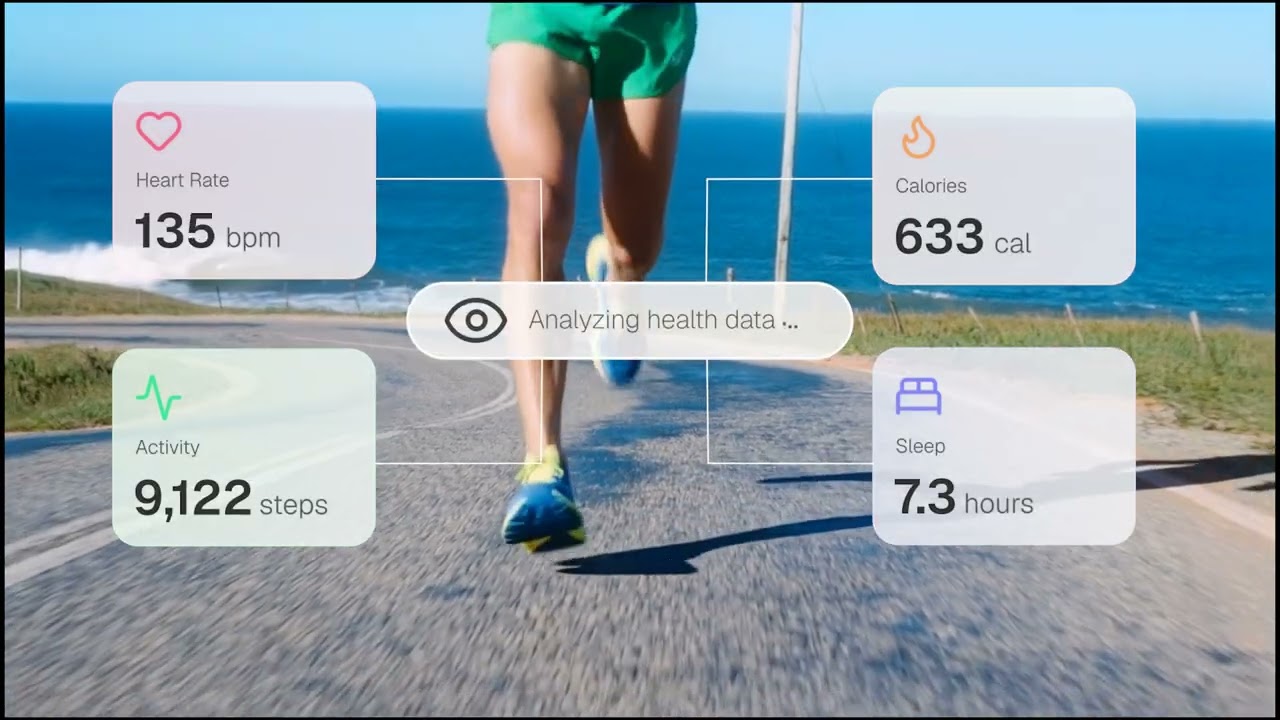
There is a crucial restraint tucked into that model. Prana's own description keeps human doctors in the loop. Patel's ambition is not interesting because it imagines expertise evaporating. It is interesting because it treats expertise as scarce attention worth protecting. Automate the history taking, logistics and first-pass synthesis, the company argues, so a clinician can spend more time on decisions that require a clinician.
This is also where Patel's choice becomes less rebellious than it first appears. He did not leave medicine for a completely unrelated arena. He moved one layer outward. Instead of asking how many appointments he could conduct, he began asking how many good decisions a system might support. The white coat stayed on the hanger, but the engineering brief still has a distinctly clinical shape.
“I needed to build the infrastructure that would allow care to scale to millions.”Meer Patel
The shortest feedback loop
Grand missions can make founders sound as if they only communicate in market-size charts. One small public anecdote offers a more useful view of Patel at work. After signing up for Prana, an early user wrote that Patel personally followed up by email, checked whether anything had gone wrong and offered to speak on a call. No orchestral score. No stage lighting. Just the CEO doing customer support.
That gesture supplies a neat counterweight to the language of millions. Scale begins with one person reporting one rough edge. A founder who wants software to remain attentive must first be attentive himself. The email suggests a practical operating style: shorten the distance between the person using the product and the person able to change it.
The stealable bit
Keep the feedback loop embarrassingly short. At an early company, a founder's inbox can be a better product dashboard than a polished weekly report.
with one reply.
Patel used the same invitation in Prana's public launch: try it, tell the team what you think. He thanked Menon and Rawal for the sleepless nights, then returned to the terse phrase that founders use when the announcement has ended and the actual work is waiting: “Back to building.” It is not much of a slogan. That is precisely its charm.
A career made of the same verb
The most useful thing to borrow from Patel's story is not the decision to defer medical school. Imitated without context, dramatic decisions are merely costume. The useful pattern is his continuity. Biomedical research, an AI engineering job and a care startup look like different chapters until you notice that each is concerned with extracting useful signals and extending what a small group of experts can do.
Careers are often explained through nouns: engineer, student, founder, CEO. Patel's makes more sense through verbs: measure, translate, scale. The nouns changed as he acquired better tools. The verbs did not. For anyone plotting a next move, that is a fine piece of career cartography. Look less at the title you are leaving and more at the action you cannot stop taking.
Prana remains a young company in public beta. The sober questions are still ahead: how reliably the technology performs, how thoughtfully the service earns trust, and whether the team can turn an elegant division of labor into ordinary, repeatable practice. A YC badge is an introduction, not a conclusion. Patel's wager now has to live outside the biography.
Y Combinator gives the wager a recognizable setting: San Francisco, a batch label, a launch post and a compressed period of company building. Prana's public materials list a team of four. At that size, job descriptions are aspirational literature. The CEO who explains the mission may also answer the inbox, inspect an interface and carry a dozen small decisions that never enter the press release. Patel's concise public sign-off, “Back to building,” reads less like branding in that context and more like an accurate calendar entry.
His circle is visible in the way he tells the story. He credits Menon and Rawal, names YC partners Tyler Bosmeny and Christina Gilbert, and frames the company with the plural “we.” Even the origin belongs to a friendship rather than a solitary revelation. That is fitting for a product built around handoffs. Prana's thesis depends on engineers, physicians and users making sense to one another. The company will be shaped as much by the quality of those translations as by the cleverness of any individual component.
Yet the founding logic is unusually legible. A teenager's question survived Hopkins, research papers, medical-school admission and an enterprise AI job. It collected collaborators instead of losing urgency. Ten years later, the answer is no longer theoretical. It has a company name, a web address, a small team and real users who can write back.
Patel once expected to use a stethoscope. He now works through code, product decisions and the complementary judgment of his co-founders. The instrument changed. The stubborn question did not. Somewhere between the laboratory and the launch page, that persistence became the story.