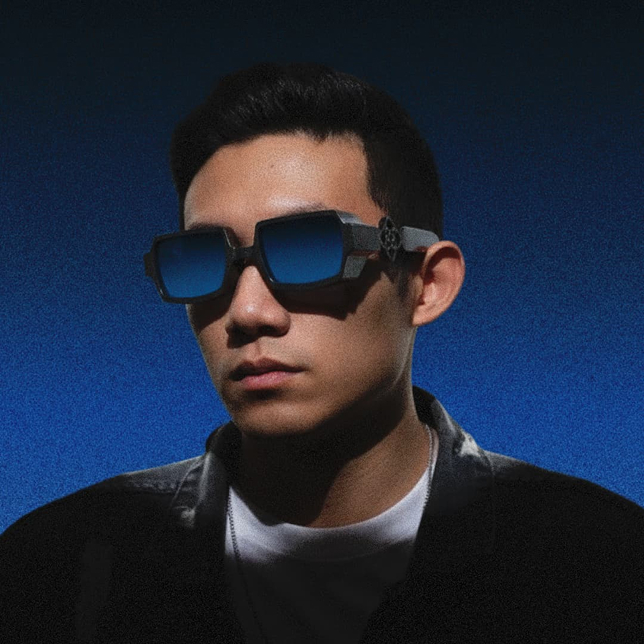
He left a quant desk to chase a stubborn question: can you prove the AI answering you is the AI you think it is? OpenGradient is his answer - written in cryptographic proofs.
Most people use AI the way they use a vending machine. Coins in, answer out, no questions asked. Matthew Wang asked the question anyway. While running modeling infrastructure for equity-options market making at Two Sigma, he kept wondering whether the model on the other side of an API was really the model it claimed to be - the same quality, every time, untampered. There was no way to check. So he built one.
OpenGradient, the company he co-founded in 2024 and now runs as CEO, is a decentralized compute layer for AI. The pitch is unglamorous and precise: run machine-learning models on-chain, wrap every inference in a cryptographic proof, keep the user's data inside an encrypted vault the user actually controls. No trust required, because trust is replaced with math.
It is a strange place to land for someone whose resume reads like a recruiter's fever dream - NASA, Meta, Google, Two Sigma. Wang collected those names the way others collect frequent-flyer miles, then spent them all on a bet that the AI stack is consolidating too fast around too few closed providers. His counter-move runs on a blockchain and answers to no one.
The market noticed. OpenGradient has raised $9.5 million, led by a16z crypto, with Coinbase Ventures, SV Angel, and a roster of crypto founders writing checks. The network now counts millions of verifiable inferences and hundreds of thousands of proofs. The vending machine, it turns out, can hand you a receipt.
No one should have to trade a lifetime of memories for a few lines of AI output.Matthew Wang, on why your context belongs in your own encrypted vault
OpenGradient isn't one product. It's a stack that turns a leap of faith into a verifiable transaction.
Models run inside hardware enclaves and on-chain, so every output ships with a cryptographic proof that it actually ran the way it claims.
A library of 2,000+ models from 100+ developers, hosted on-chain with attribution baked in - so the people who built the model share the upside.
Your context stays in a vault you control, not a provider's logs. Privacy by design, not privacy by press release.
We believe in a world where computation should be secured end-to-end and completely verifiable for people to trust it with increasingly impactful tasks.Matthew Wang, AlleyWatch interview, 2024
Wang's path to crypto-AI ran straight through the most buttoned-up institutions in tech and finance. Then he walked out the door.
Four years as a research engineer building modeling infrastructure for equity-options market making. The quant DNA still shows - his handle, @0xDeltaHedged, is a wink at the trader's craft of delta hedging.
An ML engineering stint modeling the Google Ads traffic estimator, plus messaging infrastructure work for Instagram and Messenger at Meta. Big systems, big constraints, good training.
A software engineering internship on preliminary hazard data analytics. Before the blockchain, there were rockets - or at least the spreadsheets behind them.
Andreessen Horowitz's crypto arm leads the round, joined by Coinbase Ventures, SV Angel, Foresight Ventures, SALT, Symbolic Capital, NEAR, and Celestia.
Balaji Srinivasan (ex-Coinbase CTO), Illia Polosukhin (NEAR co-founder and "Attention Is All You Need" author), and Sandeep Nailwal (Polygon co-founder) all wrote personal checks.
The handle tells a story. @0xDeltaHedged fuses crypto's "0x" prefix with delta hedging, the options-market discipline he practiced at Two Sigma. The past never fully leaves.
On GitHub, he's "Marblez." A playful alias a world away from the quant-finance resume - the kind of detail that survives a career change.
Conviction came before capital. He and co-founder Adam Balogh bootstrapped OpenGradient before raising a single seed dollar.
His co-founder's pedigree. Adam Balogh was a tech lead on Palantir's AIP, building LLM reasoning infrastructure before joining the venture.
Wang's stated worry is concentration: an AI stack consolidating around a handful of closed providers, with users handing over their data and getting opacity in return. His fix is structural, not rhetorical - keep context in user-owned vaults, prove every inference on-chain, and route the economic upside back to everyone whose data and ideas made the model smarter. Trustless, by design. The vending machine, finally, with a receipt.