There is a moment in Apollo 13 that Matthew Vincent prefers to the launch. The first-stage engines stop. The astronauts tip forward and float. Then the second stage fires, the force returns, and the difficult journey resumes. When AdvanCell closed an oversubscribed $315 million financing in July 2026, Vincent reached for that scene. The money was not arrival. It was stage separation.
This is the sort of analogy one might expect from a chief business officer who earned a chemistry degree, a doctorate in biochemistry and a law degree, then spent three decades moving among experiments, patents and transactions. It is precise, slightly theatrical and alert to the machinery behind the milestone. Funding announcements suggest a bell ringing at the end of a race. Vincent hears an ignition sequence.
At AdvanCell, an Australian-born radiopharmaceutical company, the next acceleration is tangible: a clinical pipeline to advance, isotope supply to secure, and a 128,000-square-foot global headquarters and manufacturing center planned for Andover, Massachusetts. The company is knitting Brisbane and Boston into one operating system. Vincent's job is to help the parts agree.
Three languages, one career
Vincent's education reads like the index to a complicated negotiation. He graduated summa cum laude in chemistry from Worcester Polytechnic Institute in 1986. Five years later he completed a doctorate in biochemical sciences at Tufts University School of Medicine. In 1996 came a J.D., cum laude, from Suffolk University Law School.
The sequence matters. Before he interpreted claims, he understood molecules. Before he negotiated rights, he had done research. At Tufts, his work involved inhibitors of proteolytic enzymes, an early encounter with the long, exacting route from biochemical mechanism toward a possible drug. Law did not replace science. It gave him another instrument for working with it.
He began at Lahive & Cockfield, then became a partner at Foley Hoag and later Ropes & Gray. His clients ranged across pharmaceuticals, genomics, cell biology and medical devices. The work required patent prosecution, portfolio strategy, licensing, litigation and a working knowledge of the seam where drug regulation meets intellectual property. Patent practice is often caricatured as paperwork in a handsome suit. In biotechnology, it is closer to cartography: draw the borders badly and the country may not exist when a competitor arrives.
Vincent's operating stack
The bars show the widening scope of his career, not a quantitative measure. Each layer remains active in the next.
By 2005, while still in private practice, Vincent was advising Advanced Cell Technology. He joined the company full time in 2011 as director of corporate development. The business would later become Ocata Therapeutics, and his remit expanded across commercial affairs, contract negotiation and due diligence. When Astellas acquired Ocata, Vincent had seen a scientific company from the counsel's chair and the operator's desk.
“The ride just got steeper - and that's exactly where we want to be.”Matthew Vincent, after AdvanCell's Series D
The deal is not the science - but it can carry it
Vincent did not leave invention behind when he entered business development. His name appears on patents covering lung regeneration, epithelial biology and drug-binder conjugates activated in a tumor's microenvironment. He co-authored research on gastrointestinal stem cells. The record is a useful correction to the idea that biotech divides cleanly into people who discover and people who sell.
He also spent years in the untidy territory between a company and a profession. Vincent joined the Alliance for Regenerative Medicine in 2010 and served on its executive committee from 2011 through 2014, while regenerative medicine was trying to establish both a commercial vocabulary and a policy voice. He co-founded several life-sciences ventures, including TractBIO and Multiclonal Therapeutics. These were not detours from the corporate path. They were smaller rooms in which the same questions became harder to avoid: Who owns the invention? Which experiment creates enterprise value? What must be true before a partner will commit?
Those questions explain why his résumé resists the usual split between expert and generalist. A generalist can move across functions; Vincent's career suggests something more demanding, the ability to go deep enough in several functions that their disagreements become visible. Scientists may prize novelty, lawyers defensibility, investors optionality, and manufacturers repeatability. None is wrong. A useful business-development executive has to discover whether all four can be right at once. When they cannot, the deal memo is merely expensive fiction.
His next chapters made that overlap explicit. At Arisaph Pharmaceuticals, he led corporate development and therapeutic innovation strategy. In 2017 he joined Avacta to build relationships around its Affimer technology, eventually serving as senior vice president of business development and innovation strategy. The assignment brought commercial strategy, intellectual property, regulation and drug pricing into the same conversation. It also required the most underrated skill in the business: translating enthusiasm into terms that another organization can responsibly sign.
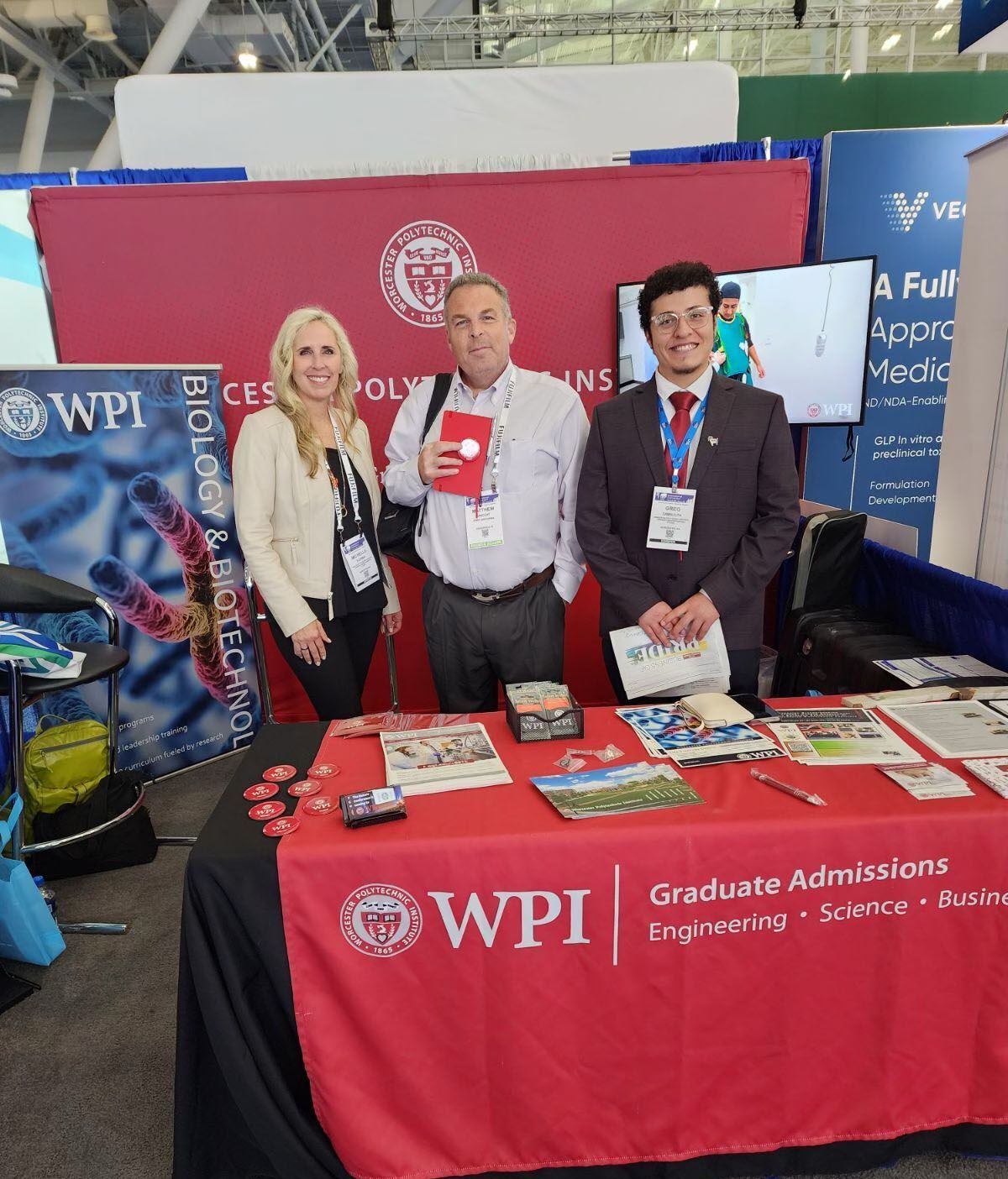
In January 2022, POINT Biopharma appointed him senior vice president of business development. He was asked to lead licensing, with an emphasis on Asian expansion and partnerships around the company's radioligand technologies. POINT sat at the intersection of a drug pipeline, scarce medical isotopes and in-house manufacturing. It was a preview of the problem he would later take on at AdvanCell.
Eli Lilly completed its acquisition of POINT in December 2023. Vincent then moved to AdvanCell as chief business officer. On paper, it was another radiopharmaceutical company. In practice, the physics had changed.
From biochemistry into patent law, then partnerships at two Boston firms.
Business development at Advanced Cell Technology and Ocata, through the Astellas acquisition.
Therapeutics business development and innovation strategy at Avacta.
Licensing and partnerships at POINT Biopharma, before its acquisition by Lilly.
Chief business officer at AdvanCell, joining Australian technology to a U.S. expansion.
A business built around a ticking clock
AdvanCell's platform centers on lead-212, an alpha-emitting isotope. A radiopharmaceutical pairs an isotope with a molecule designed to find a specific target. The business challenge is inseparable from the product: the material decays, the manufacturing is specialized, and the supply chain must perform on schedule. A conventional drug can wait on a loading dock. A radioisotope is less patient.
That makes vertical integration more than a corporate fashion. AdvanCell combines isotope production technology, automated manufacturing and drug development. Its lead program, ADVC001, is moving toward later-stage development, while the company is assembling additional programs and partnerships. In early 2026, it entered a collaboration and exclusive license with 48Hour Discovery for a peptide-based lead-212 program. Vincent wrote that he looked forward to the teams working together. The sentence is modest, but the verb is the whole job: working together is what a platform requires.
The Andover project turns that theory into concrete and clean rooms. When Vincent addressed the town's Select Board in April 2026, he described the area's concentration of pharmaceutical and biotechnology talent and discussed a possible training relationship with UMass Lowell. Two months later, AdvanCell publicly announced the facility. One month after that came the Series D, led by Ally Bridge Group and co-led by Alpha Wave, with a wide group of new and existing investors.
The numbers are large. The more revealing detail is geographical. An Australian company is placing its global headquarters in Greater Boston while preserving its Australian research and manufacturing base. Vincent, a Boston operator working for a Brisbane company, is not merely located between those poles. He is part of the bridge.
What survives the announcement
Biotechnology is fond of ceremonial verbs: launch, close, acquire, unveil. Vincent's career is filled with them. Yet his public language keeps returning to what follows. After the financing, he thanked the team and investors, then pointed immediately to manufacturing, the clinical pipeline and the work ahead. The Apollo 13 comparison was not false modesty. It was an operator's refusal to confuse permission with completion.
There is humor in the image of a dealmaker choosing a movie scene where the engines briefly stop. But it also fits the arc. His professional life has included several deliberate changes of propulsion: scientist to lawyer, outside counsel to company executive, regenerative medicine to protein therapeutics to radiopharmaceuticals. At every change, he carried the previous machinery forward.
That accumulation may be his most useful contribution to AdvanCell. He can read a scientific claim and a patent claim without pretending they are the same thing. He can recognize that a partnership is both a legal agreement and a relationship between laboratories. He has watched acquisitions from inside the company being acquired. He knows that capital buys time, while isotopes keep their own.
A good transaction creates a moment of weightlessness. The signatures arrive; the release goes out; for a breath, the hard push seems over. Then gravity changes, the next engine catches, and the organization discovers what the deal was for. Matthew Vincent has built a career in that second ignition.