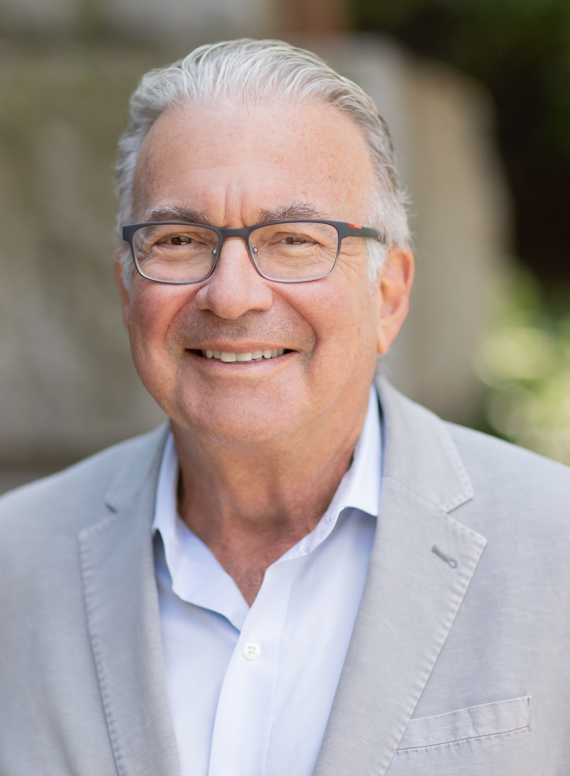
The lead drug is called CONV01-α, and the idea behind it is almost rude in its simplicity: attach a radioactive payload to an antibody, let the antibody find prostate tumor cells by their PSMA surface marker, and let the radiation do the rest at point-blank range. Kantoff co-founded Convergent Therapeutics in 2021 to build it, raised $90 million in Series A money, won FDA clearance to begin clinical studies, and at ASCO 2026 stood up to report Phase 2 data showing the drug shrinking tumors in men whose cancer had already outrun earlier radioligand therapy. For a first-time CEO in his sixties, that is a fast clock.
He did not arrive here by accident. Before Convergent, Kantoff was the person other oncologists called. He ran the Department of Medicine at Memorial Sloan Kettering Cancer Center from 2015 to 2021, presiding over roughly 500 physicians and physician-scientists. Before that, 28 years at Dana-Farber Cancer Institute, where he showed up in 1987 as a clinical fellow and a year later became the institute's first specialist in genitourinary oncology - then built that one-man post into one of the top programs in the country.
Along the way he helped change the standard of care. Kantoff was a lead investigator on the trials behind Sipuleucel-T, marketed as Provenge, the first cancer vaccine the FDA ever approved. He is best known among colleagues for a less glamorous but more durable contribution: the slow, careful accumulation of evidence that DNA abnormalities shape how prostate cancer behaves, who it kills, and which drugs it will bend to. More than 500 papers. North of 85,000 citations. The kind of body of work that turns a name into a verb in tumor boards.
"I don't tell people what to do. I tell them what not to do."
- Kantoff on how he leads
The interview that rerouted a life
The plan was never medicine. As a high-school student in Forest Hills, Queens, Kantoff fell for genetics and decided he would be a research scientist - the white-coat-at-the-bench kind, the summers-in-the-lab kind. Then a Brown University admissions interviewer floated something he had never considered: the school's combined seven-year medical program. He took the suggestion. He came out the other end with an MD and a hard-won taste for the clinic, which is to say for the patients. Everything after - the residency at NYU Bellevue, the retroviral gene-transfer work at the NIH, the decades at Dana-Farber - traces back to one conversation he didn't ask for.
That origin story explains a lot about how he runs a room. Ask his former trainees and the word that recurs is "listener." His leadership style is deliberately negative space: he resists telling talented people what to do, preferring to flag the cliffs and let them find the path. It is a philosophy that scales. The mentees who passed through his orbit include Levi Garraway, who became chief medical officer of Roche's Genentech, and William Sellers, a senior figure at Novartis. He calls mentorship a two-way exchange, and in 2024 the American Society of Clinical Oncology handed him its Excellence in Teaching Award to make the point official.
Why radioactivity, why now
Radiopharmaceuticals are having a moment, and Convergent is betting on the sharpest version of the tool. Most clinical radioligand therapies for prostate cancer use beta-emitting isotopes. Convergent's pitch leans on alpha emitters such as actinium-225, which deposit enormous energy across just a few cell diameters - devastating to a targeted tumor cell, sparing to its neighbors. The company describes CONV01-α as dual-acting: the antibody delivers the radiation, and the construct is engineered to do more than simply ride along. The promise is precision oncology in the most literal sense, measured in microns.
It is a strange and specific second act. A man who spent his career interpreting cancer's genetics decided the most useful thing he could do next was not write the 501st paper but build the machine that turns the biology into a drug. He kept the parts of academic medicine he loved - the science, the people, the teaching - and traded the committee meetings for cap tables and clinical-trial readouts. The ASCO 2026 data suggest the trade is paying off.
He has not slowed down to enjoy it. Kantoff still plays doubles tennis, still cooks, still loves music. He is married to Lorelei Mucci, a Harvard epidemiologist who doubles as a research collaborator; they have four children. The household, by any reasonable measure, knows more about prostate cancer epidemiology than any household should. And the man at its center is running a clinical-stage biotech with the energy of someone who just discovered the field - which, in a way, he did.