A water company can acquire pumps, treatment systems, meters, software, and service teams. Acquiring simplicity is harder. That is the problem Matthew Pine has chosen to put near the center of his tenure at Xylem: how to make a business with many capabilities feel less complicated to the people who need them.
It is an appealingly unglamorous ambition. Water tends to receive attention when there is too much of it, too little of it, or a bill to discuss. Pine’s work sits among those moments, where a municipal operator or factory manager must turn a collection of equipment and expertise into something dependable. The customer needs water to behave. The supplier’s organizational chart is unlikely to be of much comfort.
A career with several climates
Pine arrived at that problem by a route that included construction management, air conditioning, and wind energy. In a July 2025 conversation with leadership adviser Julie Williamson, he described deliberately gathering experience across different functions. He wanted to lead a business, and understood that he would need to know more than one corner of it.
There was a price to that approach: watching peers reach higher levels sooner. Pine’s account is less a tale of relentless ascent than of choosing what he still needed to learn. He connects that breadth with empathy for colleagues whose jobs he has had some chance to understand.
“You have to take chances on yourself,” he said. The advice has the virtue of acknowledging that somebody else’s faith in your potential only gets you so far. Eventually, you must accept the unfamiliar assignment.
His professional record gives that idea substance. At Lennox he led product management and marketing. At Vestas, his responsibilities included power plant sales technology in Central Europe. At United Technologies, he worked in Carrier’s residential business, becoming its president before moving to Xylem in 2020.
Those roles put him around products whose performance continues to matter long after the purchase. A building must remain comfortable. A power installation must work. A water system must keep serving its users. Different industries, similar opportunities for reality to interrupt a presentation.
- 2020Joins Xylem
- 2023Chief operating officer
- 2024President & CEO
- 2025Trane board
At Xylem, his responsibilities grew to include Applied Water, Measurement and Control Solutions, and the Americas. He became chief operating officer in 2023. When the company announced its succession plan that September, it named Pine to take over from Patrick Decker on January 1, 2024. The transition placed an operator familiar with the company’s pieces in charge of fitting them together.
The complication inside the water company
He stepped into a business enlarged by its combination with Evoqua, completed in 2023. The deal expanded Xylem’s treatment and service capabilities. In June 2024, at Singapore International Water Week, Pine discussed how that broader company could help operators respond to water challenges, while also making advanced solutions easier to adopt.
There is a practical tension here. More capability can give a customer more ways to solve a problem. It can also give the customer more people to call. Pine’s recurring emphasis on simplification acknowledges the work required to make breadth useful. A catalogue can grow faster than an organization’s ability to explain it.
The financial version of his argument appeared at Xylem’s May 2024 Investor Day. The company outlined a framework through 2027 that combined organic growth, margin improvement, the integration of Evoqua, and capital allocation. Its anticipated annual organic revenue growth range was 4 to 6 percent. These were targets, with execution still ahead of them.
“Water flows through every part of the global economy.”
Matthew Pine · 2024 Investor Day
That observation connects his operating agenda with the size of the task outside the company. Water management touches businesses with very different needs. Making Xylem easier to work with would give those capabilities a clearer route to customers. The logic is straightforward; persuading a large organization to make fewer things difficult is another occupation entirely.
Six weeks, or one
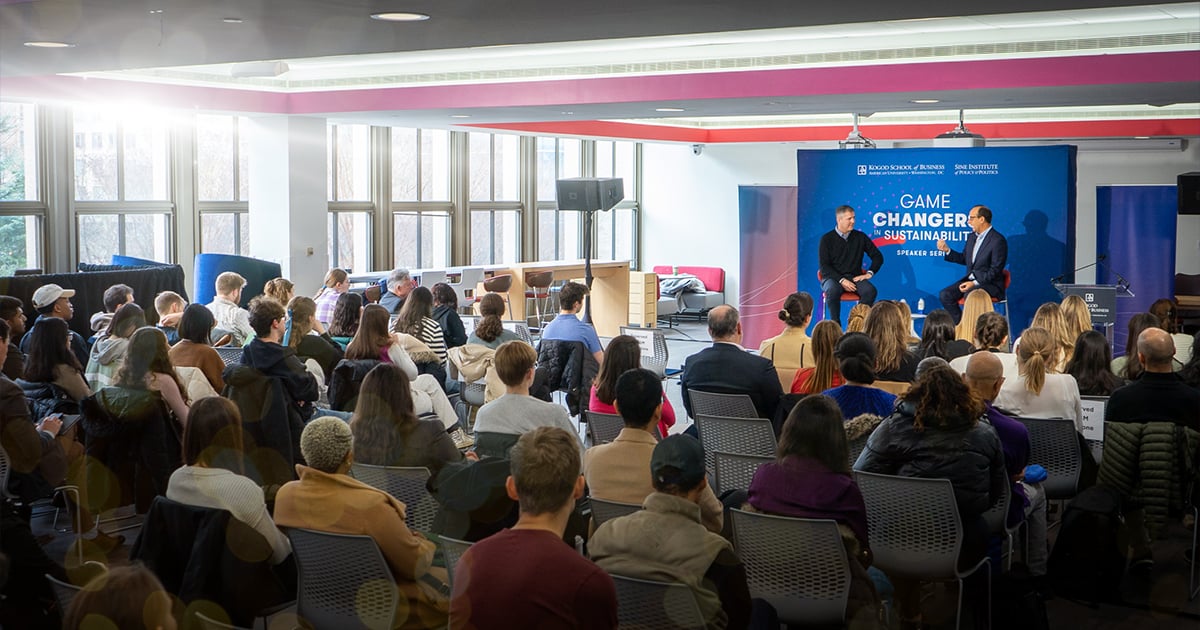
A month into his CEO tenure, Pine visited American University for a conversation with Kogod dean David Marchick. He brought an example that made the company’s interest in artificial intelligence unusually tangible: analyzing the sounds associated with leaks in a water system.
That analysis could take six weeks, he explained. With AI, the data could be analyzed in as little as one. The appeal is easy to grasp without knowing the software. A shorter wait gives customers information sooner and allows people to spend time on other work.
“We’re using AI to remove bottlenecks and get the data to our customers more quickly,” Pine said.
Less time between listening and knowing
Acoustic leak-data analysis example discussed in February 2024. An example of analysis time, not a guarantee of repair time.
The distinction matters. Finding information and acting on it are different stages of the work. A leak does not repair itself out of respect for a faster calculation. But clearing an analytical bottleneck can give the people responsible for a network a better chance to decide what happens next.
A thirsty economy meets a leaky network
By 2026, the AI conversation around Pine had acquired a second direction. The technology could help manage water, while the industries supporting it would also require water. His public interviews increasingly addressed that relationship.
In a March interview, he pointed beyond the walls of data centers to power generation, semiconductor fabrication, and mining. The wider industrial picture helps explain why a water company would pay attention to the computing boom. A digital service has a physical supply chain, however discreetly the word “cloud” tries to dress it.
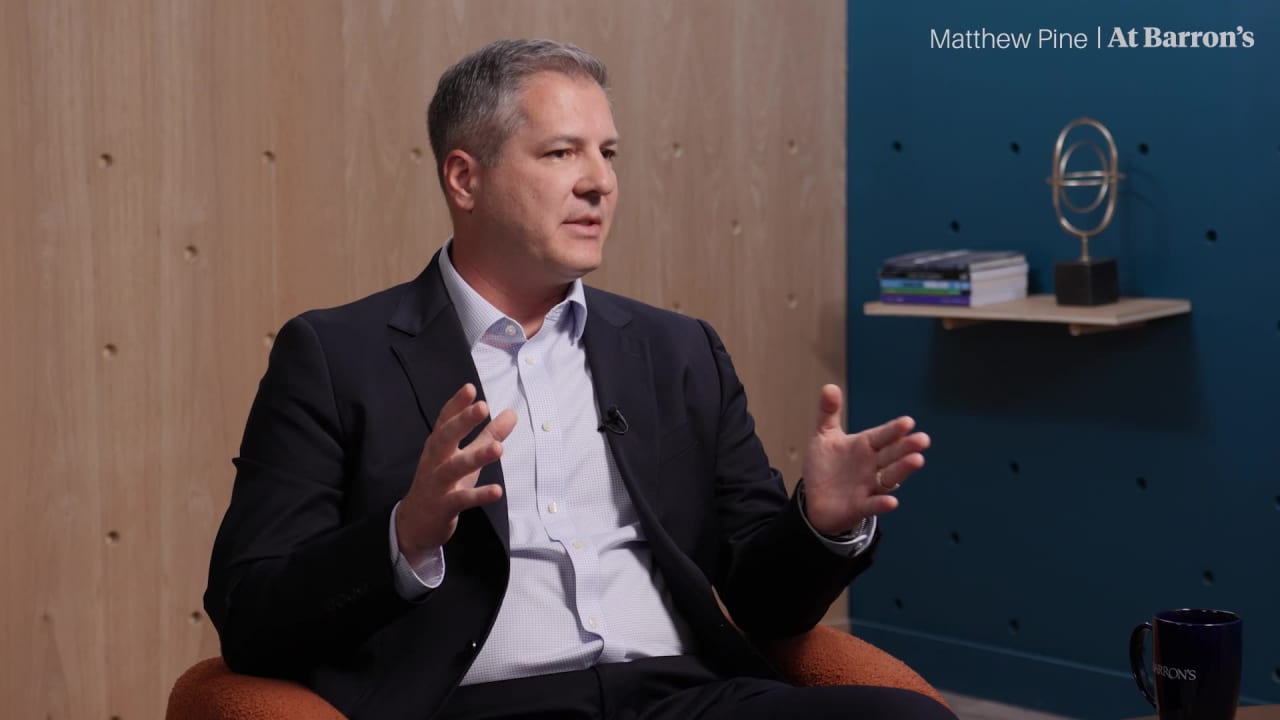
His proposed responses include reuse and partnerships that help cities reduce losses from existing networks. He has also described the AI investment cycle as a possible reason for water infrastructure to receive more attention and capital. That is an aspiration, with a practical challenge attached: investment must reach projects that can actually be delivered.
Mexico City and Monterrey offer one such test. The cities are working with Xylem and Amazon on digital upgrades using Xylem Vue. The announced approach uses data and analytics to locate leaks, reduce losses, and improve supply. The projected annual savings are about 800 million liters in Mexico City and 560 million in Monterrey.
800 millionMonterrey
560 million
Combined estimate from the two announced project figures. Projected savings, not a reported completed result.
Those estimates put a useful scale around an otherwise abstract phrase such as digital water. They also show why the partnership matters. A software platform sits alongside a city’s infrastructure, operating decisions, and the resources required to carry out changes. Pine’s customer has to make all those pieces cooperate. The same is true of his company.
The return trip to Trane
One of Pine’s more revealing career developments happened outside Xylem. Effective April 1, 2025, he joined the board of Trane Technologies. Earlier in his working life, he had held sales and marketing leadership roles at Trane Residential & Light Commercial Systems. The return came with a different set of responsibilities.
His education also combines commercial and financial perspectives: a bachelor’s degree in marketing from the University of Alabama and an MBA with a finance concentration from Northeastern University. His career has since supplied plenty of opportunities to discover where the two perspectives agree, and where an operating problem complicates both.
The Trane appointment places him in the governance of another business concerned with equipment, efficiency, and the use of resources. It adds a connection between the buildings and energy chapters of his career and the water chapter he now leads. These industries share customers who must keep working while the machinery does.
More pumps, fewer obstacles
In August 2026, Xylem announced an agreement to acquire Cornell Pump and Roper Pump from Indicor for $1.46 billion. The announced closing expectation was the fourth quarter of 2026, subject to approvals and customary conditions. A proposed transaction deserves a future tense.
The businesses bring technologies for demanding fluid-handling applications, including solids and slurry. The intended fit is with Xylem’s Water Infrastructure segment. For Pine, the agreement adds another question to the simplification agenda: how to expand the company’s reach while keeping the resulting business understandable and workable.
The other side of that task involves people. Xylem’s public account of his leadership includes employee networks, reverse mentoring, sponsorship, and developing future leaders in water. Those commitments concern who gets heard and who gets prepared for greater responsibility. They belong beside the operating plan because colleagues have to carry it out.
Reverse mentoring has a particular resonance in a career built on crossing functions. It gives a senior leader a formal reason to become the learner again. Sponsorship asks something different: using an established position to help someone else progress. Together, these practices make the development of colleagues part of the organization’s work, rather than leaving it entirely to individual persistence.
That is a useful responsibility for a chief executive whose own path depended on people taking chances on him. A large industrial company has to prepare the next person to run a team, understand a customer, or carry an unfamiliar assignment. Its future leadership is being assembled during ordinary working days, often well before anyone writes a succession announcement. Pine’s experience gives him a direct reason to care about that preparation.
Pine’s career began with a willingness to enter unfamiliar territory. His present assignment asks him to help others navigate a company with many kinds of expertise. The promise can be stated in ordinary language: make it easier for a customer to get the water problem solved. The measure will be what happens after the conversation ends and the equipment, software, and people go to work.
Keep the conversation flowing
- Xylem
- Matthew Pine on LinkedIn
- Leadership conversation · audio & transcript
- American University conversation
- 2024 Investor Day strategy
- Singapore International Water Week remarks
- 2026 interview with ENR
- Mexico projects · video
- Trane board appointment
- Cornell & Roper acquisition announcement
- Barron’s interview · YouTube
- Xylem news