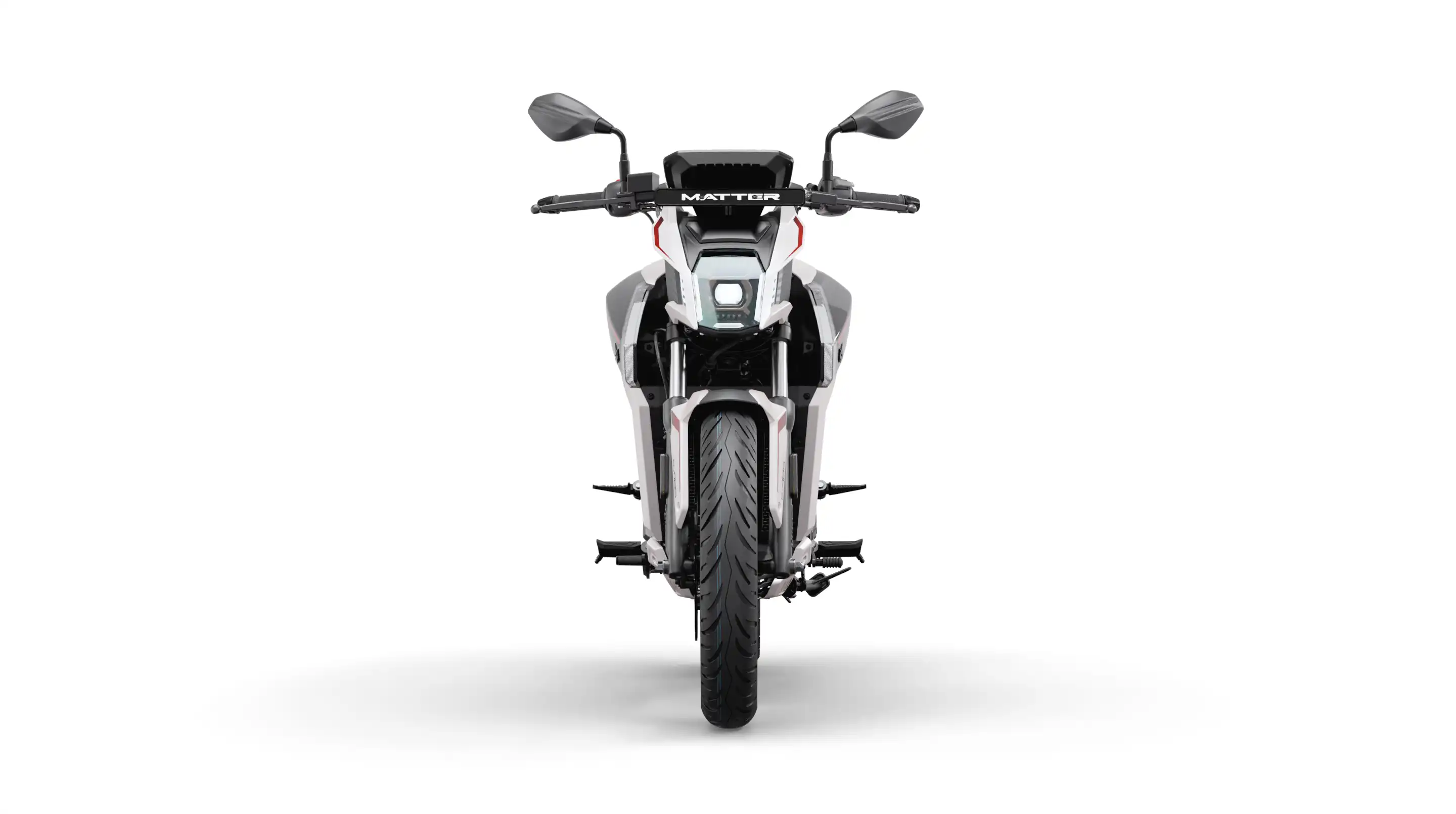
The Ahmedabad company that decided an electric bike should still have gears - and built one before anyone asked.
Somewhere in Bengaluru traffic right now, a rider is pulling in a clutch and dropping a gear on an electric motorcycle. No engine note, no fuel gauge, no exhaust. Just the click of a shift and a quiet shove forward. That bike is the Matter Aera, and the company behind it spent years convincing the industry that this moment should exist at all.
Matter is a deep-tech company from Ahmedabad, Gujarat, that designs and builds connected electric two-wheelers and lithium-ion energy storage. Its flagship, the Aera, is billed as India's first geared electric motorcycle - a phrase that tends to make EV purists wince and motorcyclists lean in. The bet underneath it is simple to state and hard to build: that going electric should not mean giving up the feel of riding.
India is the world's largest two-wheeler market, and a huge slice of it rides geared motorcycles - not scooters. When the electric wave arrived, it arrived mostly as scooters: clean, convenient, and, to a committed rider, a little characterless. The clutch and gearbox that define the riding experience for millions were treated as engineering baggage to throw out.
Then there was the deeper, quieter problem. Most early EV makers assembled vehicles around imported cells and off-the-shelf battery packs. That works until the Indian summer, the Indian pothole, and the Indian price ceiling all show up at once. Heat management, durability, and cost are not footnotes here - they are the whole exam.
Matter looked at both gaps and decided the answer was not to pick one. It would build a motorcycle that felt like a motorcycle, and it would build the hard parts - batteries, the battery management system, the thermal system - itself.
Matter was founded in 2019 by Mohal Lalbhai with co-founders Arun Pratap Singh, Saran Babu, and Kumar Prasad Telikepalli. The pitch was not modest: build India-specific EV platforms and energy-storage products from the ground up, with the difficult engineering done in-house rather than bought in.
Vertical integration is the unglamorous word for it. The flashier word is control: control over how a battery behaves in 45-degree heat, over how a pack ages, over the final sticker price. The founders' wager was that owning that stack would matter more over a decade than shipping fast in year one.
The Aera is the argument made physical. Around a 5 kWh liquid-cooled lithium-ion pack and an 11.5 kW motor, Matter wrapped the one thing other electric two-wheelers skipped: a four-speed manual gearbox the company calls HyperShift. Three riding modes - Eco, City, Sport - and a 7-inch touchscreen console with 4G connectivity, navigation, calls, and alerts round it out.
The liquid cooling is the tell. It is the kind of thermal management you expect in a performance car, not a sub-Rs 2 lakh commuter bike. That choice is Matter's whole thesis compressed into hardware: build for the Indian summer first, and the spec sheet second.
The geared electric motorcycle: HyperShift gearbox, liquid-cooled pack, connected touchscreen. The 5000+ launched around Rs 1.93-1.94 lakh.
Lithium-ion storage for mobility and stationary use - residential, commercial and grid - plus a battery-swapping concept for two- and three-wheelers.
Battery packs and battery management systems designed and built in-house, with liquid cooling for safety and longevity.
Conviction is cheap; capital is the receipt. In July 2024, Matter closed a $35 million Series B led by US firm Helena, with Capital 2B, Japan Airlines, Translink Innovation Fund, and Saad Bahwan's SB Invest joining. Reported total funding has climbed past $75 million across rounds, at a post-money valuation around $230 million.
The machines are real too. Matter inaugurated what it describes as India's first geared electric motorbike manufacturing facility in the Ahmedabad region, designed to roll out over 100,000 - 1.2 lakh - bikes a year. The Aera launched in Bengaluru and spread to a roster of cities including Pune, Delhi, Chennai, Mumbai, Jaipur, Surat, Rajkot, and Coimbatore, sold direct and through a growing dealer network.
Matter frames itself as innovation-intensive and India-specific: products engineered for local conditions, sourced increasingly from a domestic supply chain, and priced for the market they are sold in. The two halves - vehicles and energy storage - are meant to reinforce each other, the same battery competence powering a commuter bike and a home energy unit.
That is the tension Matter exists to resolve: clean does not have to mean compromised, and local does not have to mean lesser. The gearbox is the romantic part. The in-house battery is the serious part. Matter is trying to sell both in the same showroom.
The road ahead is crowded. Matter shares it with Ola Electric, Ather, Ultraviolette, Revolt, and the legacy giants - Bajaj, TVS, Hero - all electrifying at once. Competing here means doing the hard, boring things well: build quality, service networks, battery life, and a price that survives contact with a real buyer's budget. Matter has signaled it wants to go public once the growth milestones line up.
Back in that Bengaluru traffic, the rider shifts again. The bike pulls. There is no engine to announce it - only the gearbox, and the quiet that comes after. A few years ago that combination did not exist on any showroom floor in India. Matter built it because it refused to accept that electric and engaging had to be opposites. Whether the market rewards that stubbornness is still being decided, one test ride at a time. But the click is real, the bike is on the road, and the argument is no longer theoretical.
Search these official channels for ride demos, reviews, and founder interviews.