In July 2015, Mark Hastings had $315 million and a fairly specific assignment. Providence Strategic Growth, the young investment business he led, would put money into smaller technology-enabled companies in North America. The fund had passed its $250 million target and reached its ceiling. A successful beginning, certainly. Also a sum that would eventually look rather modest in the family album.
In February 2025, PSG announced $8 billion across two funds. In September 2026, its third European fund closed above €4.4 billion. Hastings, the firm’s co-founder and chief executive, had helped build an investment organization whose geography and capital bore little resemblance to that first announcement.
The interesting part is the ambition that survived the change in numbers. PSG kept its attention on software businesses with established uses and room to expand. Success introduced a complication: a firm can become very large while the companies it wants to help remain comparatively small. Keeping those two facts comfortable in the same room is now part of Hastings’s job.
The first $315 million
There was already substance behind the debut. By the first fund’s close, PSG had made four portfolio investments. One was Burning Glass Technologies, which analyzed the job market for customers including educational institutions, employers and public workforce agencies. It was software concerned with the decidedly practical matter of connecting skills, learning and employment.
That early choice helps explain the territory Hastings was entering. A product could be useful to institutions without being a household name. Its customers might care considerably more about the quality of its information than the charm of its launch party. A business serving a defined need could offer an investor somewhere concrete to begin.
Hastings described the opportunity in terms of technology reshaping traditional industries. The appeal lay in services becoming more useful and less expensive. Beneath the financial vocabulary was a recognizable proposition: find an activity people already need, then back a business improving how it gets done.
Two North American fund closes
A career before the initials
Hastings arrived with experience accumulated across several investment organizations. He earned an economics degree at Colorado College and an MBA at Wharton. His investment career began at Edison Ventures in 1995, followed by BCI Partners, where he was a principal and general partner from 1997 to 2002.
At CIBC, he led the American technology growth equity team. In 2009, he founded Garvin Hill Capital Partners. His involvement extended into company governance: he served on the boards of seven of Garvin Hill’s ten portfolio companies. The résumé contains plenty of transactions, but also the less cinematic obligation to keep turning up after one closes.
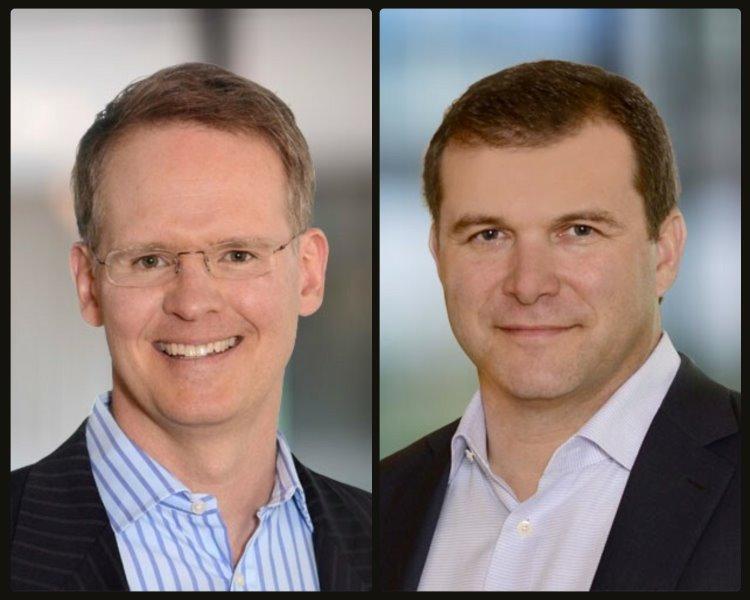
Peter Wilde recruited him to lead Providence’s dedicated growth equity strategy. Hastings joined in November 2013; PSG dates its founding to 2014. The two had overlapping histories at BCI Partners, and both had studied at Colorado College. Their partnership had a professional past before it acquired its own initials.
PSG began within Providence Equity Partners and separated in 2020. The original name, Providence Strategic Growth, remains tucked inside the abbreviation. Corporate initials are economical that way: three letters can carry an entire previous address.
The work after the wire transfer
Board service is one useful way of following Hastings’s work beyond the fund closes. He joined EverCommerce’s board in October 2016 and remained a director in its 2026 proxy. Validity also lists him among its directors. These are continuing responsibilities attached to companies, alongside the larger responsibility of running PSG.
A board seat gives the career a different unit of measurement. The transaction has a date. The relationship has a duration. Over that period, executives make decisions about priorities, resources and who should run the next phase. An investor’s experience matters in those decisions only if it proves useful to the people making them.
The kind of colleague Hastings has publicly welcomed offers another clue to his priorities. When Rick Essex joined PSG in 2019, Hastings emphasized his experience as both an operator and an investor. He singled out growth, acquisitions, operational efficiency and profitability. The shopping list was practical enough to fit a working meeting.
By April 2024, PSG was marking its 500th add-on acquisition. Hastings credited the integration of the wider PSG network across the investment cycle. Acquisitions bring a business more possibilities; they also bring the task of making the combined organization function. Announcing the purchase is usually the part with the nicest typography.
“We’re eager to put PSG VI to use.”
Mark Hastings · February 2025
His public comments on individual investments tend to stay close to the company’s task. In October 2024, discussing financing for CENTRL, he pointed to its diligence platform for the financial industry. The company was applying domain-specific AI to a process involving issuers, respondents and repeated requests for information. It was a particular workflow, with particular users, rather than an abstract claim that software would improve everything.
At Xurrent’s 2026 leadership transition, Hastings supported the arrangement in which Brian Wenngatz would take the CEO role and Kevin McGibben would remain executive chairman. His statement focused on continuity and the company’s longer-term strategy. Such transitions belong to the quieter part of investing: deciding how leadership should change as a business develops.
More time, different clocks
The $2 billion PSG Sequel fund gave Hastings another way to stay involved. Announced alongside PSG VI in February 2025, it retained stakes in six portfolio companies. Existing fund investors could choose between continuing their investment and receiving liquidity. The arrangement acknowledged that a company’s next stage and an investor’s preferred timetable need not coincide.
Hastings said the vehicle would extend partnerships with companies PSG believed had further growth ahead. That distinction matters. The new capital was attached to existing relationships, with knowledge already accumulated about the businesses. For management teams, continuing with a familiar investor can mean carrying that history into the next set of decisions.
The mechanism also makes a useful question visible. When should ownership end? A calendar can supply one answer; the condition of a business may suggest another. Sequel created a structure in which investors could make different choices while PSG continued its work with those companies. Time had become something the firm could organize more deliberately.
Europe makes the question bigger
The European expansion gives the original approach a wider setting. PSG established its European team in 2019. By September 2026, that team numbered 83 professionals, based in London with another office in Paris. The third European fund surpassed the €2.6 billion raised by its predecessor.
Across Europe, the firm reported 43 platform investments, 98 add-on acquisitions and 12 realization events at the latest close. Those figures describe several kinds of work at once: selecting businesses, helping them expand through acquisitions, and eventually selling all or part of an investment. The fundraising figure sits above an organization that must carry out each task.
Hastings’s September comments gave AI a place in both new and existing businesses. He saw opportunities to support companies built around AI, while also helping established software systems and infrastructure use it. The ambition includes changing products that already have customers and responsibilities, with all the judgment that requires.
“We see AI materially expanding the enterprise software opportunity”
Mark Hastings · September 2026
PSG’s partnership with Mistral AI, announced in 2025, supplied a concrete route toward that ambition. The plan brought language models and agentic tools to its portfolio, alongside PSG’s participation in Mistral’s Series C. Access is a starting point. Whether a company can turn that access into a useful product remains a question for its own management and customers.
The people beyond the portfolio
One public connection takes the story away from software. PSG supported the expansion of the Jehovah Jireh Mustard Seed Orphanage in South Africa, established by Scott Johnson and his wife. In 2022, Hastings praised their work and encouraged others to support the children in Mabolela Village. The statement attached PSG’s resources to a community project with a specific place and people behind it.
It is a useful detail in a career otherwise so often described through funds. Organizations are also collections of relationships, some of which have little to do with the next acquisition. Hastings’s public record includes that support alongside board service, recruiting and repeated partnerships with business founders.
The next chapter will test how much attention a growing organization can preserve. A larger fund can finance more work. It cannot, by itself, make a leadership appointment wiser or an acquisition easier to integrate. Hastings has spent his career assembling experience around those decisions. As PSG’s resources expand, the job keeps returning to companies small enough for individual decisions to matter.