The story now
A platform that makes generosity boring - in the best possible way
By the YesPress Desk
Somewhere in the Bay Area right now, a tray of perfectly good sandwiches is finishing a corporate lunch nobody touched. In the old arithmetic, those sandwiches go in the trash, then to a landfill, where they rot and exhale methane. In Maen Mahfoud's arithmetic, a driver gets a dispatch, the tray gets a new address, and a community kitchen gets dinner. Same sandwiches. Different ending.
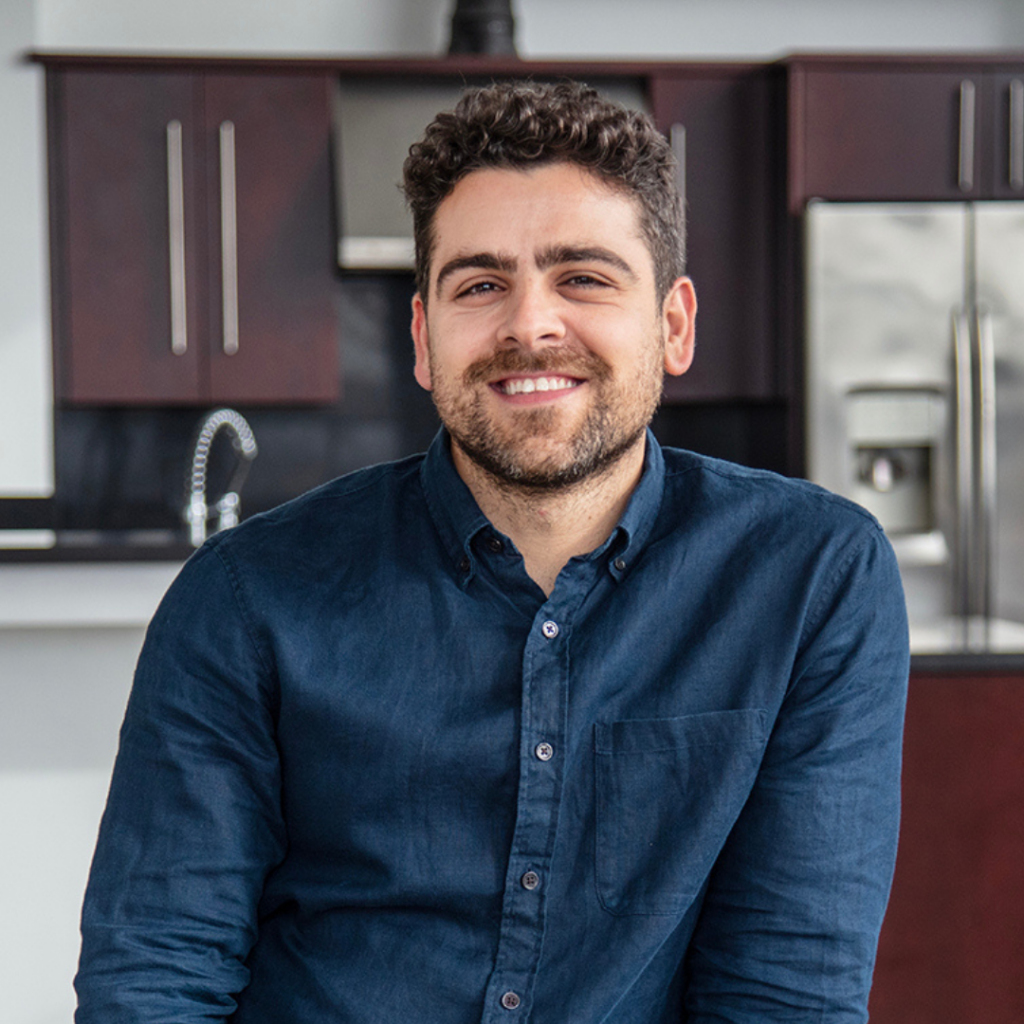
That rerouting is the whole business. Mahfoud is the founder and CEO of Replate, a food-rescue organization he runs out of San Francisco. The pitch is almost suspiciously simple: businesses make too much food, nonprofits need food, and the only thing standing between them is the unglamorous work of pickup and delivery. Replate does the unglamorous work. A web-based platform takes the donation request, software and a logistics network handle the routing, and a driver closes the loop. The donor gets a tax receipt and an impact dashboard. The neighborhood gets fed.
Today that machine runs across the United States and into the Middle East. The donor list reads like a tech-and-retail roll call - Netflix, Walmart, Amazon, Chipotle, Slack, DoorDash, Snapchat, Blue Bottle - and the receiving end is a network of hundreds of community-based organizations. Replate counts its output in pounds of food recovered, meals created, gallons of water saved, and tons of carbon kept out of the atmosphere, because food waste is quietly one of the planet's larger climate problems. When edible food dies in a landfill instead of feeding someone, it takes the water and energy that grew it down with it.
“
Many companies want to do good. Our goal is to make doing good easy for businesses.
— Maen Mahfoud
That sentence is the entire design philosophy. Mahfoud figured out early that good intentions are common and friction is the killer. A company will donate its surplus if donating takes ten seconds and zero liability. It will throw the food out if donating means phone calls, coolers, and a volunteer who flakes. So Replate built itself around removing every excuse. The technology - which Mahfoud describes as using data, artificial intelligence, and agile programming - exists mostly to make the kind thing also the convenient thing.
The bike, the lunch, the blueprint
To understand where the idea came from, rewind to a kitchen in Syria. Mahfoud's mother cooked enormous lunches, and before anyone in the family was allowed to eat, she sent Maen and his older brother out on their bikes to deliver portions to neighbors going through hard times. The food went out first. The family ate second. It was less a chore than a worldview, delivered daily on two wheels.
His father added the other half of the operating system: put yourself in someone's shoes. Between a mother who insisted on feeding the block and a father who insisted on feeling what other people felt, Mahfoud was effectively raised inside a small, manual prototype of the company he would build decades later. He just didn't know it yet.
“
Growing up in Syria, my mom used to cook us huge lunches and, before anyone touched the food, she would ask my older brother and I to get on our bikes and distribute some of that food to our community.
— Maen Mahfoud
He arrived in the United States on a different mission entirely. The plan was medicine. He enrolled at UC Berkeley and studied molecular biology, the responsible path of a kid who came a long way to make something of himself. Then the contradiction got loud. Around him, the Bay Area had people who couldn't reliably eat. Also around him, businesses threw away staggering amounts of perfectly edible food. For someone raised to bike lunch to the neighbors, that gap wasn't an abstraction. It was an itch he couldn't ignore.
From the driver's seat
Replate started in 2016, and for a while Replate was basically Maen Mahfoud and a vehicle. He drove. He picked up the food. He pitched the clients. Often all three at once, which is how the company's favorite origin story happened: mid-run, juggling a pickup and a sales pitch with a prospect riding along, he got pulled over by a police officer. The officer heard what the food was for - rescued, headed to people who needed it - and decided not to write the ticket. The prospect in the passenger seat had seen enough. "Alright, sign me up," he said. "I got you. I got you, bro."
It's a funny story, and it's also a thesis. People want to be part of something that obviously works. They don't sign up for a deck. They sign up for a guy who is so clearly doing the thing that even the traffic stop becomes a sales asset. Mahfoud built the early company on exactly that energy - present, hands-on, impossible to mistake for a person who is merely talking about a problem.
Millions
Of meals delivered
Figures drawn from Replate and the James Irvine Foundation. Cumulative impact totals grow over time.
The credentials, and why they're a punchline
Here is the part that makes recruiters dizzy. The man building delivery routes for leftover catering also holds a molecular biology degree from UC Berkeley, a Master's in Public Health from Imperial College London, a human-computer interaction certificate from MIT, and time in Harvard Business School's executive program for nonprofit management. It is a resume assembled for at least three different careers. He pointed all of it at one question: how do you move a good meal from a place of surplus to a place of need, at scale, without anyone having to be a hero about it?
The recognition followed. Mahfoud is a DRK entrepreneur, backed by Draper Richards Kaplan, and was spotlighted by Stanford's Graduate School of Business as a rising social entrepreneur. In 2023, the James Irvine Foundation named him a recipient of its Leadership Award, the honor reserved for Californians solving big problems in bold ways. The foundation's framing was telling: it recognized him not for charity but for climate work - for helping businesses cut waste and emissions by making the donate-don't-dump choice the default.
“
Don't wait. You'll always find a reason not to move forward. Go ahead and get started.
— Maen Mahfoud, on building Replate
Ask him for advice and you get the philosophy of someone who once ran a logistics company from his own front seat. Don't over-strategize. Don't wait for perfect funding or perfect knowledge. Focus on value creation, not money or profit, and the rest tends to follow. It's the worldview of a person who learned the most important lesson before he could drive: the food goes out first, you figure out the details on the way.
What he's chasing
The stated destination hasn't moved since the beginning: a world where everyone has access to nutritious food and no food goes to waste. It's an audacious thing to put on a homepage, and Mahfoud treats it as an engineering spec rather than a slogan. Every new corporate donor is a node added to the network. Every new city is more coverage. The Middle East expansion took the model back toward the region where the original bike rides happened, which is a tidy kind of full circle for a company named after the simple act of moving a meal from one plate to another.
He's also, by his own admission, a fan of builders who refuse to wait for permission. Asked who he'd want to meet, he's named Elon Musk - not for the spotlight, but for the trait he respects most in a founder: a self-starter who, as he bluntly put it, gets things done. It's not hard to see the kinship. Both run on the conviction that the gap between an obvious good idea and a working system is just labor, and labor is available to anyone willing to start before they feel ready.
That's the throughline of the whole story. A kid in Syria with a bike and a mother's instruction. A biology student who couldn't unsee a contradiction. A founder who turned a traffic stop into a signed client. And now a CEO whose entire job is to make kindness so frictionless that it stops feeling like a decision and starts feeling like the obvious thing to do with food you weren't going to eat anyway.
▶
WATCH Maen Mahfoud — 2023 James Irvine Foundation Leadership Award recipient