An English degree is an interesting piece of equipment to bring to a cyber crisis. The computers have stopped cooperating. The facts are arriving in fragments. Everyone would like a sentence that settles the matter. An English graduate might be especially alert to the trouble hidden inside that sentence: its verbs, its promises, and the difference between what it says and what a reader hears.
Lyndsey Estin earned her BA in English at Cornell. She went on to work at Paul, Weiss, Rifkind, Wharton & Garrison, then built a career advising companies on crises, transactions and financial communications. In March 2026, Kekst CNC appointed her co-chief executive officer. She leads its U.S. operations alongside London-based Richard Campbell, who oversees the business outside the United States.
The interesting part of that promotion is the work that preceded it. Estin founded the firm’s U.S. cybersecurity practice. She also works on AI communications, a field in which the audience can include a machine that summarizes the argument before a person ever encounters it. Her professional territory has expanded from difficult corporate announcements to difficult corporate announcements traveling through unfamiliar interpreters.
There is a small irony here. Technology can produce words almost instantly. Deciding which words deserve to be said still takes judgment. Estin’s public work keeps returning to that distinction, particularly when leaders must make decisions before they have the comfort of a complete account.
A degree in reading closely
Estin attended Cornell from 2001 to 2005. Her academic record includes the English Honors Program, cum laude recognition and distinction in all subjects. Those are concrete details of her education; the connection between close reading and crisis counsel is an editorial observation, rather than a claim that she mapped out her future in a seminar room.
Still, the connection is useful. Literature asks a reader to notice perspective. A company announcement has perspectives too: the executive writing it, the employee reading it, the investor looking for a material change, and the customer deciding whether to stay. A single paragraph can be grammatically sound and fail several of those readers at once. The adjective that reassures its author may irritate everyone else.
Her later career crosses that terrain. Estin has advised on litigation, mergers and acquisitions, financial announcements and leadership transitions. She has also been a guest lecturer at Brown University and NYU’s Stern School of Business. The teaching engagements place her professional experience in front of students; her earlier law-firm employment adds another setting in which language and consequence sit unusually close together.
A lawyer and a communications adviser may examine the same sentence for different reasons. That difference makes their collaboration valuable. The sentence must survive scrutiny, but it must also be understood. A carefully defended ambiguity is still an ambiguity to the person whose question remains unanswered.
The welcome before the promotion
When Estin’s appointment became public, colleague Andrew Blecher offered a detail that did not involve a transaction or an incident response. He recalled that she had helped him find his footing when he joined Kekst CNC. He described her as someone who helped him navigate the firm and supported its team.
That account gives the promotion a human scale. An organization can be understood through reporting lines and office counts, but a newcomer experiences it through people: who explains the unwritten rules, who makes an introduction, who notices that someone has arrived. Blecher’s recollection places Estin in that everyday work of making a firm intelligible to the people inside it.
Her succession also involves continuity. She followed Jeremy Fielding, who had spent 27 years with the organization. In announcing her new role, Estin credited his contribution to the transition from the founding generation to an enduring institution. Her stated ambition was to keep delivering tailored counsel with the global team through technological change and emerging business risks.
The pairing with Campbell gives that ambition a practical organizational shape. The two leaders have different geographic responsibilities within a global firm. For Estin, the new title adds the running of the U.S. business to a career already spent helping other leadership teams decide what to do and how to explain it.
The incident has several audiences
Cybersecurity brought a particular kind of pressure into Estin’s work. The firm’s U.S. practice advises organizations responding to incidents and technology companies involved in them. The situations described in her experience include operational shutdowns, ransomware, attacks by nation-state actors and extortion campaigns. Preparation includes response planning, simulations and media training.
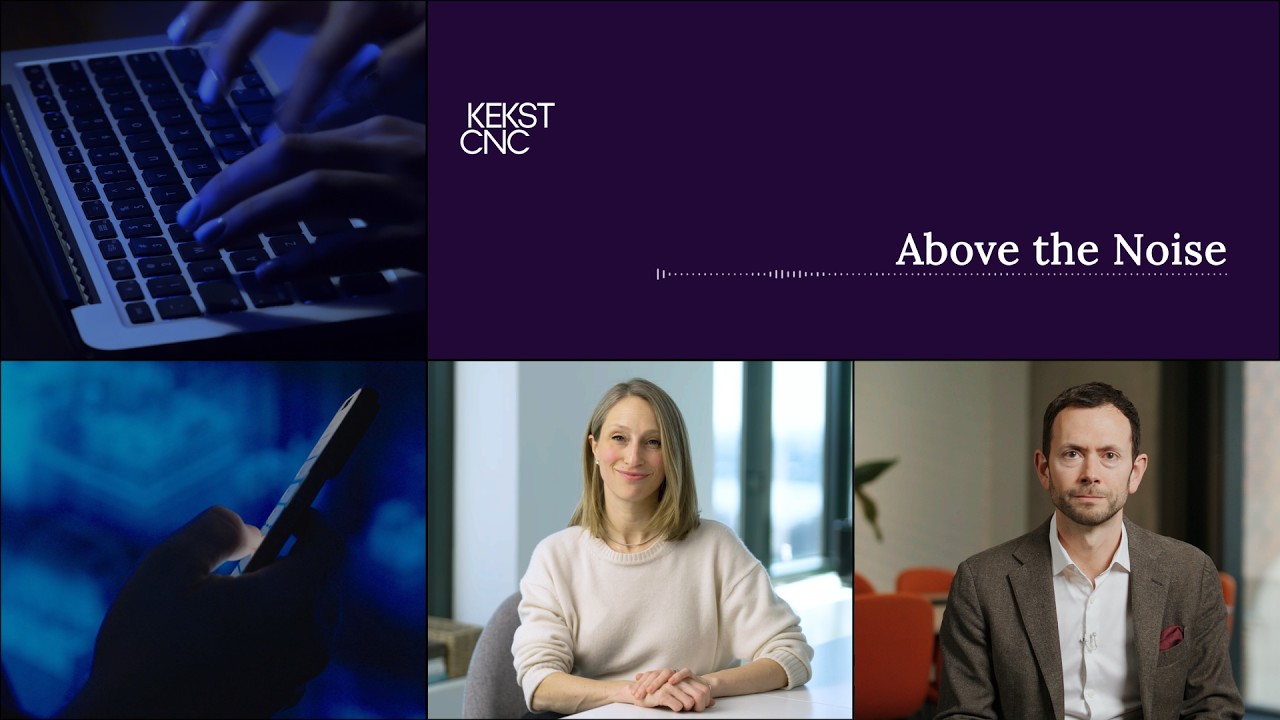
In June 2026, she joined partner Callum Laidlaw for a filmed conversation in the Above the Noise series. Their subject was the protection of trust during a cyber crisis. The discussion addressed the first hours and days of an incident, the balance between speed and credibility, and the roles of employees and leadership. It also considered increasingly personal attacks and the complications of AI-enabled phishing and deepfakes.
The human difficulty is easy to recognize. A customer may need to make a decision now. An employee may be trying to work out what to tell someone else. The organization may still be determining the extent of the disruption. A statement has to acknowledge those needs without pretending the investigation has already finished.
This is why the first answer matters. It becomes the point against which later answers are measured. A confident claim made too early can create a second problem alongside the original incident. A useful update leaves room for facts to develop while giving people something concrete enough to act on. The craft lies in that narrow space.
A board cannot rehearse every surprise
Estin has made preparation a recurring subject of her public commentary. Discussing her appearance at the Financial Times Outstanding Directors Exchange, she wrote: “In today’s environment, crisis management is part of the job description for Board members.” Her panel brought her together with Sheila Bair, Sheila Hooda and Tony Wells to discuss governance and crisis management.
Her argument focused on the capacity to make decisions with incomplete facts. Trying to anticipate every possible scenario is a formidable assignment; building the ability to act under pressure is a more useful one. That view connects preparation to governance, placing responsibility with the people who oversee the business before a crisis begins.
There is an earlier public example. In June 2022, Estin appeared in an Association of Corporate Counsel program with lawyer J. Steven Patterson and general counsel Nicole Greenidge-Hoskins. The event addressed crisis planning and management. Its presentation covered decision makers, escalation, stakeholder mapping and response responsibilities. The emphasis was on giving a company an approach it could use when circumstances refused to follow the plan.
A rehearsal earns its keep by exposing awkward questions while the consequences are manageable. Who can approve an update? Who knows whether the claim is true? Who contacts employees? A beautifully formatted document can accommodate all three questions without answering any of them. Preparation has to reach the people who will eventually need to decide.
Preparation is a governance responsibility.
Editorial takeaway from Estin’s boardroom commentary
When everything arrives at once
In March 2026, Estin contributed with Brian Bartlett, Kelly Whitten and Fielding to the Chambers crisis management guide’s discussion of Washington. Their analysis described corporate crises in which political, regulatory, legal, market and reputational pressures converge. The problem is several audiences reacting at the same time, each with a different power to change what happens next.
That picture complicates the familiar idea of a company issuing an answer and moving on. A public response may become material for another institution’s questions. The account can travel from one forum to another, acquiring new implications even when its words stay the same. Communications, legal counsel, public affairs and investor relations consequently need to work together.
On LinkedIn, Estin credited Bartlett’s leadership of the effort and emphasized preparation and strategic clarity. That is consistent with her boardroom argument: the organization needs the ability to coordinate before the moment demands it. The guide’s emphasis on integrated preparation broadens the cyber lesson into a larger view of corporate risk.
There is a reason this work resists a tidy departmental boundary. The public does not receive an organization chart with an announcement. People encounter a company, and they expect its statements to make sense together. Internal handoffs become visible when they produce conflicting answers. Coordination is therefore part of the substance of a response, however unglamorous the meetings required to achieve it.
responseLegalMarketReputational
The new reader in the proxy fight
Estin’s AI work adds another complication: an intermediary capable of generating its own interpretation. With Nick Capuano and Mark Fallati, she co-authored research examining how large language models would recommend votes in contested shareholder elections from 2023 through 2025. The work appeared on the Harvard Law School Forum on Corporate Governance in April 2026.
In the selected historical contests, activists won at least one board seat 41 percent of the time. The models recommended activist or split slates more frequently, reaching 77 percent for Gemini. These were model recommendations in a retrospective exercise, not evidence that AI cast votes or produced those election results. Keeping that distinction clear is essential to understanding the finding.
The research also examined the material informing those recommendations. Press releases represented nearly a third of citations, while top-tier media accounted for 6 percent. The observation gives the familiar release an unexpectedly contemporary role. A document written for investors and journalists can also become material from which a model assembles an argument.
In June, Estin and Capuano discussed the study with Meredith Ervine on the Timely Takes podcast. The questions extended beyond the headline result to differences between models, the arguments they found persuasive and the implications for company communications. The old discipline of explaining a business strategy now has another reader to consider. That reader is quick, prolific, and liable to interpret the same case differently on another occasion.
An answer that can survive the next question
The recurring subject in Estin’s work is the distance between information and understanding. A company can know something internally without having explained it to the people affected. It can publish an explanation without having anticipated how someone else will interpret it. Cyber incidents, board scrutiny and AI-assisted proxy analysis each expose a different part of that distance.
Her public advice puts preparation ahead of improvisation and coordination ahead of isolated responses. Her research asks how the communications environment is changing rather than assuming that established channels will behave as they always have. Blecher’s recollection adds a quieter counterpart: helping someone navigate a firm is also work in making complicated things understandable.
As co-CEO, Estin now carries that problem into the leadership of her own business. The question underneath the promotion is practical and persistent. Can a team produce useful counsel while the facts are changing and the audience is multiplying? An elegant sentence helps. A sentence that remains useful when the next question arrives helps more.