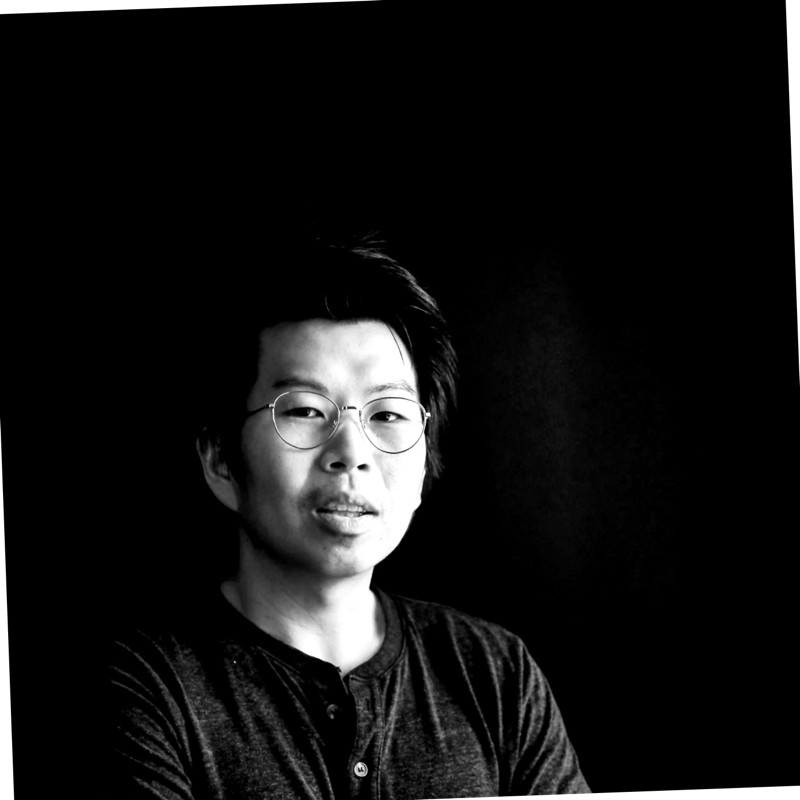
Profile
Twelve founders. One fund. Zero outside money to start.
In 2017, twelve repeat founders pooled their own capital - $1.5 million total - and made a quiet bet that venture capital had the incentives backwards. No external LPs. No institutional backing. Just a dozen people who had built things, failed at things, and raised money from people who hadn't done either. They called it MAGIC Fund.
Luke Day was one of them.
He wasn't a lifelong VC. He came up through engineering recruiting - finding and assembling the technical teams at Discord and Roblox, two of the most talent-obsessed companies in consumer tech. That background gave him something unusual for an investor: a finely calibrated sense of who actually builds things and who just talks about it.
MAGIC Fund's Fund I returned 5x over three years. The fund backed Retool before it became a unicorn. It invested in Mono - later acquired by Flutterwave - and in dozens of companies across Africa, Latin America, Southeast Asia, and North America that larger VCs couldn't be bothered to visit. By July 2021, the firm raised a $30M Fund II, with check sizes of $100K-$300K and a portfolio spanning 30+ countries.
The structure is unusual by design. MAGIC Fund runs as a decentralized network of founder-GPs - twelve investors, each an expert in their sector and geography, each making autonomous decisions with the fund's capital. There's no investment committee in the traditional sense. Instead, each GP operates from deep domain knowledge: Luke Day owns gaming, metaverse, and sports.
"The best founders want to be backed by other founders. They want to know the people they're taking money from have first-hand experience."
- Core philosophy, MAGIC Fund
Origins
The world's most expensive proof of concept
The idea behind MAGIC Fund traces back to something Naval Ravikant said - that the best founders, the ones who have real options when choosing investors, specifically want money from people who've been in the arena. Not advisors. Not analysts who ran models in business school. People who have shipped products and faced payroll.
So the twelve co-founders did something unusual: they put their own capital in first. Every one of MAGIC Fund's twelve GPs contributed personally to Fund I. The result wasn't just a proof of concept - it was a signal. If you're asking other founders to trust you with their companies, you start by trusting the thesis yourself.
Luke Day came to this through engineering recruiting - a discipline that requires understanding both what founders actually need (great engineers) and how to identify people who can deliver it. At Discord during 2018, he helped assemble engineering teams at a company that was growing faster than almost anyone could staff. At Roblox from 2019 to 2022, he did it again at an entirely different scale - a company that had quietly become one of the most complex engineering environments in consumer tech.
That experience meant something specific as an investor: Day understood what it looks like when a founding team can execute, and what it looks like when they can't. Technical recruiting, at its best, is a form of due diligence - interviewing people under pressure, testing for depth versus polish, figuring out who ships and who narrates.
MAGIC Fund - By the Numbers
The Model
A fund that looks nothing like a fund
Most venture firms have a single center of gravity - one city, one sector, one investment committee where partners debate deals until someone blinks. MAGIC Fund was built to be the opposite.
The twelve GPs are distributed across North America, Africa, Latin America, Europe, and Asia-Pacific. Each operates autonomously - they don't need consensus from the group to write a check. What they bring instead is domain conviction: if Luke Day is evaluating a gaming company, he's not deferring to a generalist partner in another time zone. He knows the sector because that's what the structure demands.
The result is a fund that can move at founder speed. Early-stage founders in Lagos or Bogota or Jakarta don't have to wait for a biweekly partner meeting in San Francisco. The GP in their region already knows the market, already knows the founders, and can move.
Fund I proved the thesis works. Seventy companies. Five-times returns over three years. A unicorn in Retool. Nine acquisitions. Those numbers didn't come from picking the hottest deals in San Francisco - they came from reaching founders that other funds passed on because they were too early, too far away, or operating in sectors that didn't fit a standard investment thesis.
Investment Focus
Gaming, Metaverse, Sports
Luke Day's corner of MAGIC Fund's portfolio sits at the intersection of participation and identity - where people don't just consume products but inhabit them. Gaming is no longer a vertical; it's a distribution layer, a social graph, and increasingly a financial system. The metaverse is the contested space where those things converge. Sports is the oldest community-building technology humanity ever invented.
That framing - communities that people care about enough to pay for, argue about, and organize their lives around - shapes how Day thinks about early-stage investments. The companies he backs tend to be infrastructure plays, community platforms, or founder-led consumer products with unusually strong retention from day one.
His engineering recruiting background matters here too. Evaluating a gaming or metaverse startup at the seed stage means figuring out whether the technical team can actually build what they're describing - whether the architecture holds up, whether the founder understands the product constraints. Day has been having those conversations for years, just from the other side of the table.
Notable Portfolio
250 bets, one map
MAGIC Fund's portfolio reads like a deliberate tour of the parts of the global startup economy that institutional VC tends to miss. There's Retool, the internal tooling company that became a unicorn in 2021. There's Mono, a Plaid-for-Africa play that was acquired by Flutterwave in early 2026. There are fintech companies in Southeast Asia, developer tools in Europe, and healthcare startups that operate in markets most US investors have never visited.
The geographic distribution isn't incidental - it's the product. A fund with twelve autonomous GPs, each embedded in their region, ends up with a portfolio that looks nothing like what a single-city firm would build. The common thread isn't sector or geography; it's founder quality and the conviction that experienced builders can spot other experienced builders faster than anyone else.
The fund started with the GPs' own money. That wasn't just a financing structure - it was a statement about what it means to back founders without hedging.
- On MAGIC Fund's founding philosophy
Career Arc
The side door to venture
Most venture investors arrive with a recognizable pedigree: Stanford MBA, two years at McKinsey, stint at a larger fund, then go solo. Luke Day arrived through engineering recruiting at Discord and Roblox - two companies that were, at the time, among the most aggressive engineering hiring machines in consumer tech.
That path is actually better preparation than it sounds. Engineering recruiting at Discord in 2018 meant operating inside a company that was growing faster than almost any infrastructure team could handle - learning to assess technical talent under pressure, to think about team composition from first principles, and to understand what it actually takes to build software products at scale.
At Roblox, from 2019 through late 2022, the context shifted. Roblox had become a different kind of company - a platform with hundreds of millions of users, a complex creator economy, and one of the most technically demanding product surfaces in gaming. Understanding what engineers needed to build there gave Day a specific lens on what gaming and metaverse startups actually require to succeed.
He departed Roblox in November 2022, moving into full-time work at MAGIC Fund. By then, the fund had already proven its thesis on Fund I. The question for Day and the other GPs was whether the model could scale to $30M and 110+ companies without losing what made it work in the first place - the founder-to-founder chemistry that no institutional process can replicate.
Quick Facts
Things worth knowing
His LinkedIn handle is daydayday - three Days in a row, a maximally on-brand move for someone whose whole brand is founder-to-founder investing.
MAGIC Fund I was $1.5M of all-founders' personal capital. No external LPs. They proved the model before asking anyone else to believe in it.
Luke Day studied Information Systems and Supply Chain Management at Arizona State's W.P. Carey School of Business - a combination that suggests someone who was always thinking about how things move at scale.
His Instagram is @dayzings - a pun on his last name that arrives without explanation, which is exactly the kind of thing a person who trusts their audience's intelligence would do.
MAGIC Fund has invested in companies across 30+ countries - making it one of the most geographically distributed seed funds operating at this scale.
Day's focus is gaming, metaverse, and sports - sectors defined not by technology but by community intensity. The companies he bets on are ones where users have opinions.
Connect & Follow