A studio apartment in Brasília and a data-storage venture aiming for the Moon make unusual neighbours in an investment portfolio. Add a Lisbon restaurant and a Burgundy wine business, and the conversation begins to resemble a dinner party at which nobody has been seated by profession. Luis Silveira has helped put all of them at the same table.
The Brazilian entrepreneur, whose full name is Luís Felipe Neiva Silveira, founded 2Future and serves as its CEO. Based in Miami Beach, he invests across borders and works with businesses whose customers might need a home, a secure digital system, or a good place to eat. His interests range from the practical business of construction to the uncertain business of making new technology work.
There is an appealing absurdity to that range. A restaurant must get tonight's service right. A space venture can spend years preparing for a mission. Wine has a calendar that takes instructions from the vineyard. Bringing these businesses together means accepting that the future arrives at several different speeds.
A future measured in square metres
Before the lunar ambitions, there were buildings. Silveira established Qriar Engenharia, later known as QriarCity, in Brasília in 2011. He had studied economics and returned from São Paulo with a continuing interest in construction. His stated aim was to create something valuable for residents of the city.
The business worked on housing associated with Brazil's Minha Casa Minha Vida programme. Its projects included Ilha Azul, with one- and two-bedroom apartments of 50 square metres, and Bimini, with 33-square-metre studios. Both were in Samambaia, in the Federal District. These are the kinds of dimensions that make every decision visible: a finish, a doorway, the arrangement of a room.
Studio apartments
One or two bedrooms
Apartment areas, not development totals. Square areas are proportional.
Silveira described a commitment to keeping the quality of delivery high while making the price accessible to the intended buyers. The proposition is easy to admire and awkward to execute. Construction asks a business to reconcile its promises with costs and physical materials. A slide can accommodate almost any ambition; a small apartment offers considerably less room for evasiveness.
That early work gives his later portfolio a useful point of reference. For all the talk of new frontiers, there was already a concrete concern underneath it: what does the person at the end of the investment actually receive? In housing, the answer can be inspected. You can walk through it and live in it.
Looking down from space
Silveira's interest in space also had an earthly starting point. In December 2016, he encountered Hypercubes, a venture developing satellite-based observation for agriculture and environmental applications. He subsequently described being drawn to its potential to address food production and environmental preservation.
In a 2019 essay co-written with Marcelo Carneiro, he explained the appeal of using satellite information and machine learning to help farmers understand conditions in their fields. The proposed uses included detecting problems earlier and making production more efficient. It was a space investment with its attention firmly on the soil.
The attraction is understandable. A satellite can make distance useful: stepping away from a field may reveal patterns that are difficult to recognise from inside it. For an investor with interests in land and technology, that provides a connection between businesses that otherwise look unrelated.
Hypercubes also helps explain why a later investment in Lonestar belongs in Silveira's story. His interest in space had developed before the lunar headlines. He had already been considering how infrastructure beyond Earth might serve people on it.
A lunar investment, without a hurry to leave
Lonestar, founded by Chris Stott, set out to develop data-storage infrastructure on the Moon. 2Future backed the company, and in early 2024 a Lonestar demonstration travelled aboard Intuitive Machines' lunar mission. For Silveira, the mission brought an investment thesis into a setting few portfolios can claim.
In March 2024, he said he wanted to continue backing the venture rather than seek a near-term exit. He also reported that the value of 2Future's investment had more than tripled. That was his assessment at the time, rather than a realised sale, but his remarks made his preference for continued involvement clear.
“Eu não tenho a menor vontade de buscar um exit no curto prazo.”
LUÍS FELIPE NEIVA / MARCH 2024He said he had no desire to pursue a short-term exit.
The striking detail is his reluctance to leave. Venture investing often acquires its neatest narrative at the exit: a company is sold, the return is calculated, and the story can be told in a sentence. Silveira was discussing a relationship he wanted to extend. A lunar demonstration could be a beginning worth staying for.
Of course, a demonstration and an established infrastructure business are different stages of work. His involvement places him among the backers of an attempt to build the latter. The distinction gives the story its tension. The destination is dramatic; the business still has to earn its place there.
Space observation → information about Earth
Earth's information → lunar storage infrastructure
The partnership that crossed the Atlantic
His Portuguese investments developed through a more familiar route: a working relationship. Sérgio Frade met Silveira through the Brazilian construction business. Direcional, where Frade worked, used banking-correspondence services supplied by Dubai, a company owned by Silveira. The connection later extended to projects in Portugal.
Frade managed QriarCity's Portuguese activity as Brazilian interest in that property market grew in 2018. He also helped revive O Frade, a restaurant in Lisbon's Belém neighbourhood inspired by his family's tavern in Beja. Silveira became a partner in O Frade in 2020.
The restaurant's roots preceded the investment. There were grandparents, a family business, and memories of serving customers long before there was a holding company involved. It is a useful reminder that an investor can arrive partway through a story that already has its own characters and obligations.
O Frade later received Michelin's Bib Gourmand recognition, and the restaurant ventures expanded to include Guelra Ocean to Table. For Silveira, the partnership joined property and hospitality through a person who understood both. A relationship formed in Brazil had become a way of working in Portugal.
That passage is less spectacular than a Moon mission, and perhaps more revealing about how a portfolio takes shape. Geography changes. A reliable collaborator remains. The businesses have to adapt to their setting, but the connection between the people can survive the crossing.
Burgundy, by the bottle
Maison Arnaud Boué brought another rhythm into 2Future's investments. Boué founded the Burgundy trading house in 2018, and the business later joined the portfolio. Its approach combined winemaking with organic agriculture and an interest in biodynamic practices.
Silveira has spoken about his affection for Old World wines and his particular interest in Burgundy. Here, personal taste and investment meet quite literally. It is one thing to recognise a commercial opportunity; it is another to have a long-standing interest in what the business makes.
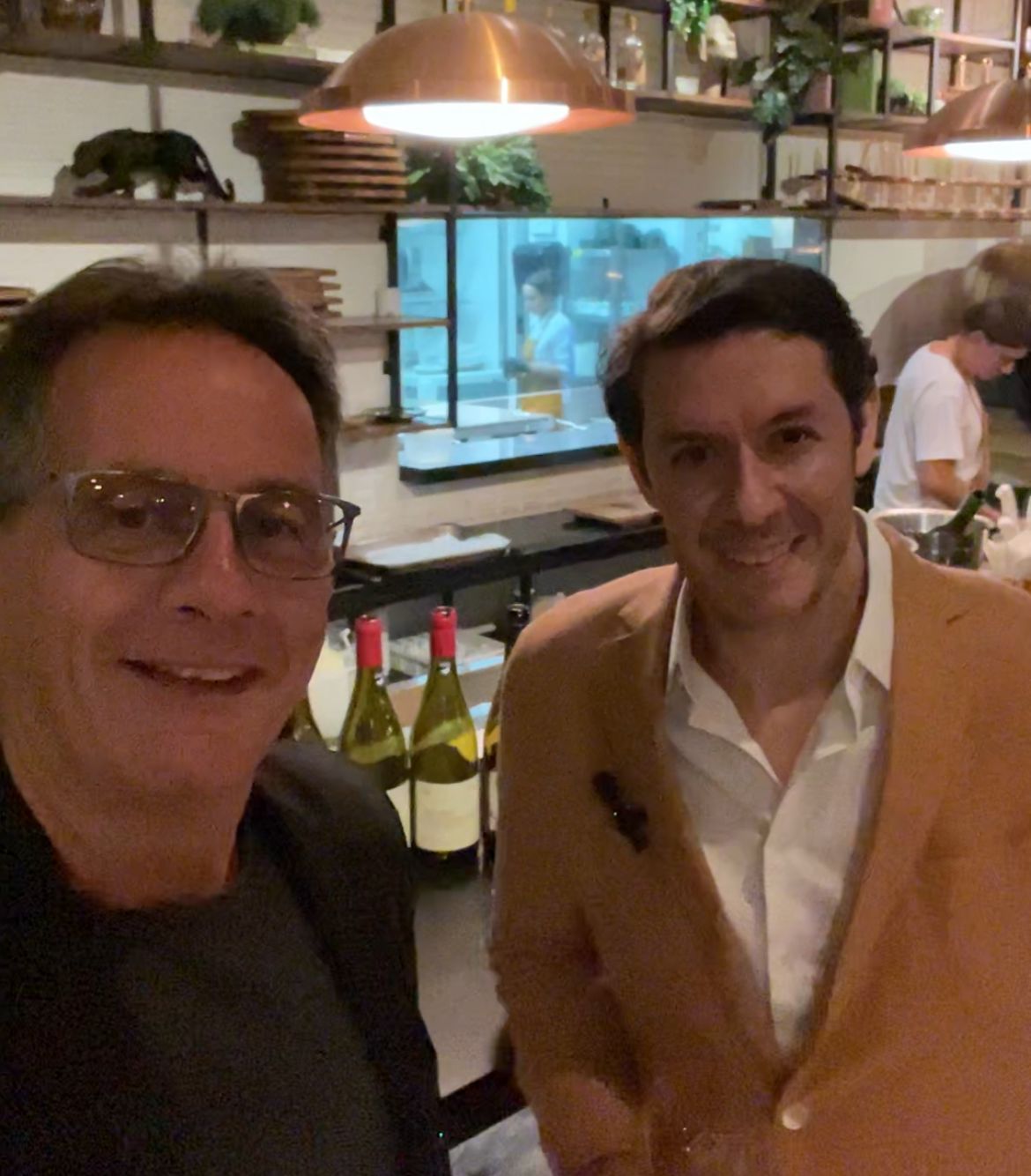
In a 2024 discussion of the maison, Silveira emphasised Boué's skill and commitment to ecological practices as reasons for the partnership. Boué, in turn, described 2Future's support for buying land, developing the brand, and organising the company. These are everyday business tasks attached to a product whose identity depends heavily on where it comes from.
A winery gives the idea of a long view a physical form. There is land to cultivate and a product that carries the consequences of earlier decisions. The investor's preference has to coexist with the maker's knowledge. Burgundy may look romantic from a distance; the partnership still requires practical work.
Building beyond the portfolio
Silveira's role also extends to enterprise technology. Konneqt identifies him as a co-founder alongside Edgar Silva and Almir Menezes. The company works on integration and security, with an emphasis on open standards and flexibility for organisations using its products.
That work brings the portfolio back from distant missions to the systems businesses use every day. Technology investment includes the less picturesque problem of getting tools to work together. A secure integration is unlikely to offer the photographic possibilities of a vineyard, but customers have reasons to care about it.
His public writing has continued into quantum computing. In March and May 2026, he published LinkedIn articles addressing cryptography, the distinction between physical and logical qubits, and technological sovereignty. Those subjects sit close to his established interest in data and the infrastructure surrounding it.
The writing adds a public conversation to the investments. It shows which questions are holding his attention, without requiring every essay to become a new company. For someone working across several sectors, explaining an interest is also a way to make the connections legible to others.
The drawing board is still waiting
There is one ambition that returns him to the beginning: Silveira has said he would like to study architecture. The wish belongs comfortably beside his early construction work. Buildings offer a way to think about how people will occupy the future, down to the spaces where they meet.
His present career already spans some very different places: homes in Brasília, restaurants in Lisbon, wine from Burgundy, and an investment aimed at lunar infrastructure. Architecture would give him another way to approach a question that runs through them: how should something be built so that people want to keep using it?
For now, the drawing board remains a stated aspiration. The investments supply enough projects to occupy the meantime. Some need to work by dinner; others ask for years. Silveira's portfolio leaves room for both schedules, with a particularly long journey between the restaurant table and the Moon.