On page 76 of Lisbon’s thick 2026–2030 plan, between smaller lines for entrepreneurship and an innovation centre, there is a number with the simplicity of a stage light: €10,500,000. The programme code is B05.P02. Its name is Web Summit. The figure is not an organiser’s projection or a flourish from an opening speech. It is the city’s own 2026 budget allocation.
That changes the question. Web Summit is plainly large, bright and international. The question for residents is what, exactly, their city is buying—and how Lisbon will know whether it got it.
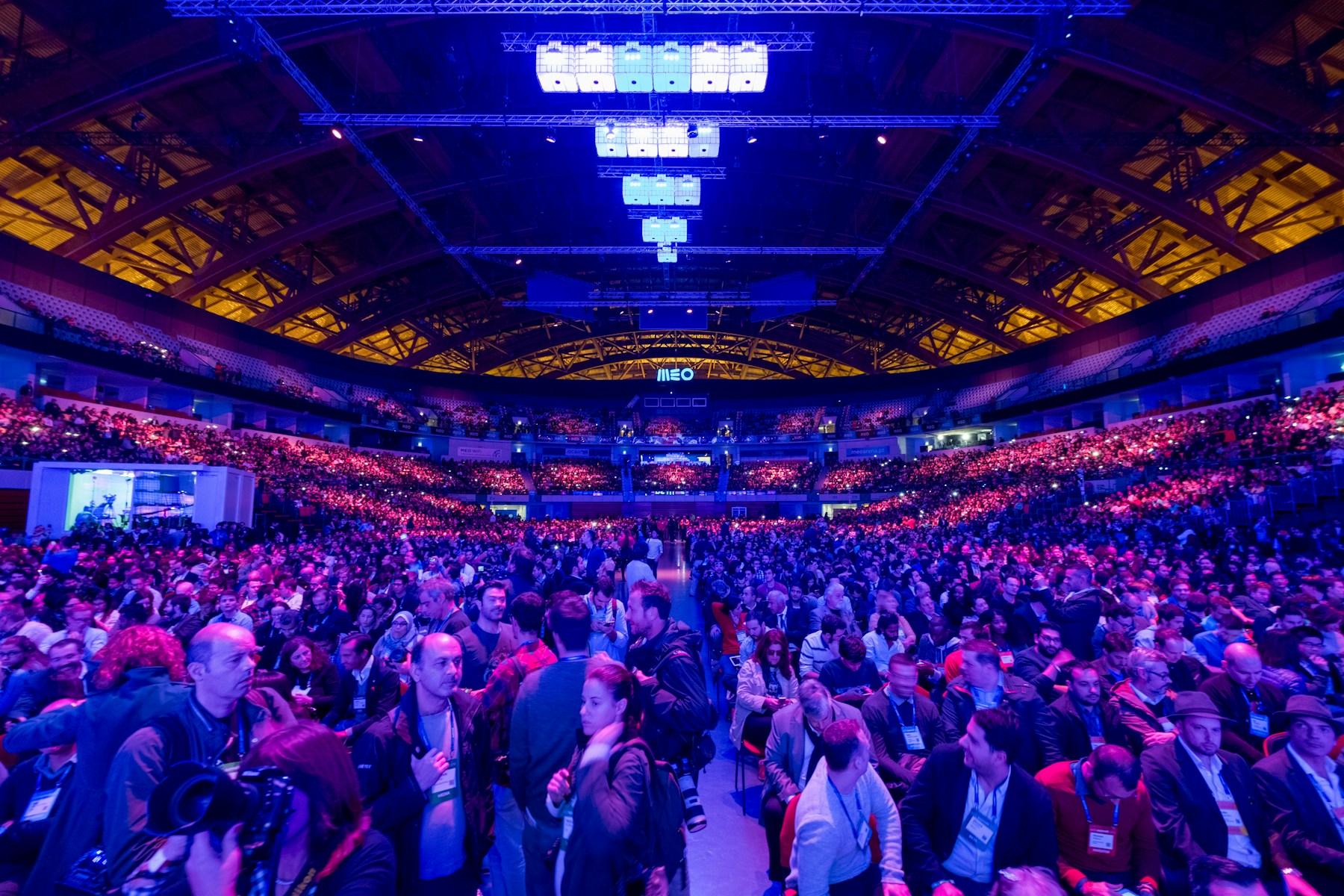
The denominators come from the previous edition. The organiser reported 71,386 attendees from 157 countries, 1,857 investors from 86 countries and 2,725 exhibiting startups. Lisbon’s own account recorded 178 Portuguese startups selected through Road 2 Web Summit.
Divide one number by the others and the abstraction acquires edges: about €147 per prior-edition attendee, €5,654 per investor or €58,989 per selected Portuguese startup. Those figures are not benefits, and they are not allocations to individuals. They are cost benchmarks. They tell us the height of the bar, not whether Lisbon cleared it.
The crowd is easy to count. The value that remains after it leaves is the real assignment.
A crowd is not a dividend
Attendance is the event business’s perfect unit: immediate, visible and reliably enormous. Economic value behaves differently. Some delegates would have visited Lisbon anyway. Some hotel bookings replace tourists who stayed away from a crowded, expensive week. Some restaurant revenue leaves through imported food, international platforms or owners elsewhere. A packed Metro carriage is evidence of activity, but it can also be a cost paid in delay and discomfort by a commuter.
The honest calculation begins with additional local spending—not every euro spent during the event. It subtracts displaced visitors, imported goods and services, profits that leak out of the local economy, extra policing, sanitation and transport operations, and the subsidy itself. It adds only longer-term investment, jobs and tax receipts that probably would not have happened without the summit. The answer may be strongly positive. But without that counterfactual, gross sales are a description of motion, not a measure of momentum.
Follow the room keys
Hotels offer the cleanest starting point. Lisbon should publish daily occupancy, average daily rate and revenue per available room for the summit dates. Then it should compare the numbers with the same weekdays in several ordinary November weeks, the same period in prior years and similar European cities not hosting the event. Portugal’s official tourism-accommodation survey already establishes a statistical base; the event study needs finer timing and a transparent comparison.
The analysis should include hotels and registered local accommodation, and separate price gains from extra room-nights. A higher rate on a room that would already have sold is real revenue. It is not the same as new demand. The city should also look for displaced business conferences, cancellations and leisure trips shortened or moved outside the municipality. Anonymous booking-origin data can identify foreign demand without identifying guests.
Follow the invoices—and the exits
Venue and supplier spending should be traced invoice by invoice. How much went to firms headquartered inside Lisbon, elsewhere in Portugal and abroad? How many local workers were hired, for how many paid hours, in staging, security, catering, cleaning and production? A euro paid to a Lisbon technician is not economically identical to a euro paid for imported equipment, even when both sit inside the same show budget.
Transport deserves the same discipline. Publish hourly Metro, Carris and rail validations around Parque das Nações against normal-week baselines; extra service kilometres; overtime, crowd-control and policing costs; taxi and ride-hail volumes; and delays or complaints on affected routes. Benefits and pressure belong in one table.
A packed Metro can be both proof of activity and a cost borne by commuters.
Event days vs ordinary November weekdays, prior years and control cities.
Lisbon, rest of Portugal or abroad; labour and imports shown separately.
Funding, exports, survival and jobs at 12, 24 and 36 months.
Extra services, delay minutes, policing, waste and resident complaints.
The startup test takes longer
The event’s strongest promise is not a full hotel. It is access: a founder meets an investor, and the conversation becomes capital, customers or a durable job. That mechanism is plausible. It is also measurable. With consent, Lisbon could follow each Road 2 Web Summit cohort for 12, 24 and 36 months, reporting aggregate funding, revenue, exports, survival, hiring and headquarters location.
A credible study would compare selected companies with similar applicants that narrowly missed selection. That matched group helps separate the summit effect from selection bias: stronger companies may be more likely to win a place and to raise money regardless. Investment should be checked against filings or investors where possible. Announced jobs should be distinguished from jobs created, filled and retained locally.
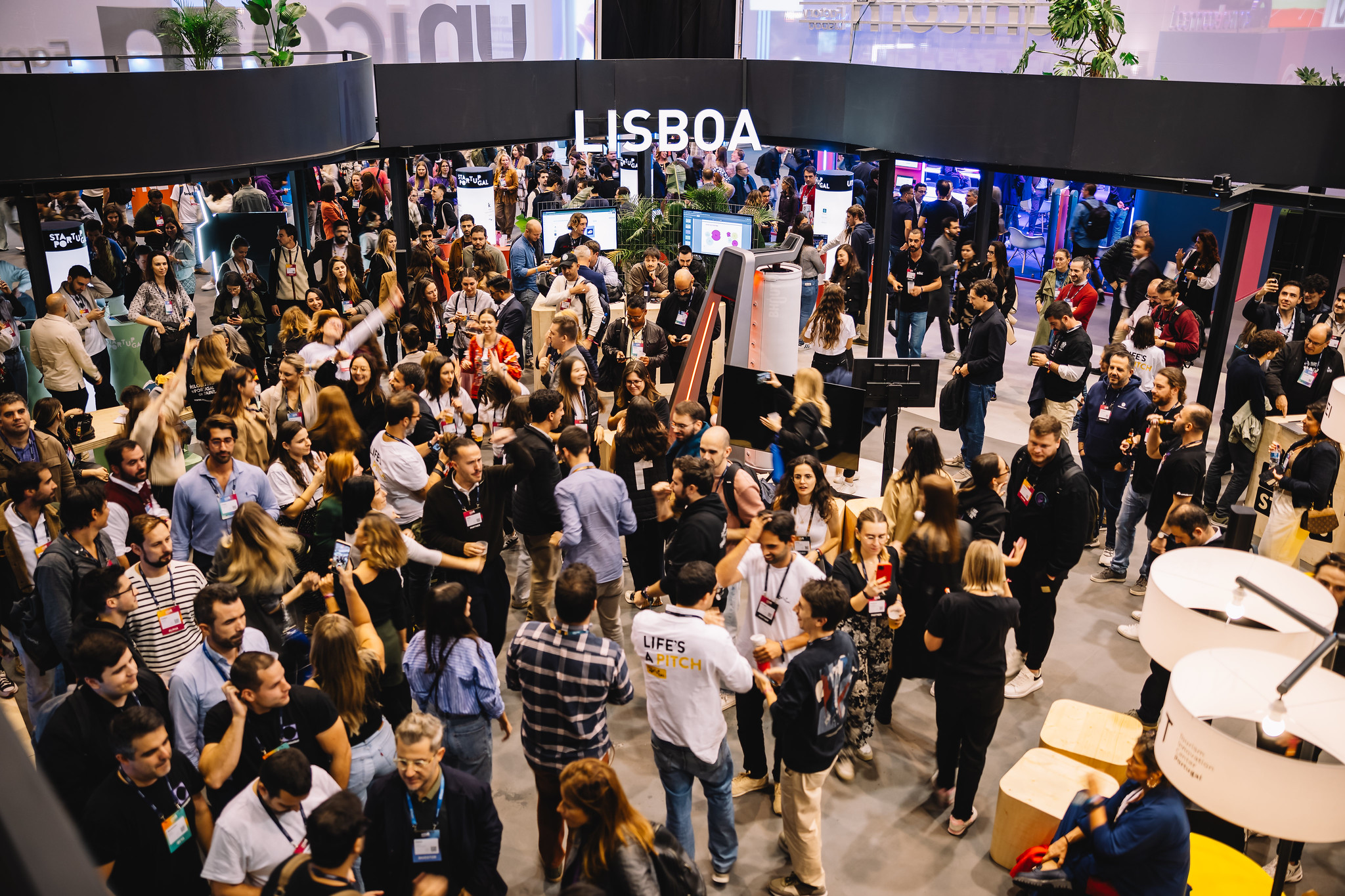
Mayor Carlos Moedas has tied Lisbon’s innovation story to 82 technology companies and more than 16,000 jobs. Those are important claims. The missing bridge is attribution. Which companies and jobs came because of Web Summit? Which came through the wider Unicorn Factory strategy? Which would have arrived anyway? A strong evaluation does not diminish the ecosystem; it shows which parts actually work.
Two clocks are ticking
The current hosting horizon ends in 2028. The Portuguese government’s 2018 resolution approved an agreement covering 2019–2028 and committed €8 million in 2019, then €8 million a year through 2028 adjusted by inflation, split between Turismo de Portugal and IAPMEI.
That national obligation should not be casually blended with Lisbon’s €10.5 million municipal line. They are different public commitments. The city should publish a consolidated account naming every payer, cash transfer and in-kind contribution. Otherwise one level of government can praise benefits while another quietly carries costs.
Ten-year hosting agreement approved.
Lisbon budgets €10.5m; scorecard window opens.
Current agreement ends; renewal decision arrives.
Two editions after 2026 remain under the deal. That is enough time to stop treating evaluation as an obituary written after the contract ends. Lisbon can set the method before each summit, release machine-readable data after it and appoint an independent reviewer able to reproduce the findings.
The scoreboard before the sales pitch
Before any renewal vote, residents should see six things: the full public cost across municipal and national bodies; additional visitor spending after displacement and leakage; local procurement and wages; verified startup outcomes; net transport and public-service costs; and a distributional account of who gains and who absorbs the pressure.
The result should be a range, not one theatrical multiplier. Assumptions, response rates and missing data should sit beside the headline. If benefits arrive mainly as hotel profits, that is different from benefits arriving as local wages or durable companies. If costs concentrate around Parque das Nações or on the transport system, the city can design mitigation instead of hiding it inside an aggregate.
The deeper question is not whether Web Summit is good or bad. It is whether a global technology brand and a liveable city are being improved by the same cheque. Lisbon already knows how to count the room. By 2028, it should know how to count what the room changed.
Sources and method: The €10.5m figure is from Lisbon’s 2026–2030 plan, table 8, programme B05.P02. Attendance, investor and exhibiting-startup totals are from Web Summit’s 2025 results; the 178 Portuguese selections and 2028 horizon are corroborated by Lisbon City Council. Ratios are simple division, rounded to the nearest euro; they are explicitly not estimates of economic impact.