The postcard disappears
For a while, Lisbon’s most photographed sentry looked less like a monument than a parcel awaiting collection. Scaffolding climbed the pale limestone. Mesh softened the turrets. The little bridge from the Tagus riverbank led not to a queue but to a worksite. Belém Tower had closed on 22 April 2025, and the absence was strangely loud.
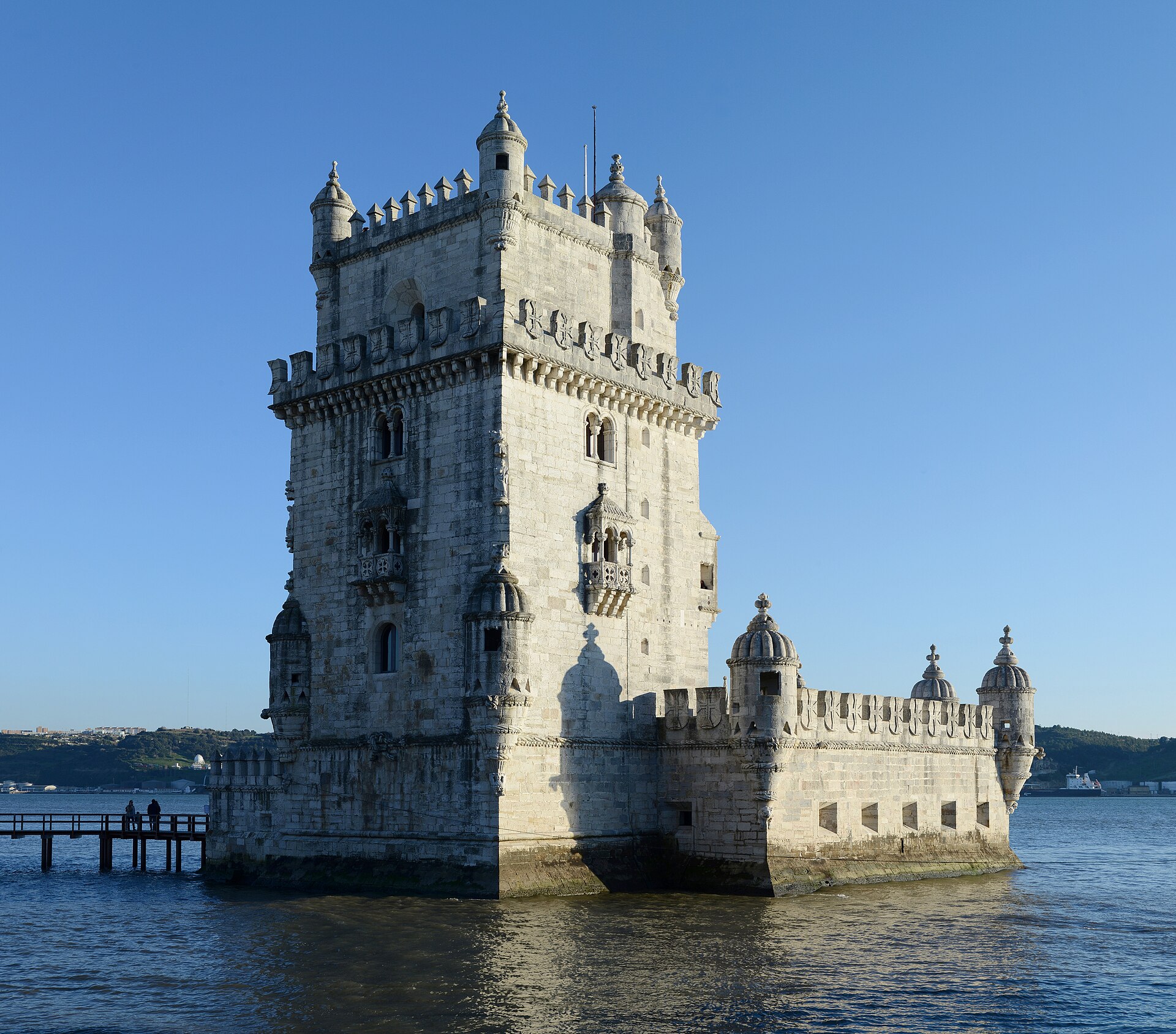
This is what happens when a city takes a postcard out of circulation. The tower is compact—almost toy-like beside the river—but it carries an outsize share of Portugal’s image abroad. Built between 1514 and 1520, it was part fortress, part ceremonial gateway, a knot of Manueline stonework tied to the country’s maritime expansion. UNESCO inscribed it with the nearby Jerónimos Monastery in 1983. In 2024, 387,379 people entered the tower, making it one of the most visited monuments managed by Museus e Monumentos de Portugal.
Then the turnstile stopped. The closure revealed the bargain underneath mass tourism: the more successfully a monument becomes an icon, the less often it gets to rest. Salt air, river humidity, wind, rain, biological growth and hundreds of thousands of bodies do not arrive one at a time. They accumulate. A five-century-old building can look eternal right up until specialists decide it cannot wait another season.
A €1.13 million hinge
The tower’s job was not a cosmetic wash. Lisbon’s announcement called it the first comprehensive conservation and restoration campaign in roughly 25 years; the reopening account was more exact, describing the first deep intervention since 1998. The €1,134,981.43 allocation covered conservation across the exterior and interior, from weathered stone and decorative elements to the rooms visitors squeeze through.
Behind those visible surfaces came the quiet infrastructure that keeps heritage alive: energy systems, fire detection and security were updated through all five floors of the tower and the bastion’s three levels. This is the unromantic half of preservation, and arguably the decisive half.
A restored carving makes the photograph. A modern fire alarm helps ensure there is something left to photograph.
The tower reopened to the public in May 2026 after an investment officially described as more than €1 million. That matters because the original planning sheet did not promise a public opening date. It forecast the formal receipt of the work in the second quarter of 2026. The distinction is easy to miss: a contractor handing over a site and a museum admitting visitors are related events, not the same event. Here, they landed close together. Elsewhere in the programme, they did not.
The museum that had to lose a floor
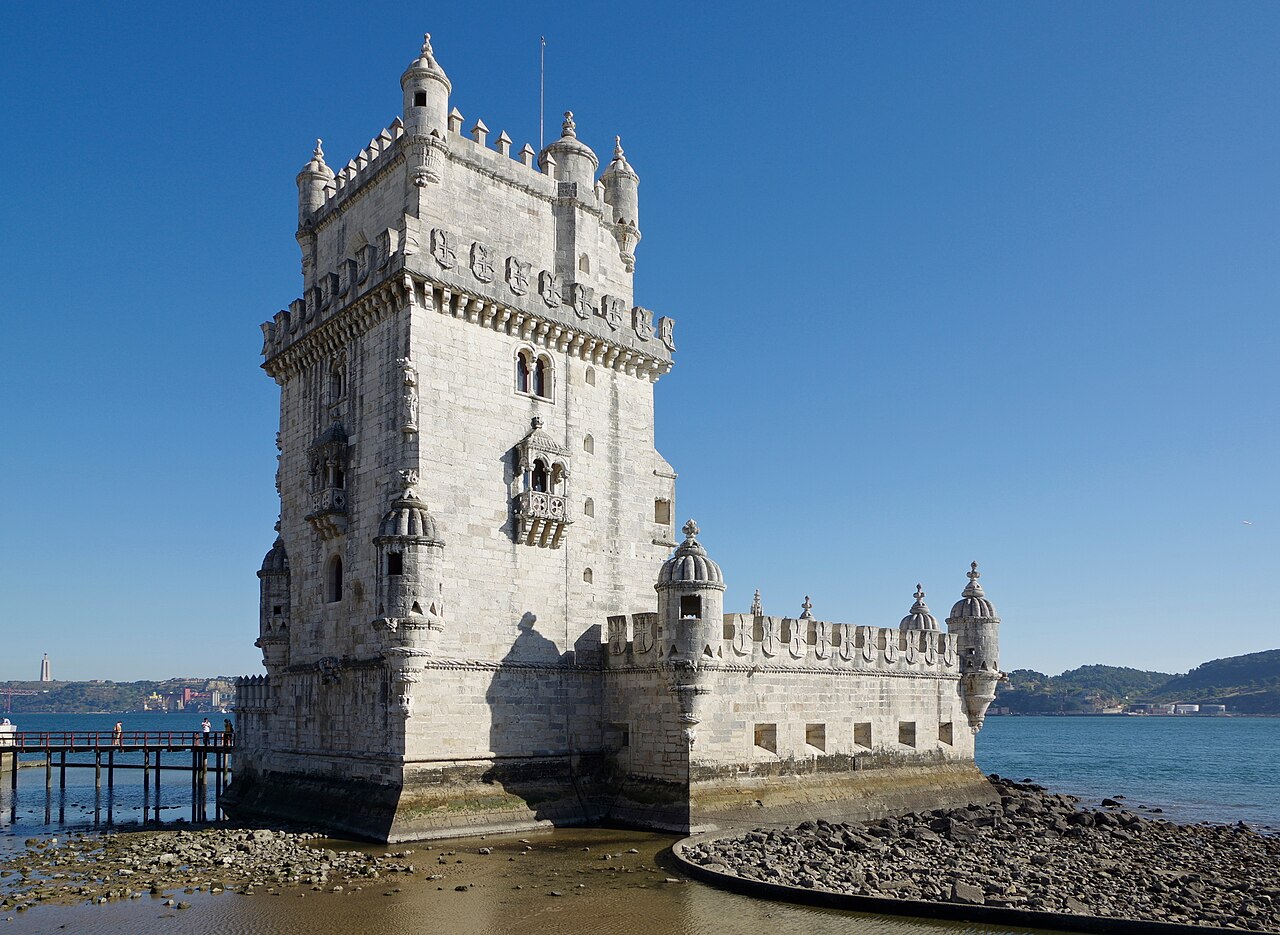
A short walk away, inside the Jerónimos complex, the National Archaeology Museum offered the programme’s most literal image of renewal: before a stronger floor could exist, the old one had to come out.
Phase 1 of the museum’s requalification included demolition of the second-floor slab, followed by structural reinforcement designed to increase its load-bearing capacity. That phrase—load-bearing capacity—is the whole story in miniature. Museums do not merely display the past. They ask old buildings to carry modern crowds, cases, climate systems, security equipment and dense collections, all under tighter standards than the architects could have imagined.
At €19,035,678.66 in the July 2025 schedule, the Archaeology Museum was by far the largest single line in the 13-site Lisbon package: more than 29% of the itemised total. It was also one of the clearest examples of why a reopening date cannot be inferred from a construction deadline. The PRR table projected work receipt in the second quarter of 2026. Yet as of 26 September 2026, the museum’s own national ticketing authority still listed it as temporarily closed. The stone can be ready before the collection, route, interpretation and public operation are ready.
The number behind the number
Lisbon City Council framed the undertaking as €67 million guaranteed by the municipality, delivered through the Lisbon Tourism Association and funded by Portugal’s Recovery and Resilience Plan, or PRR. The July 2025 technical schedule tells a slightly sharper story. Its 13 Lisbon entries add up to €64,778,616.28. In public language, that became “about €67 million.”
That is not a gotcha. It is a reminder that programme totals move. Designs change. Contracts land above or below estimates. Money is reallocated. Later PRR revisions removed the Museum of Popular Art and National Museum of Ethnology from this particular Lisbon roster, restored the Anastácio Gonçalves House-Museum, and raised other allocations. By March 2026, the Lisbon Tourism Association’s revised list contained 12 sites and totalled €66,790,622.96.
The cleanest way to hold the original headline to account is therefore to freeze the frame: use the 13 sites and allocations published in July 2025, alongside the completion quarters then forecast, and separately report what a visitor finds now.
A budget is a snapshot. A locked door is a fact.
The 13-site ledger
This is the July 2025 programme snapshot behind the announcement. “Expected” means forecast receipt of works, not a guaranteed reopening. Access reflects the national operator’s listings checked on 26 September 2026.
| Site | July 2025 budget | Expected receipt | Visitor access |
|---|---|---|---|
| Jerónimos Monastery | €3,558,913.66 | Q2 2026 | Open |
| Museum of Popular Art | €4,294,289.70 | Q2 2026 | Open Later removed from roster |
| National Archaeology Museum | €19,035,678.66 | Q2 2026 | Temporarily closed |
| National Museum of Ancient Art | €7,318,895.09 | Q2 2026 | Temporarily closed |
| National Museum of Contemporary Art | €1,820,121.45 | Q2 2026 | Open |
| National Museum of Ethnology | €3,167,056.64 | Q2 2026 | Open Later removed from roster |
| National Tile Museum | €4,036,629.54 | Q2 2026 | Temporarily closed |
| National Museum of Theatre and Dance | €2,769,962.87 | Q2 2026 | Temporarily closed |
| National Costume Museum | €2,421,077.09 | Q2 2026 | Temporarily closed |
| National Coach Museum—Royal Riding School | €5,230,311.05 | Q2 2026 | Riding school closed |
| Ajuda National Palace | €8,680,764.09 | Q2 2026 | Open |
| National Pantheon | €1,309,935.01 | Q1 2026 | Open |
| Belém Tower | €1,134,981.43 | Q2 2026 | Reopened May 2026 |
Where the national operator states “temporarily closed” without publishing a reopening date, no date is inferred. The modern National Coach Museum is open; the historic Royal Riding School named in this programme is not.
Thirteen versions of the same problem
Read the ledger vertically and a pattern appears. The programme is not one giant restoration. It is 13 different arguments with age. At the Contemporary Art museum, the enemy was water entering through degraded roofs. At the Archaeology Museum, it was structural capacity. At Belém Tower, the solution moved from carved limestone to wiring, alarms and cameras without treating those categories as separate worlds.
The funding mechanism matters too. The municipality worked through the Lisbon Tourism Association, while PRR money—European recovery funding channelled through Portugal—paid the eligible investment. In other words, the institution that markets Lisbon helped execute the work needed to stop its attractions from being consumed by their own success. Tourism was not sitting opposite conservation at the table. It was one of the routes by which conservation happened.
But the timetable was severe. The July 2025 sheet clustered 12 of the 13 handovers in the second quarter of 2026. The Pantheon alone sat in the first. Such compression explains why closures rippled across the city and why later revisions reallocated money and swapped projects. Heritage work dislikes a stopwatch. Recovery funding comes with one.
What the scaffolding was really holding up
Belém Tower has always been a piece of stagecraft. It projects strength while floating delicately at the edge of the river. Its ropes, armillary spheres, crosses and watchtowers turn military architecture into a national signature. The recent rescue exposed the machinery behind that illusion. For the tower to seem timeless, a very modern chain of surveys, contracts, conservation science, electrical systems and public money must keep moving.
The building welcomed visitors again in May 2026. The larger rescue did not resolve so neatly. Several institutions remained closed in September, even after the quarter in which works had once been expected to be received. Others stayed open while interventions shifted around them. And the programme itself changed shape.
That messiness is not evidence that accountability is impossible. It is the reason accountability needs a ledger. The memorable number is €67 million. The useful numbers are the 13 allocations beneath it, the dates attached to them, and the status of each door. A city preserves its memory twice: first in stone, then in the public record of what it promised to do.
Sources & method
- Lisbon City Council — scope of the announcement, tower works and Archaeology Museum Phase 1.
- PRR technical schedule, July 2025 — 13 allocations and projected work-receipt quarters.
- PRR technical schedule, March 2026 — later programme changes and revised allocations.
- Museus e Monumentos de Portugal ticket list — public access status checked 26 September 2026.
- Belém Tower reopening notice and 2024 visitor totals.
- Lusa closure report — timing and the original one-year works estimate.
- UNESCO World Heritage Centre — history and 1983 inscription.