Leslee Dart was offered a choice of words. She could say she had resigned from PMK/HBH, the publicity firm where she had spent 23 years, or she could say she had been terminated. In a profession paid to consider how things sound, she chose the less comfortable version. Asked why, she gave a four-word answer: “Because it's the truth.”
It was November 2004. Dart had been president and chief operating officer. Now her employer was explaining her departure, and people accustomed to calling her about somebody else's predicament were calling about hers. A publicist had become the subject. Hollywood, which enjoys a personnel dispute almost as much as a premiere, had plenty to discuss.
The company that followed would become 42West. But before the new name, the partners and the acquisition, there was a revealing question: when the office disappears, what remains? In Dart's case, enough relationships remained to build another office. Her career offers a particularly concrete way to think about a business whose finished product is often somebody else's visibility.
A degree in publicity, a minor in looking
Dart grew up in Los Angeles and studied at the University of Southern California. She began in fine arts before moving toward public relations, graduating in 1976. Her eventual qualification combined a public relations degree from the School of Journalism with a fine arts minor. Pictures and explanations were already sharing space on the transcript.
After early corporate publicity work, she joined the Academy of Motion Picture Arts and Sciences in 1977. There she met Warren Cowan, the publicist who helped establish the modern Oscar campaign, and went to work at Rogers & Cowan. Cowan became a mentor. Agent Sam Cohn also helped introduce her to directors. The education continued through people who knew how the film business operated between the formal appointments.
She joined PMK in 1981 and moved to New York to run its office in 1983. With Pat Kingsley and Lois Smith, she became an owner in 1985. These were years of accumulated introductions: actors, filmmakers, journalists, executives. New York gave her a different daily geography from Hollywood, while keeping her inside its conversations.
A publicist working with filmmakers needs to understand more than when a movie opens. A director may want to discuss the work in detail; an actor may need room to avoid discussing everything else. The same interview can look like an opportunity from one chair and an intrusion from another. Dart built a career sitting between those chairs.
One story before all the other stories
Her campaign for the 1999 film The Talented Mr. Ripley gives a glimpse of the method. Dart sought a substantial early piece that could help establish how the film was understood. She approached Frank Rich, who saw two edits and spent hours with director Anthony Minghella. The arrangement supplied unusual access without giving her control of his judgment.
There is something appealingly old-fashioned about the ambition: find someone who can explain a complicated film, then give him time with it. A publicity campaign can look like an eruption of interviews. This approach treated the first serious interpretation as a decision worth making carefully. The order of the conversation mattered.
Another measure of the range is simpler. By 2019, her professional biography credited her with directing publicity campaigns for more than 300 films and television shows. Her client history includes Tom Hanks, Meryl Streep, Nicole Kidman and Martin Scorsese. These names represent different careers and different relationships with public attention; one fixed set of talking points would have been a poor fit.
In 1995, she advised Hugh Grant to face Jay Leno on The Tonight Show after his arrest. The episode became a widely remembered example of a star answering publicly at a moment when withdrawal might have seemed inviting. Dart's work could involve arranging attention, but it could also involve deciding when a client should walk straight into it.
The clients knew whom they were hiring
By the time of her departure, PMK had been acquired by Interpublic and merged with HBH. Corporate accounts offered fees that film work struggled to match. Dart had corporate clients herself, yet her attachment to filmmakers remained central. A dispute about leadership unfolded inside a business whose financial priorities were changing.
After the firing, clients including Wes Anderson and Mike Nichols prepared to follow her. Support arrived publicly from people accustomed to having their public remarks managed. Dart did not need to turn every expression of loyalty into a speech of her own. For a professional advocate, there must be a certain satisfaction in discovering that other people can make the case.
She launched The Dart Group in 2004. Amanda Lundberg joined a few months later; Allan Mayer joined the partnership in 2006, when the business took the name 42West. The company moved beyond the story of one publicist's departure and into the less cinematic work of building an agency with several kinds of expertise.
That development is easy to overlook because the firing makes such a tidy opening scene. Starting a firm with established clients helps explain its beginning. It does less to explain how that firm keeps working years later. Film campaigns, individual careers and corporate communications require different schedules, different judgments and people capable of taking responsibility for them.
When the invitation becomes the argument
Dart was describing a change in her occupation as early as 2006. Celebrity information could travel within minutes, propelled by websites and camera phones. She spoke of a job increasingly concerned with protecting clients, and of the need to respond faster. The window for deciding what to say had become considerably smaller than the window for regretting it.
“There is an element to our job now that's protecting as opposed to publicizing.”
Leslee Dart, 2006
Her work for Woody Allen exposed the conflict inside that protective role. In 2016 she barred The Hollywood Reporter from a Cannes lunch connected to Café Society, after it published Ronan Farrow's essay criticizing the protection surrounding Allen. The lunch invitation itself became news. A decision about access turned into a public argument about who gets to ask questions.
The dispute belongs in any account of her influence. A publicist's responsibility to a client can collide with a journalist's responsibility to readers. The person arranging access has something valuable to offer, especially when her other clients are people editors also want to cover. That gives an invitation a weight far beyond lunch.
The 2021 documentary series Allen v. Farrow brought renewed scrutiny to her publicity work around Allen, who denies Dylan Farrow's allegation of sexual assault. Critics examined how established relationships between representatives and reporters could discourage difficult coverage. Her career contains both the clients' appreciation of her advocacy and the objections of people who encountered its boundaries.
The evening the publicist got the award
In 2009, New York Women in Communications gave Dart its Matrix Award for public relations. Jeff Zucker presented it at the Waldorf-Astoria. The event brought together people from journalism, advertising and entertainment, an unusually suitable room for someone whose working life connected those occupations.
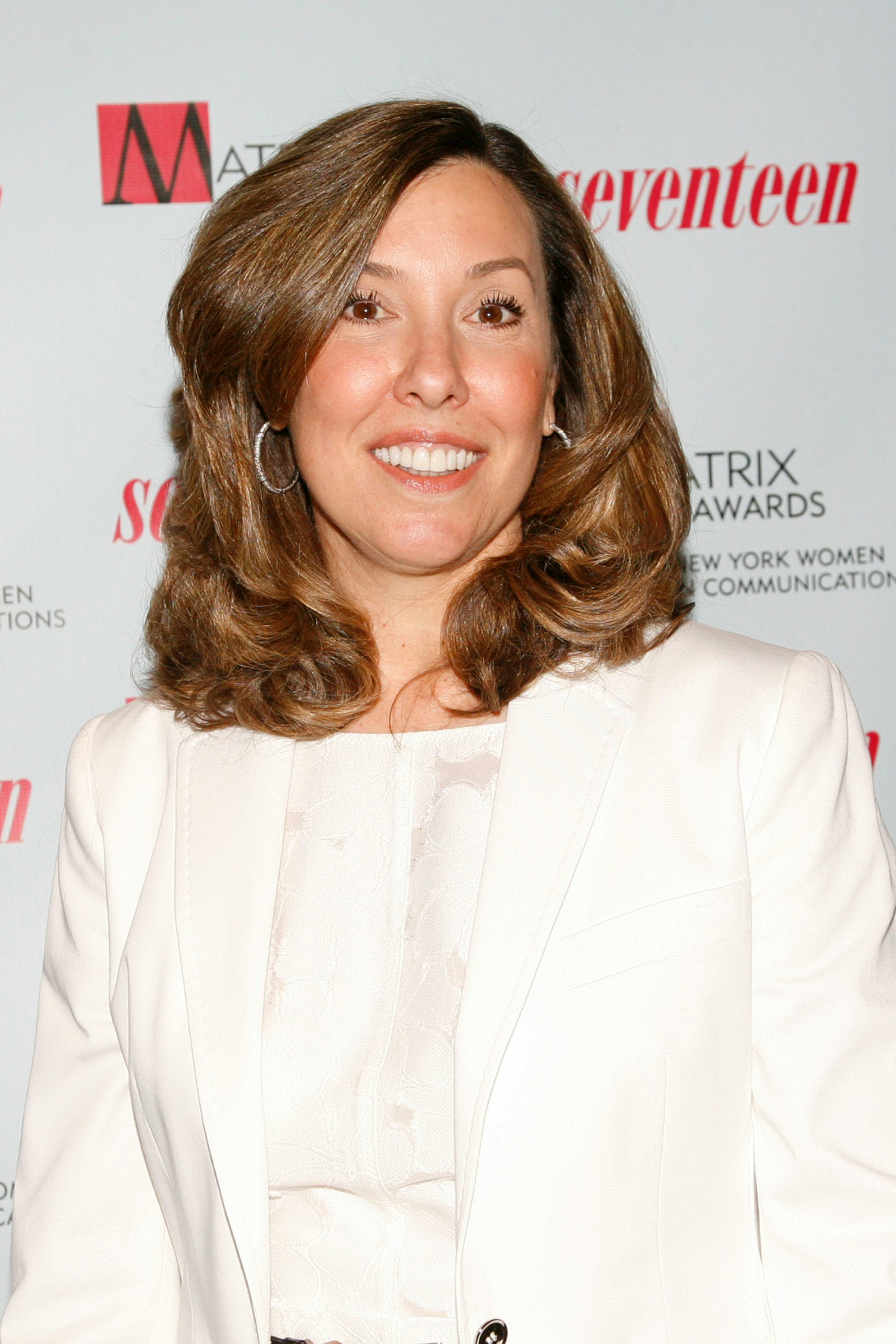
Her place in that room had been earned through work that rarely puts the practitioner's name on a film poster. Publicity leaves a peculiar record: the interview appears, the actor answers, the film gets discussed. The arranging is largely invisible. An industry award briefly reverses the direction of attention.
She also appeared on recognition lists assembled by PRWeek and by Nikki Finke for Elle. The latter placed her among women who had established their own publicity businesses. The shared detail was ownership. Dart had spent years helping other people navigate their careers before becoming responsible for the company through which she did it.
A company sale, then a different chair
On March 30, 2017, Dolphin Digital Media acquired 42West. The announced consideration was approximately $28 million in stock, including up to $9.3 million dependent on performance. Dart, Lundberg and Mayer continued in their leadership roles. The agency became part of a larger company while its existing team kept running the work.
Announced total: approximately $28m, including the performance component.
In March 2020, Dart moved out of the co-CEO role to become a senior advisor at Dolphin; Lundberg became 42West's sole CEO. Dart described wanting to keep working on strategy for her clients while helping the wider group grow. Her description of Lundberg was warmly personal: “the sister I never had.” It was a concise acknowledgment of a partnership that had lasted through the company's changes. Dart retired from the business in 2021.
There was another side to that working identity. Dart married music executive Michael Leon in 1996. At events he enjoyed calling himself “Mr. Dart,” even using “mistadart” in his email name. When she was asked in 2004 whom she would hire as her own publicist, she chose him. The person accustomed to giving counsel had someone she trusted to give it back.
The career that began with introductions in Los Angeles became a business built around relationships in New York, then a founding stake in an agency serving both coasts. The public record is crowded with famous clients, but the revealing moment remains the one in which Dart had no title to hide behind. She said she had been fired. People who wanted her counsel kept calling.
Continue the conversation
Interviews, career records and the firms in her story.