The reviewers were jumping up and down. At JPL, in an anechoic chamber, a prototype instrument was picking up the movement of the slab beneath them. Leon Alkalai and his colleagues were trying to win a mission to map the Moon's gravity. A demonstration of tiny changes in distance had acquired a rather human input: people bouncing on the floor.
Alkalai later recalled assembling the demonstration with spare GRACE hardware and new prototype equipment. The lunar proposal needed to persuade people who would have to trust it with public money. Watching a signal respond to their own movements gave those reviewers something a diagram could not. For once, the committee was part of the apparatus.
There is a useful introduction to Alkalai in that scene. His career includes computer architecture, planetary mission proposals, strategic planning, investing and company formation. Across those jobs, the recurring task is making a promising idea specific enough for other people to back, build and use. Space provides particularly unforgiving conditions for that task. A persuasive paragraph has no way to repair an instrument once it has departed.
Before the Moon, the computer
Alkalai earned his UCLA doctorate in 1989 and spent the next 32 years at NASA's Jet Propulsion Laboratory, managed by Caltech. His doctoral work concerned computer architecture; his dissertation examined architectural support for functional programming languages. His LinkedIn education entry names Miles Ercegovac and Tomas Lang as his advisers and lists tennis and ping-pong among his activities. The space entrepreneur began with a computer scientist's questions.
By 1999, he was leading JPL's Center for Integrated Space Microsystems. The work concerned smaller, lighter avionics and advanced computers for deep-space applications. A flight computer that could shrink toward the size of a dime was among the questions being explored. Engineers were also studying biological models for robotic control. The ambitions were broad, but the pressure was practical: spacecraft carry the mass of every design decision.
Another collaboration brought him together with Caltech professor Shuki Bruck on RAIN, a distributed, reliable computing project. Bruck knew Alkalai's brother and met Leon socially. The two wrote a proposal that attracted NASA and DARPA funding. Their prototype explored systems that could keep working when individual components failed. In demonstrations, wires could be disconnected while the system reorganized. Years before Sophia, Alkalai was already working at the meeting point of commercial computing and the demands of space.
JPL career begins
Mandala founded
founded in June
Two spacecraft, one scientific argument
GRAIL moved that work into mission formulation. The Gravity Recovery and Interior Laboratory launched on September 10, 2011. Its twin spacecraft, Ebb and Flow, flew around the Moon and measured changes in their separation to map the lunar gravity field. When Earth disappeared behind the Moon, the spacecraft continued communicating with each other. The resulting measurements helped scientists investigate the Moon's internal structure and evolution.
The proposal drew on GRACE, an Earth-orbiting gravity mission. GRAIL project manager David Lehman later credited Alkalai with championing the lunar adaptation and bringing Maria Zuber and David Smith into the effort. Zuber led the science team. Alkalai managed the proposal and capture effort through both stages of the competition. Getting a mission selected required the science, spacecraft design and cost argument to hold together.
Smith remembered Alkalai as capable and responsive to what the scientists wanted. His account offers a small but telling detail: Alkalai was comfortable with Zuber exercising scientific leadership. This was a collaboration in which different people had different authority. The successful proposal depended on those responsibilities fitting together, much as the eventual spacecraft depended on their instruments and communications.
A lunar gravity map sounds remote from ordinary life, but the organizational problem is familiar. Somebody wants to discover something. Somebody must show how to do it. Somebody will ask what it costs. An idea becomes a mission when those conversations converge. The launch is the visible event; much of the work that makes it possible happens around tables long before a rocket appears.
The job before the launch
Alkalai also led the capture effort for InSight, selected in 2012. That year marks the mission's selection, not its arrival at Mars. The lander launched in May 2018 and touched down that November. Its scientific focus was the planet's interior: crust, mantle and core, investigated through measurements including seismic activity. GRAIL and InSight put Alkalai's proposal work behind two different ways of looking beneath a world's surface.
His biographies record NASA Distinguished Individual Achievement medals in 2011 and 2019 for those efforts. He was elected a JPL Fellow in September 2014. Later responsibilities included strategic partnerships and planning for the laboratory. These are roles that ask an engineer to keep several horizons in view, from the next technical requirement to the institution's longer-term direction.
His blunt formulation of proposal work was: “if you're going to build it, you've got to win it first.” The sentence gives the preliminary job its proper weight. Winning a competition creates obligations. It commits a team to deliver something that once existed chiefly as an argument. A good proposal needs enough imagination to earn attention and enough restraint to survive implementation.
“if you're going to build it,
you've got to win it first.”Leon Alkalai, on mission proposals
Retirement, with a founding team attached
In early 2021, Alkalai retired from JPL and created Mandala Space Ventures in Pasadena. He became its founder and CEO and a general partner at its affiliated Explorer-1 Venture Fund. The studio's first venture was Continuum Space Systems, a software company for the space economy. His new work gave company formation a central place beside technology development.
Mandala describes its work in three parts: incubation, technical and strategic advice, and acceleration. Its incubation process assembles founding teams around intellectual property from research institutions including Caltech and JPL. Its support ranges from mission architecture and systems engineering to business strategy. Its portfolio includes Sophia Space, propulsion developer Viridian Space Corporation and Specter Aerospace, which develops scramjet technology.
That breadth gives Alkalai a different kind of engineering problem. A company needs a team, customers and a way to finance its work alongside an invention. A venture studio tries to bring those pieces together early. The proposal-builder's experience has an obvious application here: a technically interesting project still needs people willing to take responsibility for the next stage.
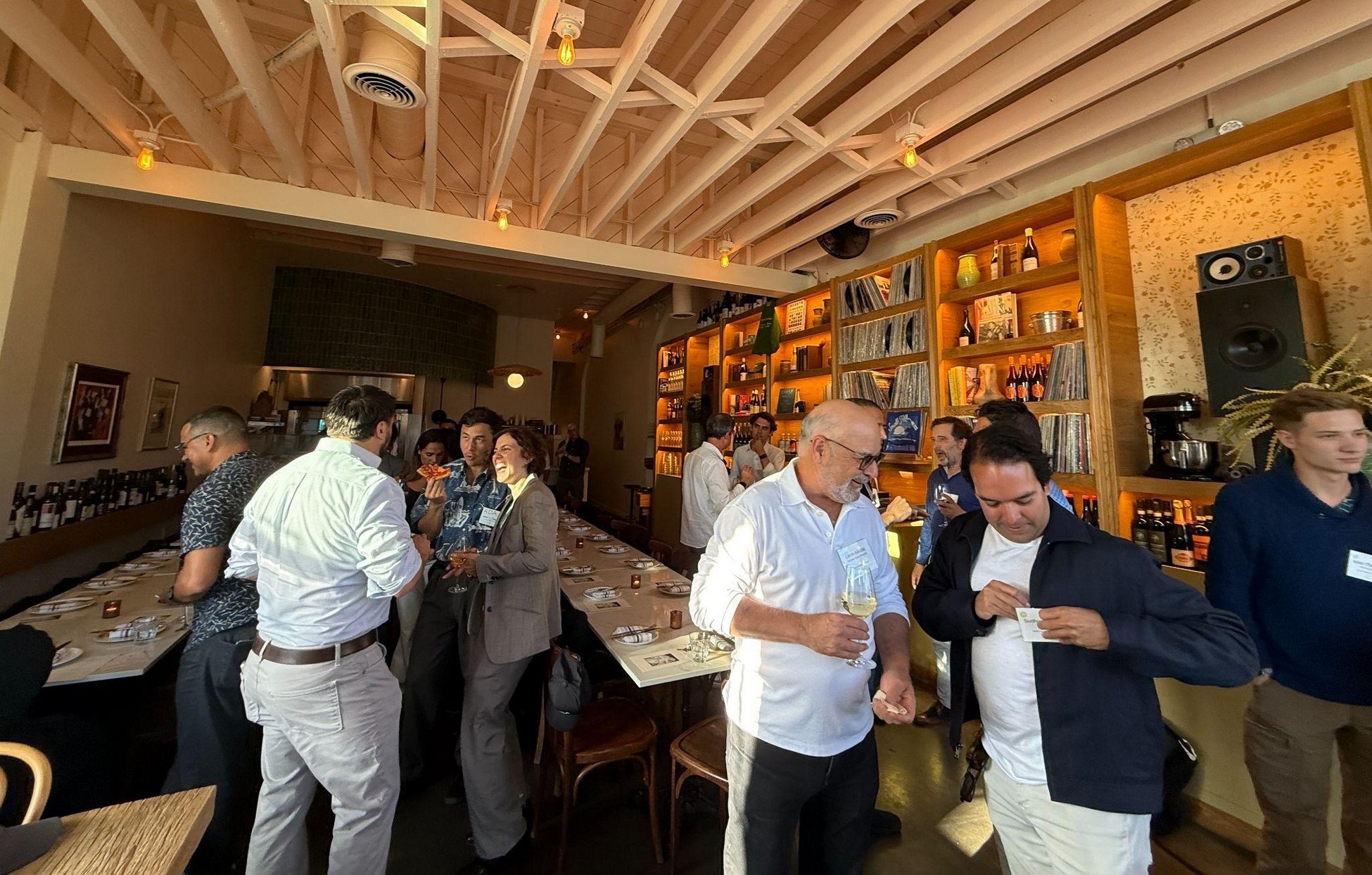
There is a less formal side to that work. In July 2026, Mandala brought founders and investors together at Companion in Los Angeles. The dinner emphasized conversation rather than panels or pitches. The photograph has the agreeable untidiness of an actual gathering: people talking, plates waiting, name tags doing their modest work. An emerging space economy still needs somewhere on Earth to sit down.
A server changes the destination
Sophia Space was founded in June 2023 to commercialize a computing architecture developed through JPL research. Its technical ancestry also includes Caltech's Space Solar Power Project. The change in application was consequential. Solar-power research asked how energy gathered in orbit might be transmitted to Earth. Sophia pursued the possibility of using that energy for computing in orbit and sending back data.
The July 2026 patent announcement named Alkalai among seven inventors, alongside John Brophy, Sergio Pellegrino, Jonathan Sauder, Timothy McElrath, Douglas Sheldon and Don Hunter. Sophia and Caltech jointly own the patent. The company also announced further sponsored research with Caltech on lightweight deployable structures and thermal management. Alkalai's venture remains connected to the research network from which the architecture emerged.
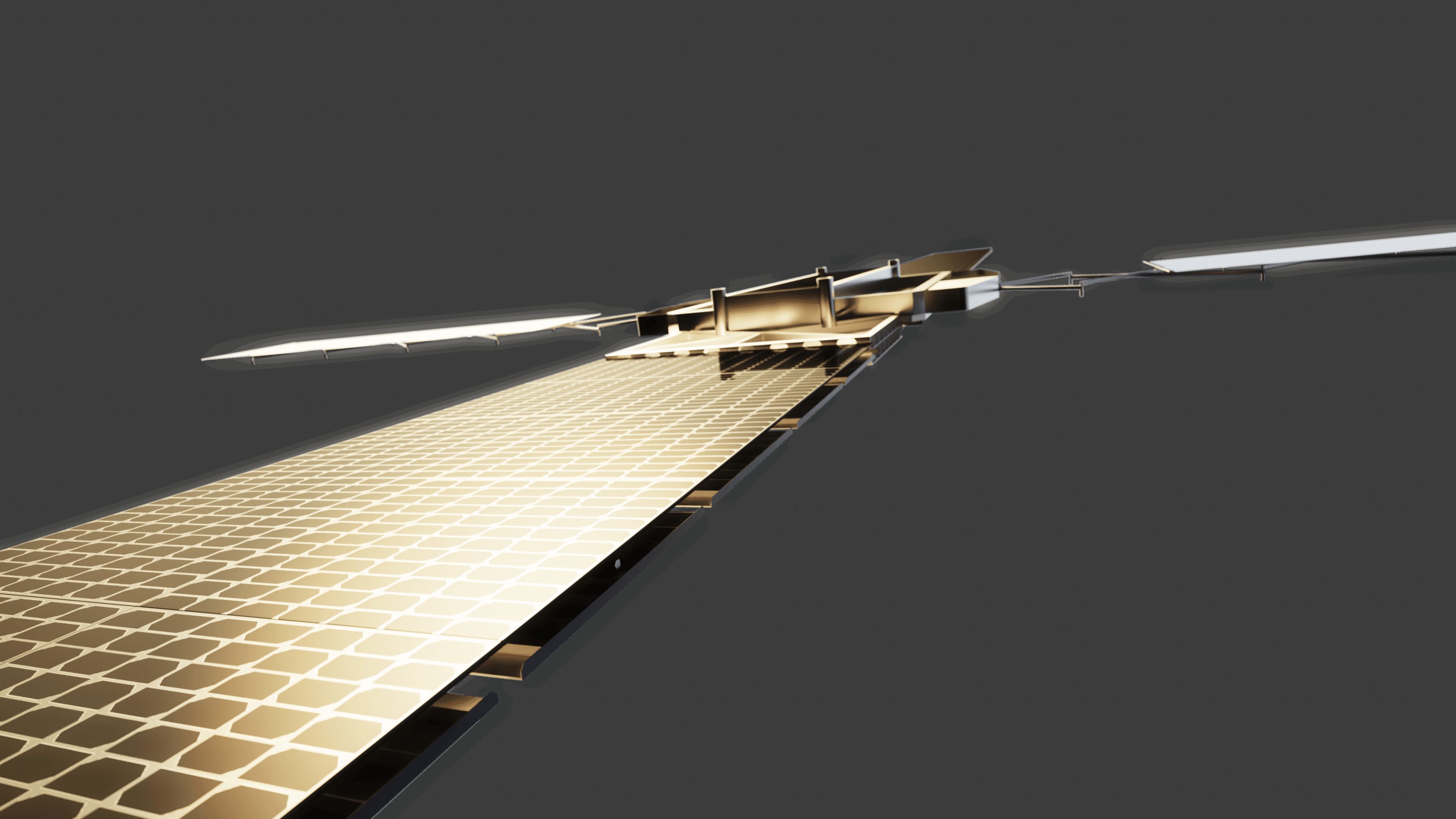
TILE stands for Thermal Integrated LEO Edge. The modules combine computing, solar power and passive heat rejection in a flat architecture. The shape has a purpose. Processing generates heat, and a vacuum removes the option of carrying that heat away with surrounding air. “Cooling in space is not simple,” Alkalai explained. The design must radiate its waste heat away.
At a Seattle Tech Week fireside chat in July 2026, he described the tiles as independently powered, connected through optical fiber to share data. He also described licensing as a possible business for the architecture. Invention, in this account, has several routes to use: Sophia can build systems, sell components or enable others to adopt the approach. The patent is part of that commercial plan.
The payload is an answer
The immediate use case is orbital edge computing. Satellites collect data in space; Sophia aims to process it close to where it is generated. For applications such as Earth observation, the desired output is a useful result delivered sooner. The architecture changes where the work happens within the path from sensing to decision. An orbital computer has to earn its ride by making that path more useful.
Sophia announced a $3.5 million pre-seed round in May 2025, followed by a $10 million seed round in February 2026. By June, it reported $22 million in total funding alongside another $7 million SAFE financing announcement. Those are company financing figures, and belong to the enterprise Alkalai helped found.
The June announcement also named Apex as the spacecraft-platform partner for a 2027 TILE demonstration aboard a Nova bus. In August, Sophia selected Rotterdam-based Spherical to supply the electrical power system and battery architecture for its Athena demonstration. The later announcement specified a target of the fourth quarter of 2027. These choices put separate responsibilities around the compute technology: a bus to carry it, power hardware to support it, and a flight to test it.
The scale of the ambition grew in September. Sophia announced a $300 million asset-financing framework with SLI for a planned ten-satellite constellation, with launches scheduled as early as 2028. The structure was outlined in a non-binding letter of support. It envisions SLI buying spacecraft and leasing them to users. A framework establishes a proposed route to deployment; its satellites and services still lie ahead.
Athena demonstration target, as announced in August 2026. Apex: spacecraft bus. Spherical: electrical power system. Sophia: TILE computing architecture.
The next demonstration
On September 30, 2026, Sophia and Redwire announced a memorandum of understanding to explore work on deployable structures, spacecraft integration and scalable orbital computing systems. The possible collaboration spans near-term demonstrations and longer-term infrastructure. It adds another set of engineering capabilities to the network around Alkalai's computing architecture.
The pattern is recognizable from his earlier career. A mission or a company needs more than the person who proposed it. Scientists, engineers, managers, suppliers and backers have to agree on enough of the same future to start working. The interesting part of Alkalai's trajectory is how often his job has placed him at that point of agreement.
His 2021 personal-journey presentation traced an origin to Apollo 11 and Belgrade in 1969. It also made room for Jules Verne, Isaac Asimov and Arthur C. Clarke. There is room in the same career for fictional worlds and electrical power requirements. The authors supply imagined destinations; engineering supplies the long list of conditions attached to getting there.
For Sophia, the next destination is a demonstration in orbit. A patent can describe the architecture. A partnership can allocate the work. A financing plan can make a proposed fleet conceivable. The hardware will have its own contribution to the conversation. Somewhere between the Sun, a processor and the heat leaving a tile, Alkalai's next idea must show what it can do.
Keep the conversation going
- Sophia Space
- Leon Alkalai on LinkedIn
- Mandala team and studio
- His personal journey, in slides
- GRAIL recollections
- David Lehman on GRAIL
- David Smith on the proposal team
- Early microsystems work
- Shuki Bruck on their computing collaboration
- GRAIL mission
- InSight mission
- Sophia and Caltech patent announcement
- Seattle Tech Week conversation
- Apex demonstration and financing
- Athena power-system partner
- SLI financing framework
- Redwire memorandum
- Mandala founders dinner
- 2025 pre-seed announcement
- 2026 seed announcement
- Listen: The Venture Studio
- Watch: Space Foundation interview
- YouTube: How Do Our Orbital TILEs Work?