Profile / Scientist - Engineer - Founder

Lee Lynd

He chose a bacterium that prefers tea-kettle temperatures and stayed with it for thirty-eight years. The reward looks like a Hanover lab that doubles as a refinery, and a startup that wants to fuel airplanes with corn stalks.
Co-Founder & CTO, Terragia Biofuel Queneau Distinguished Professor - Dartmouth Hanover, NH
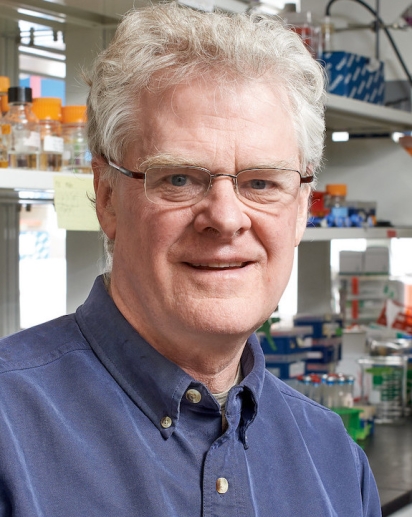
Lee Lynd portrait The professor who keeps a thermophile on speed-dial.
// Dispatch

One pot. Hot bugs. A planet's worth of crop residue.

Lee Rybeck Lynd does not have the resume of a man who likes to change subjects. Four academic degrees, three of them from Dartmouth. One faculty appointment, held since the year his doctorate was conferred. One microbe, Clostridium thermocellum, that has appeared in his publications for so long it deserves co-author credit. And one idea - consolidated bioprocessing - that took the messy four-step path from cornstalk to ethanol and folded it into a single tank.

The new thing he is building, Terragia Biofuel, is the commercial bet that the idea is finally ready. It sits in Hanover, New Hampshire, around the corner from the Thayer School of Engineering, with $6 million of seed capital from Energy Impact Partners and The Engine, and a target market that is unmistakably hard: aviation, marine, long-haul trucking. The sectors that batteries cannot reach.

Why Lynd, and why now. The cellulosic ethanol industry has been ten years away from working for about thirty years. Most of the companies that promised otherwise are gone. The ones that remain learned a brutal lesson about capital intensity. Lynd's answer is not a louder press release. It is fewer steps in the factory.
// The Idea

What consolidated bioprocessing actually does

Conventional cellulosic ethanol

Step 1
Pretreat biomass
Step 2
Produce enzymes off-site
Step 3
Hydrolyze sugars
Step 4
Ferment to ethanol
4 unit operations, 4 lines on the P&L

Lynd's consolidated bioprocessing

Step 1
Pretreat biomass
Step 2
Produce enzymes
One pot
Thermophile makes its own enzymes & ferments
Add
Mechanical co-treatment in the tank
Two unit operations vanishThe bug does the rest

The microbe of choice is Clostridium thermocellum - a heat-loving anaerobe that grows around 60 degrees C and secretes its own cellulose-cracking complex. Lynd's team engineered it, then asked a smaller and sneakier question: what if, while it is fermenting, you gently grind the biomass inside the same vessel. Co-treatment, they call it. It is the kind of refinement that does not make a magazine cover, but it is the difference between a pilot and an industry.

// Numbers

The career, as a back-of-envelope

300+Peer-reviewed papers
42KCitations
88h-index
23Granted patents
$6MTerragia seed (2024)
1987Year he joined Dartmouth
60°CC. thermocellum happy temp
2Companies spun from his lab
"Consolidated bioprocessing is widely considered the ultimate low-cost configuration for cellulose hydrolysis and fermentation." - Lee Lynd

The line reads like a sales pitch. It is closer to a thesis statement. Lynd has spent decades publishing the studies that put the qualifier in front of "ultimate." Now he is running the company that has to prove it.

// Origin

Poughkeepsie, then Maine, then a long stay in Hanover

Born in 1957 to socially active parents in Poughkeepsie, New York, he has told interviewers the household lesson was simple - pick a cause first and figure out the career afterward. The cause picked him at Bates College in the late 1970s, where he majored in biology. From there, an MS in bacteriology at the University of Wisconsin-Madison in 1981, then a hop east to Dartmouth's Thayer School for an MS in 1984 and a doctorate in 1987.

He never left. The Thayer faculty hired him out of his own dissertation, and he has been there ever since - now as the Paul E. and Joan H. Queneau Distinguished Professor of Engineering, with a second appointment as Adjunct Professor of Biology. He directs the Lynd Lab, runs the Consolidated Bioprocessing team for the U.S. Department of Energy's Center for Bioenergy Innovation at Oak Ridge, and steers the Advanced Second Generation Biofuel Laboratory at the University of Campinas in Brazil. The commute is unusual. The continuity is the point.

In 2006 he co-founded Mascoma Corporation, the first big bet on commercializing CBP. Mascoma did not become Exxon. It did teach a generation of biofuels engineers what the hard part actually is. Lynd took those lessons back to the lab. Seventeen years later, with co-treatment validated and a thermophile that finally behaves, he is trying again.

// Timeline

A linear life, mostly

1957
Born in Poughkeepsie, New York.
1979
BS in biology, Bates College.
1981
MS in bacteriology, University of Wisconsin-Madison.
1984
MS in engineering sciences, Dartmouth (Thayer).
1987
Doctorate of Engineering, Dartmouth - and immediately joins Thayer faculty.
1989
NSF Presidential Young Investigator.
2005
Charles D. Scott Award for distinguished contributions to biotechnology.
2006
Co-founds Mascoma Corporation to commercialize cellulosic ethanol.
2007
Wins the inaugural $100,000 Lemelson-MIT Sustainability Award.
2012
Elected Fellow of the American Association for the Advancement of Science.
2021
Receives the Charles Thom Award from SIMB.
2023
Co-founds Terragia Corporation in Hanover, NH.
2024
Terragia closes $6M seed led by Energy Impact Partners and The Engine.
// The Bet

What Terragia is actually trying to do

01

Skip steps

Replace pretreatment plus enzyme production plus hydrolysis with a single fermentation. Capex falls. Opex falls. The plant gets simpler.

02

Use the waste

Feed the fermenter with corn stover, sugarcane bagasse, perennial grasses. The carbon was already pulled out of the sky.

03

Aim where batteries cannot

Aviation, marine, long-haul. The hardest-to-decarbonize transport sectors are the most willing customers for a true drop-in fuel.

// Quirks

Things that are true and not in the press release

Three out of four

Three of his four degrees are from Dartmouth. He started in biology at a 1,700-student liberal arts college in Lewiston, Maine, and never quite stopped being a biologist with an engineer's tools.

Tea-kettle microbes

Clostridium thermocellum prefers temperatures around 60 degrees Celsius. That is hot enough to brew a respectable cup of green tea and, conveniently, hot enough to discourage most contaminating bacteria from showing up to the party.

Hanover - Campinas commute

He splits research life between New Hampshire winters and a sister biofuels lab in Sao Paulo state, Brazil - a country that already runs a cellulosic-curious sugarcane industry.

Two acts, same script

Mascoma in 2006. Terragia in 2023. Same scientist, same microbe, same thesis - now with seventeen more years of receipts.

// Policy

The professor who shows up to Washington

Lynd has testified before the U.S. Congress on biofuels and climate. He advised the Executive Office of President Clinton on reducing greenhouse gas emissions from personal vehicles. He has written and co-authored the field-defining surveys that any new biofuels analyst will encounter on day one. The career is not only in the fermenter; it is in the footnotes that policymakers cite when they argue about ethanol.

// Five things

to remember about Lee Lynd

  1. He stayed with one organism for nearly four decades.
  2. His big idea is subtractive - take steps out, not add features in.
  3. His chosen markets are the transport sectors that can't go electric.
  4. He learned at scale once, with Mascoma. He is trying again.
  5. The lab is in Hanover. The mission is global.
Plants are sunlight in solid form. A good microbe is a translator. - The Lynd thesis, in one line
// Links

Where to read more

Tweet Share on LinkedIn Facebook Instagram