Before Lauren Kleinman had a term for Performance PR, she had a recurring annoyance. At Ritual, where she was a founding-team member and vice president of marketing, the public-relations agency and the affiliate agency occupied adjacent parts of the same media world. Both wanted publisher attention. Both could touch the same story. Yet they behaved like distant cousins at a wedding: technically related, seated apart, occasionally competing over who had arrived first.
Kleinman was close enough to the work to see the waste. A glossy mention could burnish a brand, but the commercial afterlife of that mention was often someone else’s concern. Affiliate teams tracked links and sales; publicists prized the placement. The reader, meanwhile, experienced only one piece of content. The organizational chart had split a single moment into two invoices.
In 2019, after leaving Ritual, Kleinman founded Dreamday around the repair. The agency would merge earned media and affiliate marketing, making editorial attention legible as both reputation and action. She called the approach Performance PR. It was a tidy name for a slightly impolite idea: a press hit should not become exempt from scrutiny merely because everyone liked the logo at the top of the page.
“Building something sustainable means building something bigger than yourself - and that comes down to people, culture, and clarity.”Lauren Kleinman
The apprenticeshipFirst, stand near the machinery
Her route to that observation was unusually well sequenced. Kleinman studied communications and entrepreneurship at the University of Southern California. After college, she became the first employee at StartEngine, then an early employee at mobile-games company Scopely, where she led corporate communications and helped build functions around recruiting and people. At Ritual, she worked from the other side of the agency brief, helping with branding, packaging, positioning, PR and partnerships as the company took shape.
Seen backward, each job looks like a rehearsal. StartEngine offered the raw theater of a young company. Scopely showed her scale and the power of a corporate story. Ritual made the consumer-brand ecosystem vivid, including its seams. None of this required clairvoyance. It required proximity, memory and the mild stubbornness to keep noticing a problem after the meeting had ended.
Four rooms, one accumulating point of view
First employee. Early-stage building before the furniture had settled.
Early communications leadership inside a rapidly scaling games company.
Founding team and VP of Marketing. Brand, PR, partnerships and the agency gap.
Dreamday, followed by The Quality Edit and Quality Media.
There were earlier rehearsals, too, though the stationery was less impressive. Kleinman has written about running lemonade stands for charity, turning the family garage into a tutoring school and, with an uncle in import-export, selling Razor scooters, inflatable sofas and Tamagotchis when she was a child. She grew up among entrepreneurs. The instinct to spot demand arrived early; the vocabulary of conversion came later.
The useful collisionA publicist becomes the publisher
A year after starting Dreamday, Kleinman co-founded The Quality Edit and Quality Media. The first is a commerce publication built around product discovery; the second is a performance agency that uses content, creative, paid distribution and data. The move put her on the receiving end of the very pitches her first company sends. This is excellent occupational medicine. Nothing cures a vague pitch like having to open several hundred of them.
The companies created a closed loop. Dreamday could earn a story and manage the affiliate mechanics around it. The Quality Edit could show what publishers need from brands and which stories readers trust enough to follow. Quality Media could amplify content and study the response. Each business sharpened the others, but the underlying question stayed simple: what happens after someone pays attention?
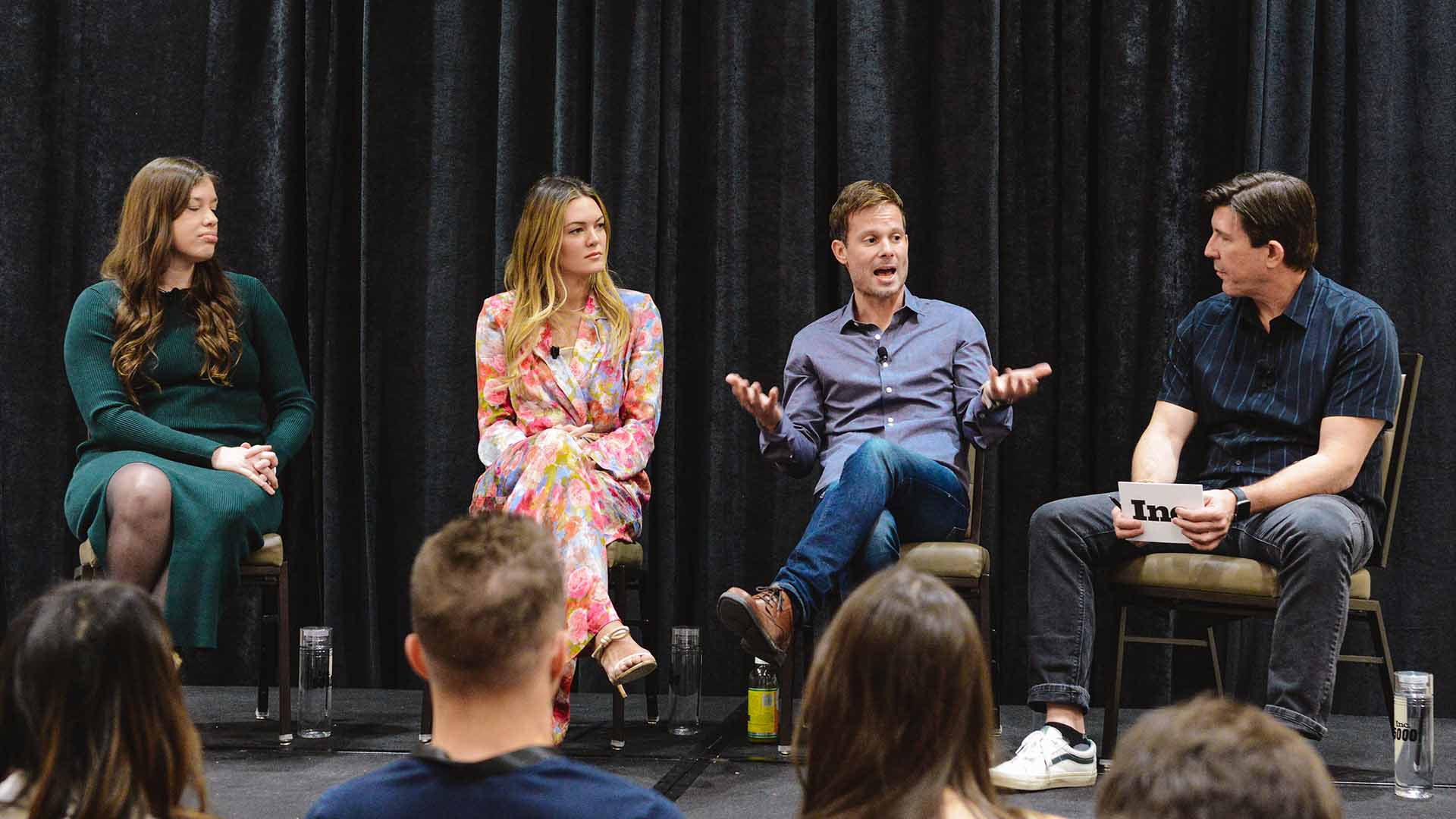
Dreamday’s growth gave the proposition institutional weight. The firm appeared on the Inc. 5000, ranking No. 719 in 2024, and earned recognition from Inc., Fast Company and industry organizations. In 2025, Dreamday and Quality Media both appeared on the Inc. 5000 and Adweek’s list of fast-growing agencies. Dreamday now describes its work more broadly across PR, affiliate, creators, influencer programs and generative-engine optimization. The label changed because the media surface changed. The instinct did not.
Those numbers are agency figures, useful but not magical. Kleinman’s more interesting claim is that measurement and taste do not have to be enemies. An affiliate link cannot tell you everything a story did. Nor does that limitation excuse everyone from checking whether it did anything. Performance PR lives in the tension: honor the editorial relationship, then follow the commercial evidence as far as it honestly goes.
The founder’s jobLearning to hand over the baton
In the beginning, Kleinman wore the predictable assortment of founder hats: sales lead, strategist, executor, recruiter and unofficial therapist. Bootstrapping Dreamday and Quality Media made frugality a design constraint. It also made letting go difficult. She has described her central early fear as hiring people, delegating and watching the original magic disappear in the handoff.
Her answer has been to define the magic less mystically. Dreamday’s published principles emphasize clients, detail, relationships, focus, candor and a lack of appetite for office theater. Kleinman says she leads with empathy and clarity, a pairing that understands kindness without directness is merely suspense. She has also acknowledged that carrying everything herself remains a habit to unlearn.
“I lead with empathy and clarity. I care deeply about our people - how they’re doing, what they’re capable of, and where they want to grow.”Lauren Kleinman
The company’s name contains the joke. Kleinman imagined her “dream day” after leaving Ritual: exercise, perhaps a hike or swim, a few agreeable client calls, then time with her children. Years into building the companies, she admitted that precise day had occurred perhaps once. What changed was her definition. A dream day became one with inspiration, people and brands she believes in, and the satisfaction of bringing an idea out of her head and into the world.
This is less photogenic than the hike, but sturdier. Founders often sell themselves a calendar when what they really want is authorship. Kleinman did not find fewer obligations. She found obligations she could arrange around a point of view.
The current chapterFrom measuring links to mapping AI
By 2026, the media system had fragmented again. Editors were building newsletters. Creators were becoming publishers. Consumers were asking AI systems what to buy. Kleinman’s public writing shifted toward founder visibility and generative search. Her argument is pragmatic: if a founder can develop a credible, durable point of view across columns, podcasts, posts and talks, that body of work keeps introducing the company long after a single announcement has vanished down the feed.
She practices the advice. The Founder Flow, her newsletter, mixes company-building with personal observation. Her Inc. column makes arguments about sustainable growth, modern PR and AI operations. The publicist became a publisher, then a columnist. Few people get to inspect the same inbox from so many chairs.
Where the agency mapped its AI opportunities
Her most revealing AI story begins at 11 p.m., with a laptop and an agency-wide client-health dashboard she was trying to wire together herself. Kleinman learned coding tools, built prototypes and eventually noticed that a founder’s curiosity could become an expensive substitute for staffing. Dreamday first used a consultant, trained the team, catalogued more than 100 potential use cases, formed an internal task force and then hired an AI engineer.
The sequence is classic Kleinman: get close enough to understand the system, measure the opportunity, then build a structure other people can run. Employees are expected to understand a task manually before handing parts of it to a machine. The tools sit inside documented processes. Team hackathons make adoption social rather than ceremonial. AI is treated as infrastructure, not confetti.
There is a neat echo here. Dreamday began because two agencies were failing to coordinate around the same story. Its AI work now asks how people and systems can coordinate around the same judgment. In both cases, Kleinman’s advantage is not the desire to automate everything. It is an impatience with gaps that everyone else has agreed to call normal.
What compoundsThe person on every side of the story
Kleinman’s career has put her inside the brand, beside the founder, across from the editor and under the byline. It explains why relationships and measurement coexist so comfortably in her vocabulary. She knows a story can be valuable before the dashboard proves it. She also knows romance is a poor reporting system.
Outside the agencies, she has served the Cayton Children’s Museum and judged the Boys & Girls Clubs’ Youth of the Year program; Dreamday and Quality Media formalized a philanthropic partnership with the latter. She mentors younger professionals and writes about building workplaces where people can grow. Her stated ambition is not merely to operate fast-growing companies, but to make them places employees remember as defining chapters.
The childhood merchant of Tamagotchis would recognize the founder: find an appetite, understand the buyer, make the offer. The adult version has better systems and much larger spreadsheets. Yet the durable part of Kleinman’s work is not a metric or a trademarked phrase. It is the habit of crossing the room. Brand to agency. Publicist to publisher. Founder to writer. Human task to machine assist, and back again.
A press clipping once arrived as proof the job was finished. Kleinman built her companies by treating it as the beginning of a more interesting question. The receipt matters. So does the reason anyone cared enough to buy.