There is a small piece of real estate between your thought and your message. You visit it to write a grocery list, answer a colleague, wish someone happy birthday, or search for the right reaction to a joke. On a phone, that place is the keyboard. Kika Tech looked at this plain rectangle of letters and saw something closer to a public square.
Its proposition was cheerful and practical: let people type quickly, in their own language, while putting emoji, GIFs, stickers and themes within thumb's reach. The resulting Kika Keyboard became a large consumer app. By June 2016, the company said it had passed 150 million downloads and 50 million monthly active users. The numbers deserve their dates. They describe a moment of rapid growth, not a live count of who is typing with Kika today.
The short version
- Kika builds an expressive keyboard for consumers and input software for device makers.
- Its early growth came from making typing personal, multilingual and easy to distribute through app stores.
- Licensing deals put film and football inside the keyboard; OEM deals made Kika a default input layer on some phones.
- Google removed Kika Keyboard from Play in 2018 after finding app install attribution abuse. A current listing is live.
The little screen beneath every app
Most apps ask users to come to them. A keyboard accompanies users elsewhere. Kika's product sat under WhatsApp, Facebook, email and search, turning an ordinary input tool into a recurring point of contact. The product still had to do the unglamorous work: prediction, autocorrect, swipe typing and layouts that felt comfortable on a small screen. If those failed, no licensed sticker could save the conversation.
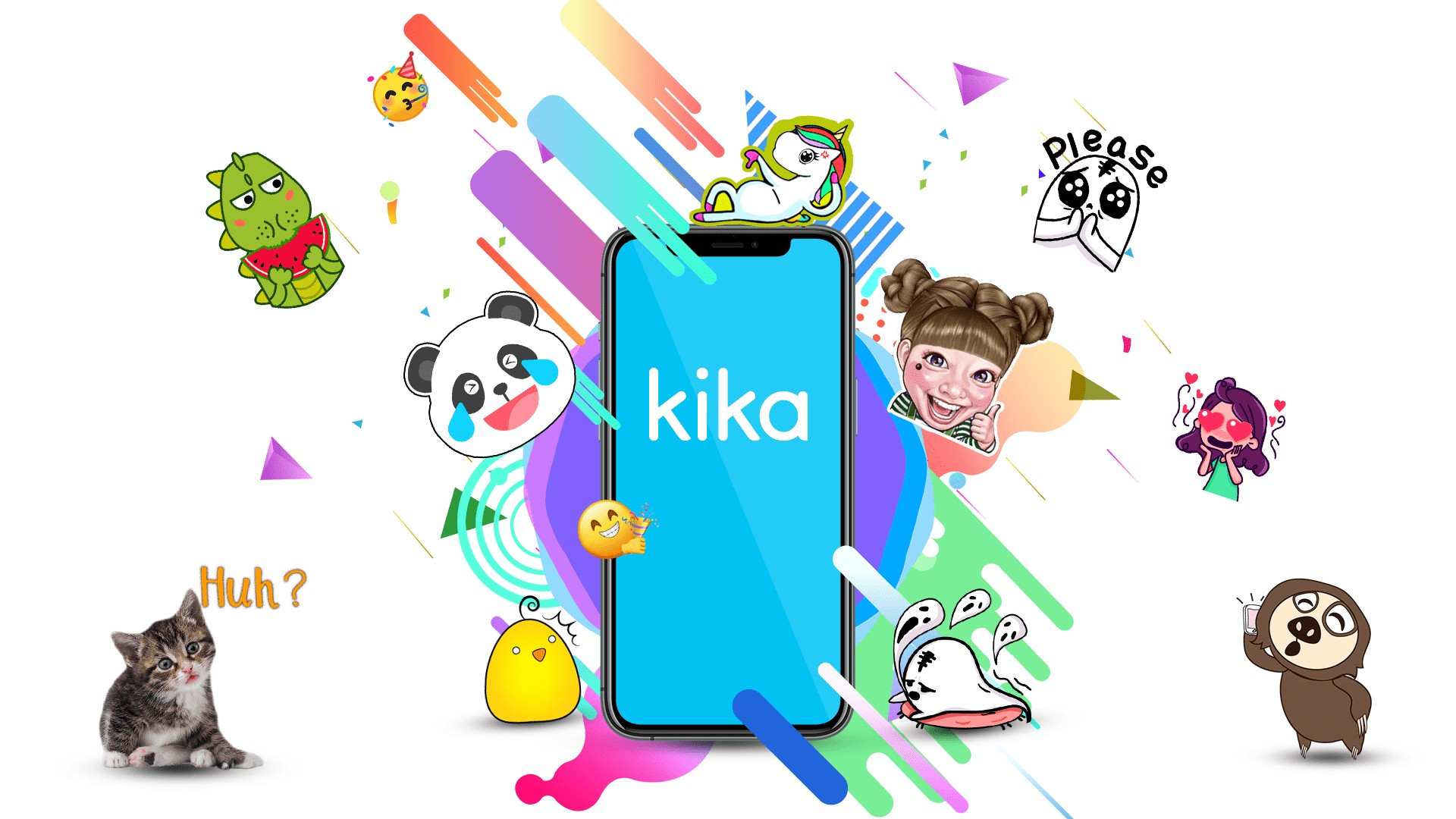
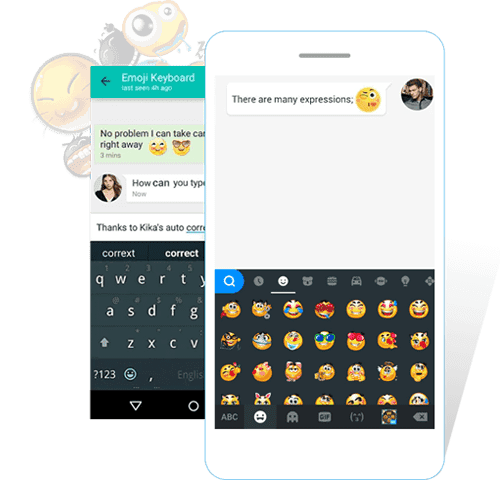
Kika layered expression over that utility. Its site describes thousands of themes, stickers and emoji, along with GIF suggestions and voice input. This was a different emphasis from the restrained defaults offered by an operating system. Kika treated a keyboard as something a person could dress, much as they might choose a phone case or a profile picture. The choice might be frivolous; the frequency of use was anything but.
A language is more than a translation
The best reason to install a new keyboard may be the simplest: the one on the phone does not understand you. Kika's company material advertised support for more than 150 languages. In a 2018 push into India and Southeast Asia, it said its customized keyboard supported 22 official and 18 non-official Indian languages, plus Indonesian, Javanese and Sundanese. Users could switch between local characters and Latin letters and use transliteration, the familiar habit of typing one script to produce another.
This is where the bright exterior concealed serious engineering. Hindi, Tamil and Urdu do not become useful on a phone by replacing English labels in a settings menu. They need layouts, prediction and correction that understand how people actually write, including the mixed scripts of everyday chat. Kika's appeal to handset makers rested on that work. In 2018 it named Xiaomi, Vivo, OPPO, Lenovo and Tecno as partners bringing its keyboard to users as a default. A download asks the user to choose you; a default arrives with the device.
“There has been a longstanding insufficient support of local languages in the burgeoning India and Southeast Asia mobile market.”Bill Hu, Kika CEO, 2018
The company also sells this expertise directly. Its Global IME service offers custom keyboards, fonts, handwriting and voice-input integration across several operating systems. The list of prospective devices is wonderfully odd: smart TVs, telematics systems, projectors, in-flight entertainment screens and kiosks. They all need some answer to the same question: how does a person put words into a machine with too few keys?
When the keyboard became a media shelf
Kika's content deals followed the same logic as its language work: put something useful or delightful at the moment someone is about to say something. GIPHY became its main GIF provider in 2017. Kika also named 21st Century Fox and Warner Bros. among its partners, and announced an exclusive Real Madrid mobile keyboard. Film characters and footballers were no longer confined to a separate branded app. They could appear where fans were already talking.
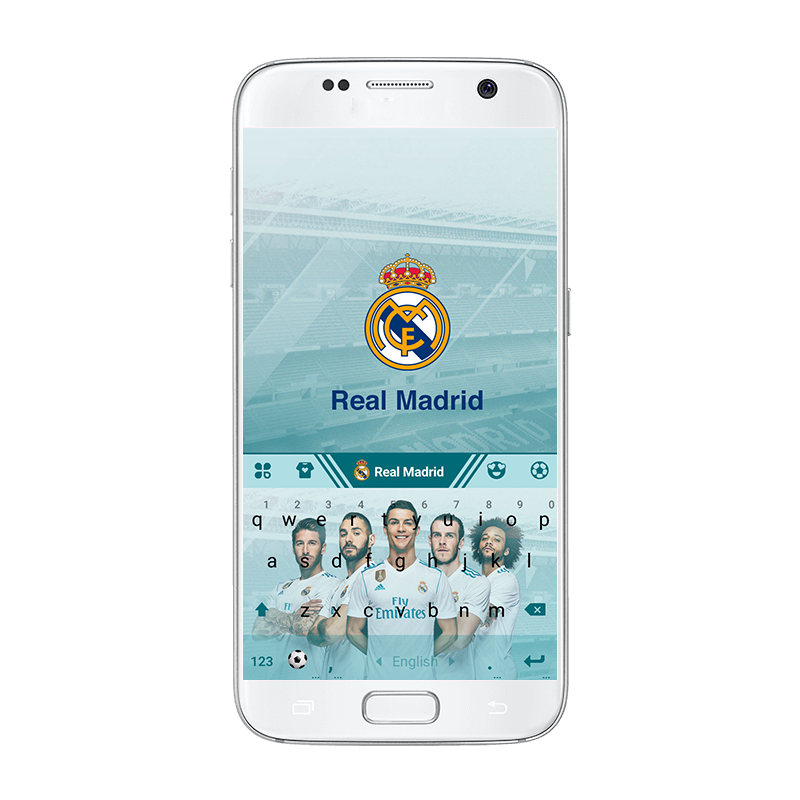
That arrangement served two customers. The person typing got quick access to a GIF or a club-colored theme. A brand got a repeated appearance in a high-frequency interface. Kika's partnerships page also pitches advertising, content and network arrangements, while its IME unit addresses manufacturers. The consumer app is free; the public material does not disclose what each commercial line contributes to revenue or what a manufacturer pays. The useful lesson is in the architecture, not an invented price tag: a popular utility can carry both services and media if the utility earns its place first.
The app store had the last word
A third-party keyboard is unusually intimate software. It runs where people type private thoughts and passwords, and users have to trust both the app and everything bundled into it. Kika encountered another kind of trust problem in December 2018. Following an investigation into app install attribution abuse, Google removed Kika Keyboard and a Cheetah Mobile app from Play. Google said it had found evidence of abuse in two apps and three ad-network software kits. Reporting at the time identified Kika Keyboard as one of the removed apps.
The abuse involved falsely claiming credit for installs of other apps, the event on which some mobile advertising payments depend. Google also said many developers using the implicated third-party kits might not have known about the behavior. That distinction matters. The public record supports the removal and the attribution finding; it does not, by itself, establish who at Kika knew what. The episode shows how an app's commercial plumbing can become as consequential as the experience on its screen.
A Kika Keyboard listing is available on Google Play today and showed an August 2026 update. The company has continued to describe its consumer keyboard and its OEM input service. The public trail does not explain the full route back to the store. What is visible is the strategic value of more than one route to the user: direct app downloads, default placement through phone makers and input software sold to other device categories.
What fits in the space bar
Kika's competitors include Gboard, Microsoft SwiftKey and the keyboards that arrive with a handset. Those rivals can offer excellent prediction and the enormous convenience of being preinstalled. Kika's answer has been a mix of personality and localization: a keyboard that can wear club colors, offer a GIF at the right moment and help someone write naturally in a language the default once handled poorly. Its OEM business asks a related question for a different buyer: can Kika solve that input problem before a device reaches the shop?
There is a playbook here for anyone building a product around a repeated action. Start with the tedious part, because repetition magnifies irritation. Make room for the user's identity without slowing the task. Localize the behavior, not just the labels. If other businesses want access to the moment you own, treat that access carefully: the shortcut from distribution to monetization runs through trust, platform rules and third-party code.
The keyboard is still only a few centimeters tall. That is part of its charm, and part of the difficulty. Kika tried to fit language, taste, entertainment and commerce in the gap between one thought and the next. It found a large audience there. It also found out that the smallest screen on the phone can carry a remarkably large set of obligations.