Karl Floersch had an unusual response when his college friend Hayden Adams lost his job in July 2017: congratulations. Adams was a mechanical engineer who needed another direction. Floersch, already working on Ethereum, suggested learning to write smart contracts and trying an automated market maker. Adams took the suggestion. The project became Uniswap.
Floersch kept opening doors. He demonstrated Adams’s work at Devcon, introduced him to Vitalik Buterin in Seoul, and brought him into a circle of people who could help. The encouragement had practical consequences. A working prototype acquired an audience, and its builder acquired collaborators.
It is a useful way into Floersch’s own career. He has spent years thinking about what allows other people to make things: the explanation that gets a beginner started, the protocol that lets an application run, the payment that lets an open-source contributor continue. Optimism, which he co-founded, puts those questions into software and economics. His preferred future requires quite a lot of other people to succeed.
A friend, a demo, a door
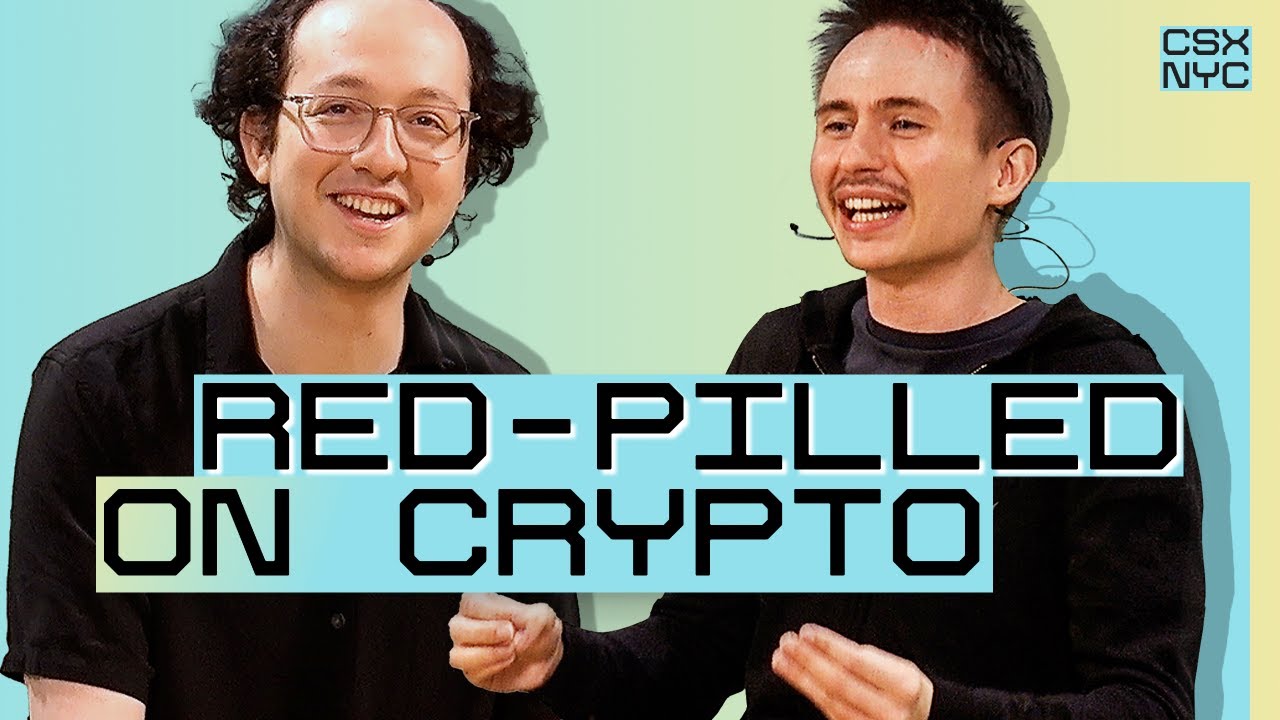
By January 2025, Floersch and Adams were appearing together in a founder conversation about Uniswap and Optimism. They had met in college. Now they could discuss two projects whose histories had become interwoven, with the distance between an uncertain beginning and an operating organization available for inspection.
That distance is easy to compress in a founder story. One person has an idea; a company appears in the next paragraph. A conversation between old friends restores some of the missing scale. There are people to persuade, things to learn, and decisions that look rather different once somebody has to live with them.
The beginner should get to build
Floersch’s own arrival in Ethereum involved asking for coffee. He recalled cold-emailing somebody at ConsenSys in Brooklyn, then going to a meetup and finding people he had previously known only from the internet. The community was suddenly within reach.
He began working from the ConsenSys office while doing his existing job remotely. Then a New York Times photo shoot caught him there. His boss saw the resulting article and asked what he was doing in it. A career transition had acquired an unexpectedly public progress report. There are subtler ways to announce an interest in new employment.
The episode fits the invitation on his personal site. Floersch introduces himself as a “bumbling host” and offers a tour through blockchains, code, and his own experiments. The stated purpose of his writing is to help readers avoid pitfalls and learn useful tricks. He signs off with an invitation to hack. The tone makes room for someone who has arrived curious rather than qualified.
His concern for that newcomer was already explicit in April 2016. He complained that learning Solidity too often meant getting dragged into JavaScript integration before doing meaningful contract work. He had spent more than a month wrestling with Ethereum tools and his frontend environment, with weeks of configuration yielding no smart contracts.
The irritation was precise. People trying to learn one thing were being obliged to learn several others first. His remedies included better Solidity learning material, package management, and testing tools. The complaint came from somebody who had tried the route himself and found too many gates before the interesting part.
His own tutorials went in the opposite direction. A 2016 MetaMask lesson explained the terms, the browser setup, and the steps for deploying a contract. It treated an early experiment as something a reader could actually complete. Small explanations mattered because a missing one could bring the whole exercise to a halt.
In the next installment, published in February 2017, he explained commit-reveal voting with the idea of a locked safe. Voters commit to a concealed choice, then reveal it so everyone can check the commitment. The candidates were Grand Master Doge and Apex Alpaca. The constitutional stakes were mercifully limited.
He also showed where the example needed improvement: the same account could vote repeatedly, and an unrevealed vote could prevent the election from finishing. The joke brought readers in; the limitations gave them work to do. A tutorial could be entertaining and still teach the habit of inspecting a mechanism.
“I make, hack, and love all this nerdy stuff.”
Karl Floersch, on his personal site
Cryptoeconomics.Study extended that teaching effort into an open-source education project. It combined lectures, documentation, coding challenges, and a community. Its subject was mechanism design: how the rules of a system affect the people using it. Its invitation was practical. Learn the fundamentals, then build something.
Who gets to hold the keys?
Floersch moved from applications at ConsenSys, including the music-rights platform Ujo, into core research at the Ethereum Foundation. Consensus and scaling became central concerns. Later, his work with Plasma Group evolved into Optimism. Across those moves, the unit of attention grew from a particular application to the infrastructure many applications would need.
In a 2018 interview, he explained why working on Casper, Ethereum’s proof-of-stake research, appealed to him. A secure, scalable network was a dependency for the applications he wanted to see. He described a design philosophy concerned with economics, robustness, and ordinary users. Speed had to be considered alongside security and the distribution of power.
His interests outside that research included freestyle rapping. He said growing up in New York City had made hip-hop part of his development. It is a pleasing detail beside the protocol specifications: a person working on formal rules also enjoyed making something up on the spot.
In April 2018, Floersch made the question of power explicit in an analysis of Plasma. A payment operator could process transactions efficiently, but users needed recourse if the operator misbehaved. An exit mechanism changed the relationship by giving users a way to reclaim funds through the main chain.
He examined the incentives with payoff matrices. Decentralization, in that account, involved the distribution of power among participants. Adding more participants was only part of the question. The more revealing test was what each participant could do to the others, and what happened when they tried.
“A key to decentralization is imposing constraints on authority.”
Karl Floersch, April 2018
His Plasma Cash specification gave each token a unique identifier, rather like a serial number on cash. That let the design reason about individual coins. The introduction thanked Buterin, Joseph Poon, and David Knott. Even a compact technical specification showed the conversation behind the work.
Make useful work pay
Public-goods funding gave Floersch another way to examine incentives. Shared software can be valuable without giving its creator an obvious way to charge every beneficiary. The developer who maintains a common tool still needs time and resources, even when everybody agrees the tool ought to remain available.
Retroactive funding approaches the allocation decision after work has demonstrated value. Optimism’s first round in 2021 distributed $1 million to 58 projects. Twenty-two participants helped make the decisions. The experiment made a difficult question concrete: could a group judge completed contributions well enough to reward them?
First round · 2021
Round 3 · January 2024
By January 2024, Round 3 allocated 30 million OP to 501 contributors. Its categories covered the OP Stack, governance, the developer ecosystem, and user experience and adoption. Writers and educators appeared alongside software builders. The things a technical community needed included explanations as well as code.
The broader ambition was to make useful contributions a dependable economic activity. If demonstrated impact could reliably earn a reward, a builder could plan around that possibility. Upfront support might become easier to obtain too. The difficult work lay in making the assessment credible and the reward predictable.
In January 2026, Optimism changed course. It announced that Retro Funding would pause for at least twelve months while it reassessed the program and concentrated on developing and maintaining the OP Stack. The organization also described a shift toward governance that held OP Labs accountable for execution.
That decision gives the funding story an unresolved edge. Floersch’s advocacy helped establish an experiment with real allocations and real recipients. The organization later narrowed its focus. Anyone interested in whether incentives can sustain useful work has to consider both the promise and the operating choices that followed.
Shared code, separate ambitions
The OP Stack offered another means of helping builders: reusable infrastructure. Introduced in October 2022, it organized blockchain components into modules that others could adapt. Optimism’s account of its development emphasized simplification, including a formative encounter with George Hotz that sharply reduced the code needed for one approach.
Other teams found their own uses for the components. A voxel game and a Game Boy emulator appeared among the examples. Shared software had escaped the boundaries of its original application. For an engineer interested in enabling other people’s experiments, that is a satisfying sort of loss of control.
Different applications · shared modules
Interoperability is the connecting goal
The connection with Adams acquired a new technical expression in October 2024, when Unichain was announced on testnet using the OP Stack. Uniswap’s purpose-built chain joined the Superchain effort. The old friendship now sat beside an explicit arrangement for shared infrastructure, governance participation, and contributions to the Collective.
The chronology is unusually neat. An early suggestion helped Adams begin an application on Ethereum. Years later, infrastructure Floersch helped develop became a foundation for the next phase of that application’s ecosystem. The shared code carried the relationship further than an introduction could.
An optimist with a calendar
Floersch became OP Labs’ CEO in 2023 after serving as CTO. By his October 2026 Smart Economy Podcast appearance, he was identified as Chief Scientist. His current subjects included institutional adoption, specialized sovereign chains, and the interoperability required if those chains multiplied. He was discussing a possible future with millions of them, a forecast rather than an achieved count.
His January 2026 post-quantum roadmap works on a longer clock. It set a ten-year plan to deprecate ECDSA-based externally owned accounts by January 2036, subject to governance approval. The eventual signature scheme remained undecided. Wallets, applications, infrastructure, and users would need a coordinated transition.
It is an apt task for someone whose career keeps returning to dependencies. A beginner depends on an explanation. An application depends on a protocol. A maintainer depends on funding. A network upgrade depends on the people expected to carry it out. Floersch’s optimism becomes most interesting when it gives those people a place to start, and enough time to get somewhere.