The useful thing about a racecar is that it does not indulge ambiguity. A machine at speed reports every lazy assumption through the wheel, the pedals or a noise one would prefer not to hear. Justin Raisor, an amateur racer and collector of classic muscle cars, has spent his working life around systems with a similar insistence on consequences. Networks fail. Security gaps become incidents. Cloud bills arrive. Artificial intelligence can make a smooth demonstration, but in government the real test comes later, when a decision affects a citizen and someone must explain how it was made.
Raisor is now Federal Founder and Field CTO at DevRev, the enterprise software company built around an AI system it calls Computer. The title carries the fashionable initials, but his public argument is notably unfashionable. He talks about governance, context, budgets and the organizational work that must happen before an AI deployment deserves to become ordinary. The point is not to place a chatbot in every corridor. It is to help institutions use intelligence without becoming careless about the things they already know.
That distinction matters in the world Raisor has chosen. For more than a decade, his work has involved United States federal agencies, Native American Tribes, Tribal gaming organizations and Tribal enterprises. These are not interchangeable customers. They carry different missions, authorities and histories. What they share is consequence. A technology purchase can touch benefits, public safety, infrastructure, business operations or culturally significant material. The software may be new. The obligations are not.
The stack beneath the speech
Raisor did not begin as an AI evangelist. His biography starts closer to the cables: network administrator, IT manager, consultant. By the middle of the last decade he was a senior sales engineer at Nutanix, explaining hyperconverged infrastructure to federal audiences. The work required translation in both directions. A technical architecture had to become legible to buyers; an agency's requirements had to survive the journey back into a product conversation.
He later moved into public-sector cybersecurity at Vectra AI. There, the abstract language of risk acquired a clock. In a 2023 article about an adversary-in-the-middle phishing campaign, Raisor walked readers through suspicious account behavior, lateral movement and mail forwarding. He also paused to acknowledge the queasy line between explaining a timely threat and exploiting bad news for promotion. That small admission is revealing. Vendor marketing tends to arrive immaculately certain. Operators know that credibility is an exhaustible resource.
At TribalNet that year, he joined a discussion on zero trust architecture. The premise was not that an organization could purchase zero trust in a box. It was a framework, requiring leaders to identify risk and build a roadmap fitted to their own environment. On the TribalHub podcast, he extended the conversation to security operations centers and hands-on blue-team workshops. The workshop invited people who were security-minded even if they were not seasoned analysts. Expertise mattered, but an open door mattered first.
Network administration, IT management and federal sales engineering at Nutanix.
Public-sector threat detection work at Vectra AI, with a focus on federal civilian and Tribal organizations.
Federal AI and analytical-workflow work at Domino Data Lab.
Building DevRev's federal practice as Federal Founder and Field CTO.
Domino Data Lab added another layer: operationalizing AI and machine learning in regulated public-sector environments. Then came DevRev. The products changed across those jobs, but the progression is coherent. Raisor moved from the systems that hold data, to the defenses around them, to the models that learn from them, and finally to the workflows where machine output meets daily work.
“AI in Indian Country isn't a technology problem, it's an organizational one.”Justin Raisor, on the case for an AI steering committee
A table big enough for the consequences
Raisor's proposed AI steering committee is an answer to a familiar institutional mistake: treating adoption as the possession of one department. His version brings leadership, IT, operations and frontline employees into the same room. Each group sees a different failure mode. Executives can align authority and resources. Technologists can test architecture and security. Operators understand how exceptions accumulate. Frontline workers know which elegant process diagram bears no resemblance to Tuesday afternoon.
mission + authority
architecture + security
process + exceptions
service + reality
The committee is less thrilling than a launch event, which is exactly why it has a chance of being useful. It creates somewhere for disagreements to happen before software turns them into policy by accident. In Raisor's public framing, the Tribes seeing practical value from AI are not necessarily those with the deepest pockets. They are the ones that make adoption a shared mission.
He also argues that AI systems can lose meaning through a kind of computational telephone game. One tool summarizes information and passes it to another, which compresses it again. Each hop may look efficient. Across a long chain, nuance disappears. In a low-stakes consumer task, this may produce an irritating answer. In public services, a missing piece of context can distort a decision about benefits, education, infrastructure or safety.
At DevRev, Raisor connects that concern to persistent memory across systems, people and time. Naturally, this is also a product argument. Yet its most valuable part is broader than any platform: institutional memory is not clutter. It is often the record of why a rule exists, how an exception was handled and whom a decision will affect. An AI system that forgets elegantly is still a system that forgets.
The pipeline, not the slogan
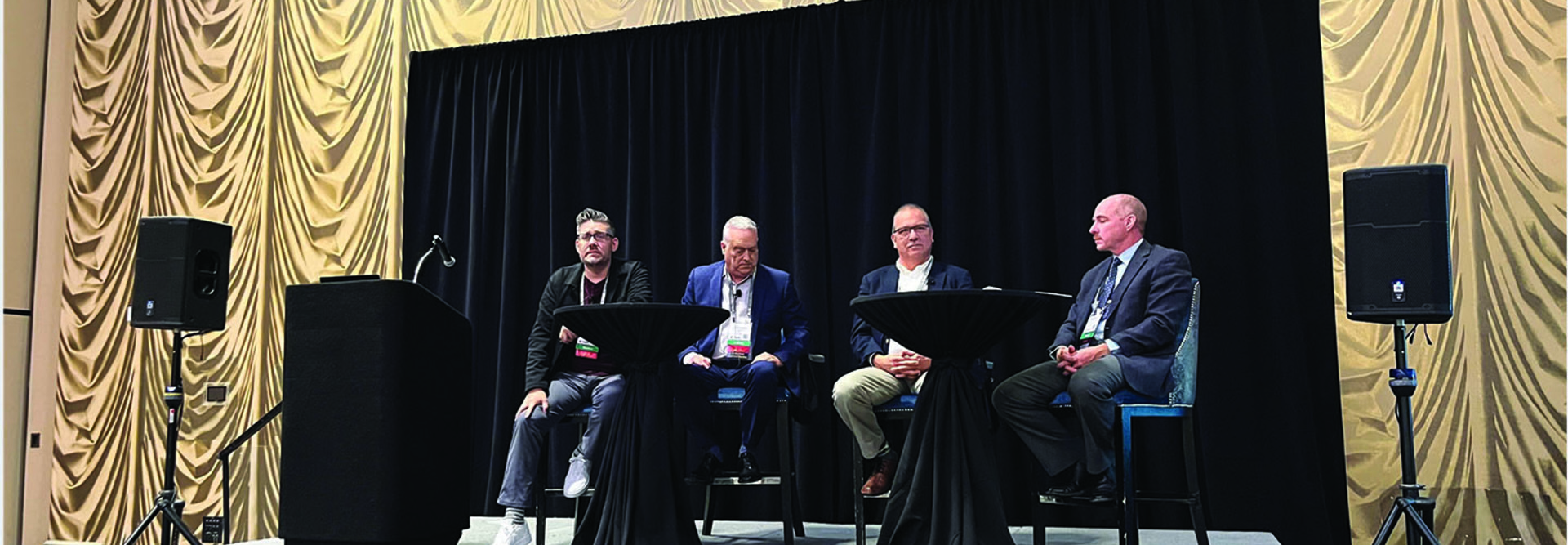
Raisor's most concrete work beyond selling technology is his advisory role with the Tribal Cyber Training League. The program, developed with PlayCyber, introduces Native high-school and college students to cybersecurity through team competitions and capture-the-flag exercises. At a 2024 TribalNet panel, he described the point simply: make the subject engaging enough for a student to pick up, then make the career routes visible.
“We're gamifying it,” he said, so participants can explore careers that offer both good wages and a way to deepen technology capability within Tribes. The league addresses a severe representation gap, but it does so with an activity rather than a slogan. Six-person teams solve problems. Young people encounter cybersecurity as a craft one can practice, not merely a profession performed somewhere else by somebody else.
The idea fits Raisor's wider approach. A community gains little from a product that arrives without durable knowledge. Training creates people who can challenge a vendor, adapt a system and decide when not to use it. For Tribal governments and enterprises, that capability also touches sovereignty. Control is strongest when it includes the skill to inspect, operate and improve the technology on one's own terms.
His TribalNet appearances make a miniature record of changing priorities. In 2023, the subject was zero trust. In 2024, it was talent development. In 2026, the listed session turned to the AI steering committee. Security, people, governance: the sequence resembles the work institutions must do when a new technology moves from experiment to infrastructure.
A vendor can install a tool. A community needs enough knowledge to question it, govern it and keep the useful parts.
Every intelligent answer has a bill
Raisor has lately added an unfashionable noun to the federal AI discussion: economics. Models consume tokens, and tokens consume budgets. A prototype may feel inexpensive because its audience is small and its edge cases are polite. An agency operating at public scale has fixed appropriations, procurement rules and oversight. Thousands of summaries, agent steps and automated replies turn architecture into arithmetic.
His warning is not that agencies should recoil from AI. It is that they should understand the consumption model early. Intelligent routing, fewer redundant model calls and auditable use are not afterthoughts when every dollar needs justification. The winning system, in his telling, will not simply produce the most impressive answer. It will produce a useful answer at a cost an institution can sustain and explain.
This is where the old infrastructure engineer reappears inside the Field CTO. Capacity planning never vanished; it changed units. Security review never vanished; the attack surface shifted. Data governance did not become less important because the interface became conversational. The great comic trick of enterprise software is its habit of declaring every old problem dead shortly before those problems return wearing conference badges.
Raisor's career suggests a more sober rhythm. Learn the machinery. Respect the mission. Invite the people who live with the outcome. Count what the system consumes. Preserve the context it is tempted to discard. Then, perhaps, accelerate.
There is no shortage of people promising that AI will change government. Raisor's more interesting proposition is that government and Tribal institutions should be allowed to change AI in return, shaping it around public accountability, community control and the stubborn particulars of service. That is slower than magic. It is also how technology becomes trustworthy enough to disappear into the work.