The first office tells you nearly everything. It was 1995, in New York, and Global Strategy Group was operating from Grandma Rose's apartment. Jon Silvan and Jefrey Pollock had a polling shop, a city full of arguments and the modest furniture of a family home. There was no grand entrance. The raw material was opinion: what people believed, what they might be persuaded to believe and how those beliefs could alter a campaign.
Thirty years later, the apartment has become company lore. The firm has more than 150 people across nine U.S. offices and a place inside SEC Newgate, an international communications group. Its work now includes public affairs, corporate communications, reputation, research, creative and digital production. The co-founder remains the chief executive. The useful part of the origin story is not its quaintness. It is that GSG began by asking questions before it tried to supply answers.
The founding instinctA listener in a business of talkers
Silvan studied political communications and economic development at the University of Massachusetts Amherst. The pairing looks almost suspiciously tidy in hindsight. His career would unfold in the overlap between public language and material consequence: elections, policy, real estate, transportation, corporate reputation and the difficult business of asking communities to consent to change.
GSG's first specialty was Democratic political polling. Research offered a disciplined way to enter public life. A poll does not settle an argument, but it reveals the shape of one. It shows where conviction is fixed, where language fails and where a coalition might exist if someone can name it. Over time, Silvan and his colleagues added the means to act on that knowledge. Public relations, crisis work, creative content and media planning collected around the original research practice.
Silvan described the evolution plainly in 2025: clients' needs had become more complex. The firm widened because the assignments demanded it. A company facing a regulatory fight may need lawyers, lobbyists, executives and communicators to move together. A public institution introducing a new system may need research, message testing, press strategy and advertising. A campaign may have one candidate but a thicket of audiences.
“This partnership allows us to tap into a highly respected and rapidly growing international consultancy as globalization continues to drive business, policy, and politics.”Jon Silvan, 2022
One assignment, four conversations
Evidence → coordination → public action
New York as a clientThe assignments behind the skyline
Titles explain some careers. Silvan's is clearer through assignments. His firm says he worked with World Trade Center developer Silverstein Properties to gain stakeholder support needed to break ground and rebuild at Ground Zero. The phrase “stakeholder support” sounds clinical until you picture the actual setting: grief, property, architecture, security, politics, memory and money pressed onto the same few acres.
It is the sort of project that makes public affairs visible as a civic craft. The strategist is not the architect and does not pour the concrete. The strategist maps permission. Which officials must agree? Which constituencies must be heard? Which facts calm one concern while inflaming another? The work happens in meetings and messages, but its consequences eventually occupy physical space.
That New York portfolio later included work involving the Metropolitan Transportation Authority, the Metropolitan Museum of Art, National Grid and other institutions whose decisions are experienced by millions of people. City & State reported that GSG helped the MTA promote OMNY, its contactless fare system. In 2026, it noted work supporting the Gateway rail program and Vanderbilt University's expansion in New York City. These projects sit beside corporate clients such as Google, Netflix, T-Mobile, Goldman Sachs and MGM Resorts, and political relationships that include Senator Kirsten Gillibrand, whom the firm has advised since her first congressional campaign in 2006.
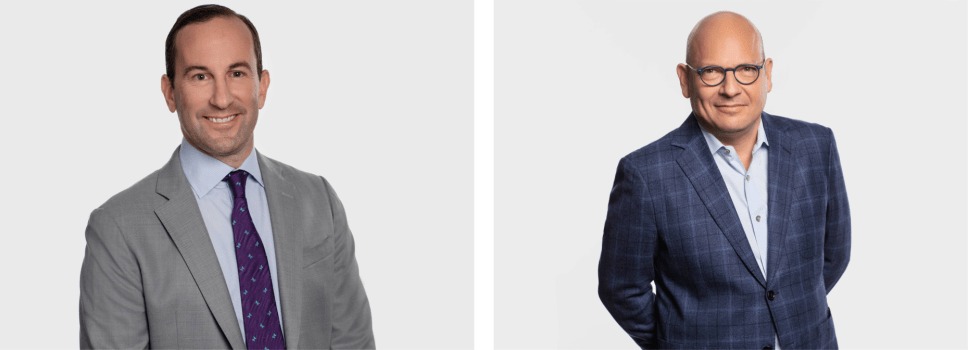
Silvan's public profile is subdued relative to the clients. This is partly occupational. Advisers are hired to improve somebody else's position, and the competent ones rarely confuse proximity to the spotlight with ownership of it. His biography lists senators, foundations, sports organizations, financial firms and cultural institutions. The list is less revealing than the common condition: each has something consequential to explain, defend, win or change.
Scale without distanceThe expensive promise of senior attention
Agency growth creates a familiar risk. The founders win the account, then vanish. Silvan has repeatedly emphasized the opposite arrangement. In his 2025 account of GSG's expansion, he said the firm kept senior leaders involved in every engagement. That promise is operationally awkward, which is precisely why clients value it. Calendars do not expand with headcount. Experience must be deliberately placed where it matters.
His 2019 appearance on the PR Council's Agency of the Future podcast framed lasting client relationships around recruiting and retaining strong talent. This, too, is less glamorous than the usual language of influence. It treats the agency not as a mysterious black box but as a collection of people whose judgment compounds when they stay, learn one another's habits and remain close to the client.
Keep research close to creative work, keep senior judgment close to the client and keep every discipline pointed at the same outcome.
There has also been a public failure. In 2022, GSG drew criticism for helping Amazon produce materials opposing a union drive at its Staten Island warehouse. The firm said it deeply regretted its involvement. The episode mattered because GSG had long-standing ties to Democratic candidates and labor. It showed how a consultancy built to serve varied clients can discover that not every engagement fits the identity it claims. An apology does not erase the decision, but the decision belongs in any honest account of an adviser whose business is judgment.
The wider mapGoing global without surrendering the name
A few days after that controversy surfaced, GSG announced a partnership that changed its scale. SEC Newgate, headquartered in Milan, took GSG into a network spanning five continents. Silvan called it the next phase of growth as globalization increasingly joined business, policy and politics. The structure was telling: GSG would serve as the group's flagship U.S. agency while retaining its brand, leadership and operational independence.
For a founder, this is the delicate middle path. Independence is part of the product, but so is reach. A client crisis crosses borders in minutes. Regulation, capital and reputation no longer observe the neat boundaries of an American agency map. The SEC Newgate arrangement offered local identity with international capacity. By 2025, City & State reported that the partnership helped GSG increase revenue by 16 percent during 2024.
GSG begins as a political polling shop in Grandma Rose's New York apartment.
Silvan advises Silverstein Properties on stakeholder support around rebuilding at Ground Zero.
GSG becomes SEC Newgate's flagship U.S. agency while keeping its own leadership and brand.
The firm marks 30 years and announces a corporate insights practice.
Observer ranks GSG first on its PR firm list; Silvan appears on three City & State power lists.
The next questionAfter thirty years, back to research
The firm's 30th anniversary arrived with the familiar rituals: a look backward, an awards inventory and statements of pride. Silvan's description of the modern GSG was more revealing. He pictured subject experts and communications professionals working beside pollsters, data scientists and an in-house creative team. The ambition was to bring the production values associated with consumer advertising into public affairs without losing the analytical core.
Then came a pleasing circle. In 2025, Silvan said GSG would launch a corporate insights practice focused on market research and consumer audiences. After three decades of expansion, the next move returned to the thing the firm knew first: ask better questions. The channels have multiplied since 1995. The speed is less forgiving. The public is more fragmented, and every institution has acquired its own small weather system of suspicion. Research cannot remove those conditions. It can prevent a client from walking into them blind.
“Coordination, discipline and a shared sense of purpose are powerful!”Jon Silvan, 2025
Silvan's career offers few theatrical flourishes. Even the New York origin story is domestic: a grandmother's apartment, two political strategists and enough faith in polling to build a company around it. The achievement is cumulative. One question leads to a message. One message leads to a coalition. One client leads to a practice, then an office, then a network.
Public affairs is often described by its outputs: the poll, the advertisement, the press conference, the changed vote. Silvan's record points to the less visible machinery beneath them. People with different incentives have to share facts. Senior advisers have to remain present. Researchers and creatives have to understand each other. And someone has to listen long enough to learn what the room is actually deciding.