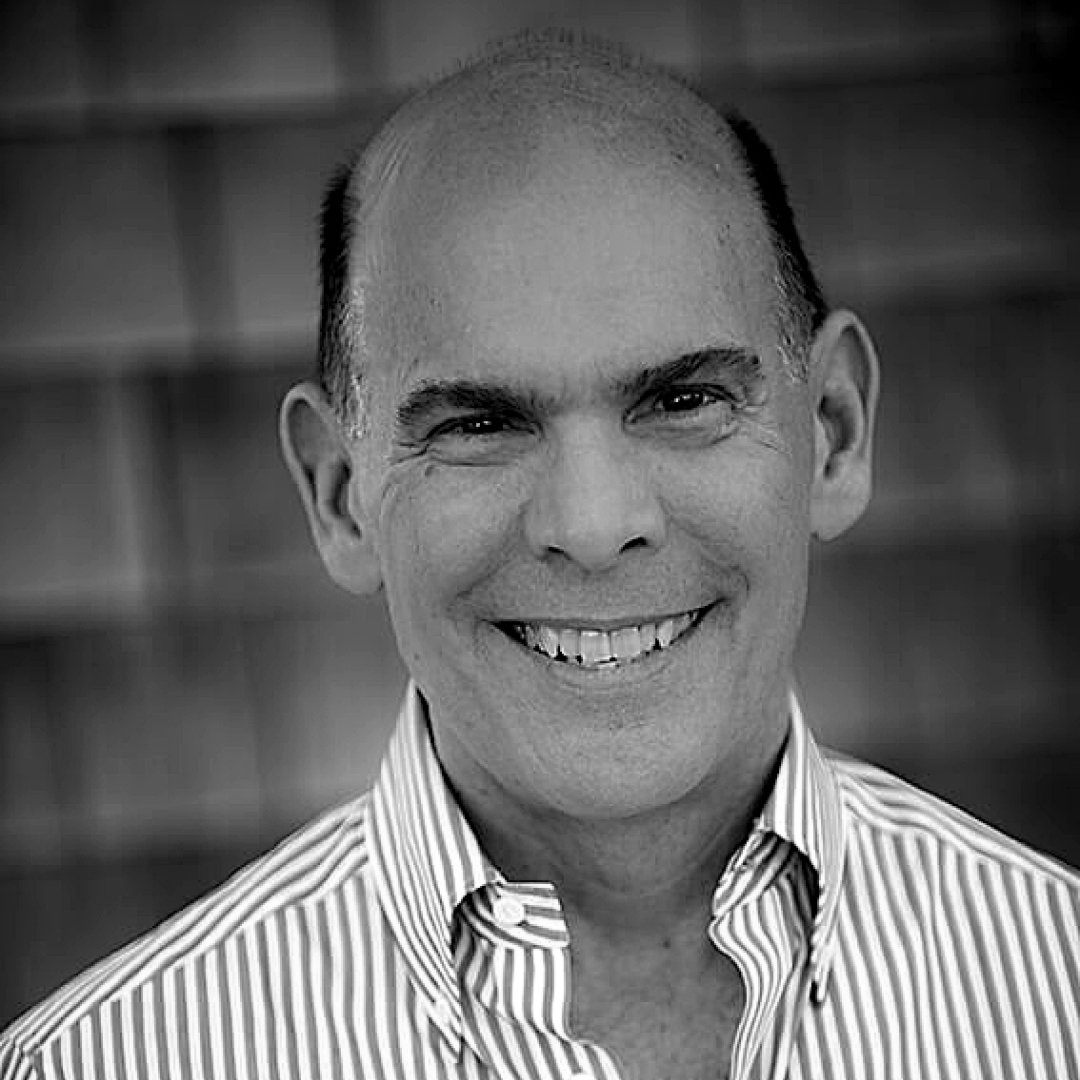
The conference room was quiet. Two men who had never met each other sat across a table, and Joel Cutler said three words that launched a billion-dollar company: "Why not KAYAK?" He introduced Steve Hafner and Paul English - strangers, both - and walked out. That company would eventually sell to Booking Holdings. Cutler got partial credit for the idea and all the satisfaction of watching someone else build it exactly right.
That story is Joel Cutler in miniature. Not the visionary. Not the operator. The assembler. The man who sees what could exist, builds the conditions for it to happen, then gets out of the way.
"I've never had a better idea than the founders. But I think good venture capitalists help the founders to believe that everything is possible."- Joel Cutler
Cutler co-founded General Catalyst in 2000 alongside David Fialkow - a partnership that began at summer camp when they were both eight years old. That is not a metaphor. They literally met as children, discovered they thought the same way about risk and opportunity, and spent the next five decades proving it. Before General Catalyst, they built and exited four companies together: National Leisure Group (sold), Starboard Cruise Services (sold to LVMH), Alliance Development Group, and Retail Growth ATM Systems. The VC firm was their fifth act.
The Education He Never Used
Cutler studied Government and Economics at Colby College, then earned a J.D. from Boston College Law School. He has never practiced law. Not for a day. The degree gave him a framework for thinking about risk, contracts, and consequences - and then he put it in a drawer and went to build companies. He is one of the most influential people in American venture capital and he got there the same way most great investors do: by ignoring the credential and trusting the instinct.
His father ran a Las Vegas tour company and convention business. Joel spent his career backing companies that would replace it - ITA Software, KAYAK, Airbnb, TravelPerk. The industry he grew up watching, he grew up to disrupt.
The Philosophy Is Deceptively Simple
Ask Cutler what he looks for in a pitch and he will tell you something that sounds like a provocation: "If someone pitches an idea to me that I don't understand, that's when I am interested." He means it. The obvious opportunity is already priced in. The comprehensible idea already has twelve competitors. He wants the thing that makes other investors squint.
His second filter is equally clear: a great team with a good idea beats a good team with a great idea. Always. Every time. He has never wavered on this. It is not that ideas don't matter - it is that ideas are abundant, and execution is scarce. The best founders do not need Cutler to have a better idea. They need someone who believes that everything is possible.
"The better question is, what happens if everything goes right? If everything goes right, is this going to be spectacular? Let's play toward a big win - not toward not failing."
This is the inversion that most investors miss. Risk management, for Cutler, is not about limiting downside. It is about making sure the upside is worth showing up for. He wants founders who take more risk, not less. He wants the company that could be spectacular, not the one that is merely defensible.
The Wall of Shame
Cutler keeps a list. He calls it his Wall of Shame - the companies he passed on that went on to become enormous. The list is long. He talks about it openly, even cheerfully. This is not false modesty. It is a precise description of how investing works: you make your best call with incomplete information, and sometimes you are wrong, and the only useful response is to figure out why.
His first two investments at General Catalyst lost approximately ten million dollars - in adtech and security. He tells that story in interviews without being prompted. The willingness to name your failures in public is a form of authority. It says: I have survived these. I learned from them. Come pitch me.
The Airbnb Bet
He describes investing in Airbnb in exactly three sentences. "Amazing and all foodies. We got to know each other through food. I had no idea it was going to be this big." That is the whole story from his perspective - remarkable founders, immediate personal chemistry, math that made sense, community that already loved the product. The scale was not predictable. The quality of the team was.
This is the consistent through-line: Cutler does not claim to have seen the future clearly. He claims to have recognized exceptional people early. The rest is what happens when exceptional people have enough runway and permission to think without limits.
Engineering as Religion
Ask him what most founders underweight and he does not pause. "Engineering really matters. Like engineering really, really, really matters." The repetition is deliberate. He has watched too many companies with beautiful decks and mediocre engineering fail where companies with the reverse succeeded. Product vision without execution is a wish. Execution without vision is a job. The combination - rare, verifiable, worth paying for - is a company.
"Engineering really matters. Like engineering really, really, really matters."- Joel Cutler
The Ten Times Rule
If you are entering a market where someone arrived first, you cannot be slightly better. You must be ten times better. Cutler says this not as a stretch goal but as a minimum requirement. The market leader has inertia, brand, and existing relationships. You have only the quality of what you built. That quality needs to be so evident it makes the alternative feel embarrassing. Less than ten times? Come back when you are.
This is why he turns off the moment he hears "we're the KAYAK of X" or "the Airbnb of Y." The derivative pitch is not just lazy - it is structurally limited. The copy cannot be ten times better than the original. At best, it is adjacent. Cutler is not interested in adjacent.
General Catalyst Now
The firm Cutler co-founded in a Cambridge office in 2000 now manages more than twenty billion dollars in assets. In October 2024, General Catalyst raised eight billion dollars in new funds - including 4.5 billion for core venture - its largest fundraise in history. The portfolio includes Airbnb, Stripe, Snap, Canva, Grammarly, Instacart, Anthropic, Warby Parker, Lemonade, and Venmo. It is one of the most consequential venture portfolios ever assembled.
The firm has also moved beyond traditional venture into something larger. A partnership with the NHS and Speedinvest launched a thirty-million-pound medical technology fund in 2025. A deal with Trian Partners to acquire Janus Henderson valued at approximately eight billion dollars signals ambitions that extend well past early-stage startup investing. This is no longer just a bet-on-founders operation. It is an institution.
"AI will become part of everything. It will be a horizontal, not a vertical."
Cutler's view on artificial intelligence is unsentimental and structural. Not a category. Not a vertical play. A horizontal layer that gets absorbed into every product that exists. This framing explains why General Catalyst invested in Anthropic - not as an AI bet, but as a foundational-layer bet. The distinction matters.
The Credential He Actually Has
Cutler did not arrive at venture capital via banking. He did not spend years as a management consultant before writing his first check. He built companies first, failed, rebuilt, exited, and then deployed capital with the specific credibility of someone who has run the gauntlet. KAYAK was his idea assembled in a conference room. Starboard Cruise Services was sold to LVMH. National Leisure Group was sold after scaling to size. The portfolio of companies he built before General Catalyst would qualify most people as successful operators. For Cutler, it was just the warmup.
The law degree sits in a drawer. The summer camp friendship runs five decades deep and 250 deals wide. The Wall of Shame gets longer every year - evidence not of failure, but of volume and honesty. He does not claim to be a first-principles thinker. He claims to recognize them - and to know what to do when he finds one.
"My job is to spot bright people in a moment of time, give them money, for them to do a lot of work and for them to give me back a lot of money and I get all the credit."- Joel Cutler
The joke lands because it is mostly true. But mostly true is not entirely true. The part he leaves out: knowing which bright people to spot. Knowing when the moment is. Knowing how much money. Knowing what "a lot of work" will require and whether the founders can sustain it. The job description is brief. The judgment required is not.
It is never over. He says that too. It is one of his more revealing phrases - not triumphant, not pessimistic, just accurate. Markets shift. Technologies transform. Companies that looked finished find second acts. Investors who looked done find the next KAYAK sitting across a conference table. You only need to stay curious long enough to notice.