A company without an office still needs a payday. This was the inconvenience waiting inside Job van der Voort’s attractive idea about work. You could assemble a team across countries, exchange code through the internet and let people choose where to live. Then somebody had to work out how to employ them. The geography that disappeared from the meeting returned in the paperwork.
Van der Voort had encountered this at GitLab, where he became vice president of product as a small distributed team grew into a company of more than 450 people. Remote work suited him. Paying people around the world was another matter. In 2019, he and Marcelo Lebre founded Remote to take on the machinery underneath the arrangement. Seven years later, his chosen mission has become unusually plain: pay the world.
It is a pleasingly practical ambition for a technology founder. There are fewer opportunities for theatrical language when the customer’s immediate concern is whether someone’s salary will arrive. Yet it carries a large personal conviction: people should have more choice about where to build a life, and employers should have more choice about whom to hire.
The train ride before the idea
His route into software began in a different kind of lab. At the University of Amsterdam, he studied psychonomics, then cognitive neuroscience. He worked as a researcher before turning toward programming. An early professional biography records a particular irritation: the lack of version control in science. Someone who wanted a reliable record of changes had found a field devoted to it.
By the end of 2012, he had decided to work full time in software development. He also tried entrepreneurship, with an early venture that did not last. Lebre was already part of that chapter. Their eventual partnership at Remote therefore had some useful history behind it, including experience of an idea failing to become a durable business.
A software job serving Dutch government clients brought van der Voort into contact with GitLab co-founder Sid Sijbrandij. Getting to work in Utrecht could take him an hour and a half by train, longer on a bad day. Sijbrandij invited him to join GitLab if he wanted a change. He did. His early duties spanned support, features, bug fixes and the website. Product management gradually became his territory.
There is something instructive about that breadth. He had entered a small company where a useful contribution could precede a tidy job description. Later, when he argued for assessing people through their work, he had his own career as an example. A conventional filter for an experienced technology executive would have had difficulty recognizing the researcher standing in front of it.
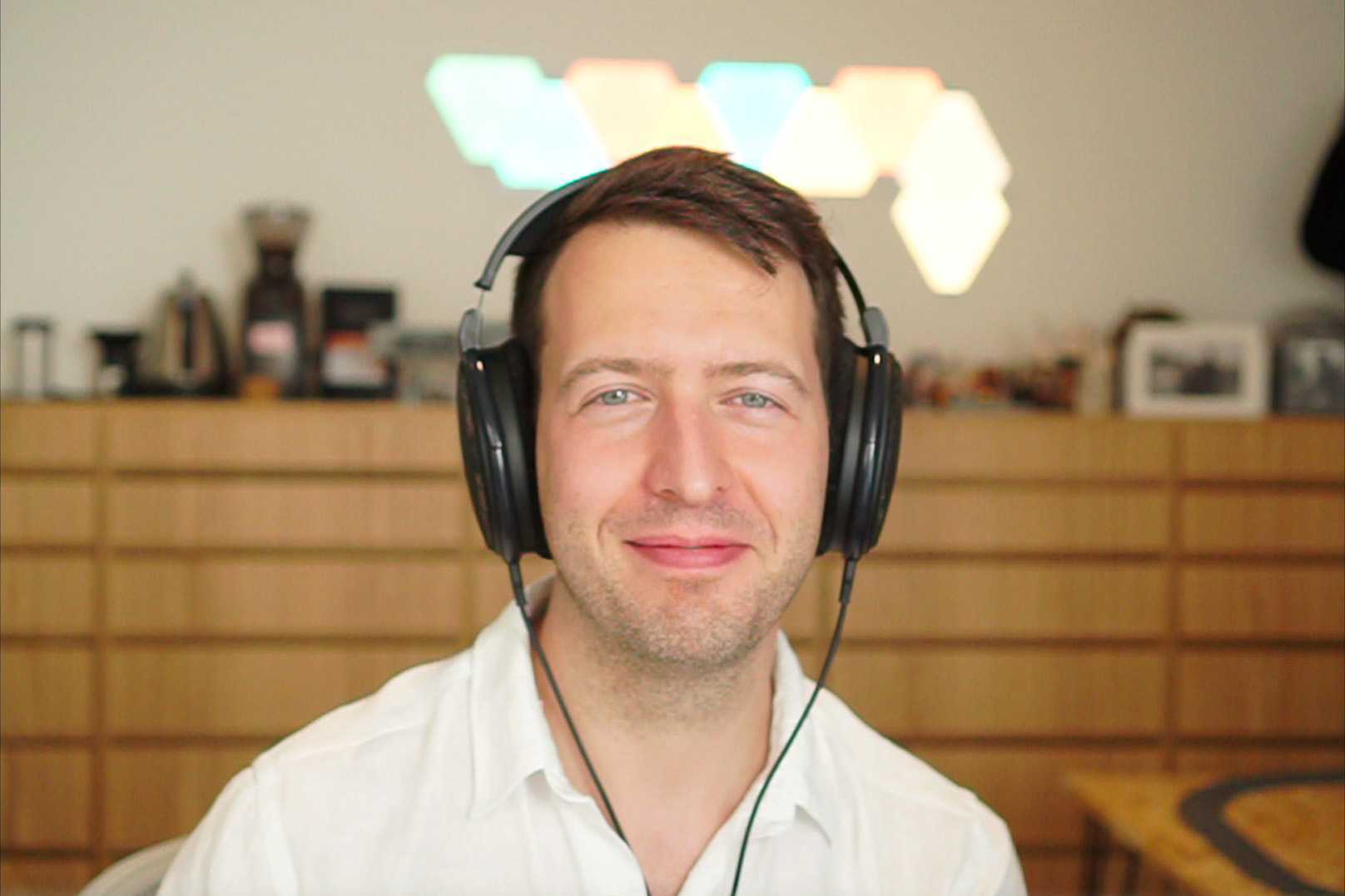
A working company, scattered across a map
GitLab gave him a sustained demonstration that distributed work could function. Colleagues lived in different countries; a shared office was absent from the daily arrangement. During his tenure the team expanded from roughly five people to more than 450. Remote’s biography describes him hiring talent in 67 countries. Growth made the benefits of a wider recruiting pool visible, along with the administrative work it created.
The freedom mattered outside the company too. Van der Voort is Dutch; his wife is Portuguese. Working remotely made a life across places easier to arrange. The appeal was concrete: being able to live where a family wanted to live while continuing meaningful work. The argument loses some of its abstraction when moving countries becomes a household decision.
He also saw that distance required deliberate habits. Documentation gave colleagues a way to find answers without waiting for someone in another time zone. Social connection needed attention as well. Casual conversation would no longer happen automatically beside a meeting room. A company had to make room for people to talk about something other than their next task.
“We want to make hiring from anywhere really easy and transparent.”Job van der Voort
What remained difficult was employment itself. Each new country brought its own requirements. A promising candidate might be straightforward to interview and much harder to hire. This was the opening he and Lebre pursued: absorb enough of that complexity that another company could employ the person it wanted without first constructing a local operation.
The expensive business of making things simpler
Remote’s employer-of-record service gave customers a route to hiring abroad through local employment infrastructure. Behind the interface sat contracts, payroll, benefits and compliance. The attraction for a customer was simplicity. Creating that simplicity required substantial work in the countries where Remote operated. An elegant screen alone would have been a rather short-lived solution.
The founders had a choice about scale. They could build a smaller business that sustained them, or raise capital for a more demanding international operation. They chose the latter. By April 2022, Remote had announced a $300 million Series C, led by SoftBank Vision Fund 2. Its disclosed total funding reached $495 million, with a valuation of nearly $3 billion.
Those are financing milestones, attached to a particular moment. They also show the size of the commitment the founders had chosen. The company’s expansion involved building and operating legal entities, with local expertise behind them. Van der Voort was asking investors to support the unglamorous parts of international work at a time when the demand for it was becoming highly visible.
The recognition reached home. In 2022, he won the Dutch LOEY Award for online entrepreneurship. At the ceremony, he described having spent that day working in his pyjamas in his attic in Zaandam. The distance between the award stage and the working day was apparently one change of clothes. His company’s operating philosophy had survived its arrival at the party.
Freedom needs an operating manual
Running a distributed business also gave him a management problem to solve inside his own company. Remote built a handbook and made its expectations explicit as the team grew. Values could not depend on being absorbed through proximity. Hiring, decision-making and communication had to carry them across a workforce that did not arrive at the same building each morning.
He is especially wary of hiring by resemblance. A candidate who feels familiar can be mistaken for a candidate who will do the work well. His preferred interview process asks questions and uses tests that reveal ability in the actual role. It is a reasonable extension of recruiting across borders: opening the map achieves less if the selection process keeps looking for the same person.
Freedom, in his account, comes with ownership. He wants people to solve problems and bring him obstacles he can help remove. In March 2026, he described learning to be more precise about his own communication. A passing suggestion from the chief executive could return to him as an instruction. He began sending more short videos so people could hear his meaning and tone.
There is a small irony here. A leader who dislikes hierarchy still has to account for the weight his position gives his words. Removing the office does little to remove that weight. His adjustment is practical, and revealing: record the thought, send the link, let colleagues hear the person behind the sentence.
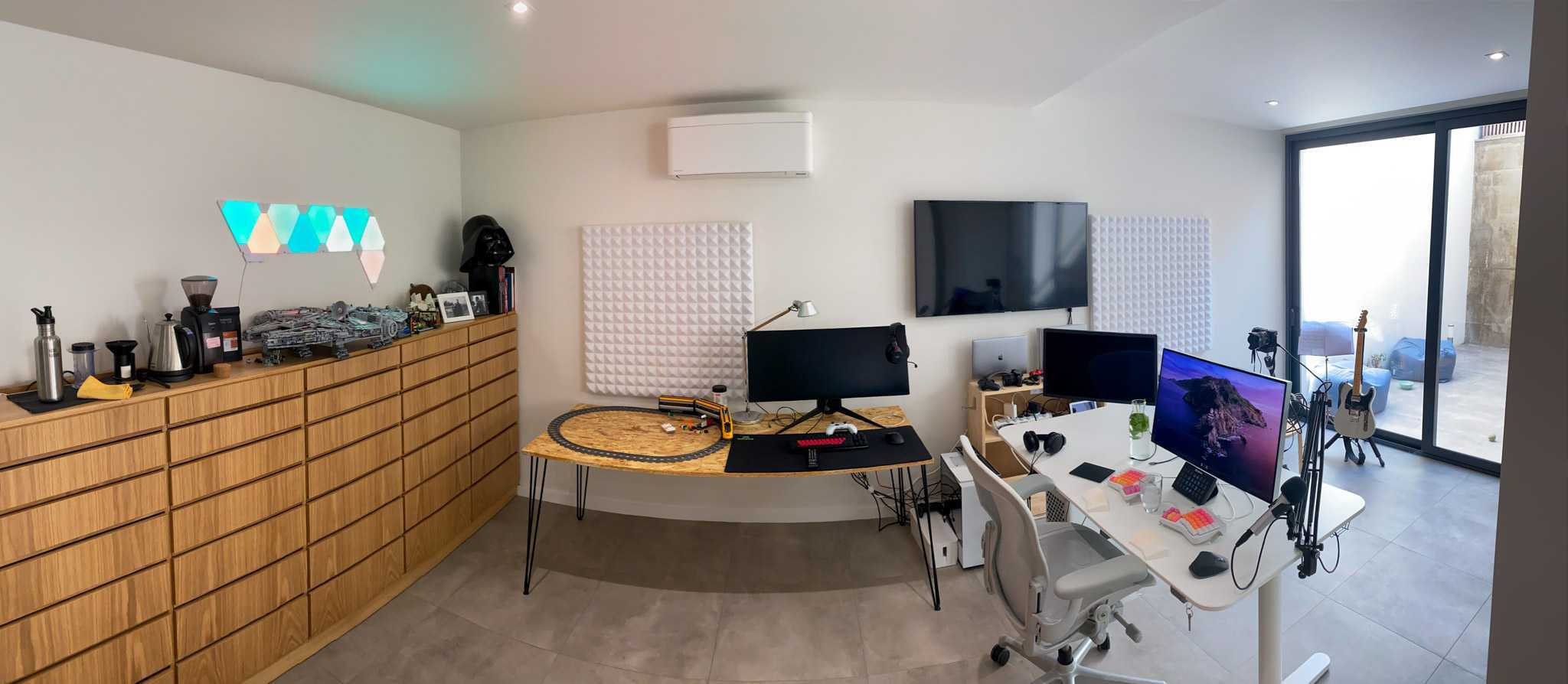
A place for every dongle
His published office tour offers a more domestic view of this preference for workable systems. The cabinet, designed by his partner, has its contents catalogued in Airtable. USB-C dongles have an assigned location. On top sits a Millennium Falcon, alongside a wearable Darth Vader helmet given to him by Lebre. Even international payroll leaves room for a little intergalactic administration.
The room also contains a second desk originally assembled for building the LEGO Falcon, later repurposed for gaming. He describes himself as an avid photographer and explains the camera he uses for video calls. These details give the workspace a recognizable owner: someone interested in design, games and how equipment works, willing to spend time getting the arrangement right.
The idea comes back to payday
By January 2026, van der Voort was describing a broader HR and payroll platform, with tools covering more of the employment lifecycle. He also spoke about the danger of adding AI in ways that create extra work. Automation, in that account, should improve a concrete process while leaving judgment and relationships with people. The test is usefulness inside an employer’s day.
In May, he set out a deeper focus on global payroll and opening Remote to other tools and AI agents through Remote MCP. In October, the company introduced its “Pay the world” identity. His emphasis had moved toward the infrastructure that makes employment dependable: local payroll expertise, accurate records and money arriving correctly in the right currency.
The original belief remains easy to recognize. A person’s opportunities should extend beyond the employers within commuting distance. Making that happen involves a surprising amount of attention to borders. Van der Voort began with the freedom to work from somewhere else. He has spent the years since building a company around the obligations that follow. Eventually, every attractive theory about work meets the calendar. Payday is due.
Keep the conversation going
Explore Remote and its company profile, or visit van der Voort’s personal archive, LinkedIn, Twitter / X and GitHub.
▶ Watch: hiring through hyperscale ↗▶ Watch: a conversation with Eva de Mol ↗More to read: his home-office tour · the leadership conversation · the October 2026 announcement.