The investor wanted a number. At Glio’s office in Brazil, João de Paula and his co-founder supplied it: some revenue, still small, growing. In de Paula’s telling, the visitor decided that this did not qualify as a business and walked out. It was a brief meeting with an impressively economical exit. Years later, de Paula still remembered it.
He remembered another conversation, too. After Glio reached Y Combinator, he kept wondering what the catch was. Would someone eventually demand the money back? Paul Graham reassured the founders that the responsibility was now theirs. The contrast stayed with him: one room had made an unfinished company feel illegitimate; another had given its founders permission to finish building it.
De Paula is now co-founder and CEO of Mesmer, working on how engineering teams operate as AI changes the production of software. Before that came Origin, where he was a co-founder and CTO. Before Origin came Glio, seven years of effort and a decision to close. The interesting part of that sequence is how often he has been willing to become a beginner again.
A law degree, followed by a different kind of practice
He studied law at the Federal University of Rio de Janeiro from 2007 to 2011. By the time he left university, he knew he did not want to follow that career. His friend Roberto Riccio was developing the idea that became Glio. Riccio had played professional poker and built the Brazilian poker site MaisEV; the pair began working together on a consumer internet business.
They needed someone to build it. Finding a technical co-founder proved difficult, so de Paula took on the missing job and taught himself to code. The division of work gave Riccio more room for design and the business model. De Paula’s legal qualification had supplied a possible profession. Programming supplied a way to make the thing they wanted to put into the world.
Glio began as a place to share experiences of local establishments. Restaurants, bars and shops could acquire reputations through the people who visited them. Its public launch came in April 2012. The two founders, one trained in business administration and the other in law, had turned to programming and entrepreneurship books to get there.
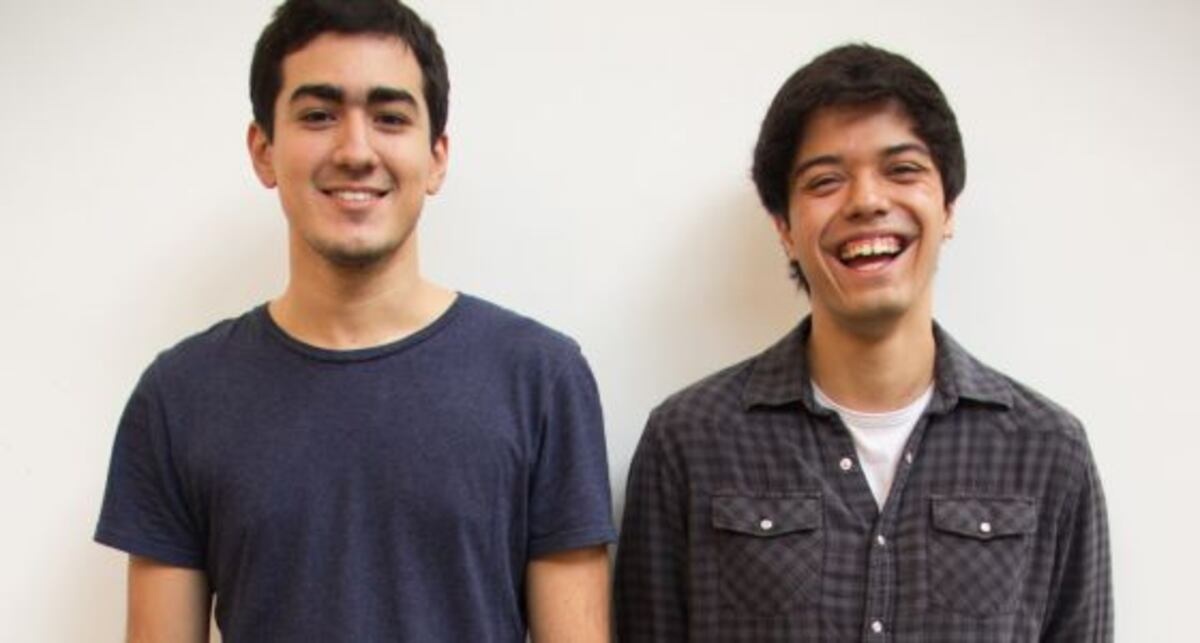
The fourth application was the one that worked
De Paula and Riccio admired Paul Graham’s essays and wanted Glio to go through Y Combinator. They applied four times before receiving an interview invitation. In 2013, Glio entered the summer batch, becoming the first Latin American company to participate. The milestone has followed de Paula through the companies he built afterward.
Four applications make a useful corrective to the polished version of an accelerator story. Acceptance is a date on a résumé. Repeated applications are work done before anybody agrees to put the date there. De Paula has discussed that process publicly, including preparing for the interview and making use of the program once inside it.
Glio reached Y Combinator’s Summer 2013 batch after four attempts.
The distinction mattered beyond the badge. In his recollection of the investor who left the office, de Paula describes a change in the people around him and in the assumptions they made about an early company. At YC, ambition could be discussed before the business had finished proving itself. He presents that shift as a lesson about environment, rather than a sudden improvement in his own intelligence.
The badge did not settle Glio’s future. In 2015, the company moved from local reviews into a cosmetics marketplace. In 2018, the founders shut it down. The years between those events resist a tidy success story: entry into a sought-after program, a change of business model, then an ending that no acceptance letter could prevent.
De Paula has continued to discuss that ending. In January 2021, he appeared on Lessons From a Failed Startup to talk about building Glio and having to close it after more than six years. Keeping that interview on his personal website gives the closure a place beside the more flattering press. A founder’s archive is usually selective. This one includes the bill.
The next company began with someone he knew
Origin followed in 2018. Matthew Watson, an American friend de Paula had met on trips to Silicon Valley, approached him about a product to help people manage their finances. They started with an initial prototype and investment, then built the platform with a six-person team during 2019. The first customers signed toward the end of that year; the operation launched in early 2020.
The idea took a different route to users than Glio had. Origin offered financial planning through employers, combining technology and human advice. De Paula became the technical co-founder. He had moved from helping people choose where to spend an evening to helping them organize money over much longer stretches of time.
By August 2020, Origin had 38 employees, 24 of them Brazilian. The company was based in San Francisco while drawing heavily on Brazilian talent. That detail makes de Paula’s international career more concrete than a list of cities: a business serving one market was being built with a team whose roots extended into another.
In September 2021, Origin announced a Series B of R$290 million led by 01 Advisors, General Catalyst and Lachy Groom. At that point, it served more than 100,000 employees across the United States, United Kingdom, Ireland, Canada and Israel. The business de Paula helped build had acquired the reach and operating demands of a company serving customers across several countries.
- 2011-2018GlioCo-founder & CTO
Reviews, then commerce - 2018OriginCo-founder & CTO
Financial planning - 2025MesmerCo-founder & CEO
Engineering operations
Origin’s year marks its founding; Mesmer began on January 1, 2025.
This time, he wanted the CEO’s chair
Mesmer began on January 1, 2025, after a sabbatical. De Paula had started companies twice before, yet he later wrote that the intensity of starting again surprised him. Experience had given him comparisons. It had apparently declined to make the work gentle.
He also made a deliberate change in role. For Mesmer, he wanted to become CEO. He chose Lucas Silva as CTO, having hired Silva as one of Origin’s early engineering managers in 2020 and worked with him for more than three years. His introduction of Silva emphasized both the ability to write software and the judgment to build products people wanted.
Sergio Bergmann joined them as co-founder and VP of Engineering. De Paula described all three as former CTOs. Their first hire, Filipe Silva, was another person Lucas and Sergio already knew through work. The company’s early staffing decisions rested on relationships with a history, rather than on an interview’s optimistic hour.
Looking back on 2025, de Paula named the team among his three biggest wins. He said Mesmer had grown fivefold over the preceding months and was seeing early signs of product-market fit. These were his reported results and his assessment of customer demand. Alongside them sat a simpler pleasure: working with people whose ability and commitment he did not spend the day questioning.
That familiarity did not remove the outside work of being CEO. He still described selling and dealing with investors as difficult. But inside the company, the daily experience had become enjoyable. A founding team can be a grand theory about complementary skills. Here, it also sounded like relief.
Berlin, on founder time
Mesmer returned de Paula to Y Combinator in 2025, twelve years after Glio’s batch. His account of the year describes going from remote work to San Francisco, then moving the team to Berlin in the third quarter. They hired their first employees and rebuilt the product from scratch. Enterprise customers followed in the fourth quarter.
He has been frank about the location. He values San Francisco for how quickly a founder can learn through unplanned encounters. Berlin became the practical choice because, he said, US immigration constraints made it nearly impossible to assemble the team he wanted. He did not dress that decision up as a declaration that geography no longer mattered.
Geography still appears in the calendar. In Berlin, calls with San Francisco prospects can fall at 11pm, midnight or later. When someone offers to reschedule after discovering the time difference, he has a ready answer.
“I’m in founder timezone. Just tell me what works for you.”
João de Paula
The joke is also a sales policy. He adjusts to the customer’s schedule. Building a global company, in this account, includes the distinctly local act of being awake when the other person wants to talk.
After the code gets faster
Mesmer’s early proposition addressed engineering leaders who could no longer see clearly what was happening across their teams. It connected activity to projects, showing progress, delays and risks without requiring another round of manual status updates. De Paula had spent years in the role of the person who needed those answers.
The current company describes itself as an operating system for agentic engineering teams. Its focus extends through planning, building, testing, review, quality assurance, shipping and operation. That wider view fits a customer conversation de Paula recounted in June 2026: a CTO had bought AI coding tools but found the team was still not shipping faster.
Faster code still passes through review and release. Mesmer’s thesis looks at the whole journey.
Conceptual diagram - no measured timings or performance results.De Paula’s diagnosis was that faster first versions were arriving at the same human checkpoints. Review, testing, release infrastructure and other downstream constraints could absorb the apparent gain. The attraction of that argument is its familiarity to anyone who has watched work wait: the first finished piece is only the beginning of delivery.
It is also a fitting problem for this particular founder. De Paula learned to build software because his first company needed a builder. He later managed people building it, then chose a different job and brought familiar colleagues along. Mesmer asks what happens around the code once writing it becomes easier. His own career has kept returning to the same practical question: what needs to change next so the work can move?