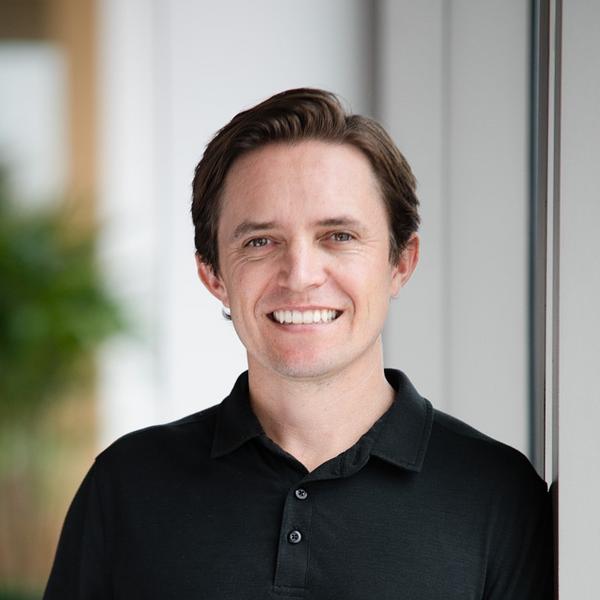
The Intern Who Stayed
In 2013, a Stanford GSB student named Jesse Wedler walked into the offices of a brand-new investment fund backed by Google. He was an MBA intern. By the time the fund - CapitalG - had become one of the most recognized growth equity vehicles in Silicon Valley, he was a General Partner. He never left.
That arc says something important about how Wedler thinks about time. Not in quarters. Not in fund cycles. In decades. His investing framework centers on a deceptively simple test: is this company capable of sustained, transformative growth across the next ten, fifteen, twenty years? If the answer is anything less than a conviction yes, he passes.
The companies that cleared his bar include Airbnb, Duolingo, Gusto, UiPath, ID.me, Next Insurance, Applied Systems, MANTL, Everlaw, Unqork, and Farther. The common thread is not sector - it spans wealth management, legal tech, identity verification, insurance infrastructure, and enterprise automation. The common thread is transformation. Each one is applying software to an industry that ran on paper, phone calls, and inertia.
Wedler grew up in Petaluma, California - 40 miles north of San Francisco, a city famous for its chickens and dairy, not its unicorn density. He studied at UC Berkeley, then earned an MBA at Stanford. Before CapitalG, he did private equity at TPG Capital and technology banking at Goldman Sachs. He arrived at the growth stage with full fluency in both the financial mechanics of large deals and the operational reality of scaling companies.
What Google's Money Looks Like In Practice
CapitalG is not Google Ventures. It is not a strategic arm looking to acquire companies or lock them into cloud contracts. It operates independently from Alphabet's other investment vehicles, with a mandate focused on profitable growth, not adjacency to Google's product roadmap. Wedler makes that point often, and deliberately.
What CapitalG does offer - and what distinguishes Wedler's value-add from a generic growth check - is operational infrastructure. Alphabet's data scientists, engineers, marketing teams, and executive advisors sit behind every investment. Wedler describes showing up to board meetings not just with questions, but with research: competitive landscape analyses, market sizing models, customer introduction lists. He calls it being "an extension of the team," not a monitor of it.
His preparation ritual is unusual by VC standards. Before engaging with a company, he researches the market, the competitive landscape, and the company itself thoroughly enough to contribute immediately. No fumbling through deck slides at the first meeting. The expectation, he says, is that he adds value from day one.
This orientation shapes the kinds of founders he looks for. Wedler values alignment of worldview over alignment of projections. When you and a CEO see the market similarly, he has said, the working relationship stops being oversight and becomes collaboration. That's a subtle but meaningful distinction in a business where investors and operators often occupy opposing corners of a boardroom.
co-led Oct 2024
fintech banking infra
on no-code software
enterprise & identity
The Bets
Analog Industries, Digital Reckoning
Wedler's investment concentration tells a story. Insurance. Banking. Legal. Wealth management. Identity. These are industries that spent most of the 20th century operating on phone trees, paper files, fax machines, and relationships instead of data. They are enormous, often regulated, and deeply resistant to change - which is exactly why Wedler finds them interesting.
His thesis: the companies that build software infrastructure for these sectors are not competing on features. They are competing for the right to become the default operating system of an entire profession. Applied Systems for insurance brokers. MANTL for community banks. ID.me for identity verification across government and commerce. Looker - which Google acquired - for data analytics. Each one, when it wins, wins at a category level, not a customer level.
In 2020, Wedler wrote a piece for TechCrunch making the case that no-code software would define the next generation of enterprise development. His investment in Unqork, a no-code platform for financial services and government, was live before the article published. He was not writing to signal. He was writing because he had already bet on it and wanted the record to reflect his thinking.
That's characteristic. Wedler is a firm believer in doing the intellectual work before the term sheet, not after. His due diligence reads like academic research: long-form market analyses, competitive mapping, customer discovery at a depth most growth investors skip entirely. When he says he shows up with "insightful data and useful suggestions," portfolio founders confirm it's not a marketing line.
The Long Game
The Woodworker Who Backed the Rocket Ships
Off-hours, Jesse Wedler does things that take time. He gardens. He builds things out of wood. He refurbishes boats - a hobby that demands patience, precision, and a willingness to work with your hands on something that does not yield to urgency. He spends time on the water with family and friends. He lives in Lafayette, California, east of the Berkeley Hills, with his wife and two children.
There is something deliberate in that list. For someone who works inside one of the most high-velocity investment environments in the world - Alphabet money, Google advisors, growth-stage pressure - Wedler's personal life reads like a calibrated counterweight. Patient hobbies for an impatient industry.
The clearest window into who he is outside work: with his younger brother Hoby, he co-founded a chemistry camp in Napa for visually impaired youth. It's the kind of project that most people in his position would mention once at a conference and never do anything about. Wedler and Hoby built it. The specificity of the cause - not generalized philanthropy, but a hands-on science camp designed to make chemistry accessible to kids who are typically excluded from lab environments - says something about how he operationalizes values.
He describes his investing philosophy with a directness that is unusual in a business famous for hedged language: pick your lane, have incredible focus, find something you can be great at, and stay there. He has followed that advice literally. For over a decade, his lane has been growth-stage B2B software in markets that the rest of Silicon Valley was too early or too distracted to care about.