WONDER TOOLS 85,000+ SUBSCRIBERS IN 201 COUNTRIES 637 APPS TESTED SO YOU DON'T HAVE TO PRINCETON. COLUMBIA X2. POYNTER. CUNY. FORMER TIME MAGAZINE REPORTER ONCE A CONCERTMASTER IN JERUSALEM 277 NEWSLETTERS RECOMMEND WONDER TOOLS $300/MONTH IN SOFTWARE SUBSCRIPTIONS - ALL RESEARCH "UTILITY BEATS PONTIFICATION" WONDER TOOLS 85,000+ SUBSCRIBERS IN 201 COUNTRIES 637 APPS TESTED SO YOU DON'T HAVE TO PRINCETON. COLUMBIA X2. POYNTER. CUNY. FORMER TIME MAGAZINE REPORTER ONCE A CONCERTMASTER IN JERUSALEM 277 NEWSLETTERS RECOMMEND WONDER TOOLS $300/MONTH IN SOFTWARE SUBSCRIPTIONS - ALL RESEARCH "UTILITY BEATS PONTIFICATION"
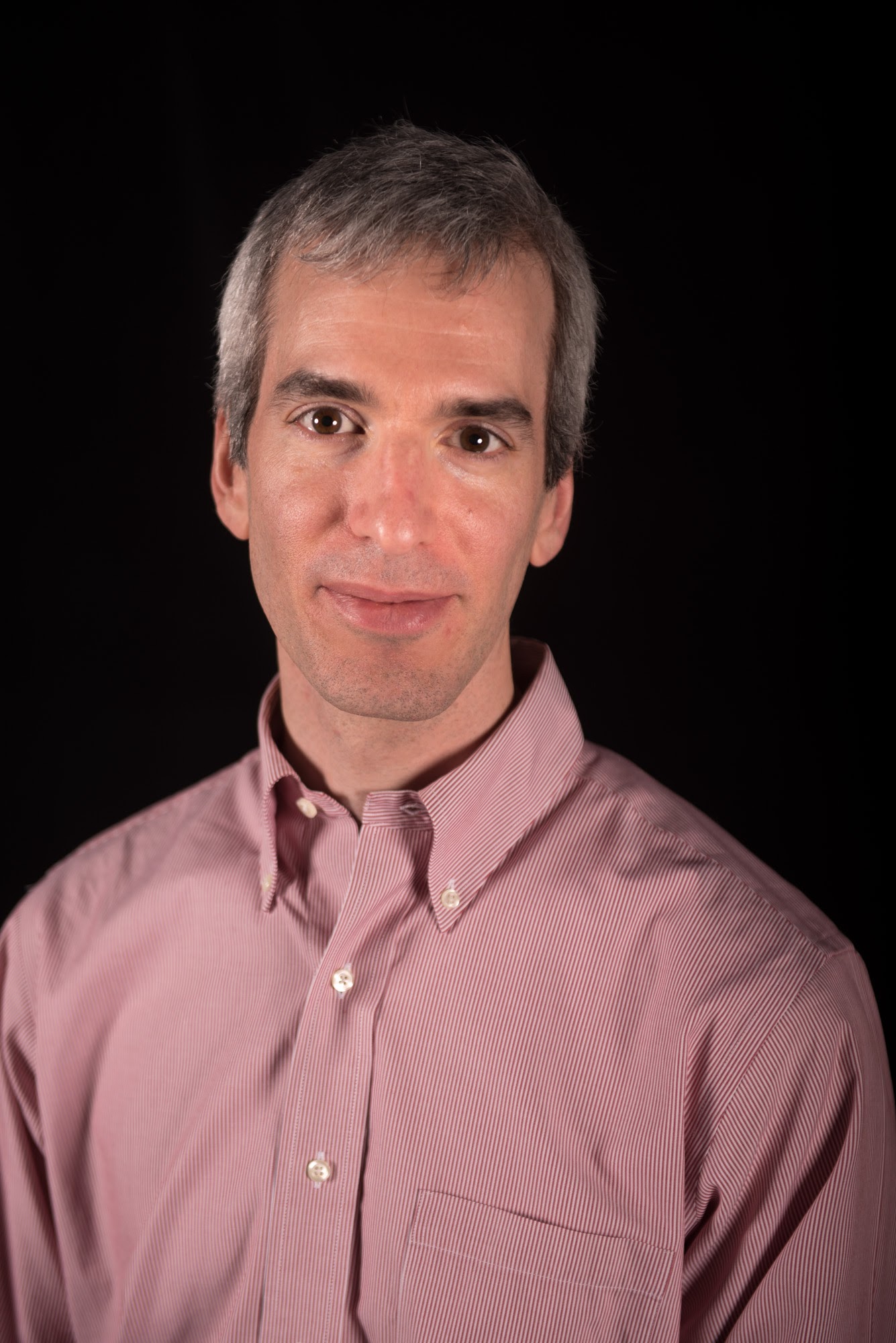
Jeremy Caplan - Wonder Tools newsletter creator and CUNY educator
Profile  ■  Journalist & Newsletter Creator

Jeremy
Caplan

The man who reads 637 apps so you don't have to - and still finds time to teach journalism, answer 3,500 emails, and remember to be human about it.

Director of Teaching and Learning at CUNY's Craig Newmark J-School. Creator of Wonder Tools, one of Substack's most-recommended productivity newsletters. Former Time Magazine reporter. Princeton, Columbia x2. Once a concertmaster. Always curious.

Wonder Tools 85K+ Subscribers CUNY Fast Company 201 Countries
85K+ Newsletter Subscribers
201 Countries Reached
637 Apps Tested on Phone
277 Substacks Recommending WT
200K+ Words Written in 5 Years

Jeremy Caplan is what happens when a Princeton policy student, a Columbia-trained journalist, a Columbia MBA, a concertmaster, and a compulsive app tester all happen to share the same body - and then decide to write a weekly newsletter about it.

His newsletter, Wonder Tools, is a weekly report on the digital tools worth your time. It is not sponsored. It is not breathless. It is not written by an algorithm. Since April 2020, Caplan has built it from zero to 85,000+ readers in 201 countries, all while running the Entrepreneurial Journalism Creators Program and teaching at CUNY's Craig Newmark Graduate School of Journalism in New York City.

The premise is almost annoyingly simple: test the tools yourself, report only the ones worth keeping, explain the weaknesses alongside the strengths. No hot takes. No hype. The newsletter's unofficial motto - "utility beats pontification" - is a direct rebuke of most of what appears in your inbox every morning.

That seriousness of purpose explains why 277 other Substack newsletters actively recommend Wonder Tools to their own readers. In the attention economy, peer endorsement at that scale is not marketing. It is reputation.

Before Wonder Tools, Caplan spent years as a reporter at Time Magazine covering Google, Apple, and Yahoo when those names still felt like the future, and cultural micro-trends like "carrotmobs" and cereal cafes when the internet was still surprised by itself. The reporting instincts stayed. The platform changed.

He has been called a trusted guide to the chaotic world of productivity software. What that actually means in practice: he spends about $300 a month on software subscriptions he considers research, tests roughly 637 apps on his phone (and uses maybe 10% of them regularly), and personally answers around 3,500 reader emails a year. Biologists email him. So do bakers. And bowling coaches.

Utility beats pontification. Headlines and hot takes are widely available elsewhere.
- Jeremy Caplan, Wonder Tools
  • Current RoleDirector of Teaching & Learning, CUNY Newmark J-School
  • NewsletterWonder Tools (Substack, since April 2020)
  • EducationPrinceton BA, Columbia J-School M.S., Columbia MBA
  • Based InNew York City
  • PreviouslyTime Magazine, Newsweek, The Paris Review
Wonder Tools

Started April 2020 in a pandemic. Still running. Bigger every month. No ads. No affiliate links. No manufactured enthusiasm.

🔍
The Testing Method

Caplan tests every tool before featuring it. He estimates he has evaluated 122 tools in his near-term pipeline, with 328 more queued. The ones that make the newsletter represent a hard-won fraction of what he explores.

The 100-to-1 Rule

For every minute a reader spends with Wonder Tools, Caplan spends roughly 100 minutes creating it. Two thousand hours invested over five years. Two hundred thousand words written. It shows.

🌎
The Reach

85,000+ readers across 201 countries. Biologists in Europe. Bakers in Asia. Bowling coaches in the American Midwest. The audience is as eclectic as the tools Caplan covers.

💬
The Community

277 other Substack newsletters recommend Wonder Tools to their audiences. That kind of peer network doesn't come from marketing spend. It comes from consistently being right about what's worth using.

🎙
The Podcast

Wonder Tools has expanded into audio with 75+ podcast episodes on Apple Podcasts, plus a YouTube channel featuring hands-on demos and tutorials for tools that benefit from being shown, not just described.

📈
The Growth

From zero in April 2020 to 65,000+ by the five-year anniversary in April 2025, growing around 3% per month. No growth hacking. Just consistent publishing, honest reviews, and word of mouth.

APR 2020 Wonder Tools launches during the COVID-19 pandemic lockdowns, targeting newly-remote workers hungry for digital tool guidance.
2021 First anniversary. Newsletter finds its rhythm and audience via Poynter partnership and organic referrals from early readers.
2023 Syndicated in Fast Company. Caplan speaks at ONA23 on AI and productivity tools. AI coverage becomes central to the newsletter's focus.
APR 2024 Surpasses 39,000 subscribers. Speaks at ONA24. Co-teaches Generative AI for Media Professionals on Maven platform.
APR 2025 Five-year anniversary. Publishes detailed retrospective: 265 posts, 200,000+ words, 2,000+ hours. Subscribers at 65,000+ across 201 countries.
2026 Crosses 85,000 subscribers. Ranked #76 in Substack Technology. 277 newsletters actively recommend Wonder Tools to their readers.

How Caplan Decides What Makes the Cut

He calls it his four-point evaluation framework. Every tool that appears in Wonder Tools has passed all four tests. Most don't make it.

01 Ease of Use

"Most people have limited time." If a tool requires a manual, it probably won't help the people who need it most. The bar is whether a busy person can use it quickly.

02 Cost

He prefers free or low-cost options that work for people regardless of employer budget. Paid tools must justify the expense clearly. He flags pricing transparently.

03 Real Impact

Does it address actual workflow friction? A clever demo doesn't pass. A tool that saves a researcher twenty minutes a day does. He tests in real workflows, not controlled conditions.

04 Personal Interest

"Something I'm excited about or can use in my own workflow." Wonder Tools is not a database. It's a curated perspective. If he can't get excited about a tool, he doesn't cover it.

From Jerusalem to Substack

The image of Jeremy Caplan at Princeton is a specific one: a young man who is simultaneously the concertmaster of an international symphony orchestra in Jerusalem and a public policy student in New Jersey. At some point, you have to choose a lane. He chose journalism.

That choice led him to Columbia's J-School as a Knight-Bagehot Fellow, then to Columbia Business School as a Wiegers Fellow, then to The Paris Review, Yahoo! Internet Life, Newsweek, and eventually Time Magazine - where he spent years reporting on the companies that were reshaping how people worked, played, and understood themselves.

The Time years were formative in a particular way. Caplan wrote about Google and Apple and Yahoo when they were still ascendant, still genuinely exciting, still capable of surprise. He also covered what he calls cultural micro-trends: carrotmobs, where consumers would reward environmentally responsible businesses with mass patronage; cereal cafes, which were exactly what they sound like; life-hacking, before that term became exhausted. He had a talent for finding the small, strange thing that revealed something true about the larger moment.

The Pandemic Pivot

In April 2020, with the world suddenly forced into remote work and everyone scrambling to figure out which apps could replace which physical offices, Caplan did something that looked modest at the time: he launched a newsletter.

Wonder Tools was not a pivot. It was an extension of everything he had already been doing - testing digital tools, teaching journalists to build independent businesses, thinking seriously about what technology actually helps people versus what merely exists. The pandemic just clarified the audience: suddenly millions of people needed guidance on tools they had never heard of, and they needed it from someone who would be honest about what worked.

Five years later, that newsletter has 85,000+ subscribers in 201 countries. It is syndicated through Fast Company. It has spawned a podcast with 75+ episodes and a YouTube channel with hands-on tutorials. And it is still, after all of it, written by one person who personally tests everything he covers and personally reads the emails he receives.

The CUNY Mission

The newsletter is the public face, but Caplan's day job is substantive in its own right. As Director of Teaching and Learning at CUNY's Craig Newmark Graduate School of Journalism, he runs the Entrepreneurial Journalism Creators Program - a 100-day curriculum designed for independent journalists worldwide who are building newsletters, podcasts, and niche news operations.

He helped direct the first global M.A. and certificate programs in Entrepreneurial Journalism, programs that have supported hundreds of journalists over more than a decade. The work is unglamorous in the best sense - practical, concrete, focused on helping working journalists build things that sustain themselves financially without compromising editorially.

There is an obvious connection between the newsletter and the teaching. Wonder Tools is itself a proof of concept for the kind of independent journalism Caplan spends his days teaching others to build. He has done it. He knows what it costs in time and attention and money. He also knows it works.

The Philosophy

On AI, Caplan is careful in the way that a person who has thought seriously about it tends to be careful. He describes AI tools as "probabilistic tools" - things that are useful but prone to errors requiring human validation. He argues that "there should always be a human in the loop." He uses Claude, NotebookLM, ChatGPT, and Perplexity regularly, and has been explicit about testing all of them in real workflows before recommending any.

He is also clear-eyed about AI's effect on writing quality. "Everything can summarize everything these days," he has observed, "but they do at different levels of quality." That distinction - between tools that merely produce output and tools that produce genuinely useful output - is what Wonder Tools is built to surface.

The newsletter's growth strategy reflects the same practical orientation. Social media is not a primary driver; he considers Twitter/X less effective than it once was. Most new readers come from recommendations by other Substack creators - those 277 newsletters that point their audiences toward Wonder Tools. That kind of growth is slow. It is also durable.

At the heart of it is a conviction that most people do not have enough time, and that the right tools, honestly evaluated, can give some of it back. That is not a revolutionary idea. But executed with the consistency and rigor that Caplan brings to it, week after week, for five-plus years, it turns out to be rare enough to build something significant around.
The Academic Architecture

BA, Public Policy
Princeton University - Woodrow Wilson School

Studied public and international affairs. Moonlighted as Concertmaster of the International Symphony Orchestra in Jerusalem during a winter program.

M.S. in Journalism
Columbia Journalism School

Knight-Bagehot Fellow. The fellowship program for journalists who want to develop deeper expertise in business and economics reporting.

MBA
Columbia Business School

Wiegers Fellow. Combined with the J-School degree to give Caplan a rare dual-lens on the business and craft of journalism simultaneously.

Ford Fellow in Entrepreneurial Journalism
Poynter Institute

Fellowship focused on building sustainable independent journalism ventures. Directly informed his work at CUNY and the design of Wonder Tools.

Certificate in Violin Performance
Music Training

A trained classical violinist before journalism claimed him entirely. The discipline of the instrument - hours of practice for incremental improvement - arguably shaped how he thinks about craft.

The Through-Line
Policy + Journalism + Business + Music

Few people hold Princeton, Columbia J-School, and Columbia Business School credentials. Fewer still were also concert-level musicians. The combination produces a very specific kind of thinker.

The Long Road to Wonder

1990s
Concertmaster
International Symphony Orchestra, Jerusalem
Mid-1990s
Early journalism: The Paris Review, Yahoo! Internet Life
Various Publications
Late-1990s
Staff Writer
Newsweek / Time for Kids
2000s
Reporter - Business & Technology
Time Magazine
2010s
Director of Education; First Global Entrepreneurial Journalism Programs
CUNY Tow-Knight Center for Entrepreneurial Journalism
2020
Launches Wonder Tools Newsletter
Substack (April 2020)
Present
Director of Teaching & Learning + Newsletter Creator
CUNY Newmark J-School / Wonder Tools (85K+ subscribers)

The Quotable Caplan

Narrow your subject. Focus on a distinct subset of things that you care about so you can delve deep in a distinct way.
The hardest part of writing is subtracting.
Utility beats pontification. Headlines and hot takes are widely available elsewhere.
Wonder Tools readers are biologists, bakers, and bowling coaches - from tech novices to legendary pros.
There should always be a human in the loop. We should do as humans what people are expecting we're doing.
Everything can summarize everything these days, but they do at different levels of quality.

Things You Didn't Know About Jeremy Caplan

🎻

He grew up idolizing Jascha Heifetz and the Chicago Cubs simultaneously. The violin and the baseball glove. He pursued both - and then chose journalism over both.

🏥

His parents are a physician and a nurse. He is the family member who chose words over medicine. They appear to have survived this development.

📱

637 apps tested on his phone. 10% used regularly. That's 63 apps. The other 574 are part of what he calls research. He spends $300 a month to call it that.

He personally answers ~3,500 reader emails per year. That's roughly 10 a day, every day, from 201 countries. Biologists. Bakers. Bowling coaches. He responds to all of them.

📚

200,000+ words written in Wonder Tools over 5 years. That's approximately two full-length books worth of prose about productivity software. He deletes 10% of every post.

🕐

The 100-to-1 rule: for every minute you spend reading Wonder Tools, Caplan spent 100 minutes creating it. Over five years, that's more than 2,000 hours - all while holding a full-time job.

🎣

At Time Magazine, he covered carrotmobs - when consumers would flood an eco-friendly business as a reward for sustainable practices. The internet was younger and stranger then.

🇫🇴

As a Princeton student, he performed internationally as concertmaster of the International Symphony Orchestra in Jerusalem. He then came home and wrote about technology for a living.

Caplan's Personal Tool Hall of Fame (2025)

These are the tools that survived. Out of 637 apps tested on his phone, these made the permanent shortlist - the ones he actually uses, recommends to readers, and considers genuinely worth the time.

Craft Perplexity Claude Letterly ChatGPT NotebookLM Google Docs Wakeout Substack

Share This Profile