The origin of JB Ashtin is hidden inside an ordinary professional favor. In 1999, Stefan Antonsson, then a senior marketing executive at Shire, asked a former colleague named Joni Bradley to organize an advisory board for psychiatry experts. Bradley was essentially a one-person shop. Antonsson hired her anyway. The assignment led to more advisory boards, a speaker bureau, a training meeting, help recruiting sites for a Phase 4 study and, finally, a 750-person investigator meeting. A project had quietly turned into a company.
There is a wonderfully unpolished photograph that does not exist but is easy to imagine: Bradley’s husband, children, parents and sister standing around the family pool table, stuffing nearly 3,000 priority-mail envelopes for that study. It is the opposite of the standard agency origin story. No pitch deck. No venture round. Just a family, a pool table and an alarming quantity of postage.
Two years later, the company left Bradley’s Canton, Michigan home for a 500-square-foot office. Her desk was a Coleman camping table; her chair came from Kroger and folded. The setup tells you what the business cost in spirit, if not in a neat dollar figure: almost nothing went into appearances, and nearly everything went into getting the work right.
“With JB Ashtin, everything just happens. There’s no drama, there’s not a lot of fanfare.”Senior director, medical affairs · anonymous medical-device client
The referral loop ate the sales funnel
JB Ashtin is a medical communications company. The phrase is bland enough to conceal an interesting job. A drug can produce excellent data and still fail to be understood. Investigators may miss the point of a protocol. Physicians may distrust a new disease claim. A publication may be scientifically correct and practically unreadable. The company works in the long passage between evidence and comprehension.
Its clients are mainly biotech startups and small-to-mid-sized pharmaceutical companies, with some large pharmaceutical and medical-device businesses. They buy publication plans, manuscripts, abstracts, posters, scientific platforms, advisory boards, steering committees, investigator meetings, speaker programs, training, creative design and digital experiences. The people using the work are medical-affairs teams, clinicians, investigators, patients and caregivers. This is custom professional service, sold through projects and long relationships - not a subscription product pretending every scientific problem is identical.
The startling number is not headcount or revenue. It is more than 90 percent - the share of annual business the company says comes from repeat clients or referrals. Bradley wrote in 2019 that nearly 70 percent of the firm’s business had stemmed from relationships formed with Shire. Customer concentration is risky, but relationship concentration can become a distribution system. Do one useful thing; get invited to do the adjacent useful thing; earn an introduction to another team.
When a slide deck is the wrong room
The best illustration begins with disbelief. A mid-sized pharma company was preparing to launch an adult ADHD treatment, but some psychiatrists doubted that ADHD persisted into adulthood. A conventional presentation could repeat the evidence. It could not make skepticism feel expensive.
JB Ashtin made a “day in the life” virtual-reality experience. In 360-degree video, clinicians saw home, work and social situations from the perspective of an undiagnosed adult. Legal and regulatory teams helped shape the boundaries; the experience was designed for congresses, sales representatives and digital channels. At two national congresses, more than 600 healthcare professionals tried it. The client then expanded its use in field engagement.
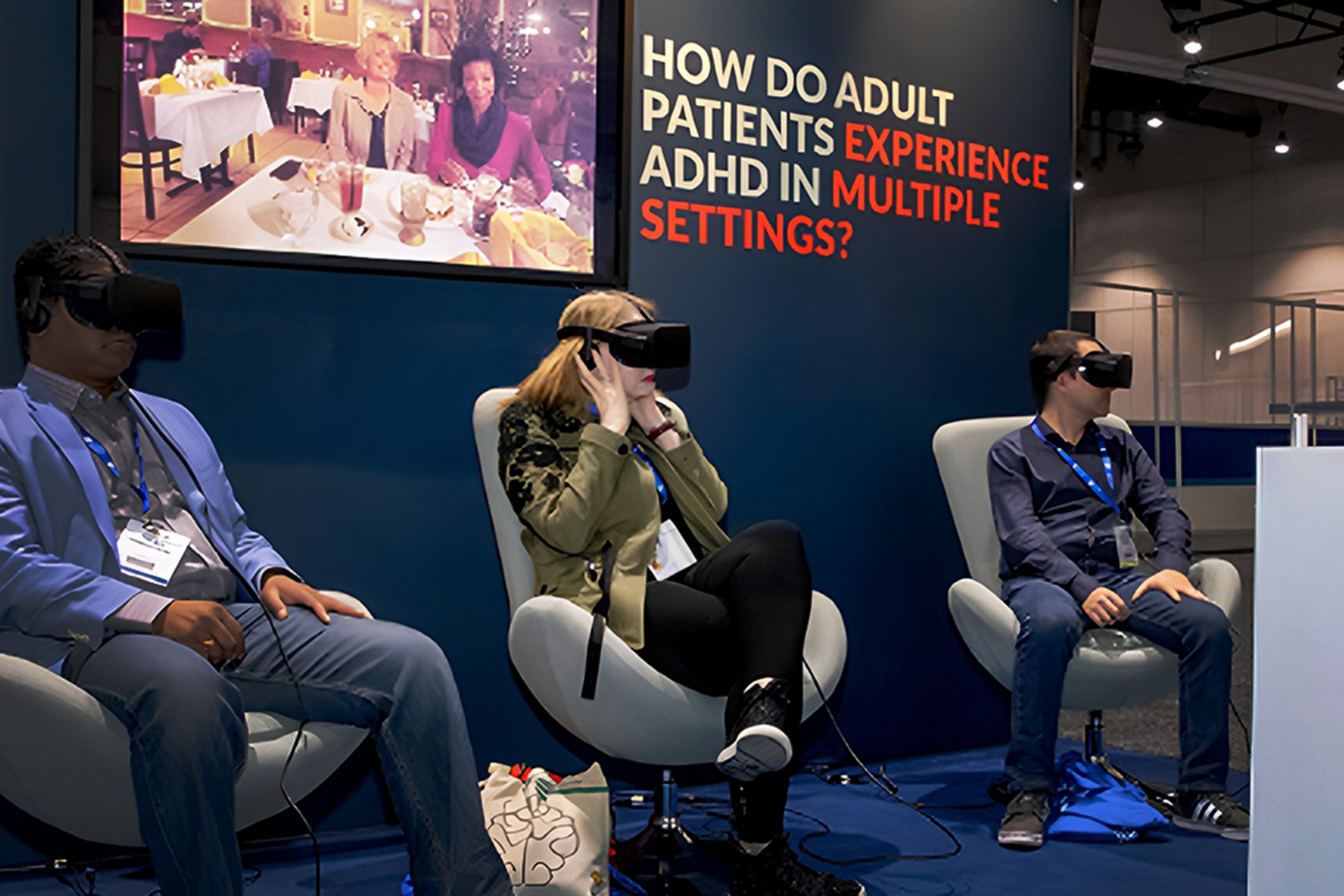
That case explains the firm’s favorite phrase, “science, strategy and heart,” better than any brand copy could. Science supplies the claim. Strategy identifies the belief blocking it. The human layer makes the claim memorable without loosening the evidence. In regulated healthcare, the clever idea is only half the work; the other half is building something legal and medical teams can approve.
Not every first attempt was technological. In another case, a small pharmaceutical company had gone two years without new clinical data. Standard engagement tactics were falling flat. JB Ashtin replaced the usual slide-deck rhythm with filmed, unscripted conversations among respected clinicians. The subject was no longer “what new data can we announce?” but “what useful clinical discussion can we create from what practitioners already face?” The videos gave sales teams a reason to reopen conversations without inventing novelty.
What failed first was certainty
Bradley is unusually candid about the management assumptions she had to discard. She once believed leaders were born, not developed. Under stress, she sometimes used sarcasm or indirection instead of direct feedback. She assumed colleagues were less busy than she was and wanted answers immediately - “by the end of this sentence,” as she later put it.
Then COVID-19 emptied the office. For more than a year, Bradley could no longer see whether people were working. She had to trust them. The result, she wrote, was the company’s most productive year. JB Ashtin is now fully remote, with weekly check-ins, collaborative sessions and periodic team gatherings. The interesting change was not location. It was the replacement of visible activity with delivered work.
The firm’s products are visible - a manuscript, a meeting, a headset. Its advantage is mostly invisible: lowering the client’s pulse.YesPress
That calm has a mundane form. Before a winter advisory board, a coordinator noticed flights were being cancelled and rerouted attendees before being asked. On another evening, a scheduled speaker cancelled three hours before dinner. The replacement’s oil light came on en route, so the coordinator located motor oil and arranged for the client’s regional director to change it in the venue parking lot. This is not glamorous medical strategy. It is also exactly what customers remember.
The useful middle
The medical-communications market offers two familiar extremes. Large global networks bring vast capacity, specialist divisions and buying leverage. Freelancers bring direct access and low overhead. JB Ashtin sits between them: scientific writers and strategists, account and creative teams, meeting execution and digital production, but with the founder-led continuity of a smaller independent firm.
That position works best when a lean biopharma team needs an extension of itself - enough range to move from Phase 2 results to a scientific platform, a publication plan, expert feedback and congress materials, without coordinating a caravan of vendors. It is less naturally suited to a buyer seeking self-serve software, commodity copy by the page, or the worldwide production scale of a holding-company network. High-touch service is valuable only when the problem is important enough to deserve touch.
Start with the obstruction, not the deliverable. Is the problem missing evidence, disbelief, poor recruitment, fragmented experts or simple boredom? Choose the format after naming that obstruction. Then make one person responsible for the unglamorous edges - the cancelled flight, the journal check, the oil light. Creativity wins attention; operational care wins the second assignment.
In a quarter-century, JB Ashtin moved from envelopes to immersive video, and from an office in Bradley’s house to a distributed team. Yet its central offer barely changed. A client hands over a complicated piece of science and a room full of people who need to understand it. JB Ashtin figures out what that room should become.