James Brown had worked out what he wanted to sell. He still needed somewhere to put the people who would sell it. In the summer of 2019, the future Storm2 was a small founding team with funding, recruitment experience and a decidedly finite claim on the seating in a coffee shop. A specialist recruitment business needs specialists. First, rather awkwardly, it needs to recruit them.
Brown’s answer to the market was specific: fintech. Companies building new ways to move, lend and invest money needed people who understood their work. He wanted to build a recruitment firm that understood it too. The proposition was narrow; the ambition behind it was international. That combination would carry Storm2 into a wider group called Levin, across borders, through rapid expansion and eventually into a substantial change of direction.
An apprenticeship across time zones
Brown had spent years preparing for ownership without yet owning the business. He joined Phaidon International as a graduate in 2008. His education had been in History & Politics at the University of Southampton; a later executive leadership programme at INSEAD added another line to the academic record. His working education would involve learning how recruitment businesses travelled.
For five years, he was based in Singapore, growing Phaidon’s Asia Pacific operation. In 2016 he returned to Europe as group managing director, leading 300 people across five locations. The sequence matters. Before he asked investors to back his own business, he had already taken responsibility for teams spread across several offices.
International expansion can look wonderfully tidy on a map. In practice, every new pin represents people who need recruiting, training and managing. Brown’s earlier career had put him close to that work. When he left Phaidon in 2018 following its acquisition by Quilvest Private Equity, his next venture would begin with an experienced operator’s interest in a particular market.
A market small enough to understand
Storm2’s launch announcement in September 2019 set out the division of labour. General technology recruiters covered a broad field. Brown’s firm would concentrate on fintech, finding people in areas including mobile engineering, DevOps, machine learning and data science. Puffin Point supplied £1 million in seed funding.
The distinction was useful because fintech was a description of the customer’s business, rather than a single job. A company moving money could need an engineer, a data specialist and a senior executive. Storm2 intended to work across those functions while keeping its attention on the sector connecting them.
Brown was making a service-business bet: sustained attention to one market could become something clients would pay for. A recruiter needed to understand the work well enough to recognise relevant experience, then persuade the right person to consider a move. A handsome list of candidates would accomplish little if the underlying match was wrong.
The launch also brought other experience into the room. Jamie Robinson and George Trewhella joined the leadership team. Payments executive David Hunter became a strategic adviser. The new firm’s proposition depended on knowledge, and Brown was assembling people who could contribute it.
The company had to hire itself
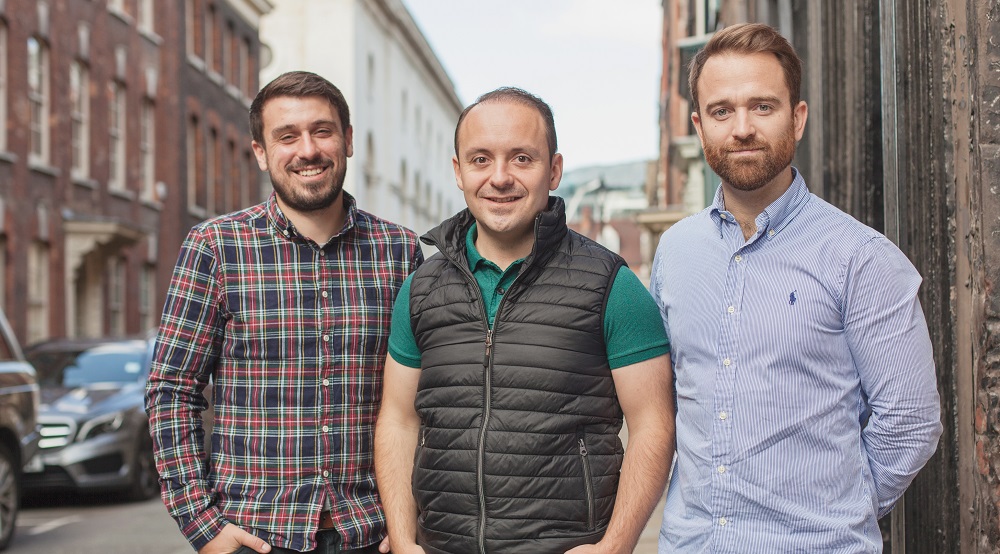
The beginning had its own recruitment problem. Brown needed colleagues willing to commit their careers to a firm still taking shape. In his early account, the founders secured an office, conducted 146 interviews in ten days and assembled a team of 20. Forty clients followed in the first 90 days.
Those are brisk numbers. Their human content is easier to miss. Each interview asked someone to assess the people making the promise, as well as the promise itself. Every client was also deciding whether this new specialist could be useful.
“I just take the credit!”
James Brown, on the people executing the early plan
The joke was his. So was the acknowledgement behind it: the first employees had taken the idea and done the work. Brown had sought co-founders who could help build the operation, giving the venture more than one person’s judgement to rely on. The company’s later podcast would return to those first 90 days with all three founders, treating the beginning as a shared story.
Teaching the people who find the people
Storm2 recruited graduates as well as recruiting for clients. That made training part of the business model from the outset. The founders could bring experience into the company, but a growing cohort of consultants would need to acquire its own.
By January 2021, Brown was discussing a business of more than 60 recruiters on The RAG Podcast. The conversation covered bringing in 30 graduates in August 2020 and training them remotely. It also addressed plans for further hiring and international offices. The practical question behind the expansion was how quickly new recruits could become effective at a specialist job.
An early employee, Nat Rozner, described sitting among the founders and learning directly from them. That proximity gave the academy idea a concrete setting. Junior staff were close to the people who had designed the business, hearing how they worked and seeing what they expected.
The relationship could last well beyond an induction. Jamie Cook joined the first academy in 2019, having been close to accepting a financial-services job in Dubai. Six years later, Levin announced his promotion to managing director, USA. A recruit from the first intake had become responsible for a major part of the company’s future.
Brown’s own graduate-to-management career gave that progression a personal resonance. He had followed a route from learning the trade to running teams. Now someone hired into his business was doing something comparable. It is a useful way to measure the distance travelled: follow a person who arrived at the beginning.
The numbers acquired a passport
By its third financial year, Levin reported $44 million in net fee income. Its November 2022 announcement described more than 600 employees and an office network that had added New York, Dallas and Hamburg to London, Singapore and Amsterdam.
Net fee income is the measure to keep attached to that figure. It is a company performance number, rather than a valuation or a statement about Brown’s personal wealth. It also belongs to a particular year. The distinction matters in a business whose shape would change.
Net fee income in the group’s third financial year
Expansion gave Brown’s specialist model more places to operate. It also gave the organisation more moving parts: offices, leadership roles, training needs and different markets. A founding team can know everyone in a room. A group spread across cities needs arrangements that work when the founder is elsewhere.
The business continued to put experienced people around that task. In February 2024, Levin appointed former SThree chief revenue officer Dave Rees as chair. The appointment came with a stated intention to develop the organisation beyond its startup phase. Rapid growth had become a management assignment in its own right.
Then the map changed
In July 2024, Levin announced that it would exit the European market and concentrate on the US. London and New York would serve American clients. Brown linked the decision to where technology investment was taking place, while acknowledging the European teams’ contribution. Puffin Point supported a corporate restructuring.
This was a significant turn for a founder who had built teams across regions. The case for a location had to be reconsidered alongside the market it served. An international footprint was no longer, by itself, the direction of travel.
The original UK legal company, Levin Group Ltd, entered administration in July 2024. It moved into creditors’ voluntary liquidation in July 2026. That entity, company number 11708924, had originally been incorporated as Storm2 Ltd in December 2018.
The current Levin website continues to name Brown as founder and CEO, and Storm2 describes an operating business serving US fintech clients from London and New York. Those details concern the current brands; the liquidation concerns the identified original legal entity. The distinction belongs in any account that follows the business from its founding.
- 2019Storm2 launches around fintech recruitment.
- 2022Levin reports $44m in net fee income.
- 2024The group announces a US-market focus.
- 2026The original UK entity moves into liquidation; the brands retain a public operating presence.
Today’s Storm2 description takes specialisation further within fintech: teams focus on areas such as payments, lending, wealth technology and blockchain. The original idea remains recognisable. Its geographic application has become more concentrated.
A sailor with a desk job
Brown’s public biography allows itself one small diversion: he used to be good at sailing, and is inclined to tell people about it. It is a pleasingly modest claim in a genre usually crowded with achievements. The sporting glory is safely in the past; the conversation apparently continues.
His preferences about office life are similarly specific. He has described liking the separation of coming to work and leaving it. Coworking communities could be useful, but participation in the social programme should be optional. A founder can want an ambitious company and still prefer to go home after work.
That detail gives the public story a more ordinary rhythm. Brown has spent his career helping organisations find people, and building organisations to do the finding. Behind the expansion announcements sit recurring decisions about whom to trust, what to teach and where to focus attention. Storm2 began with a defined market and a small team. The years since have made the responsibilities larger, even as the brief has narrowed again.