In 2013, Ian Andrews had the sort of revelation that comes only after a very long annoyance. He had spent two decades implementing financial and enterprise-resource-planning systems. Again and again, mid-sized organisations paid consultants to assemble a complicated machine from scratch, waited months for it, then inherited custom code that made the next change equally painful. Andrews’ verdict was less polite than a software brochure: businesses were being mugged.
His answer was iplicit, a cloud accounting system designed so that the choices lived in configuration and data, not in a thicket of bespoke code. It was not rushed. Development began in 2013; the first customer arrived in January 2019. In startup folklore, six years before commercial launch sounds almost indecent. In accounting, where a clever shortcut can become an auditor’s recurring nightmare, patience has a certain appeal.
The company then behaved as if the waiting had wound up a spring. Since launch, iplicit says it has averaged more than 100 percent year-on-year growth for seven consecutive years. By 2026 it reported more than 50,000 daily users at over 3,000 organisations, logging in from 103 countries. One Peak supplied £25 million in January 2025, the company’s first external institutional round. The money was intended for product development and growth, which is investor language for: do more of this, faster.
The expensive sandwich
iplicit occupies an awkward, profitable middle. Below it sit Xero, QuickBooks and Sage 50: approachable products that suit small organisations but can become a collection of add-ons, exports and reconciliations when a group adds entities, currencies, departments or approval chains. Above it sit Sage Intacct, Oracle NetSuite and Microsoft Dynamics: capable enterprise systems whose implementation can resemble a house extension - expensive, disruptive and never quite finished on the date first discussed.
The customer is therefore not defined merely by headcount. It is the charity with restricted funds and partial VAT; the academy trust reporting across schools; the property group with dozens of legal entities; the manufacturer juggling inventory, currencies and approvals; the software business whose finance team is still sewing together spreadsheets after everyone else has gone home. BDO’s outsourcing practice became a partner in 2026 for precisely this cohort. iplicit says its network now exceeds 70 channel partners, including firms among Britain’s top 50 accounting practices.
What does it cost? iplicit quotes to requirements rather than publishing one tidy sticker price. An authorised implementation partner estimates the average subscription at about £1,350 a month and projects beginning around £14,000. A 2024 public-sector price schedule listed separate monthly rates for power users, team users and team-user-plus licences across three editions. These are useful bearings, not a universal bill: modules, migration, user mix and integrations change the total. The newer iplicitPay service is refreshingly specific - 40 pence per successful supplier payment, with no setup charge, monthly fee or charge for a failed payment.
Subscription: roughly £1,350 a month on one partner’s 2026 average. Implementation: from roughly £14,000. Actual proposals vary. The useful comparison is not with a £30-a-month ledger, but with the staff time, add-ons and enterprise project the buyer is trying to replace.
What failed first was trust
Legacy accounting software rarely announces its decline with smoke. It fails socially before it fails technically. A report takes so long that managers keep their own spreadsheets. A bank feed does not connect, so payments are printed and rekeyed. The finance system still produces numbers, but too late to settle an argument. By the time those numbers reach a meeting, everybody has brought a different version.
At Watson & Hillhouse, an equipment company, bank reconciliation took as much as two days each month and customer statements another half-day. The vendor had effectively stopped developing the old finance system beyond legislative maintenance. That was the first hard break: no bank integration was coming. An auditor narrowed the replacement choice to Xero and iplicit. Xero would have required four or five companion applications; iplicit kept the sub-ledgers and complex finance work together. Reconciliation became a five-to-ten-minute daily routine, and the company says at least three and a half days a month returned to the team.
Before
Up to two days reconciling the bank each month, printed payment files and stale management information.
After
Five to ten minutes daily, bank-ready exports and at least 3.5 working days recovered each month.
Age Scotland’s trigger was similar. Its central servers were unreliable for remote work, managers maintained shadow spreadsheets, and bank figures might not be posted until ten days into the following month. The charity says iplicit cut the time to produce management accounts by two-thirds and justified itself within months. P. Johnson & Son, a property business, moved after Sage 50 forced corrections and tenant billing through manual loops. Automating one billing job cut three days to under an hour; dropping an external bookkeeper saved £1,000 a month.
“We can now issue the management accounts in a third of the time.”Ben Thomas, interim finance director at Age Scotland
Those examples also explain what changed buyers’ minds. It was not a promise to “transform finance.” It was the sight of their own processes inside a sandbox, the ability to migrate historical data, a project measured in weeks, and a shortlist comparison against the software they already understood. iplicit advertises an average of 21 implementation days on one current campaign; BDO describes a typical project as finishing within three months, versus six months or more for comparable enterprise ERP. The clock depends on the state of the data and the ambition of the integration, but the contrast is the pitch.
A stack of small disappearances
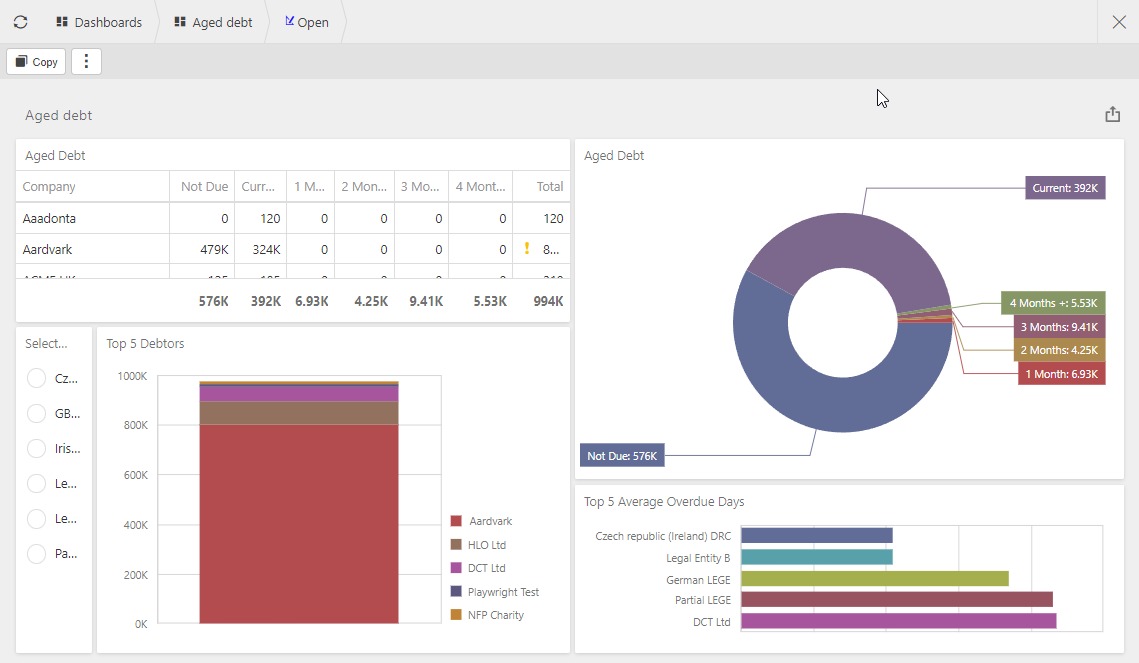
The product is less one dramatic invention than a series of irritating jobs made to vanish. A shared general ledger sits under sales, purchasing, banking, VAT, expenses, projects, stock, fixed assets and budgeting. Group accounts consolidate across entities and currencies in real time. Intercompany postings can be automated. Reports drill from a total to a transaction and its supporting document. Budget holders approve invoices from a phone. A public API, bank connections and an Excel add-in acknowledge that the rest of the organisation will not politely remain inside one browser tab.
This is where the company’s expertise matters. Andrews knew the implementation traps. Rob Steele, co-founder of the earlier Exchequer accounting system, knew an installed base that felt abandoned on-premises. Lyndon Stickley, who met Andrews through a friend on the school run, knew how to assemble a commercial team. Stickley joined as a non-executive director in 2016 and became chief executive in 2022; Steele moved from CEO to CFO. The technical founder, the legacy-market veteran and the growth operator were different pieces of the same go-to-market machine.
iplicit’s software is multi-tenant: customers use one core application, centrally maintained and upgraded. That enables a faster configuration-led rollout, but it also sets a boundary. Organisations demanding deep bespoke code, unusual infrastructure control or a single ERP spanning every global operation may prefer the heavyweight systems iplicit positions against. At the other end, a freelancer or simple single-entity company is unlikely to need this much accounting machinery. The sweet spot requires real complexity and a finance team large enough for reclaimed days to matter.
The AI arrived after the arithmetic
In 2026, iplicit added the inevitable two letters, but with a notably sober order of operations. AI Detect reviews purchase invoices for duplicates, new suppliers, unusually large amounts and entries made outside normal business hours. It raises exceptions for a person to inspect; it does not pretend suspicion is proof. iplicit Insights adds an executive dashboard and natural-language questions over current finance data. A credit-control agent has been previewed. The broader label is AI Pulse.
The sequencing is the point. A language model laid over unreconciled ledgers merely explains unreliable numbers more fluently. iplicit first built transaction controls, audit trails, permissions, documents and consolidation, then added pattern finding. Its trust centre lists ISO 27001, ISO 9001 and ISO 42001 certifications, Azure hosting and UK data residency. In finance, “the computer noticed something odd” is useful. “The computer improvised an answer” is less welcome.
One Peak’s investment gave the company room to expand this product line and its marketing. Partnerships broaden the route in: GoCardless handles invoice payment links and direct debits; Pleo connects spend management; MCS Rental Software feeds high-volume rental transactions; BDO and other accountants place iplicit beneath outsourced finance teams. This is no longer only a direct software sale. It is becoming a distribution web around the moment an organisation admits that its starter ledger has become an expensive habit.
The lesson is usefully narrow
What can another company copy? Start with the neglected customer, not the feature list. iplicit found organisations that both ends of the market had taught themselves to tolerate: too complex for entry-level vendors, insufficiently grand for enterprise consultants. Recruit people who already know why those buyers are frustrated. Replace custom code with disciplined configuration. Let customers test familiar data before asking for trust. Measure the sale in work removed - days of reconciliation, hours of reporting, a bookkeeper no longer required - rather than adjectives.
There is also a warning inside the success. Six years of self-funded development works when founders understand the domain, can afford the wait and face a market where reliability outranks novelty. It is a poor recipe when customer needs change monthly, distribution must be learned from scratch or runway is thin. A partner strategy works when accountants and resellers have clients genuinely graduating into complexity; it produces little if the product is just another tool for the same small-business buyer. And a fast implementation stays fast only when data is clean, decisions are available and “configuration” does not quietly become custom development.
iplicit has won awards, appeared twice in the FT1000, joined the Sunday Times 100 Tech list and placed fifth among medium-sized companies in The Sunday Times Best Places to Work 2026. Those are pleasant signals. The more persuasive proof is a finance director saying he can step out of the weeds. Accounting software is rarely loved for what it adds to a day. It is loved for the hours nobody has to spend using it.
Keep digging