A portfolio is a strange object. It looks like art, but it behaves like an argument. A dozen drawings laid side by side must somehow say: this student can observe, invent, revise, take a risk, finish a thought and survive four years of critique. The teenager who made the work is expected to know all of this while also doing algebra and remembering where the charcoal went.
Icon Art Academy built its business inside that gap. From a studio in Irvine, California, the company teaches drawing, painting and digital craft. Then it adds the less romantic apparatus around the work: concept development, portfolio selection, college counseling, competitions, exhibitions and conversations with admissions representatives. The customer is usually a young artist and, just as importantly, a family trying to turn talent into a credible next step.
The second curriculum
The obvious curriculum is art. Icon lists foundation and advanced classes, illustration and fine art, digital painting, animation, graphic design, fashion, architecture, entertainment, product and transportation design. The less obvious curriculum is translation. Students learn to turn a private creative habit into something a stranger can read quickly and remember later.
That distinction explains why the academy is not simply a neighborhood drawing class, and not simply a college counselor with nicer pencils. Its public roster mixes educators with working-world experience: automotive design, game art, animation, fashion and graphic design. Executive Director Jae Shin's biography includes transportation design at ArtCenter and work connected to Oakley, Hyundai/Kia and Audi. Other listed instructors bring experience from Obsidian Entertainment, Nickelodeon, Paramount, Fashion Nova and Disney. The point is not celebrity adjacency. It is vocabulary. A transportation portfolio is judged differently from a fashion portfolio; animation has its own evidence; architecture has another.
“They would help me find direction in my art and create a theme around my artwork.”Alexis Lee · former student, in an academy testimonial
Theme is the operative word. Technique can produce an excellent drawing; theme can make ten drawings feel as if the same alert mind made them. Icon's pitch is individualized rather than formulaic: build the foundations, find the student's subject, then edit with a destination in mind. This is a delicate promise. Coaching can clarify a voice, but too much coaching can flatten it. The academy's published mission - helping students discover a unique identity - is therefore more than decorative copy. It names the central difficulty of the product.
Make the private work public
Icon's most transferable idea is to create many smaller moments of judgment before the large one. In 2025 and 2026, the academy promoted portfolio reviews and webinars involving admissions representatives from NYU, Boston University, Rhode Island School of Design and ArtCenter College of Design. Students could practice explaining an idea, hear where a sequence became repetitive and revise before an application portal made the decision permanent.
The portfolio rehearsal loop
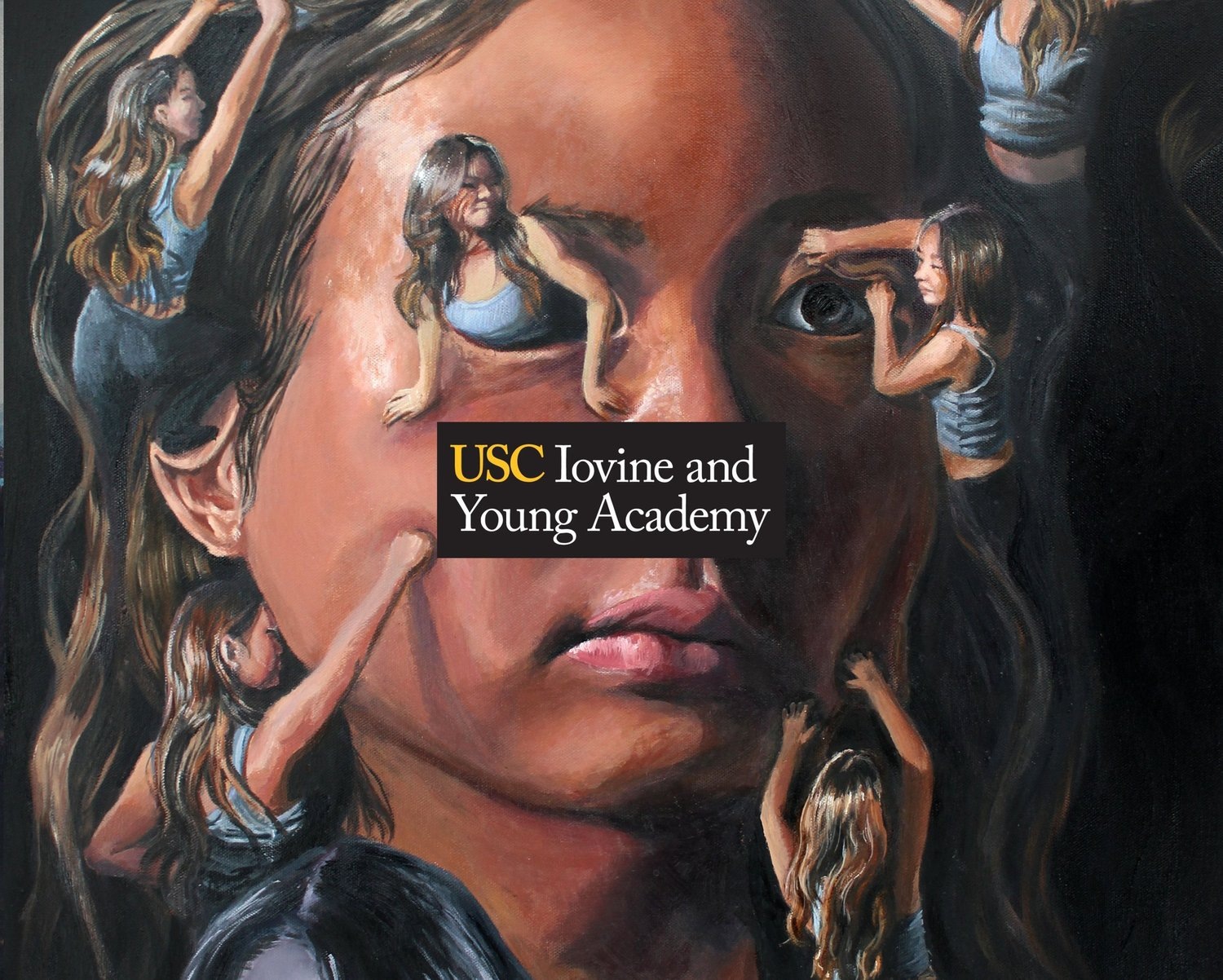
Competitions and exhibitions perform a similar job. Icon has shown student work at Pacific City Bank and, in 2025, with Silverado Hospice. Students have entered national and international contests. One, Alexis Lee, won the 2023 Best-in-Show Student award from Embracing Our Differences for a work about body dysmorphia. Icon's 2026 results page lists YoungArts national medalists and a first-place winner in California's 47th Congressional Art Competition.
These are useful achievements, but the deeper mechanism is repetition under real conditions. A contest imposes a brief. An exhibition imposes a wall and an audience. A reviewer asks the student to explain a choice. Each event turns an unfinished creative identity into an observable act. A school can copy that sequence without copying Icon's course catalog: create deadlines, add informed outsiders, put the work in public, then revise.

A studio with an admissions office attached
The academy's business model appears conventional: families pay tuition for classes, counseling and intensive programs, though current fees are not posted publicly. The offer is local at its center - one Irvine address, studio hours from Tuesday through Saturday - but broader at its edges through online classes and families aiming at colleges around the country. Contact options in English, Korean and Chinese, including KakaoTalk and WeChat, reflect the community it serves.
In 2026, Icon announced full accreditation from the Accrediting Commission for Schools, Western Association of Schools and Colleges. For an academy that began in 2004, accreditation adds institutional scaffolding to a business long marketed through results. The company says its students have been accepted by art schools including RISD, ArtCenter, Parsons, Pratt and SVA, and by universities including Yale, Harvard, Columbia, Stanford, Brown and USC. Acceptance lists do not isolate cause - talented students, families, schools and luck all enter the picture - but they show where Icon has chosen to compete.
Its alternatives are easy to name: another Orange County studio, a private tutor, an online course, a high-school art teacher, an independent admissions counselor. Icon's difference is the bundle. The student need not carry a sketchbook from one specialist to another and translate conflicting advice alone. The same organization can see the technical weakness, the portfolio theme and the application deadline.
Who gets the most from the model?
A student with a real appetite for making work, a specific admissions or competition goal, and enough time to revise. It is less natural for someone seeking a casual drop-in hobby, for a self-directed artist who only needs inexpensive technical practice, or for a family that wants guaranteed admission. Portfolio coaching can improve the evidence; it cannot make an admissions committee predictable.
What the reader can borrow
The academy's playbook is surprisingly plain. First, separate foundational skill from personal voice so neither becomes an excuse for the other. Second, organize instruction around the student's intended field, because “good art” is too vague to guide a fashion applicant and a transportation designer in the same way. Third, move critique earlier. The worst time to learn that a portfolio feels generic is after pressing submit.
Finally, give the work somewhere to go. Icon's volunteer projects are instructive here. In 2025, students helped design and illustrate an English-learning book for children in Cambodia through Pathway International and Lialoha Pathway International School. The project created a client, an audience and a purpose beyond admission. That change of context can do what another practice exercise cannot: force the artist to consider whether the picture communicates.
There is a small paradox in every portfolio academy. Students arrive because they want to be recognized as individuals, then enter a process full of rubrics, conventions and strategic advice. Icon Art Academy has spent more than two decades working that paradox. Its best answer is not to remove the structure. It is to use the structure as a frame sturdy enough for a young person's peculiar interests to become visible.