The cloud comes calling
Picture a bank deciding whether to approve a payment. The account ledger sits on the mainframe. A new service wants to inspect the transaction, apply a model and return an answer before the customer notices the pause. Moving the service elsewhere creates another journey for the request, another security boundary and another failure to plan around. Moving the ledger is a rather larger adventure.
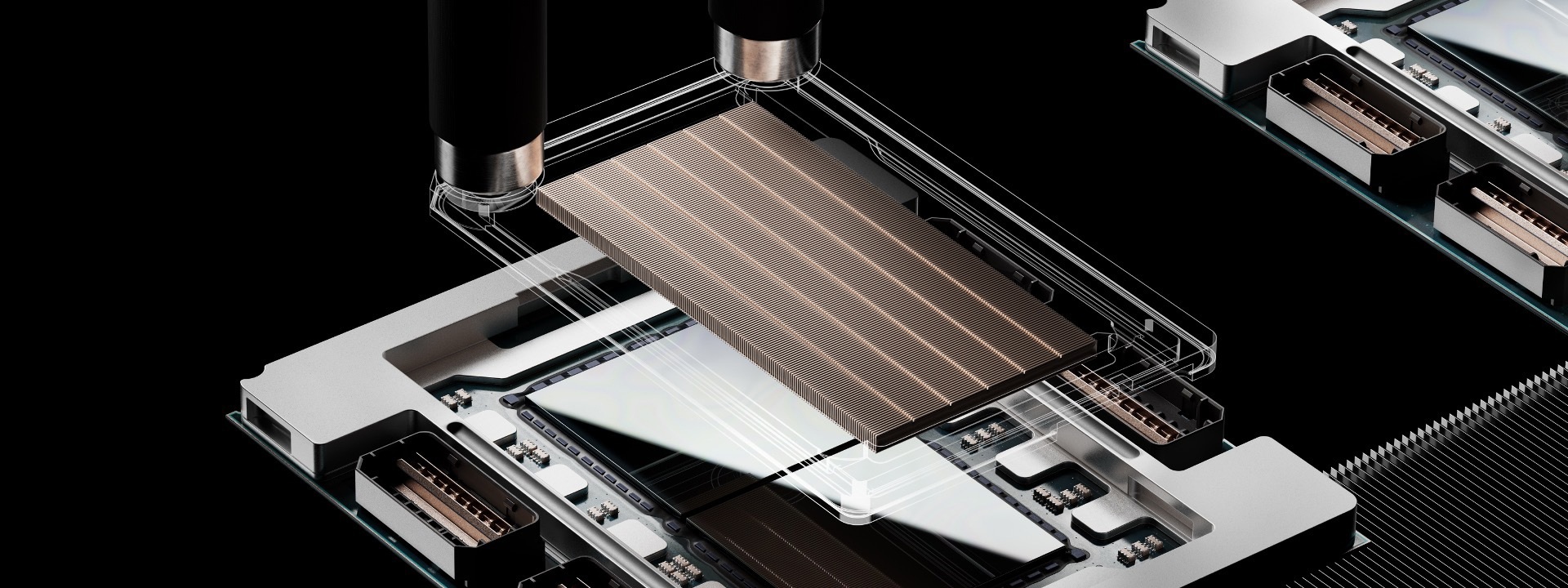
IBM has proposed a third route: give the mainframe another language. On August 24, 2026, at Hot Chips, it unveiled a dual-architecture processor design for future IBM Z and LinuxONE systems. Each core is intended to execute Arm and IBM instructions concurrently. The interesting promise is architectural: modern software could come closer to the business logic that already lives there. IBM’s announcement
Announced design targets · not measured production performance
Two languages, one core
The distinction matters. This is not a proposal to park a separate set of Arm cores beside IBM cores. IBM describes native execution of both instruction sets within each core. Arm-native Linux environments would coexist with z/OS and existing Linux workloads. That makes the processor a potential meeting place for software communities accustomed to different addresses. Arm’s explanation
The collaboration began in April, with virtualization, software compatibility and enterprise requirements among its stated priorities. Those priorities reveal how much work sits above the silicon: operating systems, isolation, management and a usable software stack must all join the party. An instruction set opens the front door; it does not furnish the house. April collaboration
An instruction set opens the front door; it does not furnish the house.From this story
What the silicon might buy
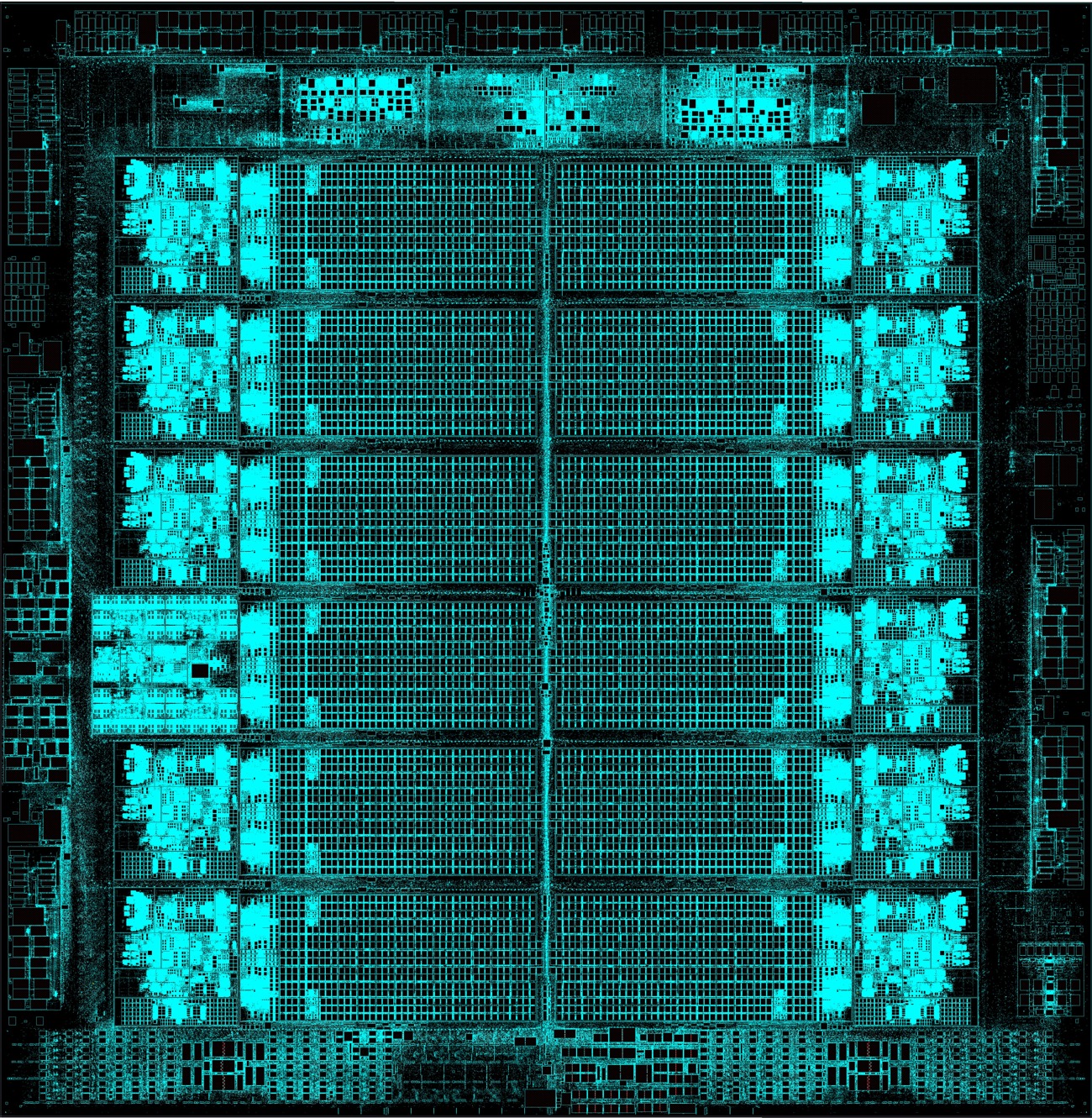
The announced design targets a 2 nm process and 11 cores running above 5.7 GHz, alongside on-chip inference acceleration, a dedicated data processing unit for I/O and a large cache architecture. These are specifications and design goals, not an application benchmark. Processor specifications
For a buyer, the useful translation is a set of workload hypotheses. High clock speeds could help latency-sensitive transaction paths, provided the software, memory system and scheduling cooperate. A smaller process node creates opportunities for density and efficiency; the node label alone cannot establish power consumption, cooling needs or cost per transaction.
Inference acceleration suggests a fraud score computed while a payment is being considered, rather than after the money has gone. The value would be the decision arriving in time. Buyers would still need supported model formats, measured accuracy and latency at their own peak load.
Dedicated I/O processing could reduce general-purpose CPU work spent moving data. Large caches could keep frequently used transaction data and instructions closer to execution. Database access, message handling and mixed analytics are plausible beneficiaries. Cache effectiveness depends on the working set; neither cache nor frequency rescues an application bottlenecked by locks or remote calls. These are prospective uses inferred from the design, not results IBM has demonstrated for this processor.
Twenty-two million is an invitation
Arm says its ecosystem includes more than 22 million developers. That is a measure of ecosystem reach, not a count of people ready to deploy on IBM Z. The proposed attraction is access to Arm-oriented cloud and AI software while keeping sensitive processing within an enterprise environment. Arm ecosystem claim
IBM’s developer outreach describes future opportunities for software providers, open-source projects and integrators, including eventual testing and validation. It also names security, encryption, fault detection and recovery as qualities prospective Arm workloads could benefit from. This is ecosystem recruitment while the platform develops. Developer programme
For a bank, insurer or government department, the prospective gain is quite specific: introduce an Arm-native service near governed data without first relocating the system of record. Hardware resilience could help maintain service through component faults; encryption and key management could help protect sensitive processing. Applications still need correct permissions, sound recovery behaviour and auditable operations. A reliable machine cannot make careless software discreet.
Nor does an Arm binary guarantee a supported application. Libraries, operating-system versions, vendor certification and deployment tooling will decide what actually runs. A cloud service that relies on provider-managed databases or identity systems may need substantial redesign even if its executable speaks Arm fluently.
The migration pitch meets its rival
AWS’s documented mainframe modernization routes include refactoring code and data into modern frameworks and replatforming workloads onto AWS. Microsoft’s general Azure refactoring architecture describes conversion to Java or .NET, with deployment on virtual machines or Kubernetes and changes to the database layer. These approaches aim to carry business capabilities into a different operating environment. AWS approach · Azure architecture
IBM’s wager runs the other way: bring more software choices to the core. That could appeal when moving deeply connected transaction logic would consume years of testing, or when local access to sensitive records has particular value. The financial comparison must include migration effort, licensing, operations and the useful life of the existing estate—not merely a processor specification.
The cloud case remains substantial. A company standardizing development and operations on AWS or Azure may value a common delivery platform more than keeping a service physically close to its ledger. Managed services and existing team skills can outweigh the appeal of another supported execution target.
And the contest is not a forced choice between moving everything and moving nothing. Microsoft documents Azure Logic Apps approaches that expose existing host transactions while retaining established programs, including integration that can run near local systems. IBM must show an advantage over these hybrid arrangements as well as over full migration. Azure’s incremental approach
| Route | What changes |
|---|---|
| IBM’s proposed chip | Bring Arm software into future core systems. |
| Cloud migration | Move or refactor selected workloads to AWS or Azure. |
| Hybrid integration | Expose host capabilities while retaining core programs. |
Compare support, latency, recovery and total cost for the actual workload.
The proof belongs in the workload
A useful distinction already exists in IBM’s own catalogue. Its August 12 announcement described expanded z17 and LinuxONE 5 systems as generally available. The August 24 dual-architecture announcement instead concerns future platforms and explicitly labels future direction as goals subject to change. The available machines do not establish that this new processor is shipping. Available systems · Future direction
The cited materials provide no shipping date, customer production benchmark or independent demonstration of this chip’s mixed-architecture performance. They do not settle how concurrent workloads share execution resources, what isolation costs, or how an Arm service behaves when neighbouring transactions surge.
A persuasive evaluation would pair representative Arm software with the buyer’s existing transaction workload. Measure completed work and tail latency under contention; then test recovery, encryption overhead, I/O saturation and deployment support. Price the whole system. An impressive average is small consolation to the payment stranded at the back of the queue.
An address worth keeping
The strategic prize is the freedom to change software without first changing the home of the business. IBM is trying to make its core infrastructure a more inviting destination for developers who learned their habits in the cloud.
For the bank in our opening scene, success would be wonderfully untheatrical: a new service installed, a decision returned, an old ledger still trusted. The customer would see a payment approved. The technology department would see one fewer reason to move the house.
The questions buyers will ask
What did IBM announce on August 24, 2026?
A dual-architecture processor design for future IBM Z and LinuxONE systems, intended to execute Arm and IBM instructions natively and concurrently within each core.
Is the dual-architecture processor shipping?
The announcement describes future direction and design goals. It gives no shipping date and should not be confused with generally available z17 or LinuxONE 5 systems.
What are the announced hardware targets?
A 2 nm design, 11 cores above 5.7 GHz, AI inference accelerators, dedicated on-chip I/O processing and a large cache architecture. These are not independently verified production results.
Will all Arm software run unchanged?
The design aims to support Arm-native Linux environments. Application dependencies, supported operating systems, tooling and vendor certification will still determine practical compatibility.
Does the chip remove the need for AWS or Azure?
No. It proposes another place to run modern software near core data. Cloud migration and hybrid integration remain alternatives; buyers must compare workload performance, support, operations and total cost.