The cold opening
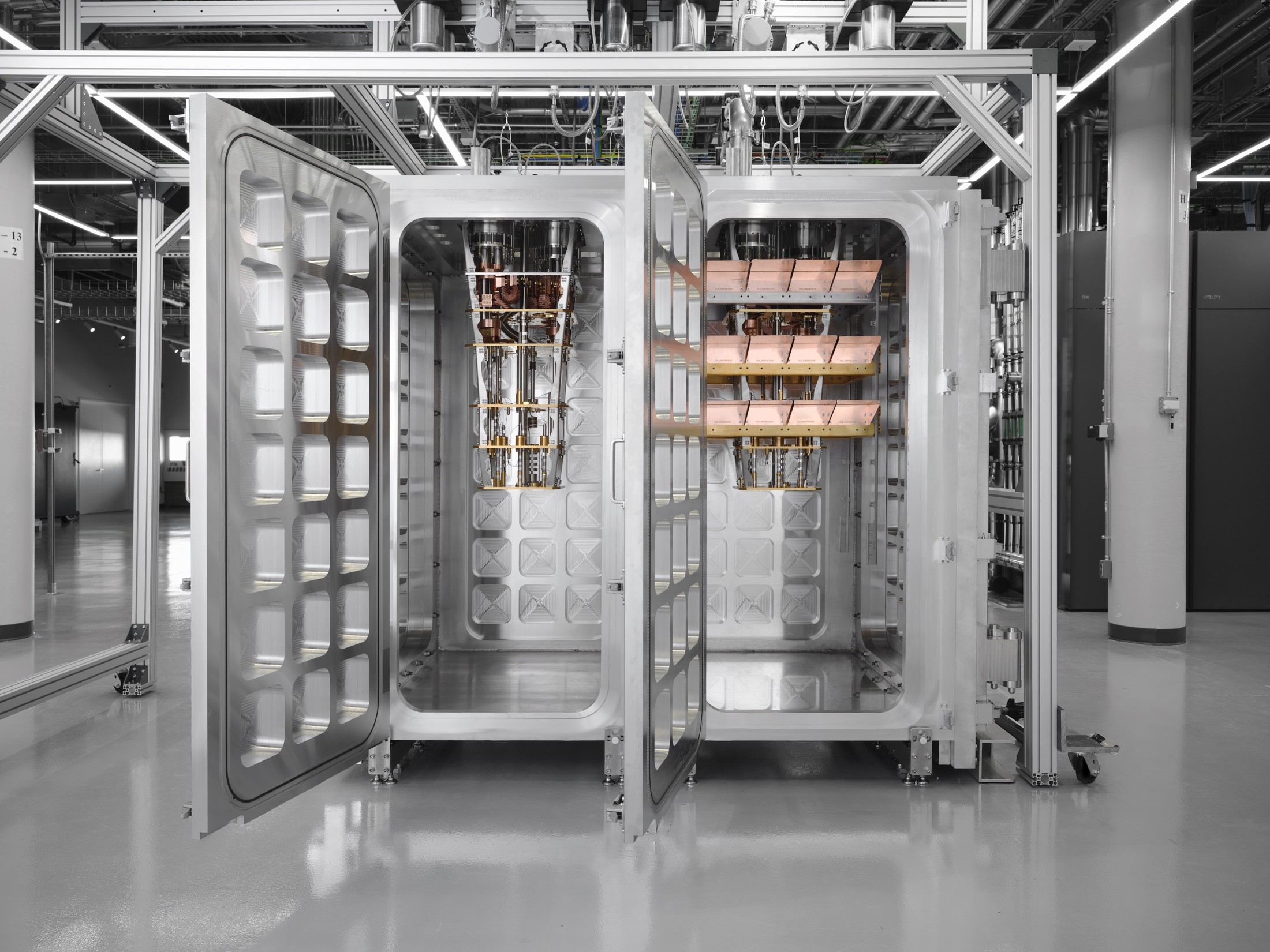
The race to IBM’s next great computer begins with a refrigerator. Two of them, joined together, chilled to a temperature at which ordinary intuitions are best left outside the laboratory. The spectacle is less romantic than a thinking machine. It is also rather more useful: a computer cannot keep its promises if its components cannot share a home.
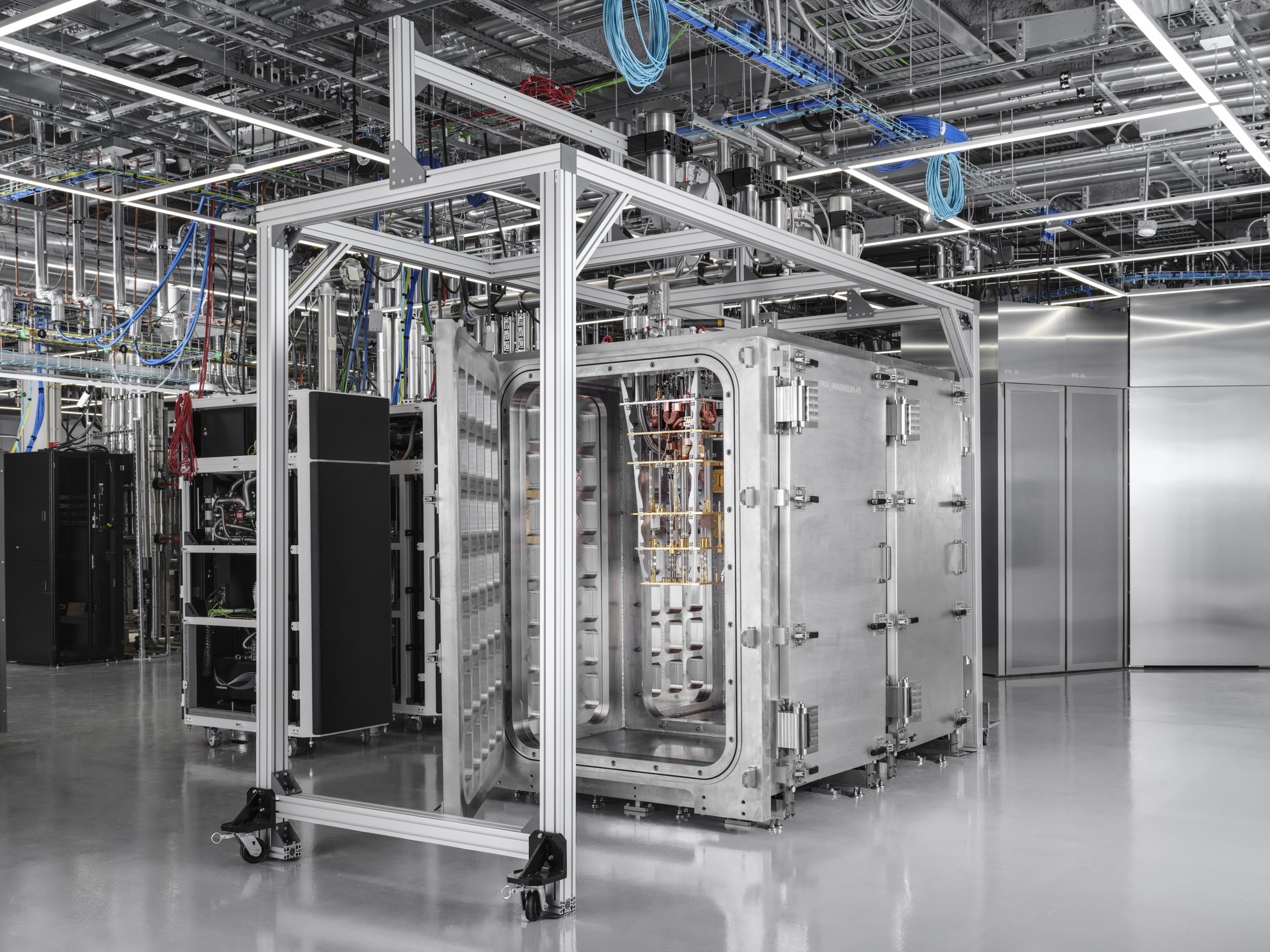
On August 19, IBM reported that its connected cryogenic modules had reached below 15 millikelvin. Each enclosure offers up to 12 times the wiring space of IBM’s most widely used quantum systems. The design is intended eventually to link hundreds of chips. For now, the achievement is two working modules sharing an ultra-cold environment. A door has opened; the palace remains to be built.
The ambition behind that door is Starling, IBM’s planned fault-tolerant quantum computer for 2029. To get there, IBM must turn a succession of laboratory successes into a machine whose parts cooperate reliably. Refrigeration is one chapter. Connections, error correction and software must supply the rest.
Reporting source: IBM cryogenic update
A $10 billion wager on the whole machine
In June, IBM announced plans to invest more than $10 billion in quantum computing over five years. The commitment covers research and development, manufacturing, capital expenditure, acquisitions and ecosystem partnerships. It is a budget for the surrounding industrial apparatus as well as the computer itself.
That breadth matters. A brilliant processor is an expensive ornament without repeatable production, control systems, trained programmers and customers who know what to ask it. IBM is funding the attempt to bring those requirements together. Money can buy equipment and expertise. Physics retains the charming habit of refusing to be impressed.
The practical question is therefore how the spending turns into measurable progress. Buyers should watch the links between milestones: whether a component works in isolation, whether it works with its neighbours, and whether the resulting system can complete a useful computation. A lavish cheque makes the attempt credible. The evidence will arrive in experiments.
Reporting source: IBM investment announcement
“Bringing fault-tolerant quantum computers to industries depends on several fundamental advances.”Jay Gambetta · Director of IBM Research and IBM Fellow
First connect it. Then make it dependable.
IBM’s August announcement sets out the next engineering steps. Nighthawk processors are scheduled for installation in the new modules later in 2026 for operational testing. In 2027, IBM aims to connect processors through its L-couplers into a system with at least 1,000 programmable qubits. These connections are meant to let separate chips exchange quantum information and work together.
The distinction between programmable and logical qubits is essential. A programmable qubit can take part in a computation. A logical qubit stores quantum information with protection from an error-correcting code, using physical hardware underneath. Those two counts describe different things; a larger number on an earlier machine does not make it the more capable computer.
IBM’s technical plan for Starling targets 200 logical qubits and circuits containing 100 million quantum gates in 2029. Error correction has to detect trouble, decode what happened and keep the computation on course. The classical machinery doing that work is part of the quantum machine’s success. IBM describes an architecture built around modular hardware and bivariate bicycle codes.
Beyond Starling, the August acquisition announcement places Blue Jay in the mid-2030s. IBM’s Technology Atlas gives it a goal of one billion gates on up to 2,000 qubits. The dates are engineering objectives, subject to revision. The compelling story is the proposed progression from connected hardware to protected computation, then greater scale.
Reporting source: IBM’s technical roadmap · 2026 systems update · Technology Atlas
- 2026NighthawkOperational tests in the new modules
- 2027Connect the chipsAt least 1,000 programmable qubits
- 2029Starling200 logical qubits · 100 million gates
- Mid-2030sBlue JayUp to 2,000 qubits · one billion gates
Roadmap goals; timing and performance remain subject to change. Programmable and logical qubit counts are different measures.
HRL brings another kind of qubit
A week after the cryogenic announcement, IBM completed its acquisition of HRL Laboratories. Financial terms were not disclosed. HRL brings silicon-spin qubit expertise alongside IBM’s superconducting approach, plus capabilities in quantum sensing, materials, cryogenics, control electronics, packaging and interconnects.
This is a purchase of knowledge across several stubborn interfaces. How a device is made, cooled, packaged and connected can determine whether an elegant design survives contact with a real machine. IBM says these capabilities are expected to strengthen its hardware roadmap. It continues to advance superconducting architectures; the announcement does not describe Starling switching to silicon-spin qubits.
The editorial inference is straightforward: a broader research base gives IBM more ways to investigate problems that resist a single approach. That is valuable, but an acquisition announcement cannot establish which discoveries will transfer into production or when. HRL adds expertise. Its contribution will have to be demonstrated in hardware.
Reporting source: IBM acquisition announcement
The enterprise homework starts now
For an enterprise, the sensible response is a small, disciplined programme with a clear question. “We need a quantum strategy” is a splendid way to commission a presentation. “Can this approach improve this specific calculation?” gives a team something to test.
Build Qiskit skills first. IBM’s documented workflow moves from mapping a problem into circuits and operators to optimizing for the target hardware, executing, and processing the results. Assign engineers who can understand both the business problem and the computational assumptions. A tutorial completed is a beginning; a reproducible experiment is a stronger credential.
Next, run hybrid quantum-classical experiments. Keep classical processing in the workflow and record the cost of the entire calculation: preparation, execution, repeated measurements and analysis. Start with a bounded question and a result that can be checked. Establish the best practical classical baseline before treating an interesting quantum result as an improvement.
Finally, validate the use case. Choose a measure that matters to the business, such as accuracy at a fixed cost or time to an acceptable answer. Set a budget, document failures and decide in advance what evidence would justify another round. A negative result can save a company a great deal of money if someone is willing to read it.
Keep procurement decisions tied to demonstrated capability. Access terms, integration effort and the resources needed for a workload deserve as much attention as processor names. Teams can learn now without making their operating plans depend on a delivery date three years away.
IBM has put a large sum and a detailed sequence of machines behind its ambition. The next tests will ask whether connected processors behave as intended; later ones will ask whether error correction supports useful work at scale. Enterprises have their own test to pass: arriving with a problem worth solving. The refrigerator may be cold. The business case should be colder.
Reporting source: Qiskit documentation
- LearnBuild Qiskit skills and reproduce a hardware experiment.
- CompareRun a hybrid workflow against a strong classical baseline.
- ValidateUse a business metric and an explicit decision to continue or stop.