Allure Security had an awkward arrangement with its observability provider. When its logs exceeded the purchased allowance, the platform shut off. The software meant to explain what was happening could stop collecting the evidence. Meanwhile, the company was hunting fraudulent websites impersonating its customers. A missing record was a business problem.
Hydrolix’s account of the switch contains a revealing detail: Allure kept its existing user interface. It moved ingestion, retention and querying to Hydrolix on AWS. The reported license fee fell below half the previous fee; searchable history stretched from roughly 30 days to at least 15 months. The familiar screen stayed. What happened underneath changed.
- Keep the evidence. Store full-fidelity logs for later investigation.
- Keep familiar tools. Connect dashboards such as Grafana and Splunk.
- Test the whole bill. Ingest price alone cannot describe operating cost.
A company born from the bill
Logs are the receipts of digital life: requests, errors, transactions, strange visits at strange hours. Collect enough and they explain why a stream stuttered or a customer could not check out. Collect enough and they also become expensive.
Marty Kagan and Hasan Alayli encountered that arithmetic at Cedexis, the content-delivery observability company Kagan co-founded. Its storage expense was becoming second only to payroll. Kagan later worked at Fastly; Alayli worked at Splunk. The problem followed them. They founded Hydrolix in 2018 to change the economics of keeping those records.

Their expertise came from operating systems where traffic arrives continuously and customers notice delays immediately. Hydrolix concentrated on high-volume event data, combining stream processing, compression and indexed search. Its place in the market is beneath the operational question: what just happened, and can we still examine it?
The archive that stays awake
A conventional retention bargain sorts data by age. Recent records remain easy to search; older ones become cheaper to keep and harder to consult. Hydrolix puts compressed, indexed data in cloud object storage and separates that storage from computing resources. Ingest and query services can scale independently. A burst of traffic need not permanently dictate the size of the database.
- 01 IngestKafka · Kinesis · HTTP
- 02 PrepareIndex + compress
- 03 RetainCloud object storage
- 04 AskSQL + dashboards
Storage and compute scale independently.
There is preparation behind the speed. Hydrolix’s technical guidance recommends summary tables, updated as records arrive, for recurring dashboard questions. Keep raw records for investigations; ask smaller, purpose-built tables for routine metrics. Otherwise, repeatedly scanning an enormous raw table can waste compute and slow the answer.
That distinction makes the performance claims easier to read. Hydrolix’s FOX materials report 55 billion records and a median query time of 0.481 seconds during a Super Bowl deployment. Those are measurements from a particular event and workload. A new buyer still needs to test unfamiliar queries against its own data.
Median query time reported for the FOX event deployment.
A workload result, not a promise for every query.
The traffic the servers never saw
For Nordic retailer Elkjøp, the missing information lived at the edge: traffic reaching caches and protection layers without reaching origin servers. Its existing backend monitoring left that picture incomplete, while moving the extra logs to another platform threatened to increase costs.
A proof of concept changed the decision. The team reported resolving five issues within months and putting Hydrolix into production before Black Friday Weeks. During the campaign, an attack involved 3,000 IP addresses across 80 countries. Hydrolix supplied visibility; the security services provider supplied protection. Elkjøp reported no customer impact.
The distinction matters. Analytics helps people recognize and investigate an attack. It does not automatically perform every defensive action. Similarly, Navy Federal Credit Union uses TrafficPeak for visibility into digital services. Broad labels such as “security” conceal quite specific jobs.
Sell the engine through a trusted door
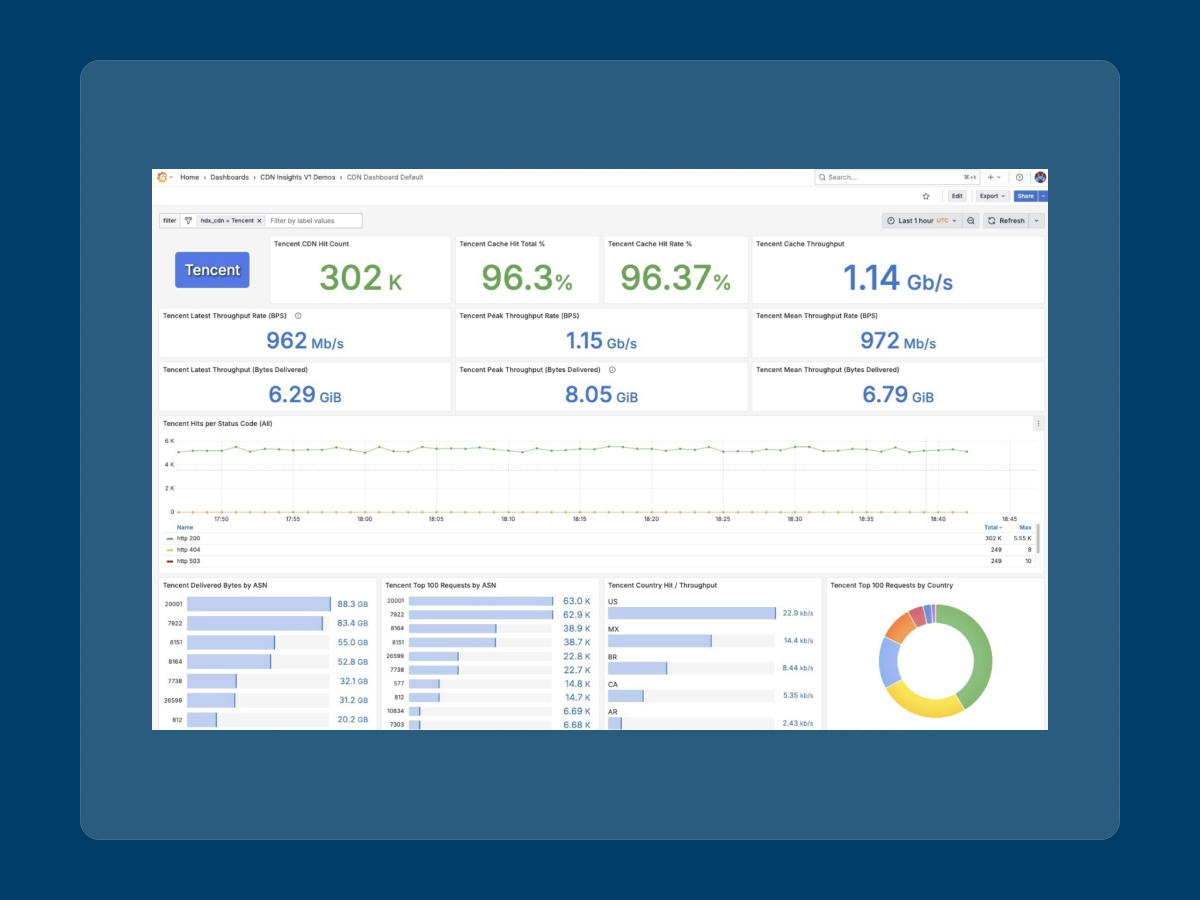
TrafficPeak is Hydrolix packaged as a managed service on Akamai Connected Cloud. AWS provides another route through marketplace distribution and integrations. These partnerships put Hydrolix near customers already buying cloud and delivery services. Familiar dashboards reduce another obstacle: teams can change the data layer without relearning every screen.
This creates an unusual competitive relationship. Splunk and Elastic are alternatives for log analytics, yet existing interfaces can also sit above Hydrolix. The purchasing question becomes which part of the stack needs changing. Allure’s experience shows why that question can be more productive than demanding a complete replacement.
In April 2025, Hydrolix announced an $80 million Series C led by QED Investors, following company-reported eightfold revenue growth in 2024. By March 2026, it reported more than 650 customers. Its distributed culture emphasizes transparency and family; Kagan’s advice to entrepreneurs starts with sharing information.

“Everything starts with transparency.”
Marty Kagan · Oregon Venture Fund profile
For a business selling visibility, that is an apt management principle. Customers need to see how the service behaves under load, what a faster dashboard required, and which costs sit outside the headline rate. The useful demonstration is one they can reproduce.
Buy a test before buying a promise
The public starting prices are $0.20 per gigabyte ingested for Bring Your Own Cloud and $0.31 for managed Hydrolix Cloud, with three months’ retention included in the latter. These are North America AWS rates. They describe different operating arrangements; buyers need a quote covering infrastructure, retention and query demand.
The self-managed option suits teams with Kubernetes expertise. Managed Cloud removes that operational requirement. Neither choice excuses an evaluation using actual incident searches, concurrent users and historical data. Hydrolix’s guidance warns that poorly chosen summary dimensions can cause cardinality to balloon: preparation requires judgment.
The transferable idea is straightforward. Preserve the underlying evidence, prepare efficient views for recurring questions, and price both together. When a sparse dataset or an existing service already answers the questions cheaply, another platform needs a concrete justification. When retention limits keep erasing the clues, Hydrolix has a particularly clear opening.