Person · Executive · Cybersecurity
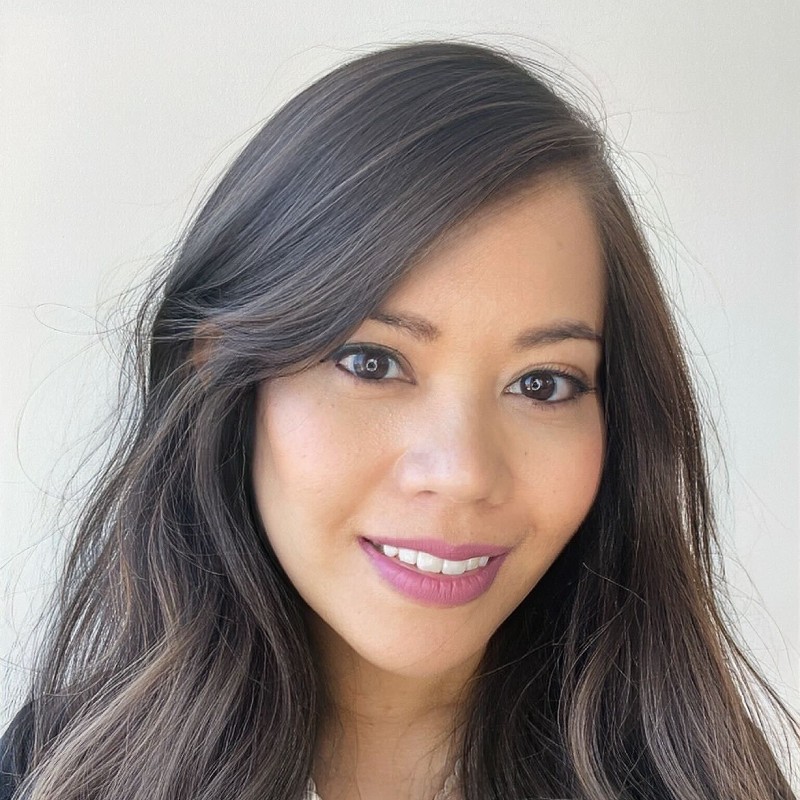
Gwenyth Castro
The operator who turns firmware research into enterprise trust - and just took the top job at Binarly.
The operator who turns firmware research into enterprise trust - and just took the top job at Binarly.
Most people will never see the code that runs before their operating system wakes up. Gwenyth Castro now runs the company whose entire job is to look at exactly that - the firmware buried under the software, the layer attackers love because nobody is watching it.
In March 2026, Binarly named Gwenyth Castro its Chief Executive Officer. The company's founder, Alex Matrosov, stepped back to the board. Castro stepped into the chair. The reason Binarly gave was simple and unglamorous: enterprise demand for supply-chain security was accelerating, and the company needed an operator who could meet it.
Binarly is the firm behind the Binarly Transparency Platform, a system built on a patented technology core that lets the world's largest enterprises see and reduce third-party software and firmware risk across sprawling environments. It is trusted by names you already know - Meta and Dell among them. The technology is dense. The mission is plain: find the things hiding in the binaries before someone else finds them first.
Castro is not the person who reverse-engineers the firmware. She is the person who makes sure that work reaches the customers who need it, on the terms that build a business. In a field crowded with brilliant research and quiet revenue, that is the rarer skill.
That kind of trust doesn't just give you experience, it changes you.- Gwenyth Castro, on fifteen years at Bishop Fox
Long before the CEO title, there was the long game. Castro spent roughly fifteen years helping build and scale Bishop Fox, the offensive security firm where the company's penetration testers spend their days breaking into systems so their clients don't get broken into for real.
She did not bounce. In an industry where two years at a startup counts as tenure, fifteen years at one company is a statement. She rose to Chief of Staff to the CEO, the role where the strategy memos get turned into things that actually happen - cross-functional initiatives, global expansion, the unglamorous machinery of growth. She was, by every account, the connective tissue between the executive team and the people doing the work.
Her credential of choice tells you something about how she thinks: a Stanford Certified Project Manager. Not a famous exploit, not a CVE with her name on it. A discipline for getting complicated things done on time. In security, that is its own kind of superpower.
When she announced she was leaving, she didn't write about KPIs. She wrote about people.
The code that runs before your operating system does - UEFI, secure boot, the deep plumbing of every machine. Attackers love it because security teams rarely look there. Binarly looks there.
The platform builds and validates SBOMs and CBOMs - the ingredient lists of software and cryptography - then runs reachability and binary analysis to separate real risk from noise.
Third-party code is everyone's risk and no one's job. Binarly's pitch is to make the unknown vulnerabilities known before they become a headline. Castro's job is to make enterprises act on it.
You created a culture where people don't just work together, they forge friendships that last a lifetime.
I spent 15 years helping build Bishop Fox with people who became my closest friends.
That kind of trust doesn't just give you experience, it changes you.
To continue making the world safer for all.
She told the story of her years in offensive security in her own words. The short version of a fifteen-year chapter.
▶ Play on YouTubeSecurity is a noisy business. Every vendor claims to stop the breach you read about this morning. The companies that last are usually run by the people who quietly turned good technology into a real customer base - and Castro spent fifteen years being exactly that person somewhere else.
The hand-off at Binarly follows a familiar and healthy pattern. The founder built a deep technical core - patented, research-driven, the kind of thing that wins the respect of other hackers. The new CEO is there to take it to market, to widen the circle of trust beyond the early believers, to make the platform a line item that enterprise buyers reach for without flinching.
She arrives with the credibility that matters in this room: she has scaled a security company before, she came up through operations rather than slideware, and she talks about trust as if she means it. In firmware security, where the whole product is "believe us about the thing you cannot see," that last part is not soft. It is the entire sale.
What she is working on now is straightforward to state and hard to do: accelerate go-to-market, deepen customer and partner relationships, and push the Transparency Platform to keep pace with threats that evolve faster than any roadmap. The mission she keeps repeating is the one she carried out of Bishop Fox - making the world safer. Same sentence. Bigger stack.