Golf Canada’s oldest product is an argument settler. In 1895, ten clubs formed a national association to run a championship, standardize handicaps and decide whose interpretation of the rules would prevail. It was governance with grass stains. More than a century later, the legal entity is still the Royal Canadian Golf Association, but the public-facing operation looks oddly modern: a consumer app, wearable GPS, social score feeds, tournament maps, ecommerce, youth subsidies and enough live events to keep a weather desk permanently employed.
This is not a normal company. It is a not-for-profit national sport federation, a standards body, a membership organization and a commercial event operator sitting in the same golf cart. That awkward bundle is also its advantage. Golf Canada is the only licensed association in the country that can issue an official Handicap Index under the World Handicap System. It can connect the score a player posts on Tuesday to the course rating behind it, the club that hosts the round and the national competition ladder above it.
Think of the handicap as the identity layer. It lets players of different abilities compete, carries from course to course and updates as new rounds arrive. The app puts that trusted number beside GPS yardages for more than 1,500 Canadian courses, scoring statistics, friend activity, health measures, smartwatch support and event guides. A governing function that once lived in binders now sits beside a golfer’s group chat.
The first thing that stopped working
For most of its history, the institution’s natural customer was the club. The model made sense when membership was the cleanest route into golf. It became less convincing as more people played public courses, booked casually and expected software to work before they joined anything. Golf Canada did not publish a dramatic failure memo. The public evidence is quieter and more useful: it ran surveys and focus groups with golfers and facilities, then announced a tiered membership model designed to include people regardless of where they played.
That research changed the premise. The job was no longer only to protect the game on behalf of existing members. It was to build a relationship with everyone who played. The 2005 amalgamation with the Canadian Ladies Golf Association had already widened the organization’s view. A 2010 rebrand dropped the formal RCGA initials in public. In 2020, Golf Canada replaced its member-only mobile product with a free app built with Quebec software firm Mirego. The pandemic supplied urgency: printed scorecards suddenly looked like shared surfaces, while a phone became the obvious scorekeeper.

“The primary objective is to be more inclusive, to welcome all golfers to be a part of golf in Canada.”Golf Canada’s membership relaunch
The sequence matters. Golf Canada did not abandon the hard, boring standard. It made the standard the anchor for friendlier products. Some app functions are free. Membership unlocks the official Handicap Index, fuller features and incident protection. As of August 2026, a public-player membership is C$64.95 for 12 months. The protection is pleasingly specific: up to C$1,500 for eligible equipment losses and up to C$1,000 if your errant ball breaks a window. Every golfer knows that product-market fit can sound like glass.
A five-part machine, disguised as a federation
Golf Canada’s business model is best understood as a flywheel, not a fee schedule. Standards create trust. The app turns trust into repeated use and a direct audience. Championships turn the sport into media and hospitality inventory. Sponsors fund visibility and programs. Participation work creates future players, members, fans and volunteers.
Revenue comes from a mixed bag: golfer and club memberships, championship tickets and hospitality, sponsorship, commercial and media rights, merchandise, program activity and sport-system support. Philanthropy runs through the Golf Canada Foundation, a separate charitable arm. The two national opens are the bright lights. The RBC Canadian Open sits on the PGA TOUR; the CPKC Women’s Open sits on the LPGA Tour. Long-running title partners buy far more than signage. RBC, for example, also supports Team Canada, young professionals and community junior golf.
This makes Golf Canada different from a scoring app, tournament promoter or golf academy. Each rival can do one job with fewer constituencies. None can combine a nationally authorized handicap, club course-rating network, elite pathway, consumer relationship and two globally sanctioned opens. The tradeoff is complexity. Golf Canada has to serve a beginner who wants a cheap first round, a superintendent concerned with course standards, a sponsor buying a national audience and an athlete chasing the Olympics. Their definitions of a good Tuesday are not identical.
The clever bit is the ladder
Golf has a famous acquisition problem: the first experience can be expensive, slow and intimidating. Golf Canada attacks the sequence rather than pretending the whole sport can be made cheap. First Tee - Canada introduces children through schools, community centres and golf facilities, often at no cost. Youth on Course then gives members aged 6 to 18 access to participating tee times for C$5 or less. Local clubs receive a subsidy. A child can move from a gym-floor lesson to a real green without the family absorbing a full retail round.
The scale is no longer experimental. First Tee - Canada says it reached more than 106,000 young people in 2025 and more than 276,000 since launching in 2021. That year’s delivery ran through 481 program locations with nearly 350 coaches. The design also aims at a distribution problem: 74 percent of participating schools and community organizations served underserved communities, and nearly 60 percent of programming was free.
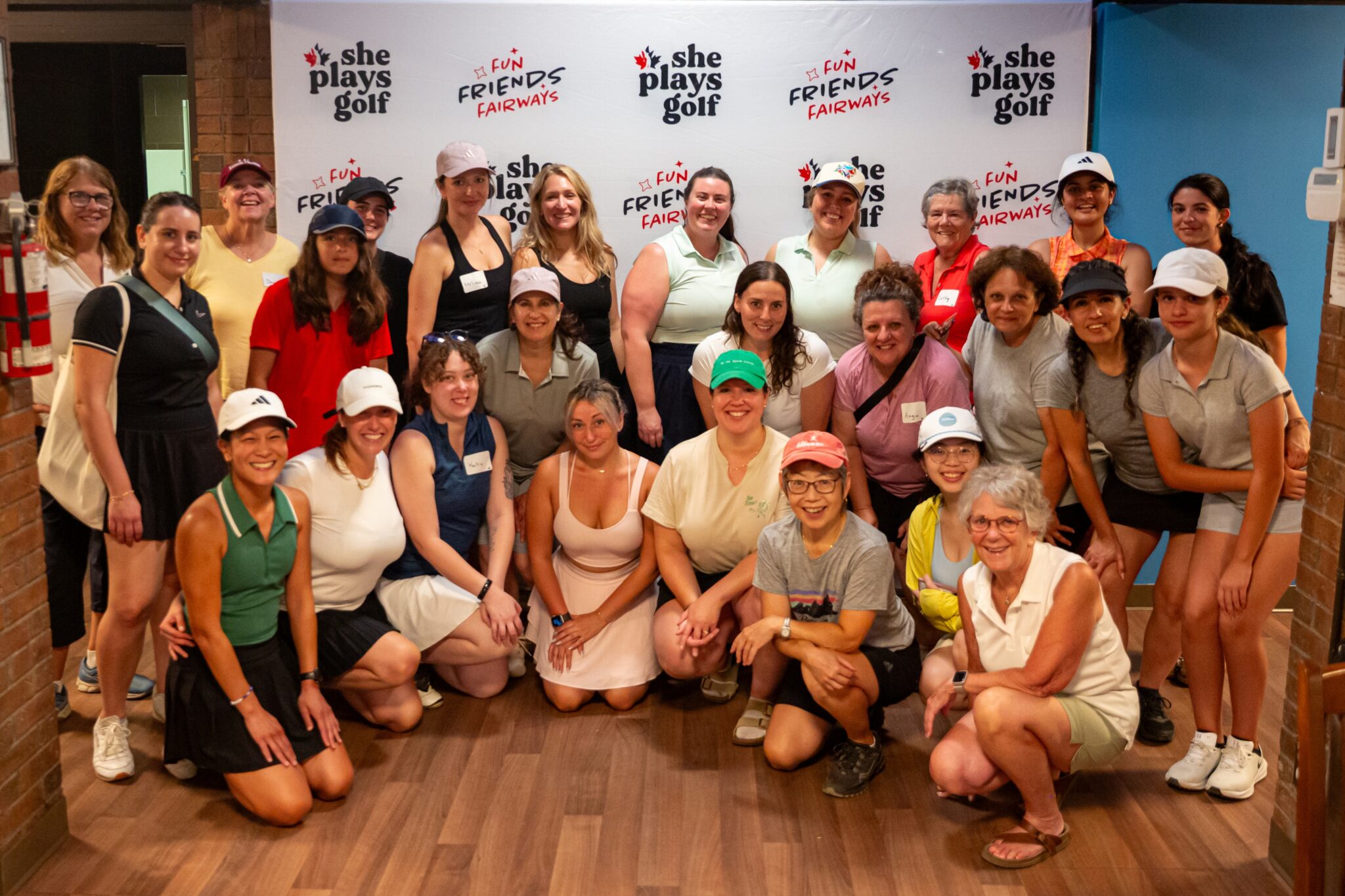
She Plays Golf uses a similar bridge for women and girls. Beginner-friendly festivals sit beside a domestic championship series, women-in-coaching work and a recreational league. In 2025, 24 events across 19 facilities engaged more than 800 women and girls; over 700 were new to the game. The competitive events offered four routes into the CPKC Women’s Open. Golf Canada is not treating participation and performance as separate departments. The festival and the exemption live on the same map.
The campus is a strategy you can walk through
In April 2026, staff moved from Glen Abbey to the new Home for Canadian Golf at TPC Toronto in Caledon. The relocation gathers Golf Canada, First Tee - Canada, performance work and heritage displays around the same property that hosts the RBC Canadian Open. Plans include a 30,000-square-foot, 18-hole community putting course that is free to the public.
It is an unusually literal expression of the strategy. Elite players can train there. Fans can attend a national open there. Children can meet First Tee there. Visitors can encounter Canadian golf history throughout the buildings. Someone without a tee time can still putt. The risk is familiar to any headquarters project: a beautiful central campus can absorb attention while a national mission depends on provincial associations, municipal courses, coaches and volunteers thousands of kilometres away. The building works only if it strengthens that network.

What another institution can steal
Keep the moat. Rebuild the doorway.
- Identify the trusted standard only you can credibly maintain.
- Turn that standard into a useful, frequent consumer habit.
- Lower the cost of the first real experience, not every experience.
- Build a ladder from introduction to participation to excellence.
- Let premium attention subsidize public access where the mission allows it.
The transferable move is not “build a golf app.” It is to separate authority from access. Golf Canada kept control of the official standard while letting anyone download the new front door. It used its events as commercial products, but tied partners to junior development and athlete pathways. It measured the weak transitions - from school to course, beginner to regular, domestic player to global tour - and designed bridges instead of slogans.
The institution owns a trusted standard, has delivery partners close to users and can cross-subsidize access without damaging the core service.
Authority is mistaken for affection, the app adds clutter instead of utility, or a central brand fails to share value with local clubs and coaches.
There are limits. Golf remains land-intensive, weather-dependent and time-hungry. A C$5 round helps only where participating courses offer usable times and families can reach them. A social app does not fix a frosty welcome at a course. A national federation also moves through boards, partners and regional bodies, so it cannot iterate with the abandon of a venture-backed startup. The model would travel poorly to a sport without a portable standard, recurring personal data or venues willing to subsidize entry.
Still, Golf Canada has made an old institution more legible. It preserves the rulebook, but its growth story is about invitations: download this, post that, try nine holes, bring a friend, let the kid play for five dollars. The original ten clubs built a gate because the game needed order. The modern organization is learning that the gate is most valuable when more people know how to walk through it.