The trouble with Daishin Sugano’s Air Jordan 5s was that somebody had made a convincing argument in rubber and leather. The shoes looked like the thing he wanted. They were counterfeit. For a collector buying online, this is an unusually intimate sort of disappointment: you have paid for a small piece of history and received somebody’s imitation of it.
- GOAT Group sells sneakers and fashion through five distinct brands.
- Its core proposition: make buying from unfamiliar sellers feel safer.
- The next audience is the everyday shoe shopper, alongside the collector.
Sugano and Eddy Lu launched GOAT in 2015 around that uncertainty. The company that grew from it now operates GOAT, Flight Club, Grailed, Sneakers.com and alias. It reports more than 60 million members across 170 countries. Behind those numbers sits a practical question: how much work will a business undertake so a customer can stop worrying?
A dinner app’s expensive lesson
Before shoes, Lu and Sugano had tried Grubwithus, which brought strangers together over restaurant meals. The obstacle was the transaction itself. A prospective diner had to agree on the food, the place, the time and the people. Making a friend required a remarkable amount of scheduling. The founders eventually moved on, carrying an education in everything that can stop a marketplace from moving.

Sneakers offered a more specific problem. A buyer already knew the model and size. GOAT could take responsibility for the uncomfortable part: whether the item deserved the buyer’s money. Its original ship-to-verify approach put the company between seller and purchaser, adding operational work to remove uncertainty.
The beginning was still messy. Lu told First Round that launch day produced 20 sales, followed two weeks later by 11 chargebacks. Then a 2015 Black Friday promotion offered coveted shoes at their original retail prices. Roughly 100,000 users arrived within a week. The app repeatedly crashed; the promotion had only about 50 pairs available. Demand had finally appeared, accompanied by furious customers.
The purchase gets simpler when somebody else takes on the complicated part.
THE OPERATING IDEA
The lesson was more demanding than “run a giveaway.” A promotion can attract people once. The business needed reasons for them to keep buying after the discounted shoes were gone. Authentication, usable listings and dependable fulfillment gave GOAT something useful to offer between the spectacles.
Someone has to do the worrying
Today, verification is broader than the original warehouse story suggests. GOAT says it uses digital authentication, in-hand verification and machine learning, with hundreds of thousands of product data points supporting the process. Some products are verified without physical examination. That distinction matters: the company’s published promise describes several methods, rather than a universal inspection bench.
Conceptual flow. Current verification methods vary by product.
This work has a price. Under GOAT’s August 2026 fee policy, a US seller with a rating of at least 90 pays a 9.5% commission plus a seller fee. Prepaid US shipping adds $5; cashing out generally costs another 2.9%. Other locations, seller ratings and group brands have different rules. The listing price is an opening number, not the seller’s take-home pay.
Standard US example at a seller rating of 90+. Rounded to cents; excludes acquisition cost, taxes and promotional fee changes.
The arithmetic explains both the attraction and the constraint. A seller gets access to buyers and a managed transaction. But a modest resale margin can disappear into deductions. For buyers, condition, shipping and the applicable return policy still deserve attention. Verification reduces a particular anxiety; it does not make every purchase a bargain.
Five doors into the same wardrobe
GOAT Group’s difference is the combination of shopping formats. GOAT connects primary and resale inventory, new and used goods, sneakers and fashion. Flight Club brings the consignment store and its physical retail presence. Grailed supplies a community-driven fashion marketplace. alias is the seller’s tool, helping inventory reach demand on GOAT and Flight Club. Sneakers.com addresses everyday footwear purchases.
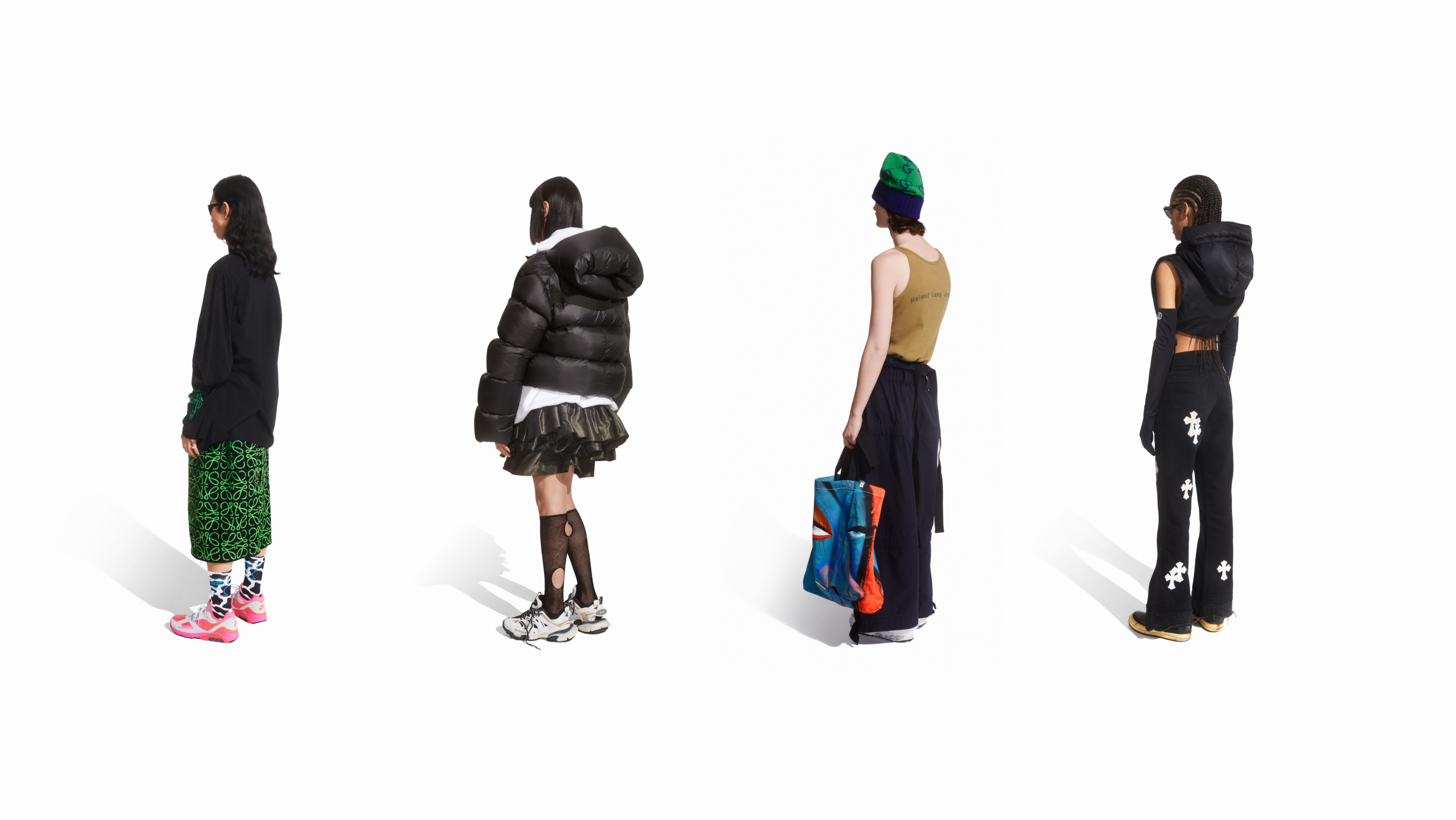
The 2018 Flight Club merger preserved separate brands. That decision has a clear logic: a collector browsing a consignment institution and a shopper opening an app can value the same inventory differently. StockX, eBay and specialist retailers compete for overlapping purchases. GOAT Group can meet customers through several familiar doors, while doing difficult operational work behind them.
Capital helped build that reach. Foot Locker invested $100 million in 2019. A $195 million Series F in June 2021 valued GOAT Group at $3.7 billion. The company also reported $2 billion in merchandise value over the preceding 12 months. That measures goods traded, rather than company revenue; the valuation belongs to that funding event.
Culture gives the catalog a reason to be visited between purchases. GOAT publishes GREATEST magazine; Flight Club runs its Fridays music series. Collaborations connect the merchandise to people and institutions. A June 2026 Ducks of a Feather announcement limited its Nike Total 90 release to 300 pairs, with proceeds benefiting participating University of Oregon student-athletes.
The $70 next chapter
Then comes the less obvious customer: somebody who simply needs shoes. In March 2026, GOAT Group formally introduced Sneakers.com after testing the platform. It reported an average price point of $70. The stated aim was to bring the infrastructure developed for enthusiasts to a broader, everyday audience.
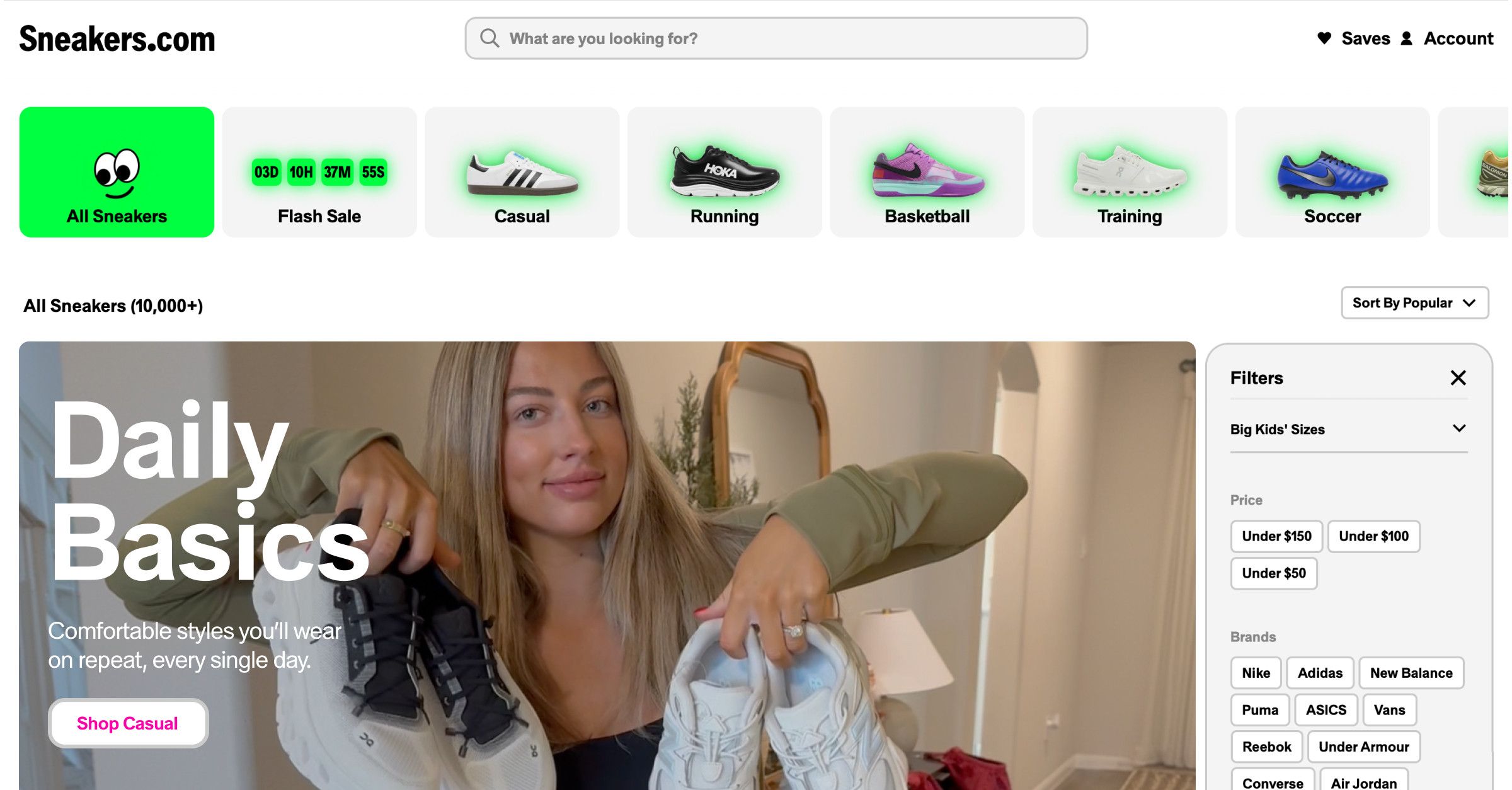
“Each of our brands is built for a distinct consumer”
Eddy Lu · Sneakers.com announcement · March 2026
Expansion still has to earn its keep. In September 2025, Sole Retriever reported closures of alias-related facilities in the UK, Hong Kong and Japan. GOAT Group described a network with some facilities expanding and others consolidating. The episode makes the underlying economics visible: moving, storing and checking products requires choices about where the work belongs.
There is something readers can copy here. Find the doubt preventing a transaction. Work out whether removing it is valuable enough to support the labor. Start with a category you understand. The approach gets harder when prices cannot cover handling or customers need immediate delivery. GOAT’s original insight remains concrete: people wanted the shoes already. They needed help believing the purchase.