A hospital can have a handsome entrance and still leave a driver wondering where to turn. GNU Group has built a practice around that awkward gap between a place existing and a person understanding it. Its tools include arrows, letters, maps, color, architectural signs and a less photogenic instrument: the meeting in which everyone finally agrees what the signs need to do.
The California firm plans and designs the graphic layer of buildings and campuses, then offers to manage the work of getting it built. Its assignments range from workplace branding to hospital navigation and donor displays. The common problem is communication in physical space. A visitor needs an answer while moving, often with something more pressing on their mind than admiring the typography.
Seven feet that made a difference
One of GNU’s clearest examples concerns John Muir Health’s hospital in Walnut Creek. In the firm’s account, residential city codes capped signs at eight feet, limiting the visibility needed to guide traffic into the emergency-room parking lot. GNU brought the navigation problem to the municipality and presented a master sign program. The commission approved 15-foot signs.
The telling detail is the argument. GNU says it invited officials into solving the problem. The case for extra height rested on how people would enter the medical complex. For a property owner, that is a useful distinction: a sign proposal must make sense to the people reviewing it as well as to the people paying for it. GNU’s master sign programs combine research, site analysis and visual documentation to make that case.
The journey starts in the parking lot
At UCSF Health’s Bayfront Medical Building in San Francisco, GNU worked with UCSF and architect Stantec on identity and wayfinding for a five-story outpatient building and the eight-story Illinois Street Garage. The assignment also included changes to exterior campus wayfinding affected by construction. Exit Design is listed as a project partner.
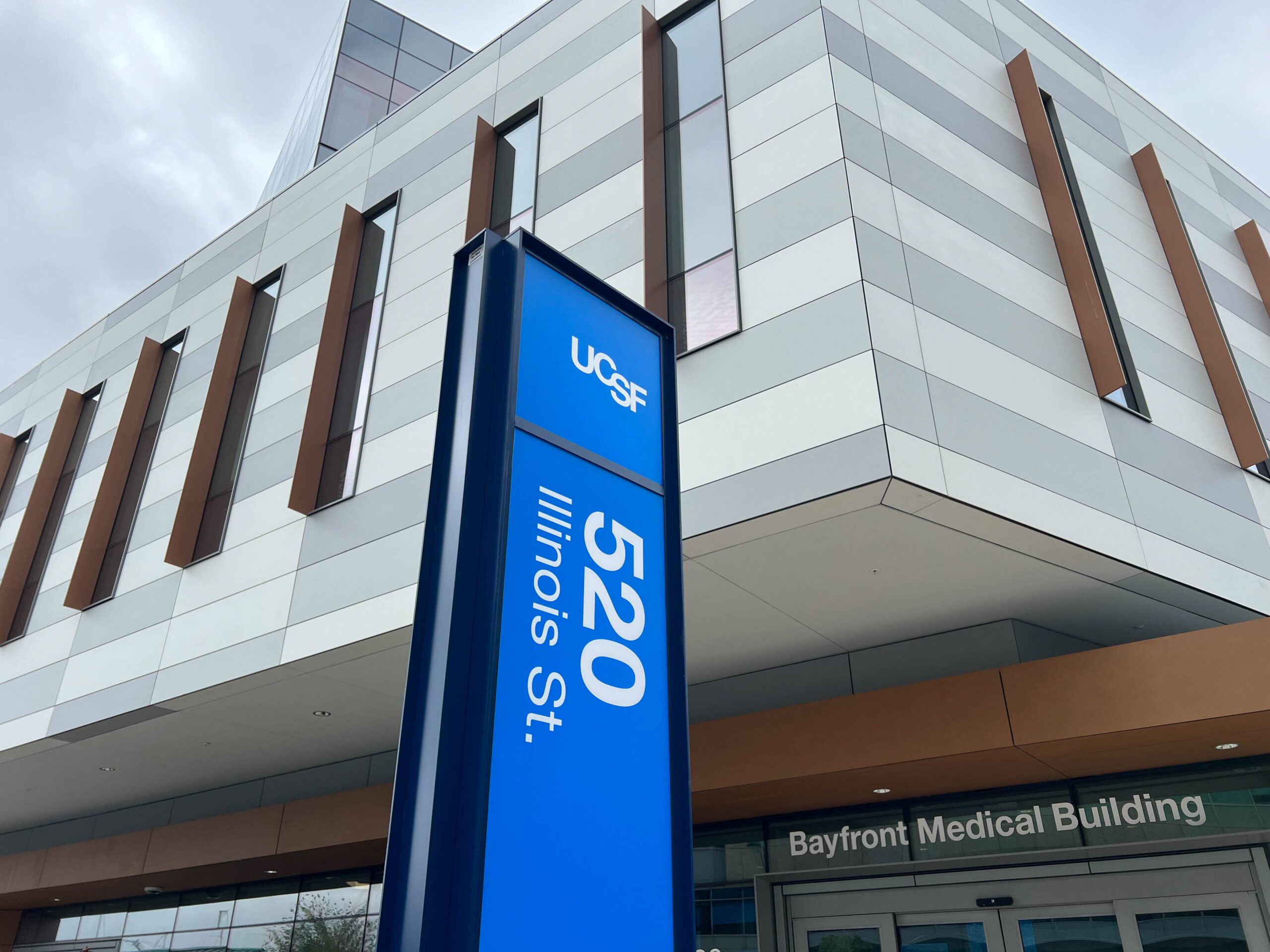
That scope captures the difficulty of the job. A new building arrives inside an existing network of streets, entrances and destinations. Its signs need to follow UCSF’s established standards while accounting for the changes around it. A building can be finished; the visitor’s route still has to connect. The Bayfront project makes the boundary between architecture and information unusually visible.
GNU’s planning service starts with circulation studies, destinations, stakeholders and constraints. It also describes interviews and focus groups with actual users. That sequence matters. People who work in a building already know its shortcuts and unofficial names. First-time visitors bring a different map, sometimes no map at all.
The firm’s planning process includes defining numbering methods and sign types before translating the strategy into a program. Readers can borrow the underlying habit: walk the route as a newcomer, mark each decision, and ask what information is available at that exact point. Starting with a favorite sign shape puts the answer ahead of the question.
- 01 / ObservePeople, routes, destinations
- 02 / DefineMessages, locations, sign types
- 03 / CoordinateDesign, budgets, approvals
- 04 / DeliverFabrication, installation, updates
A new logo has to meet the landlord
ServiceNow offers a different kind of complexity. GNU reports supporting signage changes tied to the software company’s 2017 and 2021 rebrands. The work began with auditing exterior brand placements and extended through landlord approvals, permits, fabrication and installation across US and international locations. GNU says the relationship continues for new locations and acquisitions.
Here, the customer buys coordination as well as design. GNU’s turnkey service works through fabrication and installation partners, giving the client a team to keep the program moving. At the Research Park, formerly Marina Village Office Park, GNU worked with BlueRise Ventures for DRA Advisors on redesigning and reusing the existing sign program. The firm reports savings compared with new fabrication.
The practical budget lesson is to inventory what already exists. Reuse belongs in the options discussion, provided the hardware suits the new program. Replacement, refurbishment and coordination are separate decisions. An attractive rendering alone will not settle them.
The office sign with a software habit
The most revealing product in GNU’s catalog may be its least theatrical. Sign Insert Manager is cloud software for producing replacement inserts for office doors, conference rooms, cubicles and similar signs. GNU customizes the system to a client’s fonts, colors and layouts, allowing staff to change information while preserving the design.
It addresses a small, recurring chore. Names change; a printed insert must follow. GNU’s product page includes testimonials from John Muir Health, Veeva Systems and architectural sign manufacturer AGS. AGS describes using the software during initial assembly and offering it to customers for subsequent changes. A modest task becomes a repeatable workflow.
“We love its simplicity, and so do our clients around the country.”
Neil Jacobson, President, AGS
On Sign Insert Manager
The software’s role is specific: keeping compatible changeable signs consistent. The broader maintenance framework appears in GNU’s sign standards service, which defines fabrication specifications, installation requirements, procurement and upkeep. Together, these offerings show a business interested in what happens after the installation crew leaves.
That concern also appears in a facilities-management webinar by Kevin Wilhelm and Dickson A. Keyser. Their guidance urges involvement from the people who will maintain the environment. They describe adaptable floorplates at Lyft and digital wayfinding for LinkedIn. The useful question for a buyer is who will own the next change, and whether that person has been included early enough to influence the system.
A campus is allowed to have personality
Navigation is only part of GNU’s work. Environmental branding uses graphics, materials and color to express an organization’s identity in its surroundings. The firm also designs murals, sculptural elements and custom wall installations. Those services occupy the expressive end of its practice, where recognition and memory matter alongside getting from one room to another.
At Ventana School in Los Altos, GNU created donor recognition associated with the addition of two classrooms. The program included a campaign display, plaque standards, an updatable school-board display and an entry monument. Its particularly good detail is the artwork: students drew illustrations in response to nature-related prompts GNU developed. Their work appeared in donor plaques and a rainbow pole post. The school’s own students helped give the recognition program its character.
West Valley College’s Learning Resource Commons presented another communication assignment. Working with ABA and Mark Cavagnero Associates, GNU developed identification and wayfinding for a renovated destination whose uses extend beyond a traditional library. AV arts studios, maker spaces and gaming rooms belong to the building’s new story. The sign program needed to help make that expanded role visible.
The same visitor-first thinking can be playful outdoors. At Tracy’s Legacy Fields Sports Complex, GNU and Verde Design worked with the city on a program for a site with 18 play fields. GNU’s account describes color-coded field zones, an entry gate, environmental graphics and interactive elements. The strategy considered future expansion before design began. Parents looking for the right field have little use for a system that makes sense only on opening day.
A founder who helped name the profession
GNU’s connection to environmental graphic design reaches back to the discipline’s early organizing years. Founder Richard Burns was one of the designers involved in establishing the Society for Environmental Graphic Design, now the Society for Experiential Graphic Design. SEGD’s account identifies Burns, Jim Glass and John Berry at the initial informal meeting in 1973.
In his own recollection, Burns describes a profession struggling to agree on terminology, find resources and address practical questions of liability and pricing. He credits GNU designer Doug Akagi with the Walking Man identity adopted by SEGD in 1982. The figure acquired a name of its own: Sedgewick. Even the people designing identification systems needed one for themselves.
GNU has now been in practice for more than 50 years. Its 2021 acquisition by Impec Group placed it inside a broader workplace-services business. For clients, that relationship provides access to capabilities including project and move management, workplace technology and maintenance. GNU’s present leadership includes senior vice president and managing principal Kevin Wilhelm and principal and design director Dickson A. Keyser.
Where the next arrow points
Current work keeps the firm close to the operational problems that make its services useful. In March 2026, GNU announced a pedestrian-wayfinding assignment for Merced Community College District’s Merced and Los Baños campuses. The proposed approach includes site assessments, pedestrian decision points and a street-name-style sign system. It is an announced program, with a brief centered on making the campuses easier to walk and understand.
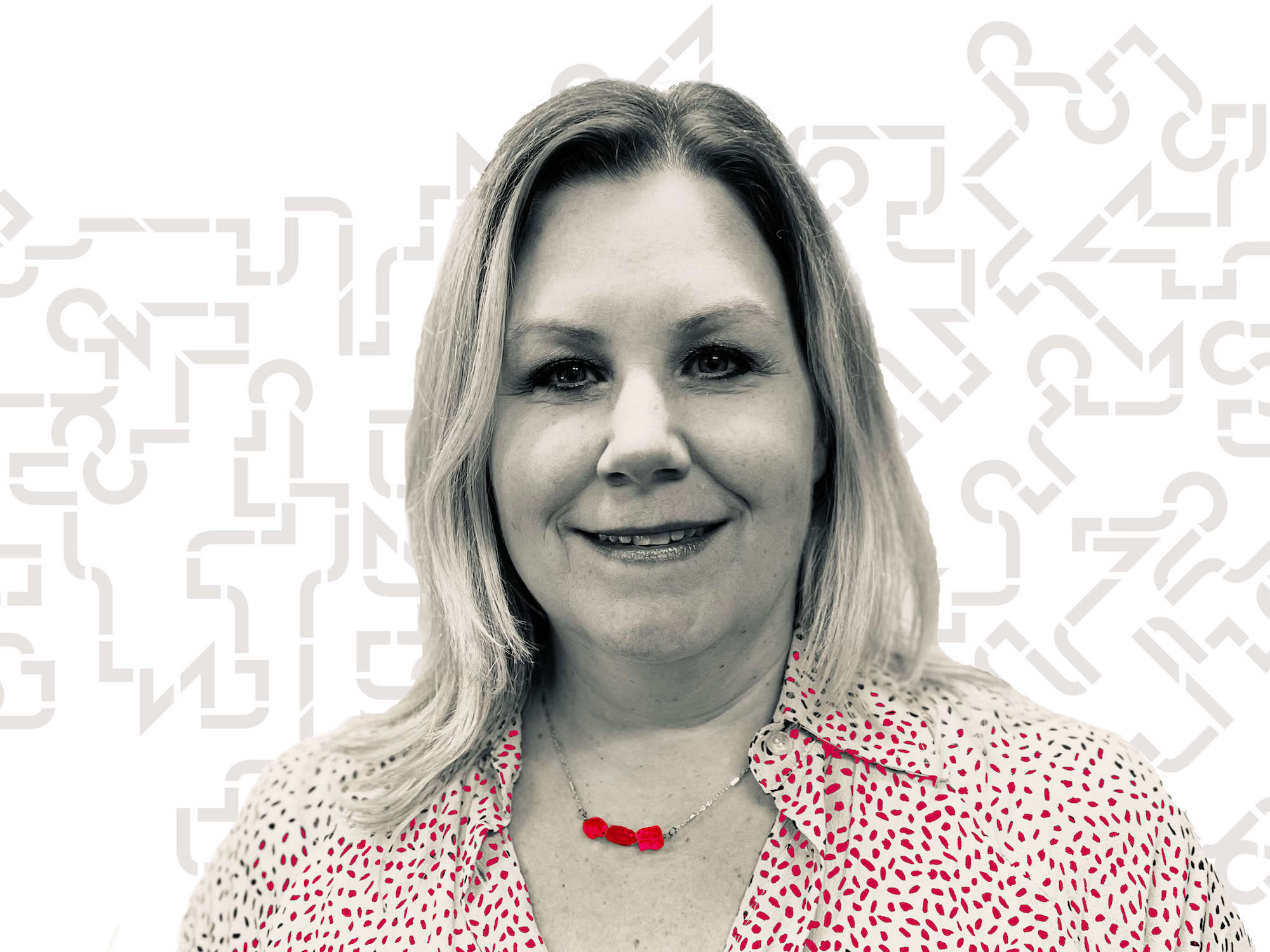
In August 2026, associate principal Beth Taylor described GNU’s involvement in emergency-department projects including Santa Clara Valley Medical Center’s phased renovation and expansion. Her account emphasizes adaptable communication while the environment changes. A temporary route has to be understandable today, even when tomorrow’s entrance will be somewhere else.
GNU fits the market where brand, construction and operations have to agree. Its offering is especially relevant to organizations managing complex places or repeated changes across properties. A buyer comparing firms should examine the scope of responsibility: research, design, approvals, procurement and maintenance each need an owner. GNU’s proposition is to connect those responsibilities. The final test remains refreshingly ordinary: can the person arriving here work out what to do next?