Diane Mays had been at Magnus Precision Manufacturing for two weeks when she found herself crawling over pallet racks, looking for parts. The controller’s verdict, recalled in a customer case study, was brief: “Never again!” In a business devoted to making precise things, locating them had become an adventure. Adventure is a poor inventory policy.
Magnus had accounting software and spreadsheet-based shop-floor controls. What it lacked was a dependable connection between the two. Its experience gives Global Shop Solutions, the manufacturing ERP developer, a more interesting introduction than a list of applications. The company sells a way to make the movement of a part legible to the people responsible for its schedule, its quality and its cost.
- One connected operation: quoting, materials, production, shipping and accounting share an ERP system.
- A useful customer result: Magnus reports 65% less labor for physical inventory counts after software and storage changes.
- A long relationship: family ownership, in-house service and manufacturing specialization anchor the pitch.
- A purchase with homework: pricing depends on the shop; data cleanup and training belong in the budget.
A part needs a paper trail
ERP stands for enterprise resource planning, a phrase with all the charm of a filing cabinet. Global Shop Solutions makes its meaning more concrete. A customer wants a part. Someone must estimate the work, price the material, promise a delivery date, buy what is missing, organize the machines, record the labor and eventually send an invoice. Each step changes what the next person needs to know.
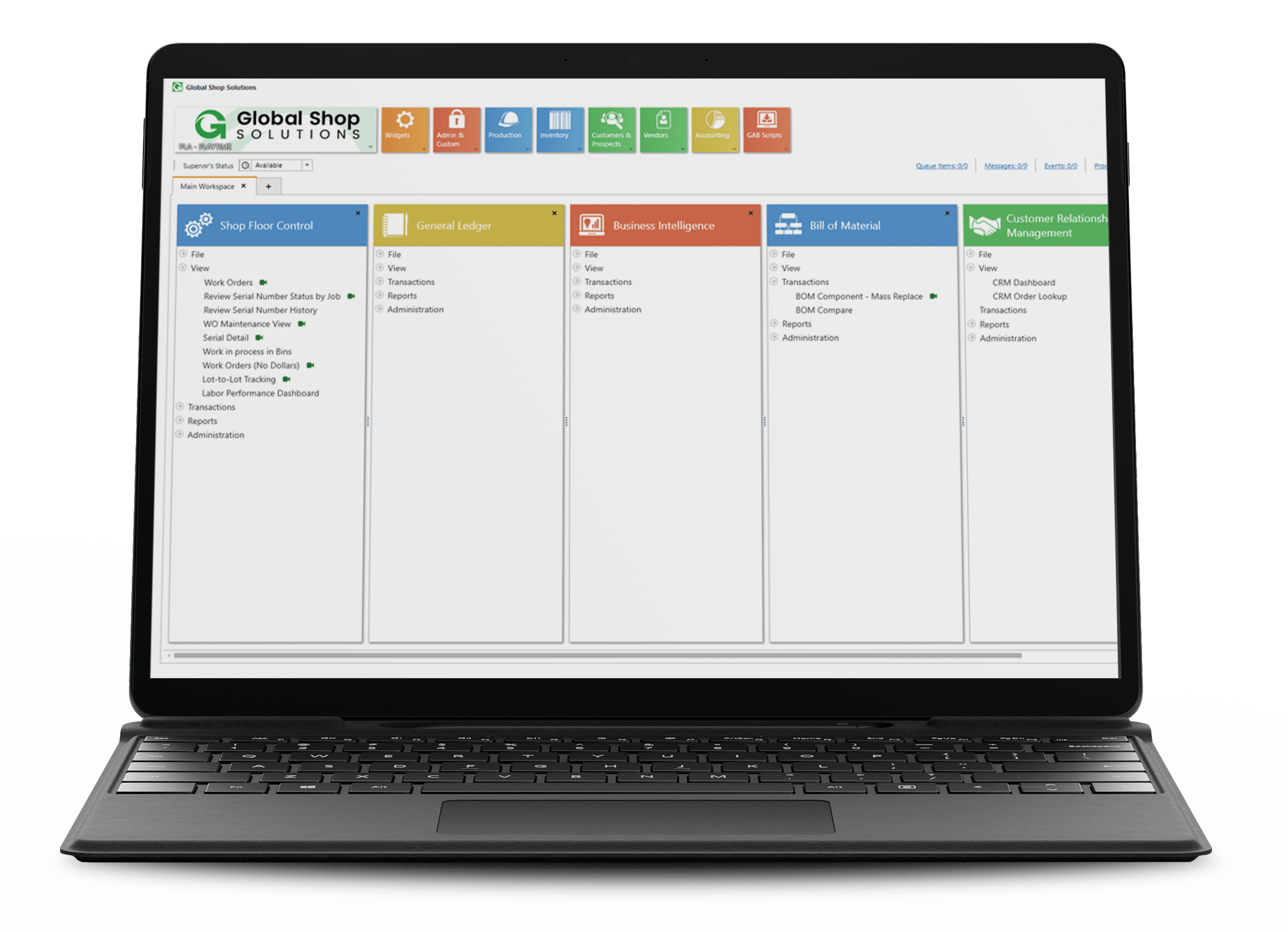
Its applications cover that sequence: estimating and quoting, order management, purchasing, inventory, scheduling, routing, shop-floor data collection, quality and accounting. Engineering tools include bills of materials, CAD interfaces and a product configurator. A routing describes how the job will be made; a bill of materials describes what goes into it. Those records give production and finance something firmer than memory to work with.
The customer is a discrete manufacturer: a business making identifiable parts and assemblies. Machine shops, custom fabricators, aerospace suppliers and medical-component makers all appear in its customer materials. Its research pages describe a target audience with 20 to 1,000 employees and $10 million to $1 billion in revenue. That is a broad range, but the common problem is specific: keeping jobs, materials and promises coordinated.
The bins came before the benefits
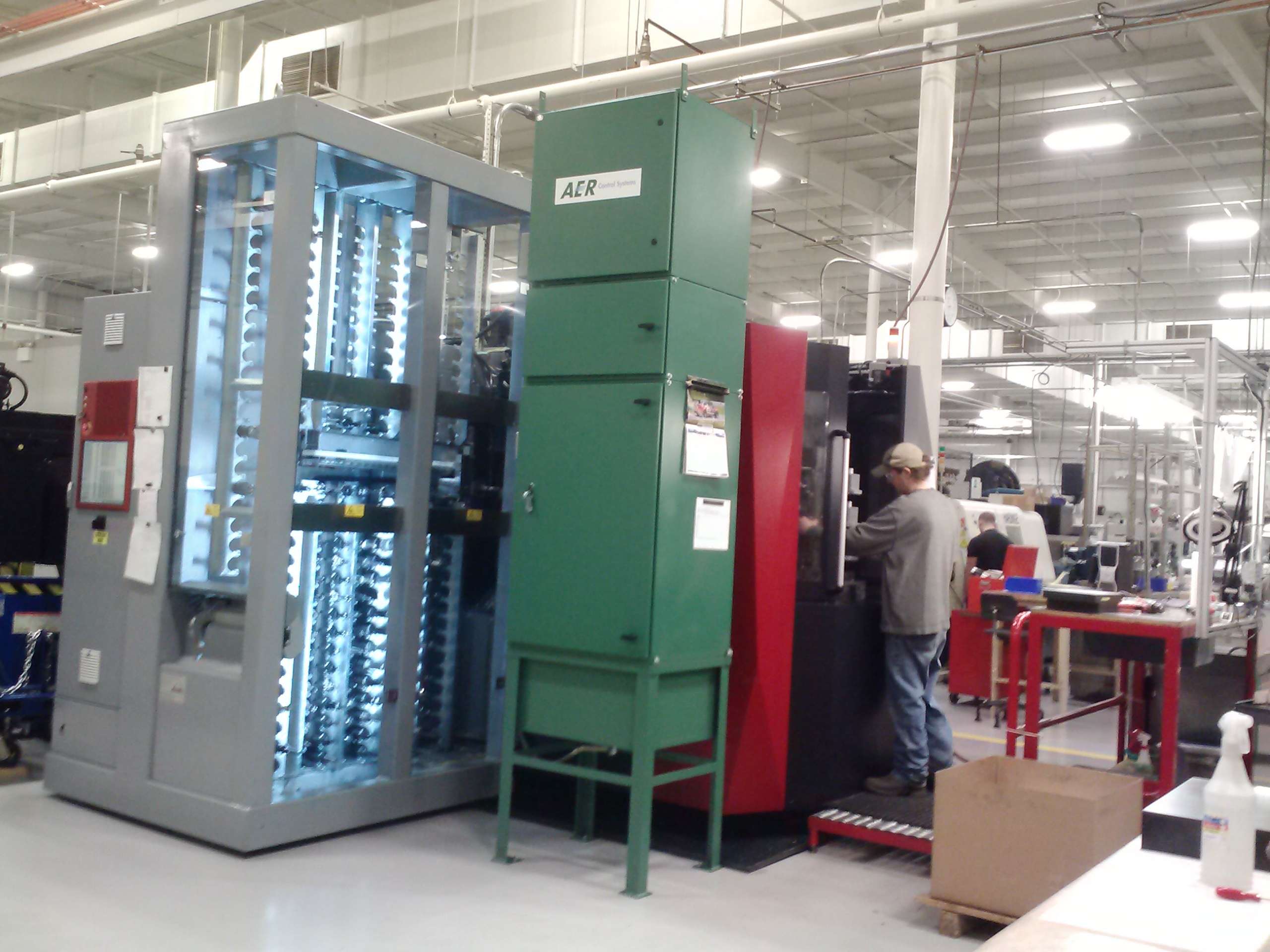
Return to the pallet racks. Mays assembled a team, redesigned the storage area and installed bin locations. The team entered the inventory data properly into Global Shop Solutions. Transactions then went through the system. The change had a physical component, a records component and a habit component. Purchasing software alone would have left the racks exactly where they were.
Less time counting. More time making.
Labor time for the physical inventory count.
Magnus also reported 99.9% inventory accuracy, including work in progress. Its annual physical count remained necessary for auditors. More useful than the percentage is the operating method: identifiable locations, reliable transactions and records that people maintain. Other factories can copy those practices. Their eventual gains will depend on their own starting point.
Another customer, Ohio screw-machine manufacturer Adams Automatic, had a different complaint. Its custom ERP had become overly complicated and difficult to use. It selected Global Shop Solutions to simplify the operation. The published case reports quality and on-time delivery above 99%. Here the obstacle was the existing software’s complexity. A system earns its place when operators can use it consistently.
The family behind the work orders
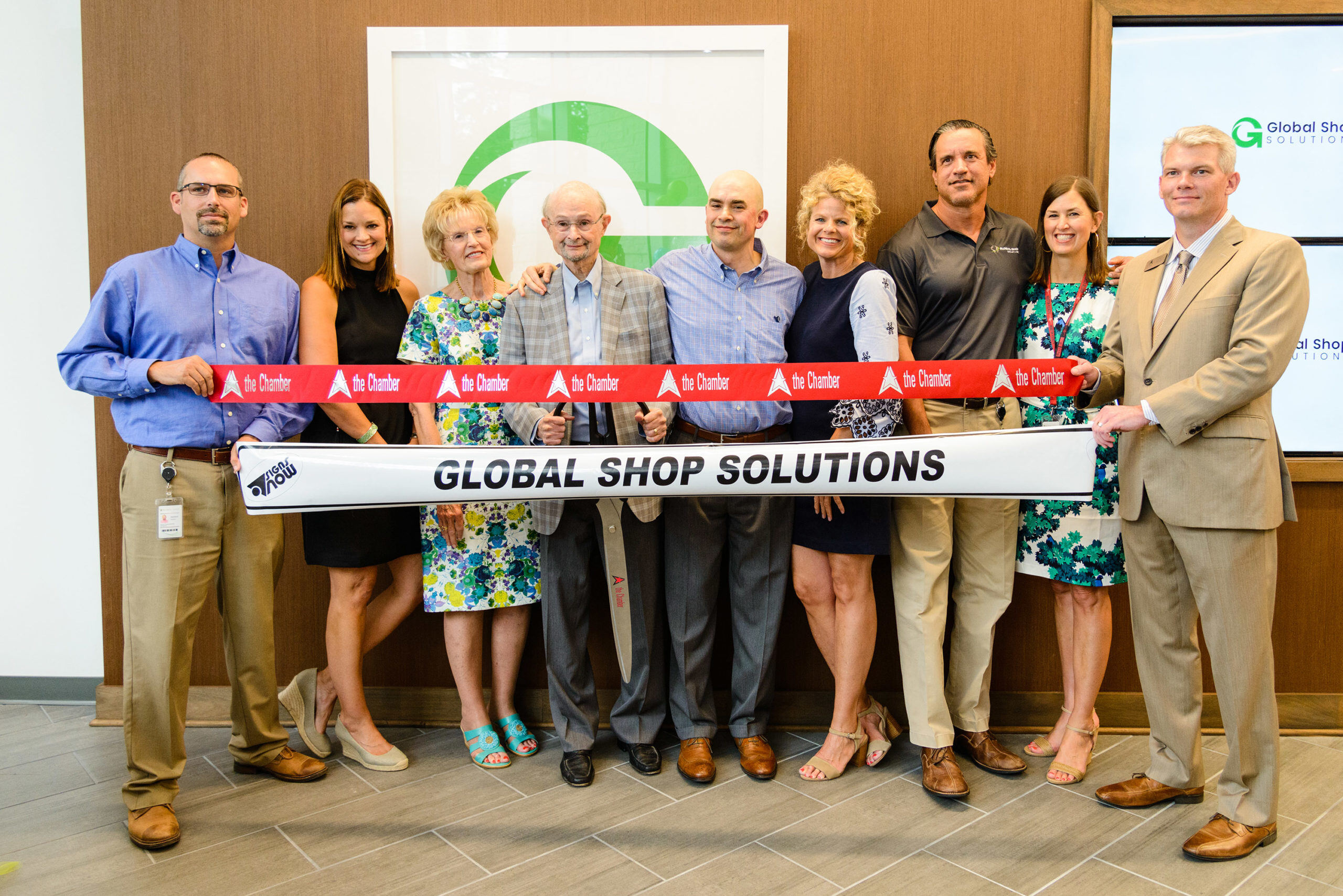
Dick Alexander founded the company in 1976. Early work served oil-industry manufacturers in Texas and Louisiana. The company’s anniversary account describes punch cards and a rented mainframe; its later history describes product improvements prompted by customer requests. The equipment has changed rather more than the questions. In a published interview, Dusty says the late-1980s oil crunch prompted the business to diversify its customer base. Exposure to one industry had supplied a reason to look beyond it.
The company’s 2017 headquarters announcement identifies both Dick and Kathie Alexander as founders. Their son Dusty became president in 2006. By its March 2026 anniversary, the company reported more than 1,800 top-level manufacturers, plus their companies, divisions and plants, across nearly 30 industries. It also described seven international offices and more than 320 employees. These are the company’s figures, and the distinction between customer organizations and individual facilities matters.
“Our focus is long-term partnership, not short-term exits.”
DUSTY ALEXANDER / PRESIDENT & CEO / MARCH 2026
Global Shop Solutions says it remains family owned, independent and without outside investment. Its service proposition includes U.S.-based product development and customer support. Ownership continuity is a sensible consideration for software that becomes part of a factory’s daily routine: changing vendors involves processes and people as well as files. Continuity still has to show up in the quality of the service.
Its competitive neighborhood includes Epicor Kinetic and Acumatica Manufacturing Edition, both of which offer manufacturing ERP. Connected applications are therefore a starting requirement in this market. Global Shop Solutions’ particular argument combines a manufacturing focus, direct service and a long ownership history. Partners extend the system around its edges: Alliance HCM for workforce functions, EMS for hardware and TEKLYNX for label printing.
Buying the system means budgeting for the change
The official pricing page uses concurrent users: employees in the system at the same time. It describes upfront charges and ongoing quarterly costs, with updates and support included in the recurring concurrent-user cost. The price is tailored to the company. A factory’s total headcount therefore does not, by itself, tell a buyer how many concurrent users to budget for.
Deployment is another decision. The cloud offering uses Amazon Web Services and vendor-managed maintenance and backups. The on-premise option gives the customer its own infrastructure to manage. Buyers should choose around their operational requirements and capacity to administer the system. The fashion of the moment is unlikely to repair a badly scoped deployment.
The company provides implementation consultants, training and a Continuous Improvement team. That last service acknowledges a useful truth: going live leaves plenty to improve. Its upcoming Simplify 2026 conference, scheduled for October 12-15, includes sessions on adoption, accounting and overlooked features. Published registration is $1,995, with an optional $500 workshop. Those are conference prices, separate from an ERP purchase.
AI arrives with an invoice
Genii is Global Shop Solutions’ embedded AI initiative. Among the publicly described uses are accounts-payable automation and sales-order entry: reading incoming documents and moving information into the ERP. In a busy office, copying an invoice is hardly an intellectual triumph. Removing repetitive entry can nevertheless be valuable, provided the result is accurate and reviewed appropriately.
The company also describes Genii Chat for natural-language ERP questions, Pulse for monitoring operational issues, Build for creating dashboards and reports, and Assist for turning conversations into tasks. These are described capabilities, not proof that every factory will get the same result. A useful evaluation starts with actual paperwork and a question the team already struggles to answer.
Take one awkward job to the demo
PS Garage Doors offers another practical clue. Its customer case describes connecting SOLIDWORKS designs to bills of materials, reducing manual rebuilding of engineering information. The value came from improving a particular handoff. A buyer can apply the same scrutiny to receiving, quoting or production reporting: find the point where reliable information becomes somebody else’s typing exercise.
Bring a real, troublesome order to a demonstration. Follow its material requirements, scheduling constraints and actual costs. Ask the people who would enter the transactions to try the workflow. Record a few baseline measures before rollout, then revisit them. Global Shop Solutions’ own guidance warns small manufacturers against excess scope and urges steady improvements after launch.
The fit is weaker when a buyer needs only simple bookkeeping, lacks the staff time to implement a broader system, or refuses to maintain production records. A connected factory still needs someone to make the connections credible. Mays’s bins are a wonderfully plain reminder: knowing where the part belongs is often the beginning of knowing what the business can promise.