George Kurtz lost a 24-hour race by sixteen thousandths of a second. At Daytona in 2023, he watched from the pit box as another car beat his team's prototype to the line. After a day of driving, repairs, calculations and changes of driver, the difference fitted comfortably inside a blink. For someone who spends his working life selling faster decisions, it was an exceptionally rude piece of arithmetic.
Three years later, his team finally won the LMP2 class at the same race. The opening corner had gone badly. There were repairs, penalties and a deficit to recover. Kurtz shared the car with Alex Quinn, Toby Sowery and Malthe Jakobsen. Twenty-four hours gave them time to put things right, provided they kept enough of the machine intact to use it.
The CrowdStrike co-founder occupies an unusual intersection of the corporate and sporting worlds. He has an accounting degree, a security book on his résumé and an ownership interest in Mercedes' Formula One team. His business promises protection against people who want to break into computers. His other occupation involves finding the quickest way around a circuit without breaking a car. Both demand judgment. Both keep records of mistakes.
Same race. Different side of the stopwatch.
An accountant learns to break in
Kurtz grew up in Parsippany, New Jersey. His interest in computers arrived well before his business career: he programmed games on a Commodore in fourth grade and ran bulletin board systems in high school. Those early online communities also introduced him to hackers. A computer could be a toy, a meeting place and an invitation to somebody with less innocent intentions.
He studied accounting at Seton Hall University and went to Price Waterhouse. The conventional career path would have supplied plenty of spreadsheets and relatively few dramatic chases. In 1993, he joined the firm's new security division. Penetration testing became his work: attempting to enter corporate systems with permission, so that weaknesses could be found before an intruder found them.
That is an unusual education in business. The presentation says the doors are locked; your job is to see whether they open. A polished explanation carries less weight than a successful intrusion. Later, at Ernst & Young, he continued working in security. By the end of the decade, he had moved from examining other people's arrangements to building his own.
In 1999, Kurtz co-authored Hacking Exposed: Network Security Secrets & Solutions with Stuart McClure and Joel Scambray. The title did its advertising honestly. It brought attack methods into a book that defenders could study. Explaining how something fails is a useful way to make people pay attention to how it works.
That October, he founded Foundstone. The company combined security products, consulting and training, addressing the awkward interval between discovering vulnerabilities and deciding which ones deserved attention first. A list of weaknesses has limited value if the customer cannot turn it into a sensible day's work. Foundstone sold a way to organize the problem.
The exit that became an apprenticeship
McAfee announced its agreement to buy Foundstone for $86 million in 2004. Kurtz joined the larger company and eventually became its worldwide chief technology officer. He had completed the familiar entrepreneurial sequence: establish a company, make it useful enough to attract a buyer, then exchange the founder's desk for a larger executive office.
The larger office did not settle the question that interested him. Security software had to protect a machine while allowing its owner to get on with using it. Protection that monopolized the computer created its own daily grievance. Anyone who has stared at a progress indicator knows how quickly a helpful tool can acquire the personality of an unhelpful colleague.
Kurtz's often-told founding anecdote concerns a fellow passenger on a flight. McAfee's software began scanning the passenger's laptop; the wait lasted about fifteen minutes. Kurtz was the company's CTO, watching his own industry's answer inconvenience a customer. The scene required no market survey. The customer was sitting close enough to observe.
He and his future co-founders, Dmitri Alperovitch and Gregg Marston, pursued another architecture. CrowdStrike began in 2011, putting the cloud at the center of the business. Its public launch followed in 2012. Falcon, the platform that became its principal product, arrived in 2013.
- 1999Foundstone
Products, consulting, training - 2004McAfee
Acquisition, then executive roles - 2011CrowdStrike
A new bet on cloud security - 2019Nasdaq
CrowdStrike begins trading
A napkin, then the stock exchange
There is another modest object in CrowdStrike's origin story: a napkin. Kurtz recalled sitting with Alperovitch in a Silicon Valley hotel lounge and sketching the principles of their new approach. The point of the cloud was to collect useful information across customers and apply that knowledge widely. A defender could learn from more than the events on a single machine.
The idea also changed what the company asked customers to think about. Blocking a known malicious file was only part of the problem. An attacker could change tools, steal credentials or move through a network using behavior that needed to be understood in context. Kurtz made stopping breaches the organizing promise of the company. It was a promise about the customer's outcome, with plenty of technical work hiding behind the short sentence.
CrowdStrike started trading on Nasdaq on June 12, 2019. In his message marking the listing, Kurtz returned to the original wager on cloud delivery and the trust customers placed in the business. The stock exchange supplied a new scoreboard. Customer systems still supplied the more consequential one.
His résumé had by then accumulated several forms of persuasion. He could explain the technical problem, discuss its business implications and point to companies he had built. The accounting graduate had become the executive who could sell a different way of thinking about security. The transition took years of work in the industry, rather than a sudden conversion during one picturesque flight.
July 19 enters the record
On July 19, 2024, a faulty CrowdStrike content update crashed Windows computers around the world. Microsoft estimated that 8.5 million devices were affected. Airlines, banks and broadcasters experienced disruption. An enterprise security product had become a route through which a single error could interrupt ordinary life far beyond the office that produced it.
Kurtz apologized publicly and committed the company to explaining what had happened. The problem involved an update for Windows hosts; Mac and Linux hosts were unaffected. It was a company failure, with responsibility resting on the organization that shipped the update. Customers needed working systems while that explanation was being assembled.
“I want to sincerely apologize directly to all of you for today's outage.”
George Kurtz / July 19, 2024
The ensuing changes included further testing, successive deployment stages and more customer control over content updates. These are the unglamorous nouns of reliable software. They deserve space beside the exciting ones. A product's ability to detect an adversary matters enormously; so does the discipline governing what it sends to the computers it protects.
For Kurtz, the incident placed a hard qualification beside the founding story. The business had grown by making protection faster and more widely informed. Its reach also made a defective update widely consequential. Success had enlarged the responsibility attached to each release. An anniversary statement or a new product launch cannot do the work of every future deployment.
The title on the door stays in the garage
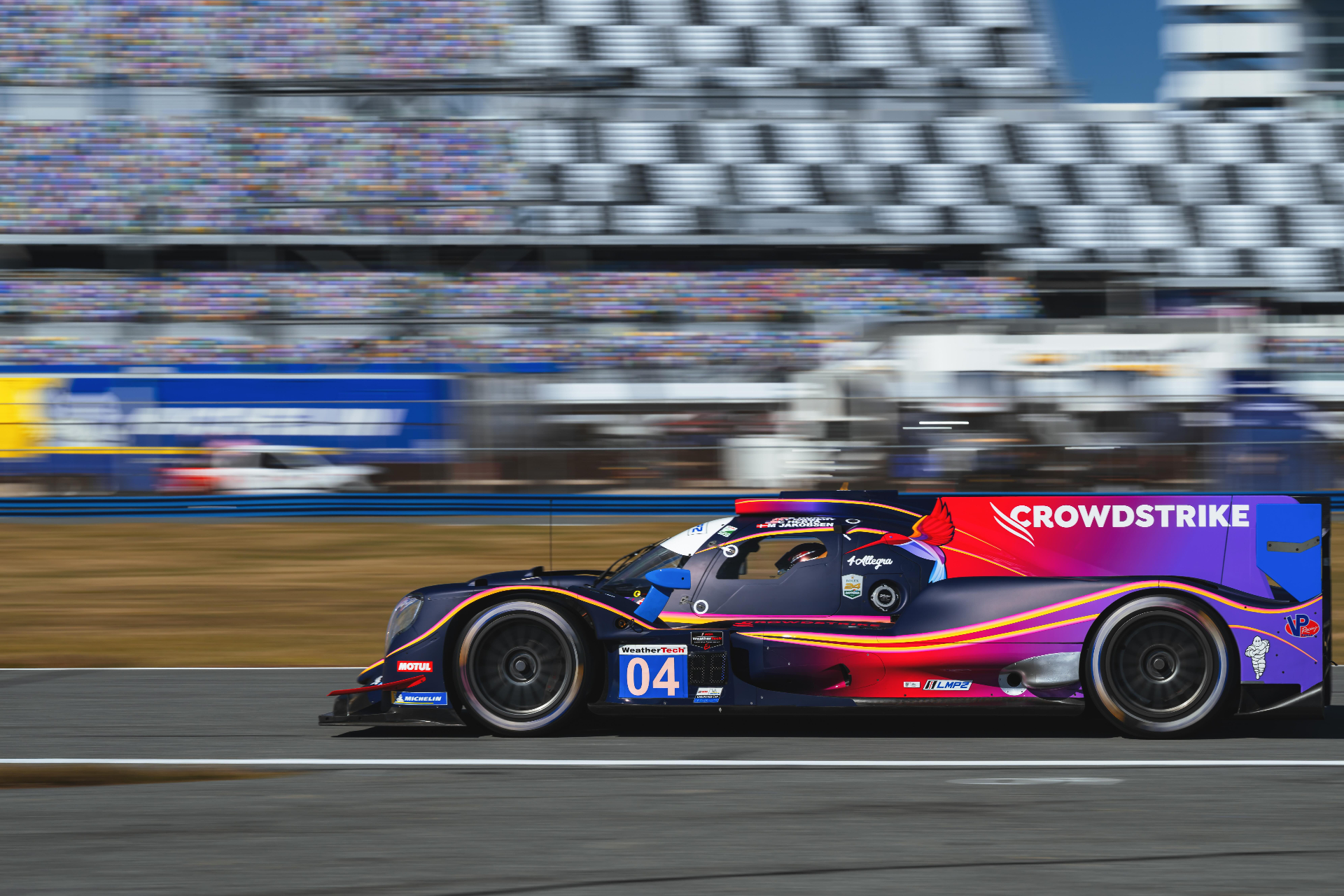
Racing gives Kurtz another environment in which results resist explanation. He competes as a Bronze-rated driver, sharing endurance cars with professional teammates. The rating describes his sporting category. A chief executive's authority buys no exemption from lap times, penalties or the need to hand over a car in usable condition.
His results include the LMP2 Pro-Am victory at the centenary edition of Le Mans in 2023 and the Asian Le Mans Series LMP2 title in 2023-24. He has raced alongside Colin Braun across multiple seasons. The partnerships matter because endurance racing spreads the outcome across drivers and a crew. The person photographed with a trophy has depended on people whose contribution is harder to fit into the frame.
At Daytona in 2026, that dependence was visible from the opening trouble onward. Kurtz's team recovered from falling two laps behind and eventually won its class. The story resists the easy picture of a wealthy executive buying a pleasant weekend. There was a car to repair, a deficit to reduce and a race still available to lose.
“You're never going to win a race in Turn 1.”
George Kurtz / after Daytona, 2026
In early October, Kurtz and Quinn secured the 2026 IMSA LMP2 championship. With Sowery, they also won their class at the ten-hour Petit Le Mans. The winning margin there was 0.666 seconds. A season's championship and a fraction of a second arrived together. For the former accountant, the decimals continue to be troublesome company.
A seat beside Toto Wolff
In November 2025, Kurtz became a Mercedes-AMG Petronas Formula One team co-owner and technology adviser. He acquired 15 percent of Toto Wolff's ownership entity, which held one-third of the team. That detail matters: the transaction concerned part of Wolff's entity, rather than 15 percent of the entire racing team.
He also joined the strategic steering committee alongside Wolff, Mercedes-Benz's Ola Källenius and INEOS founder Jim Ratcliffe. CrowdStrike had been a Mercedes global partner since 2019. The personal investment gave Kurtz another relationship with the sport, beyond sponsorship and his own driving.
His advisory brief includes technology, data analytics and performance. At the announcement, his language was admirably economical: “Milliseconds matter. Execution counts. Data wins.” Those six words could sit on either side of his working life. Formula One, however, has a useful habit of testing attractive propositions on Sunday afternoon.
Back to the problem he started with
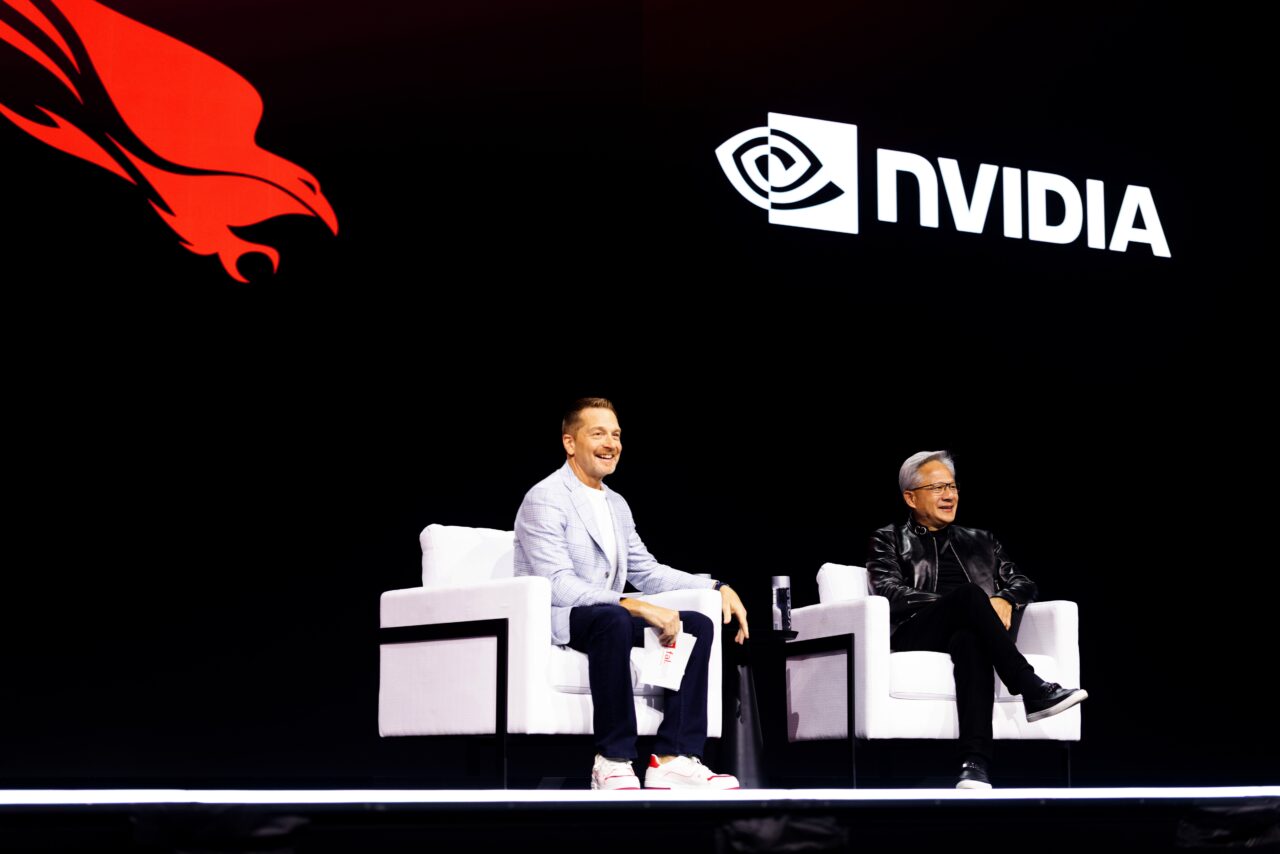
At Fal.Con in September 2026, CrowdStrike introduced SafeMind, security models developed with NVIDIA's Nemotron technology. Its proposed system pairs offensive and defensive models: one finds attack paths, the other works to close them. The ambition extends Kurtz's long interest in learning from attackers. The book made their methods legible; the new software aims to put that contest inside an automated loop.
The announcement is an ambition to judge through use. More capable automation gives defenders another instrument, and customers another reason to examine how decisions are made and changes controlled. Kurtz now leads a company pursuing faster responses while carrying the memory of what one faulty response did.
His racing calendar offers no tidy moral that resolves that tension. It offers something more practical: a record of close losses, repairs, shared effort and eventual finishes. Sixteen thousandths of a second once kept a watch off his wrist. Years later, he won it with three other drivers and a crew. There was room to recover because they kept working on the actual problem in front of them. The next problem, on a circuit or a customer's computer, still requires its own answer.
Follow the next lap
GEORGE, IN HIS OWN CHANNELS
WATCH
Driving a Mercedes F1 car at Yas Marina ↗The CISO’s Boardroom Guide, RSA 2025 ↗READ FURTHER
Kurtz on CrowdStrike’s beginnings ↗His letter on CrowdStrike’s IPO ↗The July 2024 statement and incident review ↗Microsoft’s outage assessment ↗Daytona: the near misses and the class win ↗The October 2026 championship result ↗Mercedes’ ownership announcement ↗The SafeMind announcement ↗The Foundstone acquisition ↗