Gabriel Engel’s brother had a real estate agency and a request. People were visiting its website. His agents needed to talk to them. Engel was already building customer relationship management software at Konecty, so adding a way to have that conversation sounded like a reasonable item on the list. Occasionally a reasonable item on a list acquires a company of its own.
The awkward part was what happened around the conversation. An agent might speak to a prospective buyer, then need help from a colleague or manager. Existing tools divided those exchanges into separate worlds. Customer support happened over here; internal conversation happened over there. The employee doing the work had to supply the bridge, usually by changing applications.
Engel and his colleagues wanted the ease of a modern workplace chat tool without losing the connection to the customer or the underlying business data. They built a chat component. It became Rocket.Chat, released as an open-source project in 2015. A practical request from a Brazilian business had opened a question with a much wider audience.
That question still sits beneath Engel’s work. A conversation can be a sales opportunity, a piece of institutional memory, or a sensitive exchange between colleagues. The software carrying it decides a surprising amount: where it lives, who can adapt the system, and how easily people can connect. Engel began with the agent’s inconvenience. He kept following its implications.
An inventor with a business degree
As a child, Engel wanted to invent things. When his father bought the family a computer, invention became something he could attempt without assembling a laboratory. His interest also extended to the less romantic machinery of a business. The story of Thomas Edison appealed to him because an invention still needed a company and capital to reach people.
“I wanted to grow up to be an inventor,” he has said. That ambition helps explain a choice that might otherwise look like a detour: he studied business administration at the Federal University of Rio Grande do Sul. He had learned to code early. He expected that, if he built something people wanted, he would eventually need to run the business behind it.
One of his earliest programming projects was a menu for launching his computer games. Before Windows made graphical interfaces commonplace, he wanted to choose a game without typing the command each time. It is a modest beginning, and a revealing one. The pleasure lay in removing a small obstacle between a person and something they wanted to do.
At university he started Intelimen with fellow students. Open source became part of his experience of making software and finding customers beyond Brazil. The programmer and the business student were already sharing a desk. Years later, the same combination would make a chat feature worth investigating as a business, rather than simply admiring as a clever piece of code.
London, and the cost of getting permission
Entrepreneurship was familiar territory at home. His father, grandfather and uncles ran businesses. His father suggested that he learn by working in his mother’s women’s clothing store. Engel knew little about the merchandise. That was rather the point: customers, inventory and accounts still had to make sense, whatever happened to be on the shelves.
He later moved to London to study English and experience business abroad. The intended one-year stay became ten. During that period, his cofounders in Brazil bought his share of their company. He stayed in England, helped Brazilian businesses enter international markets, and spent two and a half years at Vodafone.
At Vodafone Global Enterprise, he worked on business innovation and mobile applications as a product manager. He saw the advantages of a large organization, along with the effort required to get an idea through it. Presentations, approvals and expensive suppliers could absorb the time he wanted to spend making something. He returned to Brazil with a particular appetite for a leaner operation.
There is a pleasing irony here. The business graduate learned enough about a large business to want a smaller one. London gave him an international perspective; Vodafone gave him a close view of organizational friction. When he began building again, those experiences supplied different constraints. Reach beyond the local market. Keep the work moving. Avoid making the presentation more elaborate than the product.
A launch with pizza on the agenda
The chat software existed before the team released it publicly. Getting code ready for strangers required unglamorous work: removing customer-specific details, explaining deployment, preparing a website. Other paid work kept making a persuasive case for going first. An open-source launch could wait until next month.
Then Engel saw another developer rallying interest around a similar project in the Meteor community. Their own work had been sitting behind a closed door while someone else was inviting people in. Engel brought pizza and energy drinks, and the team worked through the cleanup. Competition supplied a deadline that the internal schedule had failed to provide.
Even the name involved a practical compromise. The team had considered Chat Rocket, in keeping with Meteor’s taste for space-related names. The matching dot-com domain was too expensive for a side project. A newly available dot-chat address offered a cheaper route, and the words changed places. Rocket.Chat’s branding contains a small piece of domain-shopping history.
Publishing changed the audience. Developers could try the software, report problems and improve it. Engel’s later accounts describe an immediate rush of interest. The useful thing to retain is the change in direction: a component of Konecty had attracted a community of its own. The team now had to decide how much of its future belonged to that component.
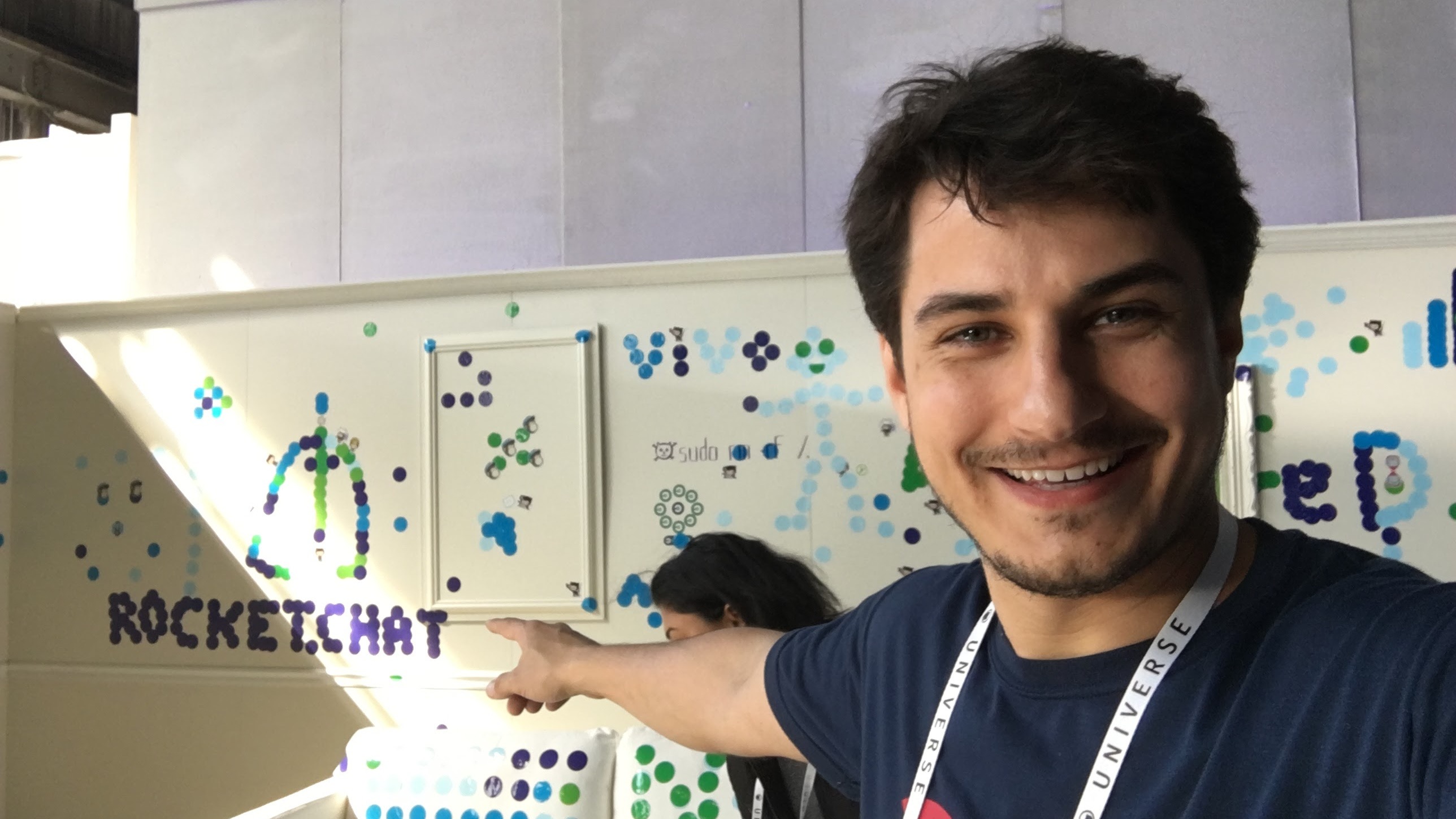
The gift that needed a sales department
In his 2025 account of the company’s beginnings, Engel placed Rocket.Chat’s incorporation in late 2016, following an investment offer from New Enterprise Associates. He also described the consequence for his own job. Running both businesses would not work. Konecty needed a new leadership arrangement, and he became fully dedicated to Rocket.Chat.
The platform’s commercial appeal grew from choices an organization could make for itself. It could run Rocket.Chat in its own environment and adapt the software to its needs. Developers could integrate messaging into other products. Engel had built something that could travel far beyond the particular website request that started it.
Popularity, however, was only one part of the business. An open-core model pairs an open-source foundation with paid enterprise capabilities and services. A free product needs to be useful enough to attract people. The paid offering needs a reason to exist. Both sides have customers with opinions, and neither is especially interested in the founder’s theoretical elegance.
Rocket.Chat announced a $19 million Series A in February 2021, led by Valor Capital Group. The announcement put institutional funding behind a project that had begun with customer demand and public code. Capital could support the company’s expansion. It could not answer every pricing question or shorten every enterprise sales cycle. Those remained operating problems, waiting for people to solve them.
A community inside its own invention
Rocket.Chat’s community used Rocket.Chat to organize itself. That arrangement had an unusually direct benefit. When the tool made collaboration difficult, the people experiencing the difficulty could work on the code. Better collaboration helped them improve the product, and improvements made collaboration easier. The users were close enough to the machinery to reach for a spanner.
Engel described learning from people at MongoDB and Elasticsearch about balancing community software and enterprise demands. Larger organizations wanted assurances, support and auditing capabilities that smaller communities might not need. A feature could have little appeal for one group and substantial value for another. Listening carefully mattered more than applying one price to every kind of user.
That habit of listening also shaped the company’s distributed work. Rocket.Chat began as a remote company. Engel treated the Porto Alegre office as a meeting place, rather than the only location where work could count. In his description of managing remote teams, ownership and autonomy were central. Employees needed to understand responsibilities without someone watching their chairs.
The model asks something of the manager, too. A company cannot declare independence for its employees and then communicate its priorities by implication. Decisions, expectations and feedback have to travel. For a founder of communication software, this is a useful daily examination: the product carries messages, while the organization has to make those messages worth carrying.
The product person becomes the people person
“I’m a product person.”Gabriel Engel
“I’m a product person,” Engel has said. He is happiest discussing work with designers and developers. The admission makes his account of a CEO’s day more interesting: much of it went into interviews and conversations with employees. The work he loved and the work the company required had become overlapping, rather than identical, circles.
He wanted to hear from people several levels below him, as well as direct reports. Information can arrive at the top of an organization with its rough edges polished away. By talking more widely, he sought the problems and risks that employees were seeing before they became an agreeable presentation.
Hiring gave him a harder lesson. He acknowledged that the company had grown too quickly, putting too much weight on skills and too little on shared values. His regret was not building the people function earlier. This is an unusually useful admission from a founder: good technical work does not automatically produce a group that can work well together.
His interests outside the product offer a little perspective on that learning. He has described a large audiobook library and a habit of listening while driving. He credits family examples with teaching him to make negotiations fair for both sides. A business relationship has a future after the current transaction. For someone selling collaboration, that seems a sensible place to begin.
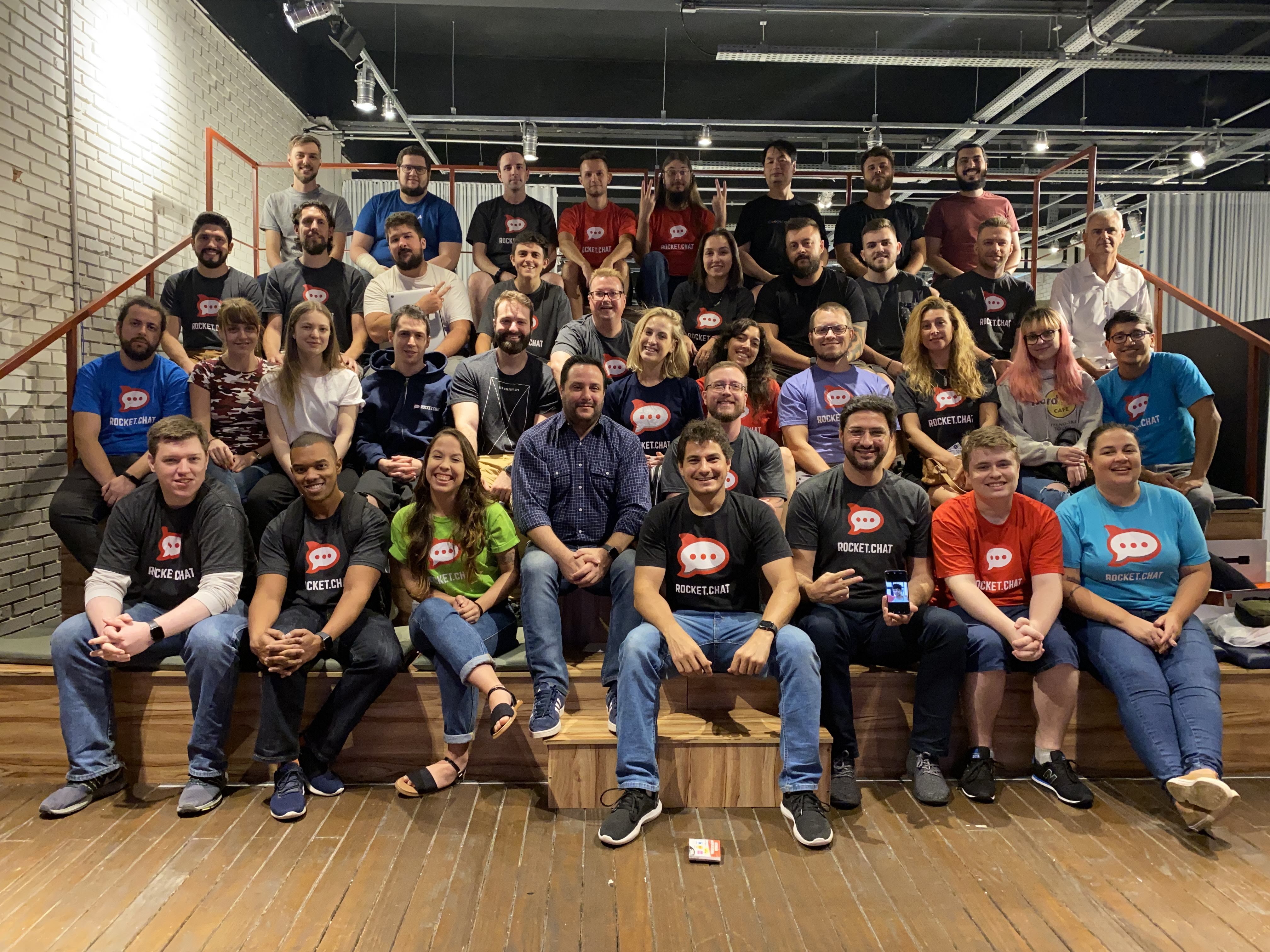
The conversation gets bigger
Engel’s stated long-term ambition has been to bring real-time, federated communication to the role email plays across organizations. Federation allows separate systems to communicate rather than requiring everyone to inhabit one provider’s space. The ambition follows naturally from the original irritation: people should be able to talk across boundaries without rebuilding their working lives around each boundary.
The emphasis has become more demanding as Rocket.Chat has addressed government, defense and critical infrastructure. Its current positioning brings messaging, voice, video, AI and applications under the name Secure CommsOS. For Engel, the customer conversation now involves institutions whose requirements extend beyond an attractive chat window. Control of the environment becomes part of the purchasing decision.
A March 2026 roadmap event listed Engel alongside product leader Christopher Skelly, with sovereignty, interoperability, federation and zero-trust capabilities on the agenda. The vocabulary has grown more technical since the real estate website. The underlying concerns remain recognizable: connect the people who need to speak, and give the organization a say in how that connection works.
Engel’s route to this point has involved a game-launching menu, a clothing shop, London, corporate product management and a feature that escaped its original assignment. The sequence is more interesting than a straight line from ambition to achievement. Again and again, he encountered a practical inconvenience and tried to make it easier. His brother needed his agents to talk to visitors. There is now rather more to discuss.