A computer has already made important decisions by the time it asks for your password. It has initialized hardware, checked parts of its boot process, and begun loading an operating system. The software doing that early work is firmware. Most people meet it only when something goes wrong, or when a technician asks them to press a mysterious key during startup.
- FirmGuard manages BIOS firmware remotely across supported Windows devices.
- Its customers include managed service providers and enterprise IT teams.
- Updates, configuration, drive erasure and recovery share a cloud console.
- Absolute Security acquired the business in October 2026.
FirmGuard has built a business around this interval before the familiar desktop appears. Launched by Phoenix Technologies in March 2023, it gives administrators a way to inspect and manage UEFI BIOS firmware across a fleet. Phoenix called it its first software-as-a-service product. The move took firmware expertise usually associated with computer manufacturers and offered it to the people maintaining computers after purchase.
The job before the login screen
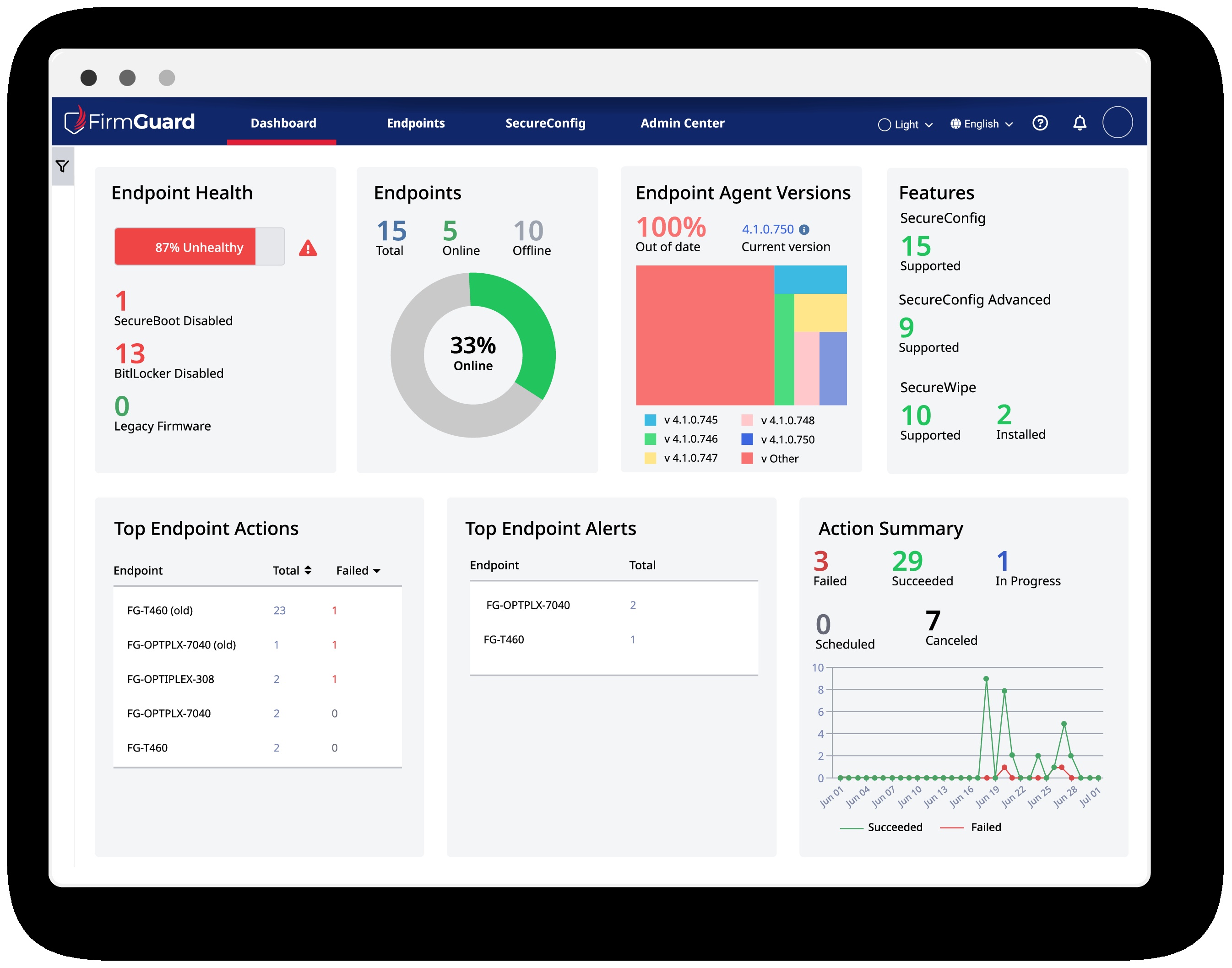
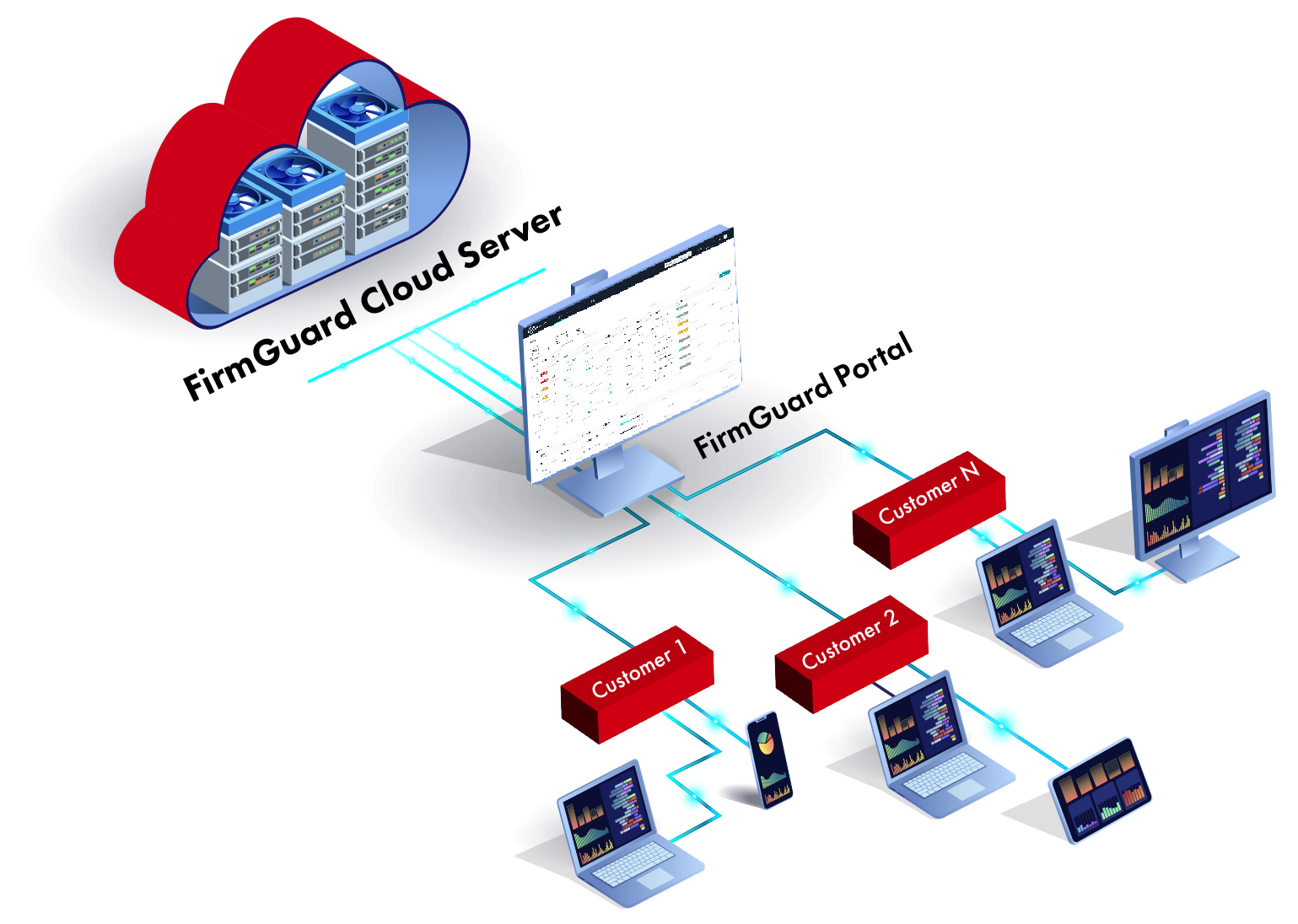
The arrangement is straightforward. A lightweight agent goes onto each endpoint, commonly through an existing remote monitoring and management tool. It communicates with FirmGuard’s cloud service, hosted on AWS. Administrators work through a portal. The ambition is to make a normally obscure layer behave like something an IT department can actually inventory and maintain.
Different tools do different jobs. SecureCheck watches firmware-related changes and security conditions. SecureConfig lets an administrator change BIOS settings remotely. SecureUpdate compares installed firmware with manufacturer releases and supports scheduled updates. SecureSense exposes details such as BitLocker status and device identifiers. Together, these functions turn scattered checks into a repeatable workflow.
The firmware problem has an awkward twist: reinstalling Windows does not necessarily remove malware embedded in motherboard firmware. Storage and firmware are separate places. That makes the distinction between repairing an operating system and restoring firmware integrity essential. A wipe-and-reimage button has a purpose, but it should never be mistaken for proof that every layer of a computer is clean.
SecureUpdate also illustrates why this work needs care. Its documentation describes manufacturer-supplied firmware capsules with digital signatures, applied during reboot before the operating system loads. A fleet can contain several manufacturers, each with its own update practices. Bringing those releases into one scheduling process is useful, but the manufacturer still supplies the firmware. Administrators need to verify the result on their machines. The product makes that maintenance easier to organize; it does not make firmware an interchangeable commodity.
Put the BIOS on the calendar
The telling customer example concerns a missing routine. In FirmGuard’s published case study, Georgia IT provider ASC Group says BIOS configuration and updates previously happened ad hoc. It adopted FirmGuard in 2024 and made it standard in its stack in 2025. Configuration defaults became client-specific, and firmware updates joined existing maintenance windows.
ASC also reported fewer puzzling endpoint problems after regular updates, including issues such as Bluetooth stopping unexpectedly. That is a customer account, without a quantified savings figure. Still, the operational lesson travels well: give firmware an owner, define an approved configuration, and schedule its upkeep alongside other maintenance. The first failure here was a process gap. Testing a workable management tool gave ASC a reason to change it.
Know the fleet. Set the baseline. Make time for updates. Check the result.
A rescue route beneath Windows
Recovery creates a second reason to care about the boot process. Remote support becomes awkward when the software providing the connection depends on an operating system that cannot start. FirmGuard’s SecureSync establishes an authenticated firmware-level channel over Ethernet or Wi-Fi, allowing enrolled endpoints to communicate before the OS loads. Its usefulness comes from moving the conversation earlier.
SecureReimage, announced in April 2025, introduced remote restoration to a trusted Golden Image. SecureReset, announced in August 2026, combines remote storage erasure with Windows reimaging without requiring a functioning OS. Administrators can also use a PowerShell script during Windows setup to customize the recovered machine. The same workflow can help prepare a device for reassignment after an employee leaves.
Preparation matters. SecureReset’s instructions begin with installing FirmGuard on Windows endpoints in advance and enabling SecureWipe. A dead battery or absent network connection cannot be argued away by a cloud console. The sensible trial therefore includes the uncomfortable scenario: take a representative machine, exercise the recovery route, and check what happens when its usual management path disappears.
Two dollars, multiplied
FirmGuard’s published pricing makes the commercial proposition unusually easy to examine. It lists $2 per endpoint per month below 500 endpoints, $1.75 for 501 to 1,000, and $1.50 for 1,001 to 5,000. Larger fleets require a conversation with sales. The page says the whole platform is included, onboarding is included, and contracts typically run for 12 months.
100 endpoints × $2 at the published small-fleet rate.
$2,400 over 12 months, before applicable taxes or negotiated terms.
For an MSP, the calculation includes technician time, site visits and a recurring service it can sell. FirmGuard’s April 2025 HaloPSA announcement recognized the workflow problem too: it described importing customer groups and generating service tickets from security alerts in phases. An alert earns its keep when someone has a clear route to act on it.
A new owner. The same early start.
On October 9, 2026, Absolute Security announced its acquisition of FirmGuard. The buyer described plans to combine FirmGuard’s UEFI capabilities with its own firmware-based resilience platform, including broader management, patching and a consolidated console. Those are announced integration plans; the deal itself is complete.
“We built FirmGuard to make firmware protection simple and secure.”
Gerard Moore · FirmGuard President & CEO
October 2026 acquisition announcement
FirmGuard sits in a market that includes Eclypsium’s broader firmware security platform and manufacturer-specific management tools. Its practical appeal is the combination of BIOS administration and recovery workflows for Windows fleets. Its FAQ remains explicitly Windows-focused. Buyers should check their exact hardware and required features during the seven-day trial. The question to copy is simple: what can your team still do when Windows cannot help?