There is a number that looks almost comically small until you remember what it counts: 1.6 percent. In 2022, the New York City Campaign Finance Board hired Fenton to reach young voters and immigrant citizens under the NYC Votes banner. The agency built multilingual ads, modeled audiences and ran a randomized test. People exposed to the work turned out at a rate 1.6 percentage points higher than the control group. In a toothpaste ad, 1.6 percent is a rounding error. In an election, it can be the plot.
This is the useful way to understand Fenton. It is nominally a communications agency. It makes brands, buys media, pitches reporters, builds websites and prepares clients for crises. But the thing it really sells is movement: from doubt to agreement, from awareness to a click, from a click to a donation, from a private preference to a public vote.
The firm was founded in 1982 by David Fenton and Robert Pollock as a public-interest communications shop. Its early résumé runs through the grand subjects of progressive politics: apartheid, pesticides, healthcare and the environment. It worked on sanctions against South Africa and handled Nelson Mandela's first American press tour. Today, under CEO Valarie De La Garza and owner James Marcus, it is a national, remote-forward agency of more than 100 strategists. The tool kit has expanded. The wager has not.
Most agencies sell attention. Fenton's more interesting product is what happens after attention.
The smallest number in the room
Communications firms love large numbers because large numbers look handsome in a slide deck. Fenton has plenty. Its Science Moms campaign, launched in the frantic news cycle after the January 6 attack, eventually logged more than 6,800 media placements and 3 billion impressions. The team went wide: parenting publications, climate reporters, local stations in battleground states, national outlets and ads aimed at policymakers. That breadth was a practical response to a brutal launch problem. One crowded news cycle could have buried a new group of scientist-mothers before anyone learned its name.
Yet the modest turnout figure is more revealing than the billion-impression one. It ties exposure to behavior. Fenton's advertising practice works backward from that requirement. Who is persuadable? What do they currently believe? Which message might move them? What action would count as movement? Then come audience models, in-language creative, media placement and testing.
Begin with the action, not the announcement
For the Dave Thomas Foundation for Adoption, the question was whether skeptical child-welfare professionals could be persuaded that every child waiting in foster care is adoptable. Fenton modeled the audience, ran personal stories at high frequency and surveyed belief afterward. In two months, 8 percent of the target universe moved from disagreement to agreement, with the result reported at at least 90 percent statistical significance. That is not merely a prettier message. It is a before-and-after.
What failed first? The polished guess.
The cleanest glimpse of Fenton's learning process comes from an unglamorous object: the beverage carton. Since 2014, the agency has helped the Carton Council grow an online community and teach people how to recycle cartons correctly. A paid awareness campaign produced more than 3 million impressions and nearly 22,000 site visits. But the more valuable result was comparative. The best-performing creative showed real people handling cartons in everyday life.
That finding changed the ongoing organic program. Instead of treating the media buy as a finished performance, the team used it as a laboratory. The losers were not publicly itemized, and there is no reason to pretend otherwise. What is known is that the human, demonstrative video beat the alternatives. The lesson is wonderfully plain: when asking people to perform a small behavior, show a person performing it.
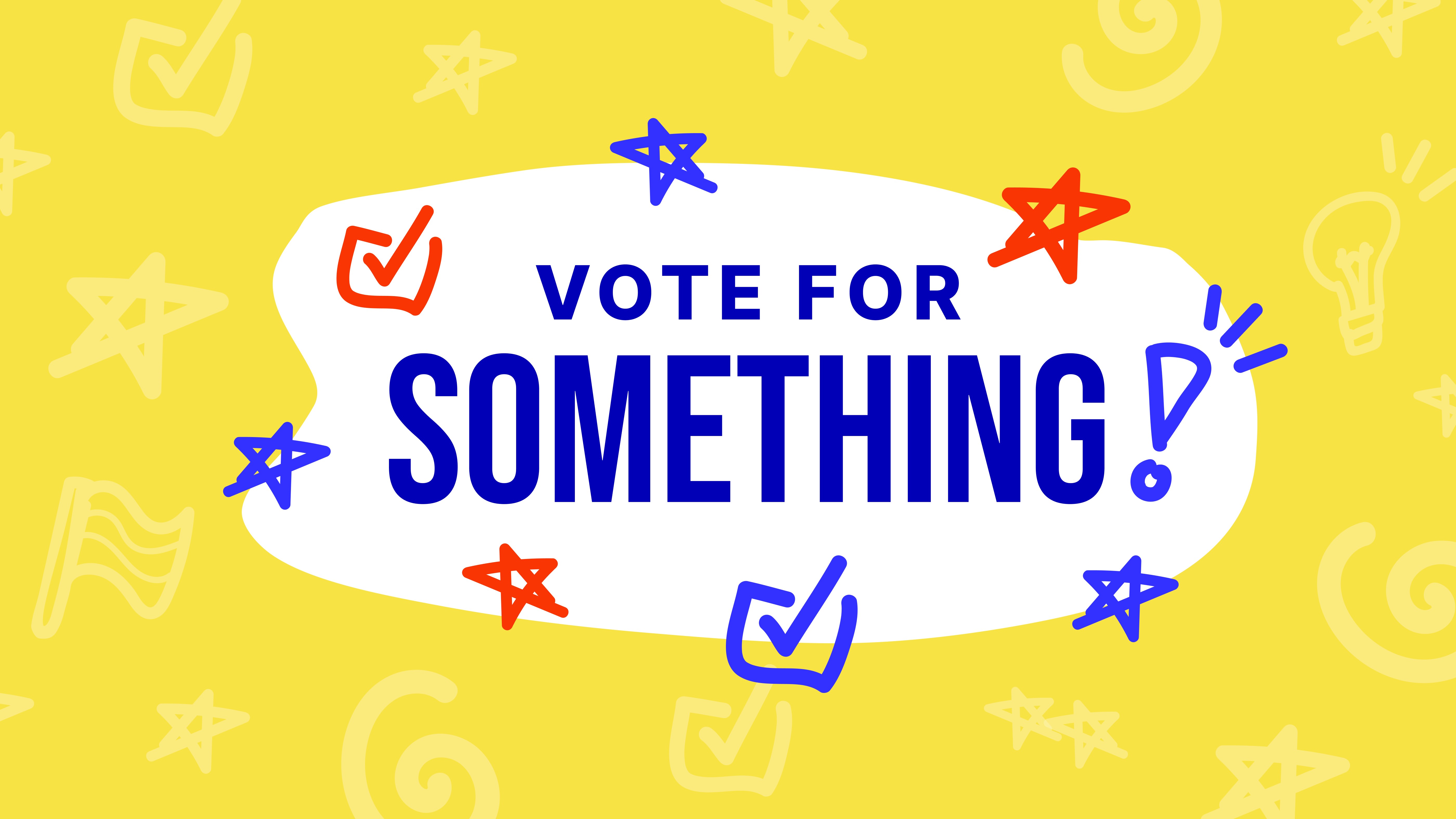
The same logic animated the 2024 Vote for Something work for State Voices. Rather than scold anxious voters with another civic-duty lecture, the campaign gave people bright templates they could personalize around their own values. State Voices reported 800,000 registrations, 250 million voter contacts and 100,000 vote plans across its network. Those are network-level outcomes, not a neat causal claim for one piece of creative. Still, the strategic turn is worth copying: replace the institution's reason with the participant's reason.
The price tag, when anyone will say it
Private agencies rarely publish fees, and Fenton is no exception. Two case studies at least reveal media scale. Its 2021 St. Louis County vaccination work included a $900,000 multi-channel paid campaign. The related website drew more than 88,000 visits, nearly 28,000 of them clicking for vaccination details. The share of county residents with a first dose rose by nearly half during the campaign, though a public case study cannot isolate how much of that rise the advertising caused.
The California work, for the Chef Ann Foundation, aimed to improve the reputation of school-food professionals and help with recruitment. Fenton used surveys to locate persuadable parents, AppleCart data to reach school communities and video at high frequency. After two and a half months, the share of parents who said quality school-meal preparation takes skill rose from 76 to 84 percent.
An agency with a point of view
Fenton's customer list explains its market position better than any slogan: nonprofits, foundations, advocacy groups, coalitions, government agencies and purpose-led companies. The firm charges for professional services, through projects and ongoing engagements, rather than selling software or audience access. A client can buy research, narrative strategy, earned media, advertising, brand design, digital products, crisis counsel and, since 2026, a formal fundraising practice.
Competitors can provide each ingredient. Large PR networks offer reach; political consultancies offer campaign reflexes; specialist studios offer craft; in-house teams offer institutional memory. Fenton's difference is the bundle and the constraint. It says every account is social-impact work. That choice narrows the market while building a staff fluent in voting rights, public health, philanthropy, racial justice, education and climate. The firm says 56 percent of its team identify as people of color. Its culture statement links representation to the ability to produce culturally competent work, rather than presenting diversity as office decoration.
The 2023 reorganization made the company remote-forward and national. Sector expertise began to matter more than which office happened to hold a client. It also formalized senior leaders around philanthropy, government, political advocacy, issue advocacy, corporate social good and racial justice, with creative, digital and advertising crossing those practices. This is how the business scales: not by making the work generic, but by making specialized judgment available across accounts.
Persuasion still needs somewhere to go
There are conditions under which this playbook has little room to work. The audience may be immovable. The requested action may be difficult, unsafe or unavailable. The messenger may lack trust. A media budget may create frequency without credibility. And a campaign measured only by impressions can mistake distribution for consequence.
Fenton's strongest public examples have four things in common: a reachable audience, a specific next action, credible messengers and enough data to adjust. Remove any one and the beautiful machinery begins to spin in place.
That is the idea a reader can copy without hiring an agency. Write down the behavior before writing the headline. Separate the persuadable from the already convinced. Test the ordinary version against the polished one. Let community partners challenge the message before the public does. Decide what evidence would change your mind, then collect it.
Fenton has changed from a founder-led PR shop into an integrated national agency. It has survived ownership changes, a pandemic, the collapse of office geography and the splintering of the media system. The continuity is almost quaint: it still believes that repetition matters. The upgrade is that repetition is now aimed, tested and measured. A changed mind remains expensive. At least the invoice can come with an experiment.