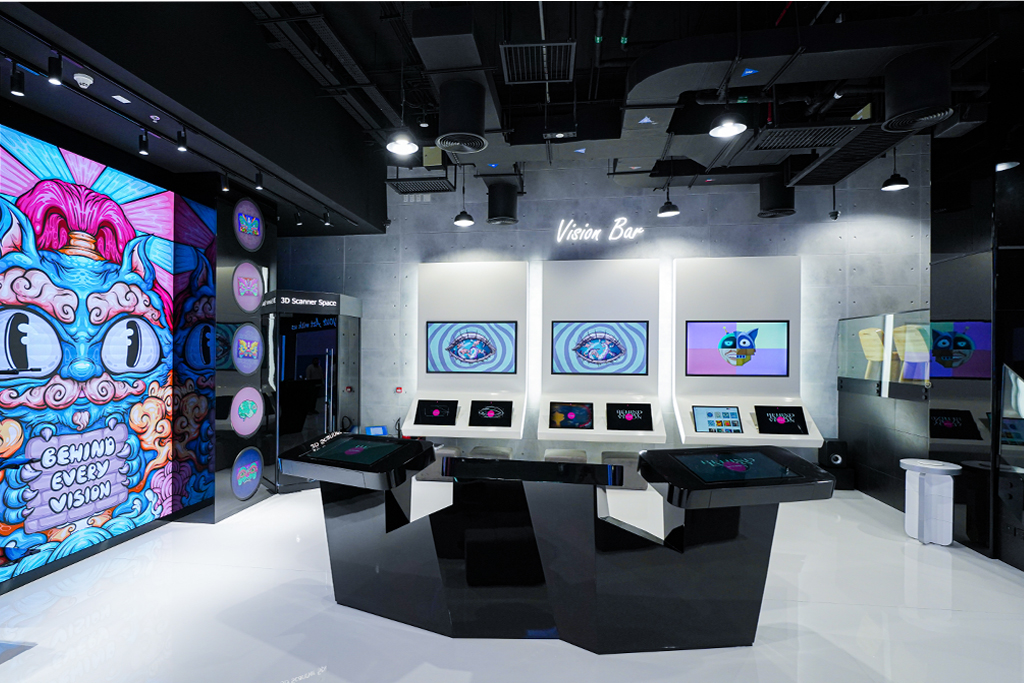
In Dubai Mall’s Chinatown, among the places to eat and shop, there is a place to buy something you cannot put in a shopping bag. The ftNFT gallery displays digital art and offers terminals for purchasing collectibles. Its fit-out contractor describes a 350-square-metre space. For a business concerned with intangible assets, Fastex has given the customer a remarkably tangible starting point: a room.
- Fastex connects crypto trading, payments, digital art and blockchain development.
- Fasttoken, or FTN, links the ecosystem and powers the Bahamut network.
- Its distinctive move: give unfamiliar technology familiar entrances, from galleries to cards.
That room makes more sense when you look at the rest of the company. Fastex is a Web3 ecosystem incubated by SoftConstruct, with Vigen Badalyan identified as a co-founder. The brand dates its founding to 2022. Its offerings stretch across an exchange, payment gateway, wallet, cards, NFTs and blockchain infrastructure. Read the list quickly and it sounds like a shopping spree. Read it as a customer journey and a more interesting idea appears.
01 / Give the customer a door
Buying a digital asset is only one task. Funding the purchase is another. Keeping it, spending it and understanding what ownership means introduce further decisions. Fastex places products around those moments. The exchange addresses trading. Fastex Pay addresses merchant payments. The wallet addresses custody. The ftNFT marketplace gives artists and collectors a venue, while physical spaces add an opportunity to ask questions.
The Dubai Mall location opened in March 2023, following a location at Mall of the Emirates. This is an unusual distribution choice for software. A gallery can make a digital transaction visible before a visitor has learned the vocabulary. It also gives the brand a presence beyond the trading screen. Whether that encounter produces repeat customers is a separate commercial question.
02 / The coin beneath the counter
Underneath these entrances sits FTN. Fasttoken began its public token sale in January 2023. Fastex reported $23.2 million raised across private and public sales. That is financing through a token, with its own obligations and economics. It establishes neither the company’s equity valuation nor the income generated by customers using its services.
FTN also serves as the native coin of Bahamut, the ecosystem’s EVM-compatible layer-1 blockchain. EVM compatibility lets developers use familiar Ethereum programming tools. The distinctive proposal is proof of stake and activity: alongside staking, the design incorporates the use of smart contracts associated with validators. It tries to give people who help create network activity an additional reason to participate.
03 / First, measure the right thing
Reward activity and you immediately face a measurement problem. What counts? Can somebody produce the appearance of use more cheaply than genuine use? These questions matter because the measurement helps decide who benefits. A blockchain incentive is also a piece of software, with all the opportunities for mistakes that implies.
Hexens’s April 2023 Bahamut audit found one critical vulnerability and two high-severity vulnerabilities, among other findings. The critical issue involved activity-point calculations that could let a validator receive more points than intended. Hexens says the development team fixed all reported issues and that it validated the corrections. The report documents an engineering problem and its remediation, rather than evidence of a live theft.
There is something usefully specific here for other builders. If your product invents a reward, test the accounting behind that reward. Reviewing the ordinary transaction path is insufficient when the novel part of the system decides who gets paid.
04 / A regulator changes sides
The human counterpart to that technical caution is Vakhtang Abrahamyan, identified as Fastex’s CEO in a June 2025 interview. He described more than 25 years in central banking and recalled earlier warnings that banks should avoid crypto without regulation. By 2025, he was arguing for cooperation between companies and supervisors. His account shows a changed position without supplying a neat conversion scene.
“There isn’t a single solution for dealing with the regulators.”Vakhtang Abrahamyan · June 2025
The distinction between aspiration and permission remains essential. Fastex’s August 2023 announcement of initial Dubai VARA approval explicitly said it did not permit virtual-asset activity. January 2025 reporting described a Malta Class 4 VFA licence. These are jurisdiction-specific milestones, with different meanings. Neither should become a blanket claim that the whole ecosystem has permission everywhere.
The same specificity helps explain expansion. In June 2025, Fastex announced U.S. spot-trading services in 27 states and territories, targeting retail and institutional users. The number describes an announced footprint at that moment. A global brand still encounters local rules, verification requirements and product eligibility.
05 / The familiar object does the explaining
At Harmony Meetup 7 in July 2025, Fastex presented an upgraded exchange-linked card developed with Monavate. Commissioned coverage also described a premium metal version with Arculus cold-wallet technology. Then came FTN Notes: physical collectibles described as backed one-for-one by FTN. A card and a collectible approach the same digital asset from very different directions.
These products clarify the competitive position. An exchange customer can consider services such as Kraken or Coinbase. A developer can choose another EVM chain. Fastex’s argument is the relationship between its offerings. For a merchant, the useful question is whether accepting crypto improves a payment workflow. For a trader, it is whether funding, execution and withdrawal fit the task at an acceptable total cost.
Trading commissions are part of the exchange business model. Network fees, card conversion, payment-provider charges and withdrawal costs can affect the user’s economics too. A familiar interface does not remove those calculations, nor does it remove custody choices or token volatility. Integration earns its keep only when the next step becomes easier.
That is the portable idea in Fastex’s experiment: design the entrance around something the customer recognizes. A gallery offers conversation. A card offers a checkout routine. A shared brand offers continuity. The harder test comes after that first encounter, when the customer tries to finish an ordinary job.