Imagine a campaign manager staring at two numbers. The first is a price per door. The second is a count of doors supposedly knocked. Both look clean in a spreadsheet. Neither says whether the canvasser knew the candidate, whether a voter answered, whether the conversation was recorded honestly, or whether anyone noticed that a route had been completed at the speed of a passing car. The arithmetic is tidy. The reality may be a mess.
Express Canvassing has built its business in that gap. Founded in 2022 by Austin Marquette and Samuel Arena, the Florida-based firm runs paid field programs for candidates, PACs, ballot initiatives and advocacy organizations. Its teams knock doors, gather signatures, help secure ballot access, register voters, collect survey responses and follow up with peer-to-peer texts. It operates nationally. In the 2024 cycle, the company says it worked in more than 30 states and canvassed more than 2 million doors.
Those are scale numbers, the kind that land easily in a pitch deck. But the more interesting proposition is smaller: a door should not be treated as a commodity. A legitimate knock has preparation behind it and evidence after it. Express Canvassing is selling the machinery that makes the distinction visible.
The peculiar economics of a knock
Campaigns can buy television by audience, mail by household and digital advertising by impression. Field is more awkward. It requires recruiting people, teaching them a message, moving them through neighborhoods, supervising their work and checking what comes back. It is expensive precisely because the product is a human encounter. The price per door is easy to compare, so it tends to dominate the purchase. Easy metrics often do.
Marquette's objection is that the cheap door can become the costly one. If training is thin, a canvasser may be the only campaign representative a voter ever meets and also the least prepared. If oversight is weak, the campaign can pay for activity it cannot trust. If the survey captures only support, oppose or undecided, the operation may miss the useful detail hiding inside the answer.
The cheapest door is not always the most valuable door.Austin Marquette
Programs are designed around an organization's goal and budget, which is sensible because collecting ballot signatures in one state is not the same job as persuading scattered voters in another. The firm's philosophy of cost is clear: verification, management and training are not administrative extras. They are part of what the client bought.
What a useful door produces
A porch can be a sensor
A conventional canvass reduces a complicated voter to a handful of boxes. Economy. Education. Public safety. Other. But “economy” could mean grocery prices to one person, property taxes to another and rent to a third. Five thousand identical check marks can conceal five thousand different worries.
Express Canvassing's emerging technology thesis begins here. Marquette has described tools in development for training, quality control, reporting and early detection of suspicious patterns. Artificial intelligence, in this telling, does not take the canvasser's place. It helps a manager notice the route completed implausibly fast, the team with an odd contact rate or the issue appearing repeatedly in one community. The software points to the place worth looking. A human still decides what it means.
The second step is organizational. Field information is often marooned in a field report while polling, mail, phones and digital teams keep their own dashboards. Marquette argues that a doorstep observation should travel. If housing costs keep surfacing in one precinct, the pollster may add a question, the digital team may test a message and the candidate may change an answer. The knock then becomes more than delivery. It becomes sensing.
The part another organization can copy
Do not ask only how much activity occurred. Define the evidence that proves it, train for the exceptions, and create a short route from frontline observation to management action. The principle travels well beyond politics.
Two founders built for motion

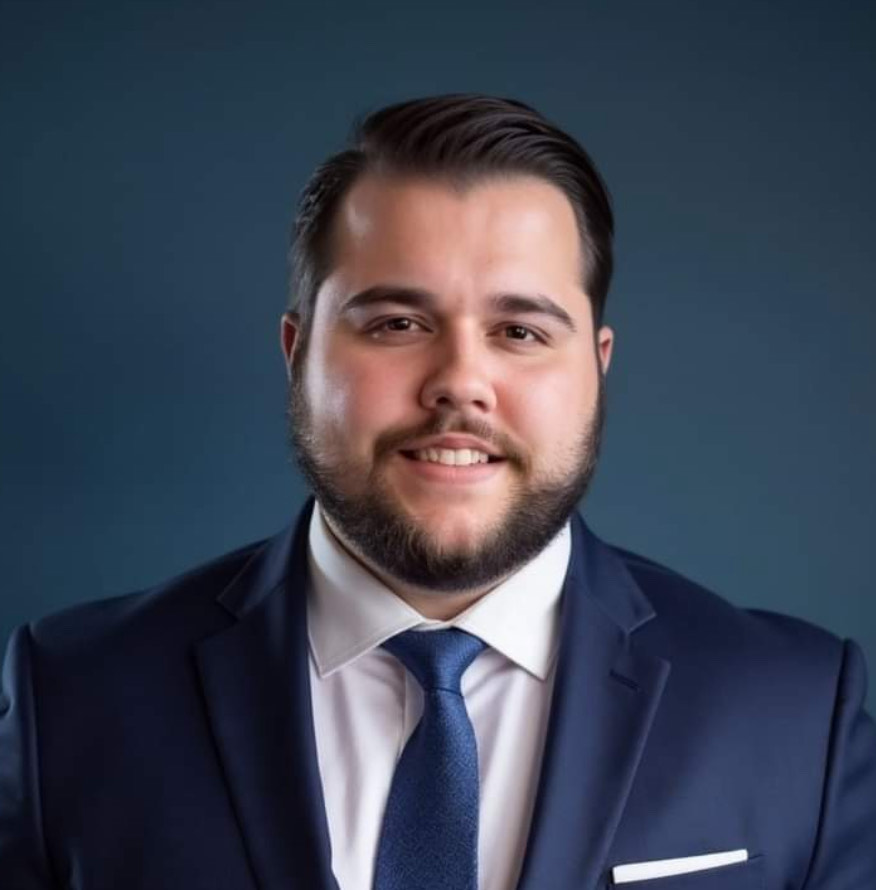
Marquette entered campaign politics in 2016 and became a hands-on Republican field strategist. Arena arrived with experience managing canvassing, ballot initiatives, voter registration and ballot-access drives across more than 40 states. Their complementary problem is motion: people, rental cars, hotels, turf, scripts, petitions, deadlines and data all have to meet in the right place at the right time.
The hiring material is revealing. Express Canvassing recruits project managers, field directors, compliance specialists, recruiters and canvassers. It offers travel assignments with transportation and lodging when needed. Campaign experience helps, but reliability and work ethic receive equal billing. This is not a business that can be operated entirely from a strategy call. Someone must show up in the heat, cold or rain, find the address and absorb the small rejection of a closed door without letting it spoil the next conversation.
That operational focus has produced recognition. Marquette joined Cygnal's 2025 ARRO 30 Under Thirty class, and Arena followed in 2026. The University of Florida ranked Express Canvassing No. 11 on its 2026 Gator100 list of fast-growing Gator-led companies. For the 2026 Oklahoma governor's race, the firm says its team knocked more than 200,000 doors for Mike Mazzei from the campaign's early days through his Republican primary runoff victory.
Where the model earns its keep
This approach makes the most sense when the electorate is defined, the margin matters, direct contact is persuasive and the campaign can act on what comes back. It is particularly suited to ballot qualification, persuasion and turnout programs where compliance, timing and local texture matter. A close race gives a good field program room to justify its cost.
It is less useful when a client merely wants the appearance of motion, has no plan for the data, or lacks enough time to recruit and train. A doorstep program cannot repair a weak candidate, guarantee that voters will be home or substitute for television, mail, phones and digital. Even Marquette's argument is additive: the strongest campaign layers its channels, allowing each encounter to reinforce the others.
The paradox is that the company's modernizing idea depends on preserving an old-fashioned moment. The data can become richer. The training can become adaptive. The quality checks can become faster. But politics still arrives at the door as a person asking another person for a minute. Express Canvassing's wager is that campaigns will pay more attention to everything that makes that minute real.