Before a company gets a meeting, it has already made an impression. Someone has searched its name, skimmed an explanation, asked a question. Esty Pujadas has spent a career working on what happens around that encounter. Now, as CEO of Grayling North America, she is paying attention to an audience that cannot shake hands: the systems that retrieve, rank and summarize a business before a human decides whether to hear more.
The new job was announced in December 2025. Pujadas arrived from Sodali & Co, where she had been chief operating officer for the Americas. Earlier came executive roles at Next 15/The Booth Group and a long career at Ketchum. Across those positions, the recurring assignment was to help organizations make sense to people beyond their own walls. A company can be perfectly intelligible to itself and baffling to everyone else. Entire conference rooms have been furnished on that misunderstanding.
Her Grayling mandate brings that old problem into a different distribution system. Human relationships still matter in her account of reputation. Alongside them sit AI-informed filters, working before the introduction. The question is how to make a company understandable in both environments without losing the substance that gave it something to say in the first place.
A route through ballet and computers
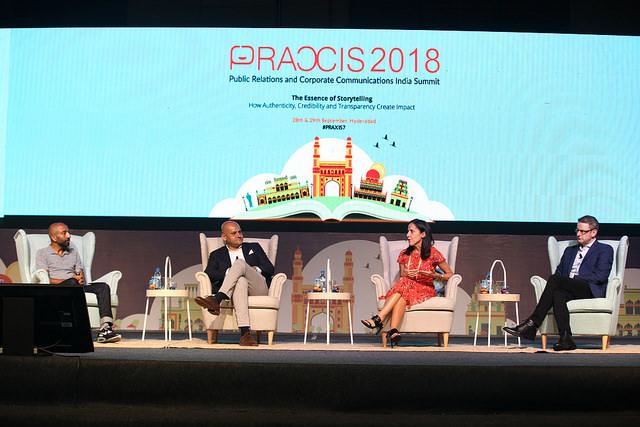
Pujadas’s early path offers an unexpected pairing. She studied at Juilliard with ambitions to become a ballerina, then studied computing at Carnegie Mellon. Years later, in a 2018 interview about communications, those two educational worlds appeared in the opening account of her background. Her public professional profile also lists Carnegie Mellon and identifies English and Spanish as languages in which she has native or bilingual proficiency.
Ballet and computing make an appealing shorthand: performance and structure, an audience and a system. It would be too tidy to make them a complete explanation for her career. What they do provide is a useful way into the work she eventually chose. Communications requires a message to hold together internally and land with someone externally. The elegance of the construction means little if the audience misses the point.
Her technology work at Ketchum repeatedly returned to that gap. A specification sheet describes what a device can do. A person wants to know what life with it might be like. Those are related questions, but they ask for different kinds of language. Pujadas was arguing for the second question well before generative AI supplied communications departments with another vocabulary to learn.
The gadget wanted applause. The buyer wanted simplicity.
In 2012, Ketchum’s Digital Living Index surveyed 6,000 consumers in six countries. The findings gave technology marketers an awkward piece of news. Fifty-four percent wanted technology to be easy to use, and 46 percent wanted it to simplify their lives. Entertainment and self-expression attracted smaller shares. Meanwhile, 76 percent were not very satisfied with technology’s ability to make life simpler.
Pujadas, then partner and director of Ketchum’s global technology practice, described the desire for simplification as the study’s most surprising finding. The industry’s enthusiasm for more capability had run ahead of the consumer’s appetite for more complexity. Her advice was compact: “Focus on the experience and not just the object.” A useful sentence, especially in a business capable of producing several slides before discovering its verb.
She also made the abundance problem concrete. With more than 20,000 new items launched at the 2012 Consumer Electronics Show, she observed, trying one new product each day would take 55 years. That was a memorable way of saying that consumers cannot be expected to inspect everything the industry is delighted to invent. Choice creates an attention problem long before it creates a purchasing decision.
The implication for communications is still uncomfortable. More detail can make a message harder to use. Categorizing people by the experience they want can be more illuminating than sorting them only by age or gender. In Pujadas’s work, understanding the audience became a practical discipline: investigate what people value, then decide how the company’s story connects to it.
Not very satisfied with technology’s ability to simplify life.
A hundred-year company, a very local story
IBM’s centennial provided a different test. Ketchum worked on its 2011 Celebration of Service campaign, a program involving employee volunteering around the world. The challenge was to give a large corporate anniversary meaning beyond the anniversary itself. A century is an impressive age for a company. It is less immediately interesting to a reader who would like to know what happened in the neighborhood.
Pujadas’s account of the campaign emphasized the difficulty of sustaining attention through a crowded news year. A year-long program could not depend on a single launch and hope that interest would politely remain seated. The work needed many locally relevant stories, connected by a recognizable purpose. She described maintaining coverage over the year while acknowledging how quickly the social-media landscape was changing.
Her lessons were practical: research in advance, involve employees and stakeholders, work with local communities, equip partners to participate, and connect the program to the company’s heritage. The global identity supplied coherence; local activity supplied something worth describing. A campaign traveled because people had a reason to carry it. That is a less glamorous account of international communications than a map with pins, and a more useful one.
“Focus on the experience and not just the object.”Esty Pujadas, 2012
The map grows; the audience stays particular
By 2014, Pujadas was completing a transition from technology-practice leadership to global development officer at Ketchum, after holding both responsibilities from 2013. The expanded role involved working with global and local leadership on client opportunities and agency partnerships across Asia Pacific, Latin America, the Middle East and Africa. Choosing partners meant considering culture and capabilities together.
This is where a communications executive’s job becomes organizational. A client’s experience depends on how teams work together, who understands the local market, and whether expertise can move across the network. A global promise is easy to write. Delivering it requires people in separate offices to make compatible decisions about a specific client. Pujadas’s responsibilities moved toward the machinery behind that promise.
In 2016, she was named to Ketchum’s new global leadership council. In 2018, she became president for Latin America, Asia Pacific, the Middle East and Africa, while remaining based in New York. The role included helping prepare the international rollout of an agency model organized around industries and client needs. Her remit crossed regions with very different operating environments.
The scale did not erase the cultural question. In her 2018 interview, she discussed digital platforms and audience relationships across markets, emphasizing the need to understand local context. The same broad communication problem can appear in Brazil, Seoul and the United States while demanding different choices in each place. Familiar platforms make distribution easier; they do not make everyone familiar to one another.
Ketchum
APAC · Latin America · Middle East · Africa
Grayling
From customers to shareholders
Pujadas left Ketchum in March 2022. Her subsequent executive experience included Next 15/The Booth Group and Sodali & Co. At Sodali, the field of attention included shareholder and stakeholder advisory. That changes the setting: an organization may be trying to explain itself to investors, address competing interests or support a consequential corporate decision. The audience has something at stake beyond liking the message.
A March 2025 announcement identified her as Sodali’s chief operating officer for the Americas when Susy Monteiro became head of Canada. Pujadas welcomed Monteiro’s expertise in shareholder services and governance. The moment offers a glimpse of the operating work between the better-known communications appointments: building regional leadership around people who understand the market and the decisions clients face.
There is also a human account of her leadership. In a public professional recommendation, Caio Bamberg credits working with Pujadas with changing how he leads, describing strategic judgment alongside sensitivity to people. It is a colleague’s assessment, rather than a personality diagnosis. Still, it adds something an organizational chart cannot: the effect a leader can have on the way someone else approaches the job.
The first impression has a new gatekeeper
At Grayling, Pujadas reports to global CEO Richard Jukes and is based in New York. Her assignment covers multinational companies investing in North America and US companies with communications needs at home and abroad. The career behind the appointment includes advising organizations such as Google, IBM, Samsung and Visa. Technology, international coordination and stakeholder confidence are familiar territory.
The newer territory is the layer of interpretation before a human encounter. In announcing her arrival on LinkedIn, Pujadas described visibility and trust as increasingly shaped by signals that AI systems read and rank. Her ambition is to help leaders close the gap between their relationships with people and their representation in those systems. In this account, reputation work begins earlier than the conversation a company has prepared to have.
In May 2026, Grayling appointed Maury Postal to lead creative strategy and innovation services in North America, reporting to Pujadas. His remit includes answer-engine and generative-engine optimization, alongside storytelling and creative strategy. She singled out his combination of creative judgment, AI fluency and storytelling discipline. The appointment gives organizational shape to the idea that a story needs both human appeal and technical discoverability.
Her participation in Accordience’s Women, Power & AI discussion for International Women’s Day 2026 adds another question: who gets to influence how the technology is built, applied and governed? Pujadas joined colleagues from across the group in a discussion about women’s perspectives and equity. She has also been appointed to the Institute for Public Relations board of trustees, bringing her experience into an organization centered on communications research.
The thread through these chapters is an interest in what happens on the receiving end. A consumer wanted a simpler experience. A community needed a locally meaningful reason to care about a corporate anniversary. A regional team needed room for cultural judgment. Now a company needs to be legible to systems that help decide whether its story reaches a person at all. Pujadas’s next audience may be a machine. The eventual reader still has a life to get on with.