The important object in Eric Satz's founding story is not a laptop, a pitch deck, or a check. It is a retirement-account statement left on a kitchen counter. Satz was then managing a venture fund and preparing to put his own money into a private company alongside it. The statement suggested a better match. Retirement money is supposed to sit patiently for years; a private investment can require exactly that sort of patience. So he asked: “Can I use my IRA to make this investment?”
The legal answer was yes. The practical answer was a small opera of obstruction. His regular provider would not do it. Specialist custodians would, but the transaction required calls, forms, expense, and somewhere between eight and ten weeks. Satz did much of the work, then paid for the privilege. He had spent an adult life in finance and still found the process surprising. Imagine meeting it without the vocabulary, contacts, or stubbornness.
One transaction, two clocks
The discrepancy became Alto. Satz began working on the company in late 2015, assembled a team in 2016, and launched a beta product in 2018. The business would become a technology-led self-directed IRA custodian: a way for people to place retirement savings into assets beyond listed stocks and bonds, including private equity, venture funds, real estate, private credit, and direct company investments. Alto did not create the permission. It tried to make the permission usable.
“Can I use my IRA to make this investment?”Eric Satz, on the question that led to Alto
A founder with scar tissue
Satz did not arrive at that kitchen counter as a fintech innocent. Born in Cleveland, he moved with his family through Anchorage and eventually Miami. His first business education came from selling frozen lemonade out of a van. Because he kept a percentage of each sale, he learned to tune the route: find the places with the best demand, waste less time between them, and let incentives supply a rather effective curriculum.
At Amherst College he took over newspaper distribution for The New York Times and The Boston Globe. After college came investment banking in New York, including work at Donaldson, Lufkin & Jenrette and Credit Suisse First Boston. Then came a coffee shop. It closed after about 18 months. A poor retail location was the expensive lesson. Satz has since said that failure tends to teach more than immediate luck, which is consoling only after the rent stops arriving.
His next financial-technology bet worked rather better. In 1999, Satz co-founded Currenex, an electronic foreign-exchange trading platform that State Street later acquired. The underlying instinct is recognizable in Alto: find a market conducted through awkward conventions and build cleaner rails beneath it.
Then he and his wife, Kate, moved to Nashville, her hometown, and started Plumgood Food. The company delivered organic groceries and prepared meals before app-based grocery delivery became routine. Satz understood that the real business was logistics, not a pretty website. Plumgood grew to roughly $5 million in sales. Then the 2008 financial crisis arrived, household budgets tightened, and the company closed.
The ending was plain rather than cinematic. Satz wound the company down and returned what capital remained. The morning after Thanksgiving that year, he still ran Nashville's five-mile Boulevard Bolt, finishing in a reported 41 minutes. Closing a company on Wednesday and reporting to the starting line on Thursday is not a theory of resilience, but it is a serviceable picture of it.
The long route to Alto
- Co-founds Currenex, an electronic foreign-exchange platform.
- Starts online grocer Plumgood Food in Nashville with Kate Satz.
- Co-founds Tennessee Community Ventures and backs early-stage companies.
- Begins Alto and joins the Tennessee Valley Authority board.
- Alto launches its beta product.
- Alto reaches approximately $2 billion in assets under custody.
The right to be patient
After Plumgood, Satz helped create Tennessee Community Ventures, an early-stage fund whose sole limited partner was the state of Tennessee. He also worked with Panopto and served as an investor and advisor. From 2015 through 2018, he sat on the board of the Tennessee Valley Authority after nomination by President Barack Obama and unanimous confirmation by the Senate. His career had moved from Wall Street to startups, from groceries to public power, and from raising money to deciding where it should go.
That mixture matters because Alto rests on an argument about time. Retirement accounts are long-duration pools of capital. Private assets are often illiquid. Satz describes that illiquidity as a feature rather than a defect when the investment and the investor's horizon genuinely match. The caveat is doing real work. Private investments can be speculative, hard to value, and capable of losing every dollar. Access does not relieve anyone of due diligence; it merely lets more people face the decision.
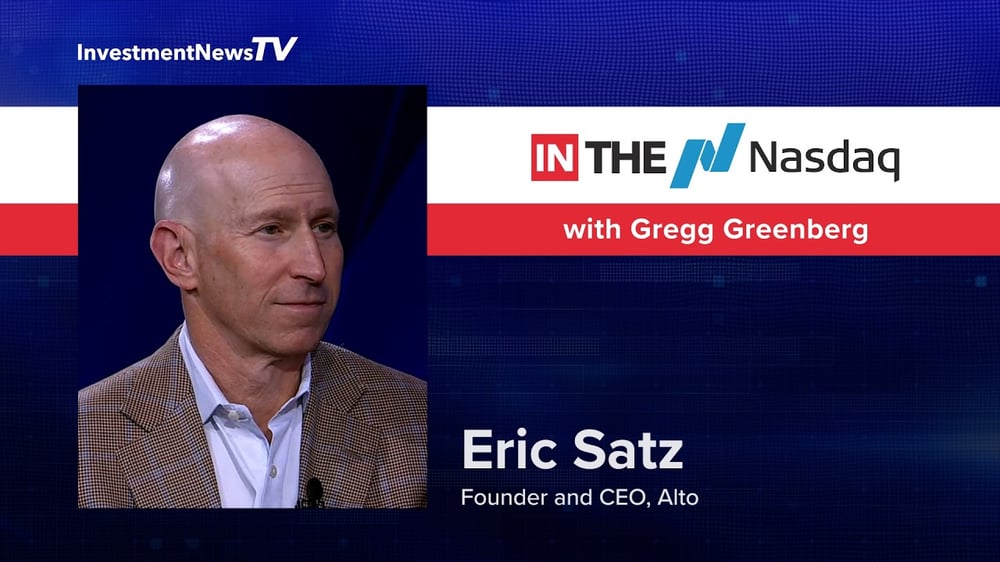
Satz's target is not only the transaction. It is the geography and social machinery around it. Private opportunities have traditionally circulated through networks concentrated in a handful of financial and technology centers. Alto added a marketplace and, in 2023, launched a broker-dealer and an exempt reporting advisor. The ambition was to let an investor find an opportunity as well as fund it, without requiring an introduction from a friend in Manhattan or Palo Alto.
The numbers grew. Alto raised a $17 million Series A and a $40 million Series B in 2021. By late 2025 it reported approximately $2 billion in assets under custody, more than 30,000 self-directed IRA investors, and over 2,500 issuers supported by the platform. Those figures describe scale, though they do not capture the strange work of making custody interesting. Satz has done his best. He once called himself a “recovering investment banker,” a diagnosis with no obvious billing code.
Luck, red flags, and the people at the table
Satz refuses the founder's temptation to edit luck out of the autobiography. His version has three ingredients: hard work, opportunity, and the awareness to recognize the opportunity when it appears. “You have to be on the field to make plays,” he has said. It is sports language from a former Amherst soccer player, but the important word is see. Plenty of people meet bureaucracy. Fewer decide it is a market.
Experience has also taught him to notice warnings. Satz has described an investment from early in his career in which a difficult negotiation produced red flags. Legal expenses and other sunk costs persuaded him to continue. The investment became, in his concise account, “a complete disaster.” Everyone lost money. The lesson he took was relational as much as financial: do business with people you like and respect, because trouble will eventually require candor on both sides.
“Getting the people right means you're going to get the company right. Better people make better companies.”Eric Satz on building teams
That maxim fits Alto's distributed culture. Satz has argued that colleagues need not occupy the same room every day, while preserving periodic in-person gatherings for strategy and the human business of meals, canoeing, or throwing axes at wooden targets. Alto also runs a biweekly ask-me-anything session with him. A custodian depends on trust; the company has made openness part of the internal furniture.
Selling the storefront, keeping the rails
In November 2025, Alto sold its CryptoIRA business to the investing platform Public. The arrangement was more revealing than a simple exit. Public took over the customer-facing trading experience, while Alto continued as custodian and began supplying infrastructure behind the product. The company stepped away from directly operating the crypto segment while keeping a place in the plumbing.
It was a move toward what Alto calls custodial infrastructure as a service. In less polished English: another financial company can build the storefront while Alto handles the regulated IRA machinery underneath. For a founder whose first success helped move currency exchange online, the return to rails feels consistent. Satz may enjoy a marketplace, but he has spent much of his career being irritated by what happens after someone clicks “invest.”
His public argument has widened too. In 2026 he wrote about a proposed knowledge-based route to accredited-investor status. The present framework often uses income or net worth as a proxy for sophistication. Satz's objection is brisk: wealth says little about whether a person understands a K-1, an illiquid fund, or the conditions for an exit. An informed retired teacher may know a particular real-estate deal better than a wealthy novice. If the gate opens, however, education and sound infrastructure matter more, not less.
The old rule and the new machine
There is an appealing modesty to the original Alto insight. Satz did not discover a loophole. He discovered that a legitimate financial choice had been made so inconvenient that it barely functioned as a choice. The law had left a door unlocked; the industry had stacked filing cabinets in front of it.
A decade later, his aspiration remains expansive: alternatives for all. The phrase requires careful reading. It cannot mean every alternative is for everyone. It means investors should not be excluded merely because the machinery is antiquated, their ZIP code is unfashionable, or their advisor prefers the familiar shelf. Choice can be democratized. Judgment cannot be automated away.
Satz's own route makes him a fitting advocate for that distinction. He has sold lemonade, delivered groceries, traded currencies, invested state-backed venture money, overseen a federal power authority, closed businesses, and opened accounts. The sequence is untidy. Useful careers often are. Each episode seems to have sharpened his suspicion of systems that confuse habit with necessity.
The IRA statement on the counter asked only to be filed. Satz picked it up and asked what it could do. That is the entrepreneur's occupational hazard: even the post can become a decade of work.