The first ElevenLabs trick is still the one that stops a room: paste in a paragraph, choose a voice, and hear punctuation turn into breath, hesitation, emphasis, even attitude. A few years ago, text to speech sounded like a railway announcement trapped in a laptop. ElevenLabs helped make it sound like someone had read the copy first. That difference matters to a YouTuber replacing a scratch track, an author testing a chapter, a game designer casting a side character, and a support team deciding whether callers will hang up after “hello.”
Those are also the people this product is for. The browser tools reward creators who care about performance but do not want to book a studio for every draft. The API rewards developers who need speech, transcription, music, or dialogue inside another product. ElevenAgents is aimed at businesses that want a voice or chat agent to handle refunds, appointments, sales questions, and other actual work. ElevenReader, on iOS and Android, is the gentler edge: give it an article, PDF, or ePub and let it read.
The company now calls its three big doors ElevenCreative, ElevenAPI, and ElevenAgents. That naming is useful. It prevents the old mistake of treating ElevenLabs as one magic text box. Underneath are models with different jobs, latency, languages, limits, and temperaments. Buying well begins with choosing the room before choosing the voice.
Start with the job, not the demo
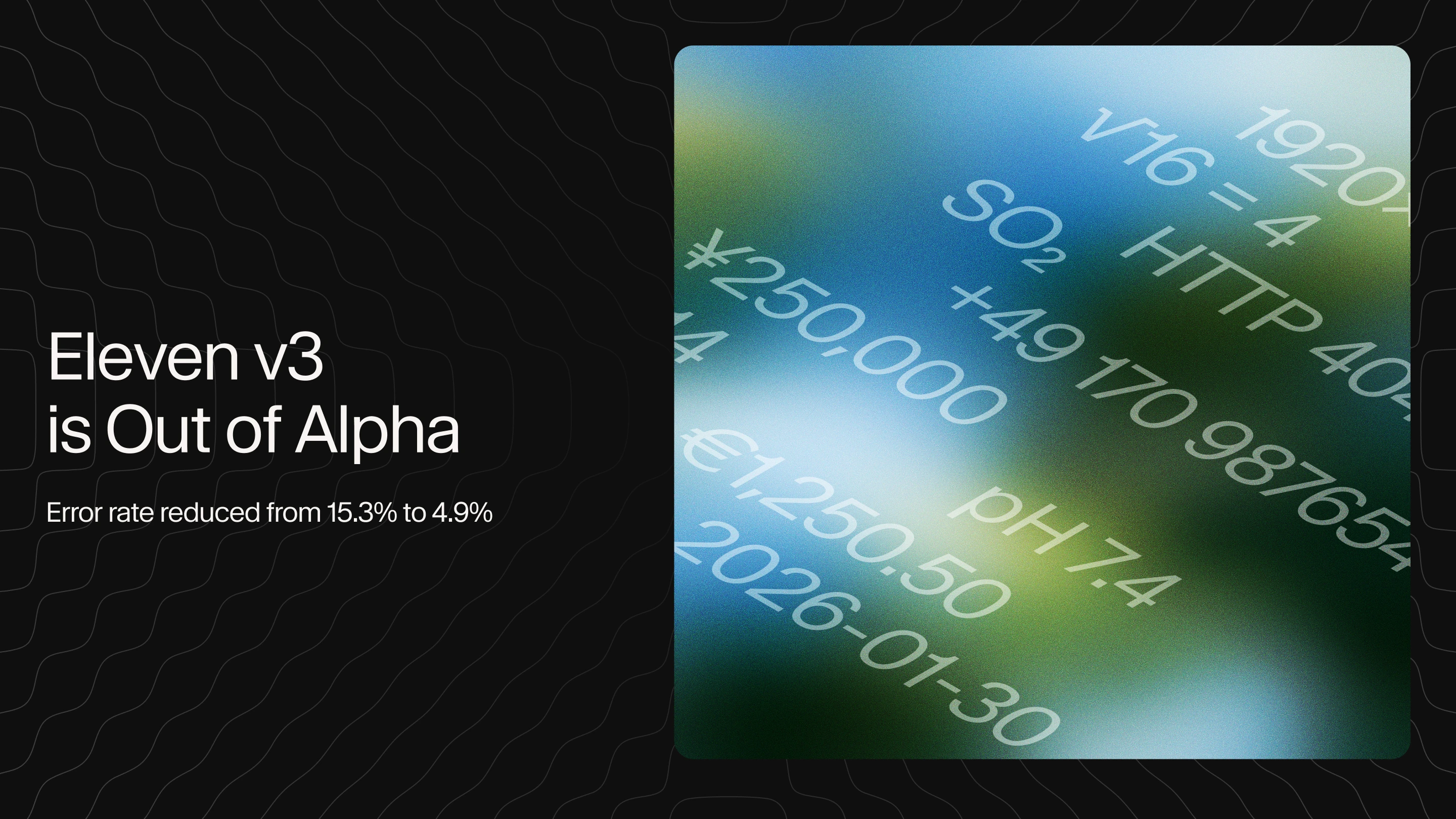
For a polished trailer, character scene, dramatic audiobook passage, or ad, Eleven v3 is the obvious audition. It supports more than 70 languages, natural multi-speaker dialogue, and inline directions such as [whispers], [sighs], or [excited]. It is less like selecting “cheerful” from a dropdown and more like leaving stage directions in a script. The model is the latest flagship speech release, generally available since February 2026.
For a live assistant, speed matters more than theatrical range. Eleven v3 Conversational is tuned for expressive real-time speech at roughly 280 milliseconds of model latency. Flash v2.5 chases raw speed at roughly 75 milliseconds, excluding network and application delay. That footnote is the whole engineering meeting: a fast model does not rescue a slow language model, a distant server, or a clumsy phone stack. Multilingual v2 remains the practical choice for steady long-form narration when consistency outranks fireworks.
| Job | Best starting point | Why | Watch for |
|---|---|---|---|
| Expressive narration | Eleven v3 | Wide emotional range, dialogue, 70+ languages | 5,000-character request limit; direction takes iteration |
| Live voice agent | v3 Conversational or Flash v2.5 | Real-time delivery and lower latency | Test the entire pipeline, interruptions, and noisy calls |
| Long-form audiobook | Multilingual v2 in Studio | Stable voice across longer passages | Pronunciation dictionaries and chapter-by-chapter review |
| Localization | Dubbing v2 | Transfers timing, tone, and delivery across 90+ languages | Names, regional accents, translation choices, background audio |
| Transcription | Scribe v2 | Diarization, timestamps, mixed-language detection | Specialized vocabulary and privacy settings |
A studio with several strange little rooms
Voice cloning gets the headlines, but the surrounding workflow makes ElevenLabs sticky. Instant Voice Cloning is available from Starter. Professional Voice Cloning begins on Creator and is the version used for the Voice Library. Voice Design works differently: describe an age, accent, texture, pace, and personality, then audition generated candidates. For a fictional narrator, that can be cleaner than imitating a person.
The Voice Library is part casting directory, part licensing market. Approved creators set usage terms and can restrict or remove a voice with notice. Customers search by language, accent, age, style, and category. By May 2026, ElevenLabs said more than 10,400 creators had earned over $22 million. Its own tour of the catalog includes warm narrators, rugged cowboys, villains, mad scientists, and cartoon characters. Apparently the future of audio still needs a fellow who sounds suspiciously experienced with a lasso.
“I just want to do it.”Brad Barlow, radio host and Voice Marketplace creator, on avoiding the old voice-acting obstacle course
Dubbing v2 listens to the original performance instead of rebuilding solely from a transcript. It tries to carry timing, energy, and emotion into more than 90 languages while adapting phrasing for speech. That is why the product feels more useful than a translation button pasted onto a voice generator. Scribe v2 runs in the opposite direction, turning messy audio into words with speaker labels, word-level timestamps, non-speech tags, keyterm prompting, and optional entity redaction.
Then there is Music v2. It generates tracks with or without vocals, follows detailed prompts, handles multiple languages, and lets you regenerate one section without bulldozing the chorus. It is an adjacent product rather than a reason to buy ElevenLabs for voice alone, but it changes the shape of the workspace. A small team can now rough out narration, effects, dubbing, captions, and a score without changing tabs six times.
The meter runs while you direct
ElevenLabs is freemium, but “credits” hide the unit that most buyers actually care about: finished minutes. The Free plan has 10,000 monthly credits. Starter costs $6 for 30,000 and adds commercial rights plus instant cloning. Creator is $22 for 121,000 credits and adds professional cloning. Pro is $99 for 600,000. Scale costs $299 for 1.8 million and three seats; Business costs $990 for 6 million and ten seats. Enterprise is negotiated. Annual billing effectively charges for ten months.
The catch is iteration. You pay when you generate, not when you download. Some unchanged regenerations may be free, and the interface is supposed to indicate that beforehand. But a stubborn pronunciation, drifting voice, odd pause, or skipped word can turn one finished minute into several attempted minutes. Paid credits can roll over for up to two months within a cap; downgrade or cancel and unused paid credits disappear at the end of the cycle.
“I wish we had an easier way to highlight a single word and adjust its emphasis or speed.”A 2026 Reddit reviewer on the gap between generation and direction
That complaint is more useful than a star rating. G2’s large review set leans heavily toward praise for voice quality, speed, setup, and the interface, while recurring negatives include expense, pronunciation, and missing controls. Reddit is rougher and more operational: users describe credits burned on retakes, voice drift across longer passages, and agent latency that changes under concurrency. None of this cancels the quality. It tells you what to test.
For developers, the product is plumbing
The developer story is unusually broad. There are REST endpoints, streaming WebSockets, webhooks, WebRTC, SIP trunking, and official SDKs for Python and JavaScript. Agent libraries cover React, React Native, Swift, Kotlin, Flutter, and more. The August 2026 CLI brings the API into the terminal and treats agent configuration as code: pull it into local files, edit, inspect a dry-run diff, then push. Machine-readable schemas and JSON errors are designed for coding agents as much as for humans.
ElevenAgents bundles voices with orchestration, testing, monitoring, tool calls, knowledge, and channels. Procedures can convert an existing SOP into a structured sequence or a flexible playbook. Phone deployments can connect through SIP providers, including Twilio and Vonage, but that does not mean the system arrives production-ready in one click. Test interruption handling, tool failures, handoffs, accents, phone compression, peak concurrency, p95 latency, fraud cases, and the bill after a week of real traffic.
The consent question is part of the product
A realistic clone is both the attraction and the risk. Soon after public launch, misuse forced ElevenLabs to tighten access. In 2024, a fake Joe Biden robocall sent to New Hampshire voters was traced by audio experts to its software. The company now points to account-level traceability, text and voice moderation, professional-clone verification, controls for famous voices, and a classifier that checks whether audio came from ElevenLabs.
There is a more constructive version of licensing, too. Michael Caine and Matthew McConaughey agreed to licensed uses of their voices; McConaughey’s plan included narrating his newsletter in Spanish. Epic Games and the estate of James Earl Jones put an interactive Darth Vader into Fortnite. These examples work because permission is not an afterthought. If your project relies on “we can probably use that voice,” stop before the microphone icon.
Who should buy it, and who should keep walking?
Buy ElevenLabs when the voice is noticeable: narrative video, fiction, characters, localization, accessible content, premium prototypes, or a customer conversation where flat delivery damages trust. Creator is the sensible solo-professional trial because it includes Professional Voice Cloning and enough room to learn the workflow. Developers should benchmark Flash, v3 Conversational, and Multilingual v2 against their own traffic before committing. Enterprises should judge the operational platform, support, data controls, and observability with the same seriousness as the sound.
Keep shopping if your priority is the cheapest bulk narration, surgical word-level editing, or a complete phone-agent stack with every carrier, dashboard, and escalation path already chosen for you. Murf and WellSaid emphasize controlled business voiceover; Descript joins voice work to audio and video editing; Speechify centers listening; Cartesia and PlayAI compete for real-time APIs; large cloud vendors trade character for infrastructure familiarity. The right comparison is a workload, not a homepage sample.
The YesPress verdict
ElevenLabs earns its place when spoken performance is part of the product, not decoration. Its best voices can carry a joke, a threat, or a tired customer’s question without sanding every feeling into “helpful.” The suite is broad enough to replace several point tools, and the API is mature enough to build around. Just budget for direction. Synthetic actors still need notes, retakes, and someone listening all the way through.
A five-minute buying test
Create a free account and prepare one ugly script: a proper name, a date, a price, an acronym, an interruption, an emotional turn, and two languages if you use them. Generate it in v3 and Multilingual v2. For agents, play the result through a real phone and interrupt mid-sentence. For narration, generate the same character at the start and end of a chapter. Count attempted credits, not just the keeper. If the improvement over your current voice is obvious and the retakes fit your margin, move up one plan. If not, the free test has already done its job.