The neatest fact in Doug Merritt's biography is also the one most likely to be lost in a boardroom résumé: before he became the chief executive of Aviatrix, he was its customer. While running Splunk, he encountered the company from the unglamorous side of enterprise technology, where infrastructure must work before anyone can take credit for the useful things built above it. Splunk was remaking itself for the cloud. Aviatrix helped connect the old estate to the new one.
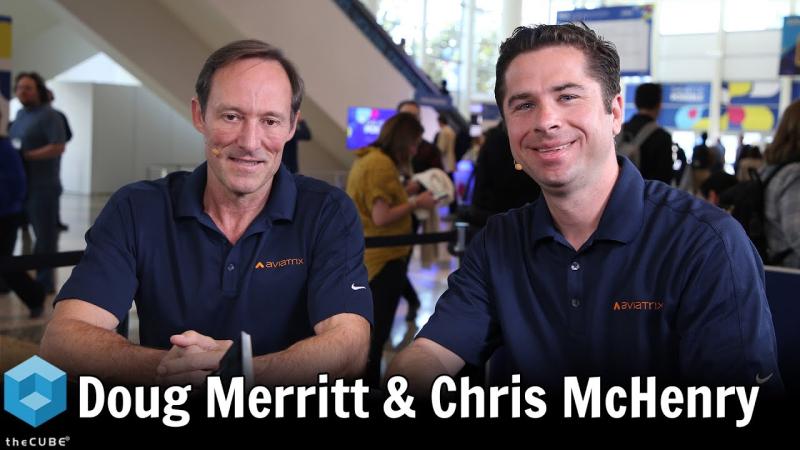
Then the buyer changed chairs. In June 2023, Merritt became Aviatrix's chairman, chief executive and president. He arrived after two years away from the CEO job and with a peculiar advantage: he already knew what it felt like to need the product. This is less romantic than founding a company in a garage, but more useful. Garages rarely have procurement committees.
The return fits the pattern of his career. Merritt keeps appearing where a technology business must exchange one operating system for another without switching itself off. At Splunk, that meant moving from on-premises perpetual licenses to cloud subscriptions. At Aviatrix, it means turning a multicloud networking specialist toward cloud security and containment just as AI makes software faster to create, harder to inventory and easier to attack.
First, admit where you were bad
Merritt began in enterprise sales, including a spell at Oracle. In 1996 he co-founded Icarian, an early cloud application company focused on workforce management. He also wrote code for a couple of years. His retrospective performance review is brisk: he calls himself a “very, very mediocre coder.” He was better at selling, pivoting and listening to customers.
The confession matters because he does not use founderhood as varnish. In a later interview, Merritt said he “whipsawed” the young organization. Technical familiarity was not the same as knowing how to deliver software reliably, repeatedly and at scale. The distance between an intuitive product decision and a dependable operating system had to be learned, occasionally at colleagues' expense.
Icarian was acquired by Workstream. Merritt took the education into PeopleSoft, where he ran the human-capital-management product division, and then SAP. At SAP he helped create a governance, risk and compliance business that grew from under $10 million to more than $800 million in license sales over five years. Cisco followed, then Splunk.
The cloud bet before it became obvious
By the time Merritt became Splunk's CEO in late 2015, the cloud sounded inevitable in conference keynotes but remained debatable in budget meetings. Splunk handled data, and data brought awkward questions: Where would it live? Who might see it? How would residency and privacy work? At immense scale, keeping the machinery on a customer's premises had its own cost and complexity. Neither route was painless.
Merritt and his team chose the cloud. They rebuilt the product as a cloud-native service, changed the financial model and altered how the company sold. The sales shift was subtle but consequential. Instead of presenting Splunk as an infinite box of Lego and asking each buyer what to build, the company became more prescriptive about common use cases and the sequence in which customers could adopt them.
“There is no failure, only learning.”Doug Merritt on his process-centered philosophy
Annual recurring revenue rose from $220 million to $3.12 billion during his tenure, while cloud went from less than one percent of bookings to more than half. Such figures make transformations look clean after the fact. They are not. A subscription transition rearranges revenue timing while a product rebuild rearranges engineering, sales incentives and customer expectations. It is a renovation conducted while guests remain in the hotel.
Merritt left Splunk in November 2021. During the interval that followed, generative AI arrived loudly enough to disturb retirement. He watched videos, experimented with ChatGPT and other models, and concluded that the industry was leaning forward again. He wanted back on the playing field, but not for just any enterprise-software role.
A smaller company, closer to the machinery
His checklist for the next job began with trust. Aviatrix had a five-member board, and Merritt already knew three of them well. The company had a balance sheet that allowed room to maneuver. More important, it served a technical buyer with a difficult problem that was not crowded by a dozen lookalike vendors.
The problem was networking. Public clouds made computing resources easier to summon and gave developers an alluring promise: write the application and let the platform handle the dull infrastructure beneath it. Yet a company's data still moves through networks, often across several cloud providers, data centers and edge services. Someone remains accountable for where those packets go, what they contain and what happens when an attacker gets inside.
Merritt has a soft spot for the people carrying that responsibility. Network engineers and operations teams, he argues, are underappreciated precisely because their work is invisible when successful. If packets do not arrive, almost nothing else works. One can build a dazzling application on top of a network failure, but only briefly.
At Aviatrix, networking has increasingly become a security argument. Traditional security spent decades improving detection: see the intrusion, raise the alarm, investigate the evidence. Merritt now makes the case for containment. Assume trust will eventually be violated. Design policy close to workloads, limit lateral movement and make the blast radius smaller before an alarm becomes a postmortem.
Keep open the possibility that the remaining one percent changes the answer.
Curiosity becomes useful when it includes another person's circumstances.
Slow down long enough to define the foundation before accelerating execution.
Once the purpose is clear, own the experiment, the feedback and the correction.
The principle Merritt says he needs personally: stop, notice and refill the engine.
Daily mastery, distant finish lines
Merritt's leadership doctrine is unusually explicit. Its sequence begins with relentless curiosity, then empathy, purpose before action, radical accountability and, finally, celebration. The last item is partly corrective. He has acknowledged that he does not celebrate his own success enough.
The framework manages to be demanding without pretending that people are machines. Curiosity checks certainty. Empathy checks curiosity. Purpose keeps empathy from drifting into indecision. Accountability turns the preceding ideas into work. Celebration makes more work psychologically possible. Merritt has little patience for passive aggression, perhaps because it violates the entire chain: the concern stays hidden, the purpose goes unstated and nobody can own the outcome.
Outside the office, his preferred metaphor is endurance. Merritt has completed nearly 100 triathlons. Training encourages attention to daily inputs rather than infatuation with a finish line months away. He brings the same process orientation to companies: consistent practice, candid feedback, another iteration. Outcomes matter, but staring at an outcome does not move it closer.
He lives in Texas, is married and has four children. A 2019 profile found him protecting ordinary family rituals while running Splunk, taking his children to school several times a week and getting home for dinner most nights. It is the kind of scheduling detail that reveals more than another productivity maxim. Ambition consumes every unguarded hour. Guarding a few is part of the job.
The customer in the chief executive's chair
There is an appealing loop to Merritt's arrival at Aviatrix. Splunk taught him how difficult cloud transformation becomes at scale. That difficulty introduced him to Aviatrix. Time away gave him room to see AI renew both the possibilities and risks of enterprise technology. Then the former customer returned to lead the vendor, carrying scars from the problem it helps solve.
He now hosts In Progress, an interview series whose title could serve as the caption beneath his whole career. The founder who pushed an organization too abruptly became the executive who talks about purpose before action. The data CEO became a network-security CEO. The retired operator discovered another transition worth operating through.
Second systems are notoriously dangerous. Their designers know enough to attempt everything the first version omitted. Merritt's version is more restrained. Ask harder questions. Listen to the people closest to the work. Limit the damage when trust fails. Repeat tomorrow. And, every so often, remember to celebrate.