She sold English lessons. Her students wanted jobs in another country. So she built the bridge instead.
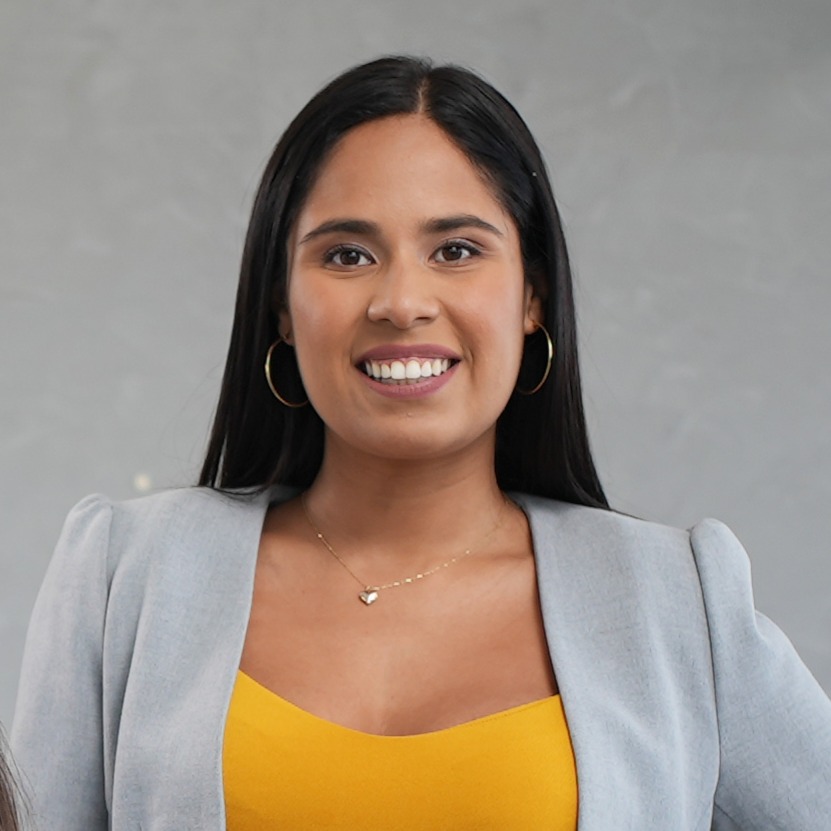
The face of a borderless hiring thesis. Obando left two stable sectors because they couldn't keep pace with her.
A developer in Lima can write code as clean as anyone in San Francisco. What they often can't do is get a recruiter in San Francisco to notice. Domenica Obando built a company around closing exactly that gap, and she did it almost by accident - by paying attention to what her customers actually wanted instead of what she was selling them.
Today she is the founder and CEO of Talently, a Latin American tech talent marketplace that vets developers and data scientists, sharpens their skills and English, and routes them into roles at companies across the United States and the region. The names on the destination list read like a who's who of the new economy: PayPal, Nubank, Mercado Libre, Walmart, Rappi. The vetted network behind it numbers somewhere around 100,000 professionals.
The pitch is deceptively simple. Companies want great engineers and dread the guesswork of finding them. Engineers want better work and don't know how to get seen. Talently sits in the middle and removes the guessing for both. Obando calls it infrastructure - the plumbing for a future of work where geography stops deciding who gets the offer.
We are building the infrastructure for the future of work without borders.
Before the marketplace, there was Andi - an English-learning platform Obando started to help Latin Americans get fluent. It worked. But she noticed something odd in her own customer list. The people most desperate to learn English weren't tourists or students. They were software developers, and they wanted the language for one reason: to land international jobs that paid in dollars.
That detail rearranged everything. English wasn't the product. It was a symptom. The real demand was access - to companies, to interviews, to the kind of opportunities that turn a good salary into a life-changing one. So she pivoted Andi into Talently and pointed the whole machine at the bigger problem.
It's a founder move that sounds obvious in hindsight and is brutally rare in practice. Most people defend the thing they built. Obando followed her customers out of her own first idea and into a market many times its size. The English curriculum didn't vanish - it became one rung on a longer ladder that now includes technical training, soft skills, interview prep, and employability coaching.
The result is a talent accelerator with a sharp edge. Developers who feel stuck apply, get diagnosed for skill gaps, train up, and come out the other side placed in a better job. Graduates routinely double their earnings. Some multiply them by ten.
Reported salary multiples for Talently participants. The ceiling is the part that keeps developers applying.
Talently validates technical skill, language, and cultural fit before a candidate ever reaches a company. The promise to employers isn't more resumes - it's fewer, better ones, with the guesswork already removed.
Obando treats geography as a defect in the hiring system. A skilled engineer shouldn't earn a fraction of a peer's salary because of the city stamped on a passport. The company exists to patch that.
Long before AI matching and marketplaces, her work was about teaching - volunteers, teachers, English learners. "Education as a gift toward freedom" is the through-line of every venture she has started.
Education is a gift toward freedom.
She didn't arrive at startups from a garage. She arrived from an NGO and a stint inside Peru's Ministry of Education, where she ran digital upskilling programs and worked on product innovation in the public sector. The mission fit. The metabolism didn't.
By her own account she left because the pace of the public and nonprofit world couldn't match her "fast-paced personality and hunger for impact." It's a candid thing for a founder to admit - that she needed the speed of a company to do the work she cared about. The cause never changed. The vehicle did.
What stayed constant is the belief underneath all of it: that skill is everywhere and opportunity is not, and that the job is to fix the second half of that sentence.
The goal is plain: make Talently Latin America's largest talent marketplace, and build the rails for a working world where a passport stops setting the salary.