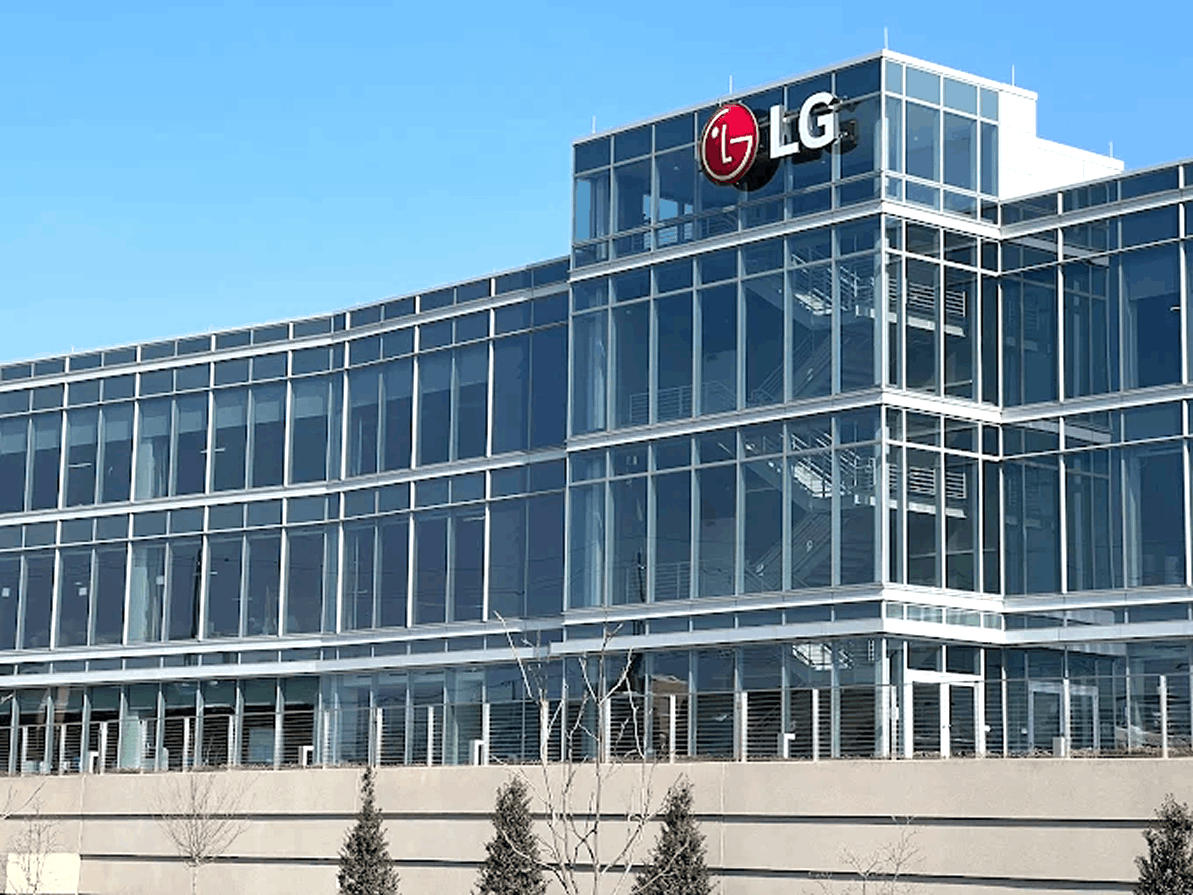
There is a small joke hiding inside the name DoctorHere. In 2018, the “here” was a phone: MEDIHERE, the South Korean parent behind DoctorHere, started with software that helped patients find specialists. By 2020, “here” meant a video call, sold to Korean Americans as unlimited telehealth and prescription support for $119 a year. Today, “here” might mean Suite 601 on Seventh Avenue, a clinic in Edgewater, or a wellness room inside LG Electronics. The company did not abandon technology. It discovered that healthcare keeps asking where, exactly, the patient and clinician will meet.
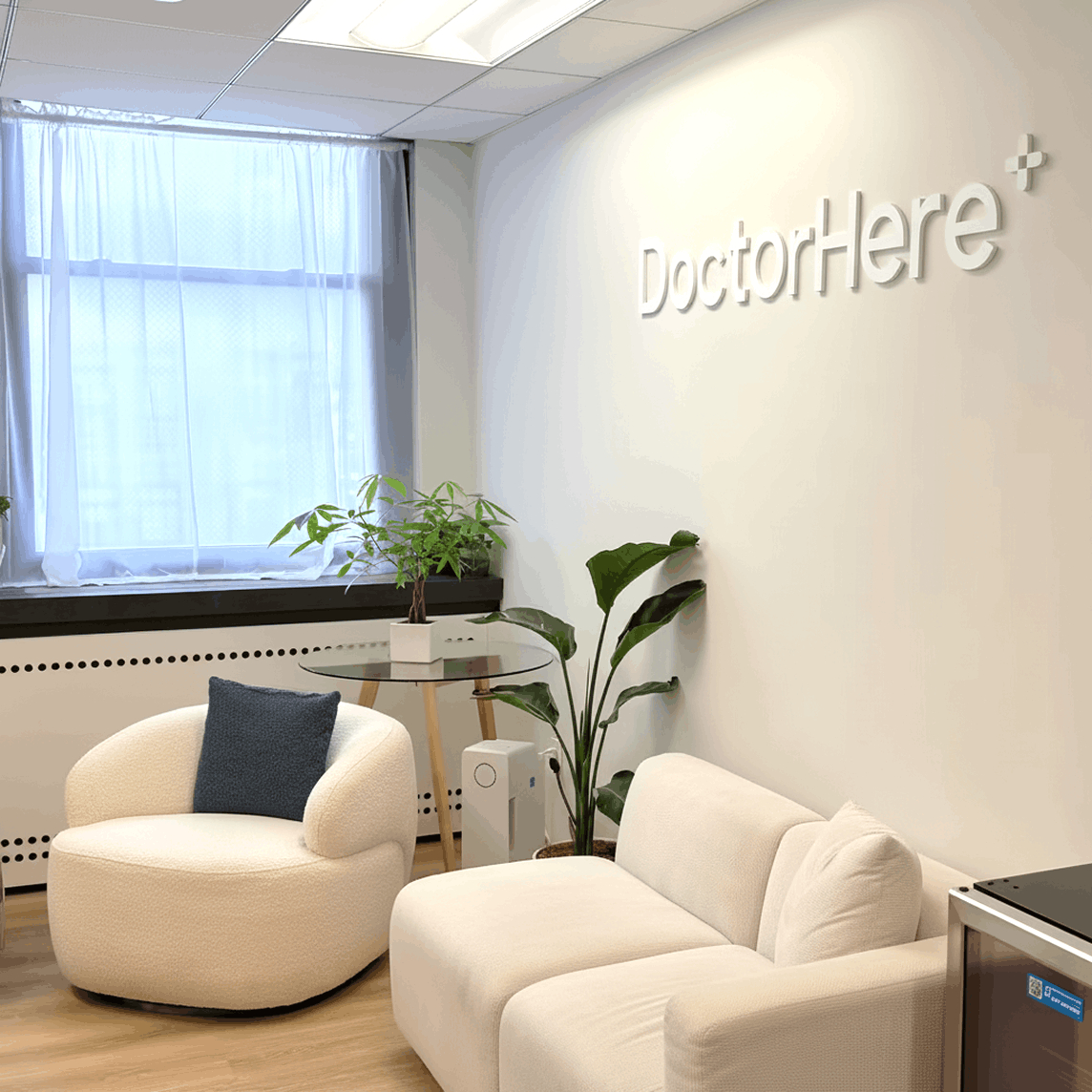
That evolution makes DoctorHere more interesting than another AI-clinic slogan. The New York company now operates a hybrid primary-care model: same-day in-person visits, virtual care, neighborhood offices and employer-site clinics, supported by online booking and a care concierge. Its public site lists six locations across New York and New Jersey. Three are conventional community clinics; three sit at LG Electronics USA, KISS Products and Samsung Electronics America. The format changes, but the pitch stays compact: “Book, Check-in, Care.”
01 / The productThe choreography is the product
DoctorHere sells primary care, not a mysterious new medical category. Patients can seek routine and preventive treatment, use virtual visits when appropriate, and book at physical locations in Manhattan, Englewood Cliffs and Edgewater. The site also lists medical weight-loss services. The practical customer is a person who values speed and continuity: someone who wants an appointment today, does not want to repeat a medical history at every visit, and prefers a team that follows up before a problem becomes dramatic.
Its original customer was narrower and sharper. Korean immigrants in the United States faced expensive care, long waits and the risk of explaining symptoms in a second language. In announcing its 2020 Series A, MEDIHERE framed those frictions with numbers: more than $10,000 in average annual medical spending and a 24.1-day average wait to see a doctor. The first offer was legible - virtual access for $119 a year. A niche defined by language and navigation gave the young company a reason to exist before it had a clinic footprint.
The company has since widened the door. It says it accepts more than 300 insurance plans and offers self-pay care, though its current public pricing page does not itemize prices. Historic membership terms describe recurring monthly or annual fees. The revenue model therefore appears to mix reimbursed visits, direct patient payment, memberships where available and workplace-clinic contracts. The precise employer economics are private, but the distribution logic is obvious: instead of asking patients to discover another health app, put a clinic where hundreds of them already arrive every morning.
“Care, Simplified.”DoctorHere's current operating promise
02 / The pivotWhat failed first was the fantasy of pure software
No public account says DoctorHere's first model collapsed, and the company still uses virtual care. But its center of gravity plainly changed. Doctor discovery solved information asymmetry: which physician should I see? Telehealth solved distance: can I speak to one now? Neither, alone, guarantees continuous primary care. Screens are excellent at conversations; they cannot take every measurement, perform every exam or build a local habit of care. The company's response was not a grand repudiation. It was an accumulation of rooms.
What changed management's mind can only be inferred from that sequence. The pandemic validated remote consultation - MEDIHERE reported more than 25,000 cumulative telehealth visits by late 2020 - while also exposing its limits. DoctorHere began describing “smart medical clinics” in New York and New Jersey, staffed by clinicians and backed by software. The idea became less about replacing the office and more about removing the office's most irritating behaviors: delayed appointments, forms, disconnected histories and passive follow-up.
The financial cost of the pivot is not public. The operating cost is easier to see: leases, clinical hiring, insurance contracting, compliance and the endless local work of making an appointment start on time. DoctorHere funded the journey with a KRW 3 billion Series A in November 2020, led by Korea Investment Partners with InterVest and The Wells Investment. Databases also report later capital, including a 2022 round with undisclosed terms and a $2.35 million convertible note in 2023. Its valuation and revenue remain private.
03 / The differenceA clinic chain disguised as a workflow
DoctorHere occupies an awkward, potentially useful middle of the market. CityMD and other urgent-care chains win on immediacy but are not built primarily around long relationships. One Medical packages attractive offices, digital access and membership at national scale. Teladoc begins with the screen. Traditional independent practices can deliver deep continuity, but their scheduling and administrative systems vary wildly. DoctorHere borrows from each: neighborhood availability, virtual convenience, recurring primary care and a concierge who, the company says, reaches out first.
Its Korean-American origin is also more than biography. Bilingual care and cultural fluency can reduce the soft failures that happen before a diagnosis: a patient postpones a visit, misunderstands instructions or avoids a call. That wedge is difficult to manufacture with advertising. It grows from serving a community repeatedly. The employer sites extend the same logic. Trust and convenience improve when the path to care is measured in elevator rides rather than subway stops.
AI appears in the company's current description as “multi AI agents” and in recruiting language about reducing documentation and administrative burden. The credible near-term use is backstage: prepare context, surface preventive-care gaps, streamline records and give clinicians more time with patients. The more DoctorHere claims autonomous intelligence, the more proof it will owe. The more it uses automation to make the ordinary visit less annoying, the easier the value is to understand.
The clinic is not the opposite of the software. It is where the software has to prove it can keep an appointment.
04 / The copyable bitSteal the sequence, not the furniture
There is a practical playbook here for founders outside healthcare. Begin with a painfully specific customer, as DoctorHere did with Korean Americans navigating U.S. medicine. Give the first product a price a person can repeat from memory. Watch what remains difficult after the digital layer works. Then move closer to that bottleneck, even if it makes the business look less elegant on a venture-capital slide.
Culture matters because this model cannot be run by engineers alone. Public recruiting material describes a cross-border team spanning development, design, administration, clinicians, sales and marketing, organized around autonomy and responsibility. That multidisciplinary sprawl is the job. A beautiful booking flow that sends patients into a chaotic office is not a product success. Neither is a warm clinical encounter followed by a month of billing confusion.
05 / The catchWhen the model does not travel
Hybrid care is not a universal cheat code.
It struggles where patient density is low, clinician recruitment is tight, payer contracts are weak or employers will not subsidize on-site access. It also fails when “same day” creates episodic visits without continuity, when AI adds clicks instead of removing them, or when expansion outruns clinical quality.
A six-site network is evidence of execution, not proof of national scalability. DoctorHere has discussed ambitions far beyond the Northeast, including a 500-clinic goal in a 2024 convention booklet, while older recruiting pages projected dozens of sites sooner than the current public list shows. Clinics grow at the speed of credentialing, hiring, leases and local reputation. A playbook that works inside Korean-linked employers in New York and New Jersey may need substantial adaptation in Texas or California.
The company's reported 85 percent-plus retention rate is encouraging, but it is self-reported and lacks a published definition. Retention can mean repeat visits, active membership or something else. The same caution applies to accepting 300-plus insurance plans: breadth on paper does not tell a patient the exact out-of-pocket cost of Tuesday's appointment. DoctorHere's next level of trust will come from making those operational details as simple as its three-verb promise.

Still, DoctorHere has arrived at a sensible proposition. Primary care is a relationship delivered through a chain of mundane events. The patient finds a time, shows up, explains what is wrong, receives care and hears from someone later. Technology can shorten and connect those events. A clinic can make them tangible. DoctorHere's bet is that the combination is more defensible than either piece alone.
The line worth copying is not “powered by AI.” It is “we reach out first.” That promise converts preventive care from a dashboard into a behavior. It is expensive, operational and easy to notice when absent. In other words, it sounds a lot like healthcare.